







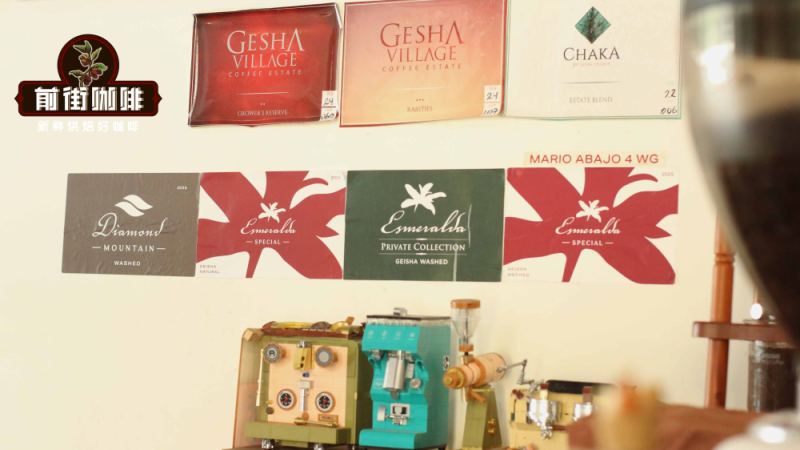
Panama's Hacienda La Esmeralda is the force that brought Geisha coffee to the world's attention, and the estate divides its Geisha into three grades—Red Label, Green Label, and Blue Label—based on cupping performance and growing plot. These three differ in elevation, plot origin, whether they participate in auctions, and flavor profile, and the price gaps between them are quite pronounced. In this article, Front Street Coffee sorts through Hacienda La Esmeralda's history, plot divisions, grading standards, and processing methods, and includes brewing parameters and flavor descriptions for three Geisha offerings, helping coffee enthusiasts understand the grade differences and find the Geisha that suits them.
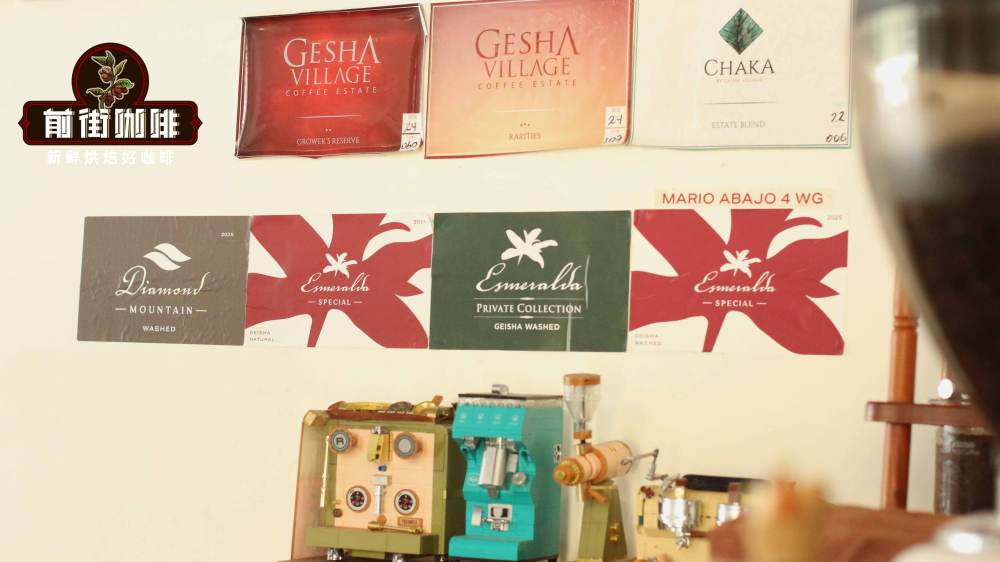
To learn more about specialty coffee, follow: Front Street Coffee (Frontsteet Coffee)
When it comes to Geisha coffee, Hacienda La Esmeralda in Panama is a name you can't avoid. It both discovered Geisha's potential and pushed this variety onto the world stage. Hacienda La Esmeralda manages the quality of its Geisha with great care, and the Red Label, Green Label, and Blue Label grades each have clearly defined criteria. Below, Front Street discusses just what makes Panama Hacienda La Esmeralda's Geisha so special.
Panama Hacienda La Esmeralda
Panama is located in Central America. The Panama Canal was built by the United States and, for a period after its completion, was managed solely by the U.S. as well. The opening of the canal brought many American elites southward at the end of the 20th century, partly out of work needs and partly to seek business opportunities. Hacienda La Esmeralda was born against this backdrop.
In 1964, American banker Rudolph Peterson retired and moved to Panama, buying Hacienda La Esmeralda in Boquete, initially focusing on dairy farming. Later, his son Price gave up his medical career to help his father run the farm, introducing the Caturra and Catuai coffee varieties in 1987 and building a wet mill in 1994, giving the estate its own processing capability. In 1996, they purchased the neighboring Jaramillo estate—which had superior geographical conditions and excellent flavor in its existing coffee varieties—and later incorporated it into Hacienda La Esmeralda.
The Petersons were drawn to Jaramillo precisely because its existing coffee beans carried a pleasing orange note and floral-fruity aromas, different from the usual flavors of Panamanian coffee. After cupping different sections of the farm one by one, they discovered a patch of unknown coffee trees at the estate's highest point. Because the yield was so small, the previous owner had used them only as a windbreak, but the Petersons identified them and decided to plant and cultivate that area separately. This is the Geisha that coffee fans now know so well.
After this coffee won the 2004 Best of Panama (BOP) green bean competition, its fame took off, and expert appraisal later confirmed it was the Geisha variety from Ethiopia. Afterward, the Peterson family poured a great deal of effort into infrastructure to support fine batch separation and processing—that is, the Red Label, Green Label, and Blue Label mentioned earlier by Front Street.
Hacienda La Esmeralda's Plot Divisions
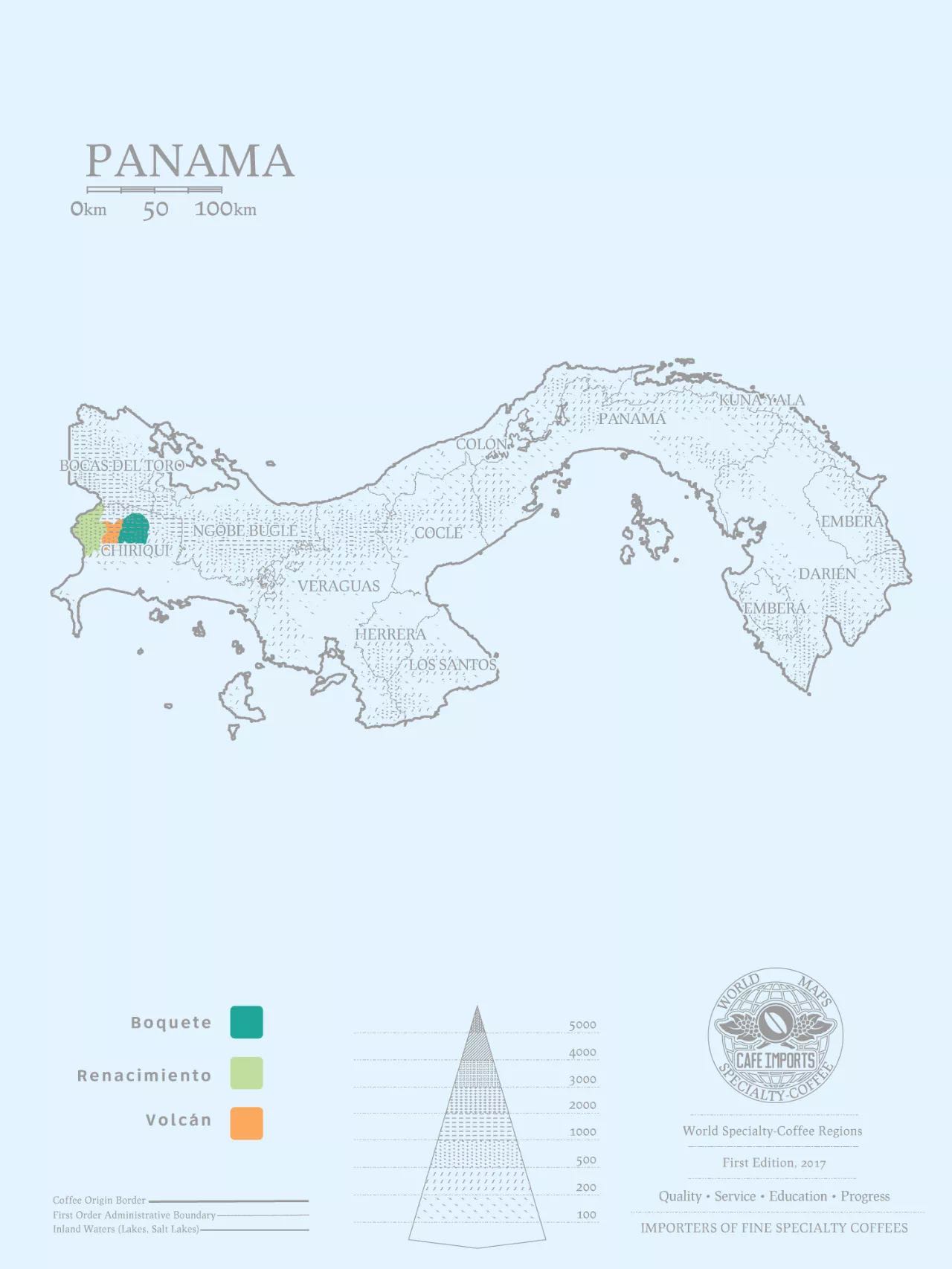
As Front Street noted earlier, Hacienda La Esmeralda is located in Panama's Boquete producing region. This is an important coffee region in Panama, home to many well-known estates such as Elida Estate and Kotowa Coffee Estate. Ever since discovering Geisha, Hacienda La Esmeralda has divided its Geisha plots with great precision, mainly into three estates: Jaramillo, Canas Verdes, and El Velo. Each estate is further subdivided into small plots.
High-quality Geisha comes mainly from two plots: Jaramillo and Canas Verdes.
Jaramillo
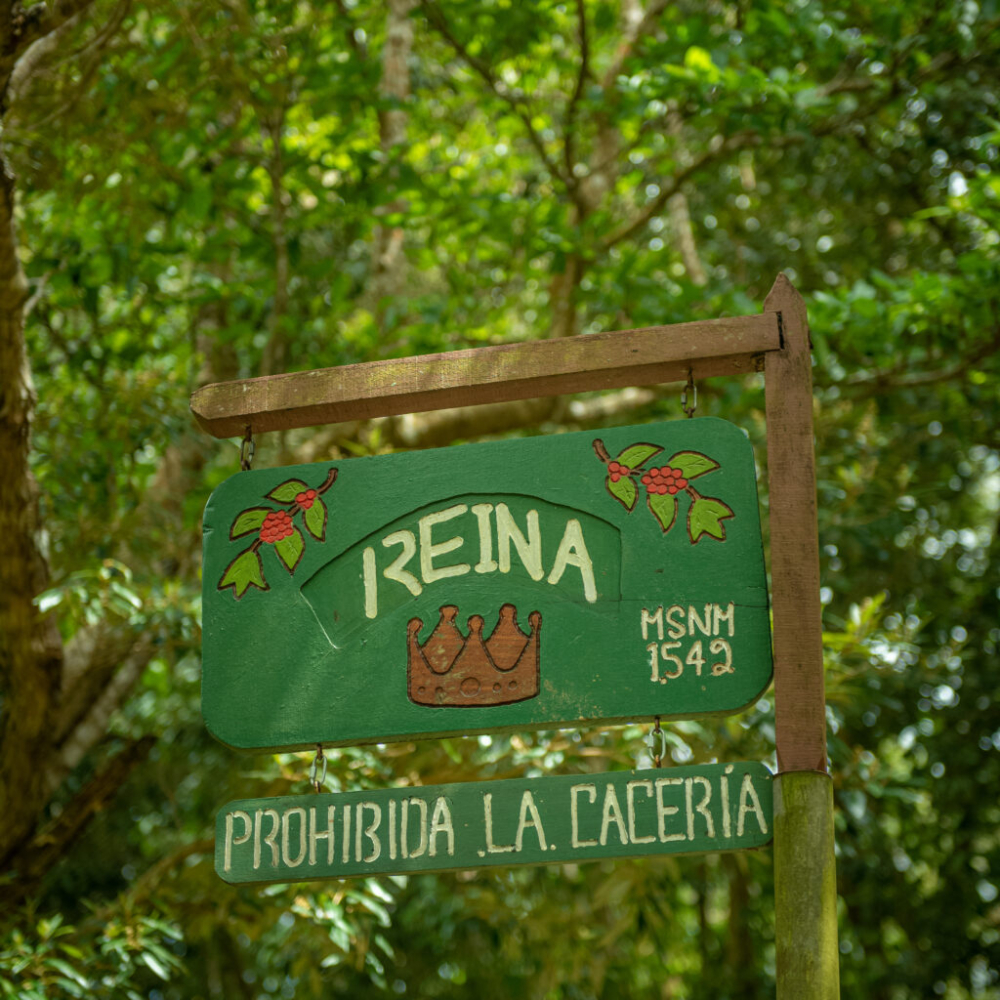
Annual rainfall 4000ml, average daytime temperature 19-25°C, average nighttime temperature 11-15°C, average elevation 1600-1700m. The Jaramillo plot is divided into 5 small plots: Mario, Noria, Reina, Bosque, and Buenos Aires.
Canas Verdes
Annual rainfall 3500ml, average daytime temperature 16-23°C, average nighttime temperature 10-15°C, average elevation 1600-1800m. It contains 9 small plots in total: Lino, Coronado, Fundador, León, Montaña, Trapiche, Chinta, Cabaña, and Tumaco.
El Velo is the most recently acquired estate of Hacienda La Esmeralda, with an average elevation of 1700-1900m. Besides growing Geisha and Catuai, it also has a small number of introduced varieties such as Laurina, Pacamara, Moka, and SL28. El Velo is divided into 7 small plots: Guabo, Portón, Durazno, Mural, Higo, Buena Vista, and Guila.
Hacienda La Esmeralda's Red Label, Green Label, and Blue Label Grading Standards
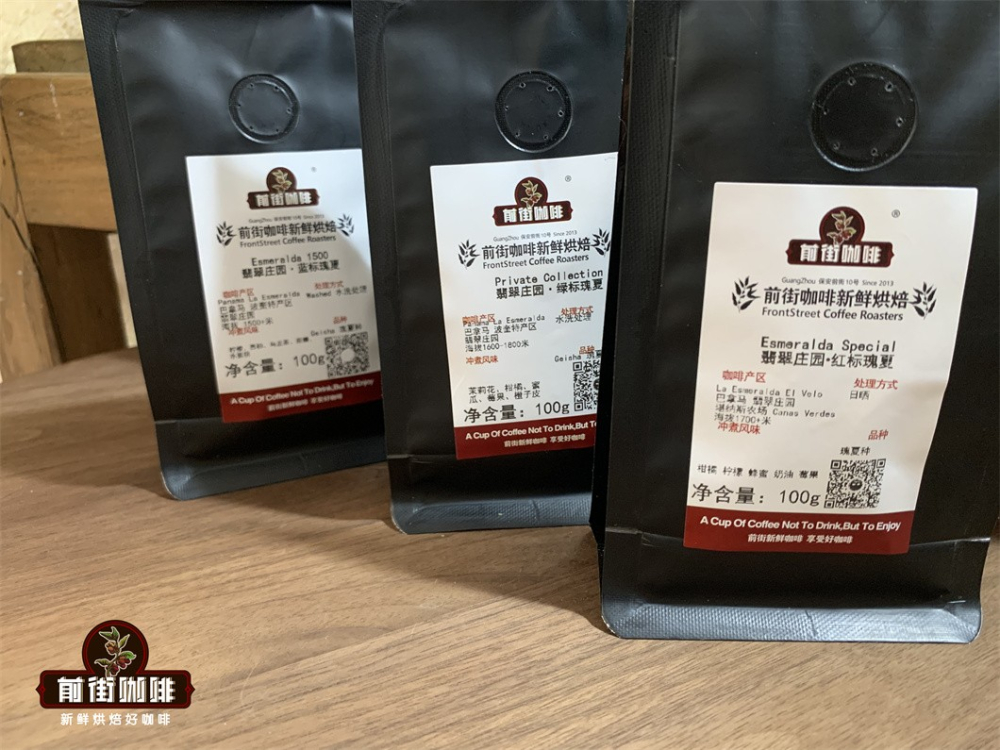
As Front Street said earlier, Hacienda La Esmeralda has strict grade divisions for its coffee beans, which also makes its marketing strategy different from other estates. Based on cupping performance, planted variety, and plot, the estate divides its coffee into five brands, of which there are three Geisha brands: Esmeralda Special (Red Label), Private Collection (Green Label), and Geisha 1500 (Blue Label). The Catuai variety has two brands: Diamond Mountain and Palmyra.
Hacienda La Esmeralda Red Label Geisha
The Geisha from Esmeralda Special is what people usually call Red Label. Grown at elevations of 1600-1800 meters, scoring above 90 points in cupping, it comes from Geisha beans from the two production areas of Jaramillo and Canas Verdes.
It must also take part in Hacienda La Esmeralda's own independent auction; only Geisha lots from designated plots that are put up for auction count as auction Red Label. There is also non-auction Red Label on the market, which in fact is Geisha selected from the same plots that did not enter the auction and was released to the market; the variety quality is the same, with only a difference in selling price. This grade of Geisha is processed by natural or washed methods, with flavors featuring distinctive, bright floral aromas and citrus notes.
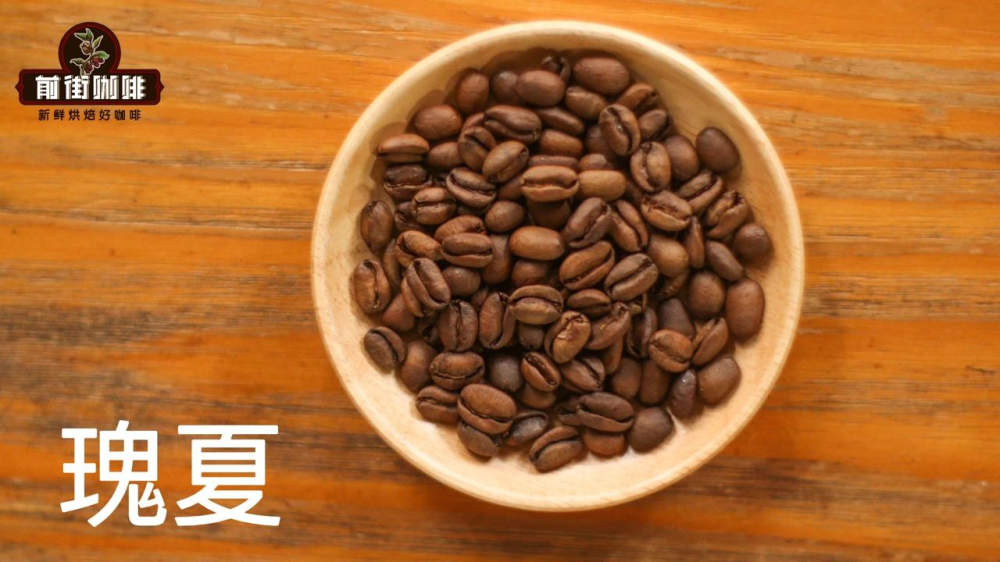
Front Street Coffee (FrontStreet Coffee): Panama · Hacienda La Esmeralda Red Label Geisha Coffee Beans
Country: Panama Region: Boquete (Hacienda La Esmeralda) Elevation: 1700 m Variety: Geisha Processing: Natural Flavor: Citrus, complex fruit, rose tea, honey
Hacienda La Esmeralda Green Label Geisha
Private Collection, commonly known as Green Label, is not an independent competition lot; it is a Geisha variety that does not participate in auctions but is still of excellent quality. Grown at elevations of 1600-1800 meters, it is a blend of micro-lots from different plots such as Jaramillo and Canas Verdes. Because it is a blend, with no detailed plot labeling, Green Label sometimes tastes very similar to Red Label, but the next release may differ again.
Although Green Label is not as high a grade as Red Label, it still carries Geisha's classic flavors: floral aroma, fruity notes, citrus acidity, and a thick, juicy mouthfeel. Green Label Geisha is likewise processed by washed or natural methods. Since its elevation standard matches Red Label's and it is simply harvested as a blend, Front Street Coffee (FrontStreet Coffee) considers it the most cost-effective grade from Hacienda La Esmeralda; the lot we obtained is washed.
Front Street Coffee (FrontStreet Coffee): Panama Hacienda La Esmeralda Green Label Geisha Coffee Beans
Country: Panama Region: Boquete (Hacienda La Esmeralda) Elevation: 1700 m Variety: Geisha Processing: Natural Flavor: Jasmine, citrus, melon, berry
Hacienda La Esmeralda Blue Label Geisha
The Geisha 1500 brand is the commonly seen Blue Label Geisha. It is selected from elevations of 1400-1500 meters and is a blend of beans from three different plots: Jaramillo, Canas Verdes, and El Velo. Its flavor has slight floral notes, fruity acidity, and sweetness, with a less substantial mouthfeel. Currently Blue Label Geisha is available in both washed and natural versions, with the natural lot introduced only in small batches at the end of 2019.
Front Street Coffee (FrontStreet Coffee): Panama Hacienda La Esmeralda Washed Blue Label Geisha Coffee Beans
Country: Panama Region: Boquete (Hacienda La Esmeralda) Elevation: 1400-1500 meters Variety: Geisha Processing: Washed Flavor: Lemon, oolong tea, cane sugar, white peach
It can be seen that the biggest difference among these three labels is elevation. As Front Street has mentioned in previous articles, coffee beans grown at higher elevations usually have better flavor, so Red Label and Green Label are of higher quality than Blue Label. However, what makes Green Label Geisha different from Red Label Geisha is that it is harvested as a blend, whereas Red Label Geisha beans are labeled by plot and participate in auctions, hence the large price gap. But Front Street believes the flavor difference between Red Label and Green Label Geisha is not obvious, so Green Label is much more cost-effective. Therefore, Front Street suggests that coffee lovers who enjoy Geisha but have a limited budget may want to try Green Label Geisha.
Front Street also learned that Geisha coffee has an unusual trait: when grown in extremely harsh environments, its flavor actually performs better. This means Geisha coffee is especially difficult to harvest and its yields are very low. Not just any estate can grow delicious Geisha coffee; abundant conditions and equipment are needed to produce Geisha with excellent flavor, which is also why Hacienda La Esmeralda's Geisha coffee beans stand out from the rest.
Panama Hacienda La Esmeralda Geisha Coffee Bean Processing Methods
As Front Street said earlier, the processing methods for all three Geisha grades from Hacienda La Esmeralda are the most common washed and natural methods. The difference between the two is this: washed coffee beans show a cleaner, brighter flavor and can express the region's original flavors, while natural processing adds fermented notes and aroma on top of the washed flavor, making the flavor sweeter and more fragrant.
Washed Processing Method Steps
1. First, the coffee farmers pour all the harvested coffee cherries into water; bad or defective beans float to the surface, while those that sink to the bottom are the coffee cherries that pass quality standards. This also greatly reduces the time wasted picking them out one by one. 2. The selected coffee cherries are put into a depulper to remove the skin and pulp. After removal, a layer of mucilage still clings to the surface of the coffee cherries, so a large amount of clean water is used to rinse the sticky residue off the surface of the cherries.
3. Next, fermentation is used to completely remove the mucilage. This process takes about 18 hours, but after fermentation is complete, the fermenting bacteria cling to the surface of the coffee cherries, so they must be washed again with a large amount of clean water. In this step, obtaining 1 kilogram of coffee beans requires 40 to 50 kilograms of clean water. Front Street considers this a very large number, and this is precisely why arid countries cannot adopt washed processing.

4. Once the coffee beans are cleaned, they can be dried. Some regions take them outdoors to dry directly, while some more developed producing regions send them to processing plants to be machine-dried, bringing the coffee's moisture content down to about 11%. 5. Finally, the dried coffee beans are stored and packaged, and then they can be sold for export.
Natural Processing Method Steps 1. The first step is picking ripe coffee cherries, then manually sorting to remove defective, overripe, or insect-damaged cherries and keep the good beans. This is also a major reason why the coffee beans in Front Street's shop are relatively uniform and attractive in appearance.
2. The good cherries that have passed manual sorting are sent to a drying area for drying. Different coffee regions use different drying racks—some use tarps, others use raised beds or concrete floors, etc. The average drying time is 27-30 days, until the coffee's moisture content drops to 11%, which completes the drying process. 3. This step is also fairly critical: after drying is complete, the coffee cherries are sent to a specialized processing plant to be depulped and hulled, and may even be polished, so that parts such as the pulp all fall away, yielding the coffee beans in the commonly recognized sense.
4. After hulling, the green coffee beans undergo another round of sorting to again remove beans with poor appearance. This is because over-dried coffee beans are relatively fragile and get broken into fragments during hulling, while under-dried coffee beans contain too much moisture, and if the moisture is too active it makes the beans prone to bacteria and mold. Therefore, they are sorted again before being sent to warehouse storage and packaged for export.
The above is the information Front Street has compiled about Hacienda La Esmeralda Geisha. Before putting any coffee bean on the shelves, Front Street conducts extensive cupping and brewing tests, from which we select the brewing data line with the best flavor to brew for Front Street's coffee-loving friends. Next, Front Street will share the brewing data for these three Geisha coffees from Hacienda La Esmeralda.
Front Street Coffee (FrontStreet Coffee) Panama Hacienda La Esmeralda Coffee Bean Brewing Recommendations: Dripper: Hario V60
Water temperature: 90°C Dose: 15 grams Coffee-to-water ratio: 1:15 Grind size: medium-fine
Front Street Coffee (FrontStreet Coffee) Brewing Method: Pulse Pouring
Bloom with 30 grams of water for 30 seconds, then pour in a small stream in circles up to 125 grams for the first pulse; when the water level is about to expose the coffee bed, continue pouring to 225 grams and stop; when the water level is about to expose the coffee bed again, remove the dripper. (Timing starts at the beginning of the bloom.) Total brew time is 2'00".
Panama Hacienda La Esmeralda Geisha Flavor Descriptions
[Red Label] Bright rose and citrus aromas, genmai, berries, apricot, complex fruit, honey, with a thick juicy body, rich layers of flavor, and pronounced sweetness.
[Green Label] Rich jasmine floral aroma on entry, high sweetness, citrus, berries, juicy body, cream, green tea, orange peel, cantaloupe; overall rich layers of flavor, with a lasting finish of florals and citrus.
[Blue Label] Soft lemon and grapefruit acidity on entry; as it cools slightly, oolong tea, honey, and cane sugar sweetness return; the mouthfeel is relatively clean and bright.
The above content is compiled by CoffeeHunters, a coffee news website.


