







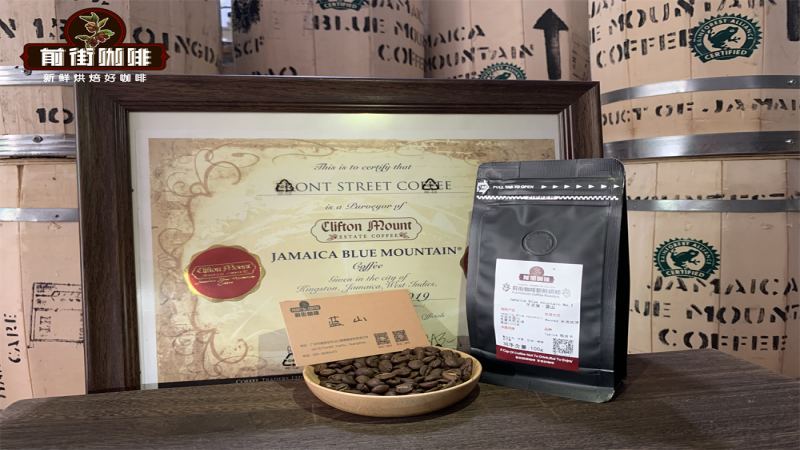
Blue Mountain coffee has long been regarded as the representative of premium coffee, but should it be dark-roasted or light-roasted to bring out its classic flavor? From Front Street's perspective, this article systematically sorts out the flavor origins of Blue Mountain coffee, the characteristics of its regional variety, washed processing, and grade classification, focuses on analyzing the impact of roast level on Blue Mountain flavor expression, and gives the cupping basis for Front Street's final use of a medium-dark roast. At the same time, the article also compiles the complete brewing parameters and method for the Jamaican Blue Mountain No. 1 served at Front Street's store, including coffee dose, coffee-to-water ratio, water temperature, grind size, and the use of the KONO dripper, helping readers experience the layered changes of dark chocolate, nuts, cream, and soft acidity from high to low temperatures.
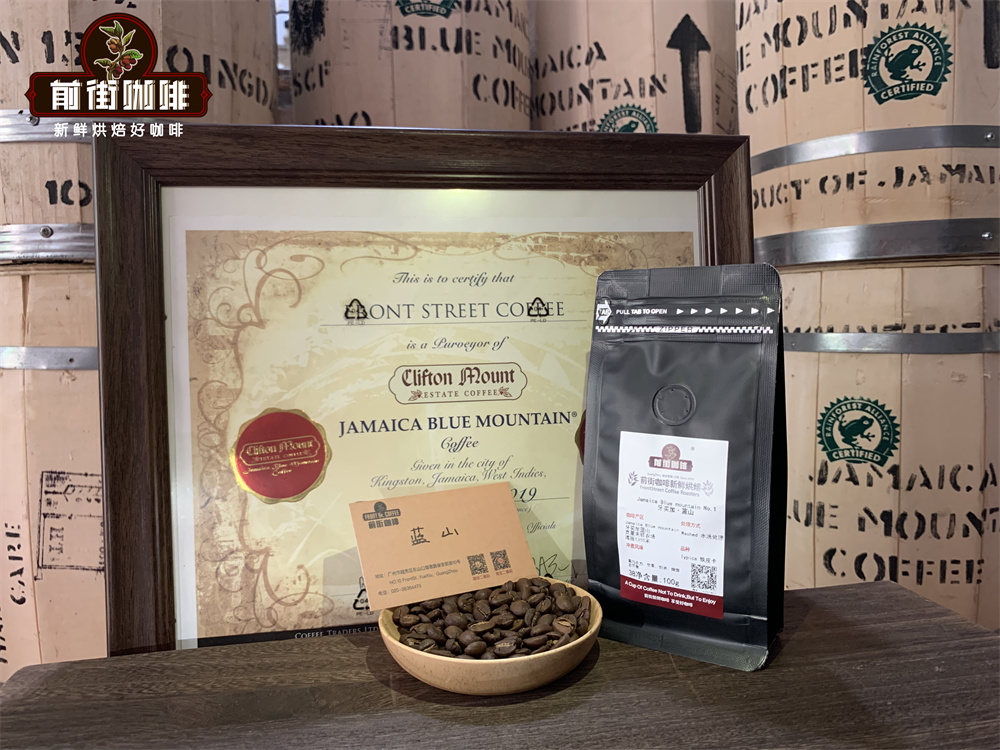
When people mention Front Street, many immediately think of Blue Mountain coffee. In an era when coffee culture was not yet widespread, Blue Mountain was almost synonymous with premium coffee. Today Front Street will discuss the flavor characteristics and roasting choices of this classic coffee.
Where does the flavor of Blue Mountain coffee come from?
As Front Street has emphasized many times in past content, the final flavor presented in a cup of coffee is influenced by multiple factors, including variety, growing terroir, harvesting and processing, roasting curve, and brewing method. Only when every step is handled carefully can you obtain Blue Mountain coffee with elegant aroma and a clean mouthfeel in the cup.
Blue Mountain coffee is produced in Jamaica's Blue Mountain region, and its variety is Typica, which can be traced back to Ethiopia, the birthplace of coffee. Typica is rich in acidity and aroma and has a clean taste, but because of its poor disease resistance and low yield, it has been abandoned by many producing regions. After Typica was introduced to Jamaica in 1728, the island-type microclimate of the Blue Mountain region was completely different from elsewhere—cool temperatures, variable humidity, and thin mist. These conditions provided a good foundation for coffee growth. After hundreds of years of adaptation, Blue Mountain Typica has not only retained its pure lineage but also gradually developed stronger disease resistance.
To maintain the stability of Blue Mountain coffee quality, Jamaica has long used the washed method to process green beans. Before fermentation, the skin and pulp are first removed, and after overnight fermentation a large amount of acidic substances is produced, causing the mucilage layer to fall off the bean surface. The parchment beans are then dried in sunlight until the moisture content reaches the standard. The washing process makes the flavor of Blue Mountain coffee beans themselves cleaner and more transparent. In recent years, naturally processed Blue Mountain has also appeared on the market. Compared with the washed version, natural Blue Mountain has a little more fermented fruity sweetness and acidity.
Processed Blue Mountain coffee undergoes strict inspection from multiple dimensions, including green bean color, bean size, defect ratio, and cupping performance. Blue Mountain coffee is divided into four grades: Blue Mountain No. 1, Blue Mountain No. 2, Blue Mountain No. 3, and Blue Mountain Peaberry (PB). Among them, the highest grade, Blue Mountain No. 1, requires beans to reach screen size 17 or above, a defect bean ratio below 3%, and moisture content controlled between 10% and 12.5%. After roasting, it presents appropriate acidity, sweetness, bitterness, body, and aroma. This is what people often call the classic Blue Mountain flavor.
When choosing the roast level for coffee beans, Front Street prioritizes the flavor direction the coffee needs to present and the terroir characteristics of the origin. Front Street believes that the classic Blue Mountain flavor should have both a rich dark chocolate and nutty base, along with soft acidity, and a smooth, full-bodied, balanced, and plump mouthfeel. After repeated experiments and cupping comparisons, Front Street ultimately chose a medium-dark roast. If roasted too light, Blue Mountain's body will noticeably decrease; if roasted too dark, the coffee will be dominated by burnt bitterness.
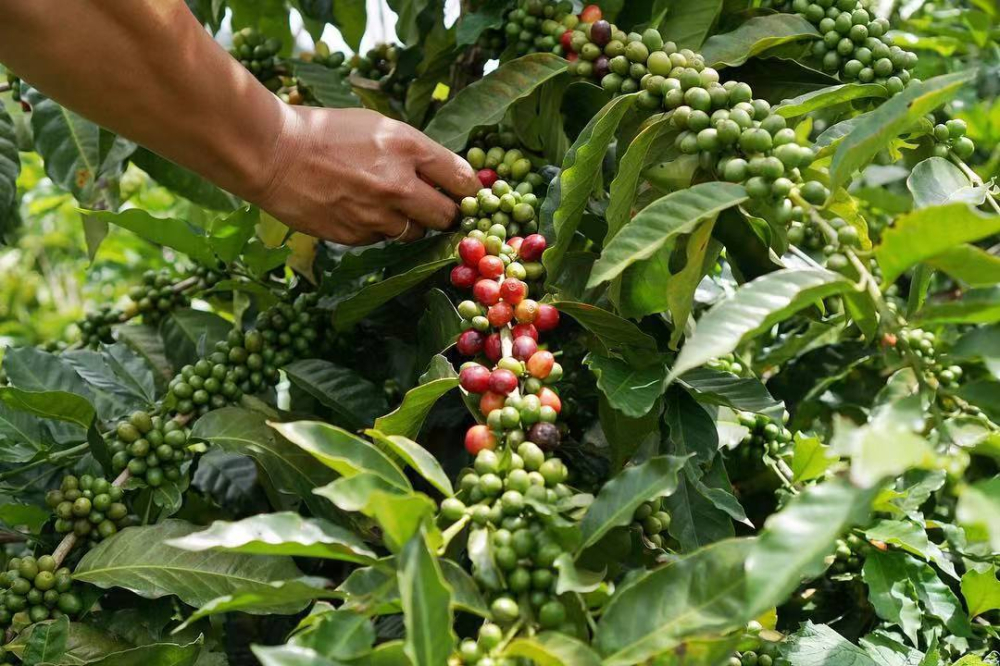
The flavor and mouthfeel of Blue Mountain coffee
Below, Front Street summarizes the brewing method for a cup of Jamaican Blue Mountain No. 1 according to the store bar's serving standard.
Front Street Blue Mountain No. 1 coffee brewing parameters:
Dose: 15 grams of coffee grounds
Coffee-to-water ratio: 1:15
Water temperature: 88℃
Grind size: 75% passing through a No. 20 standard sieve.
Dripper: KONO dripper
When brewing medium-dark roasted beans such as Blue Mountain coffee, Front Street chooses the KONO dripper to enhance body. KONO's ribs are less than half the height of the dripper. This design is intended to make the filter paper cling tightly to the dripper wall after wetting, thereby restricting airflow, extending the water absorption time of the coffee grounds, and making the overall extraction more even. Because the roast level is darker, the various substances in the coffee dissolve faster. If you use the grind size and high water temperature for light-roasted coffee, over-extraction is very likely. Therefore, when brewing Blue Mountain No. 1, Front Street lowers the water temperature and makes the grind coarser.
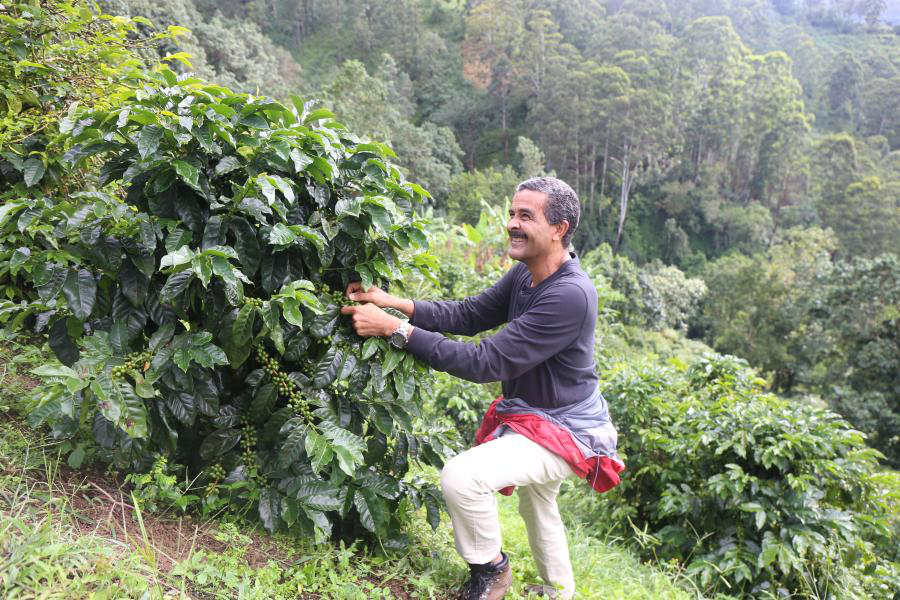
Before brewing, Front Street first confirms the freshness of the coffee beans. If the roast date is more than 30 days ago, a large amount of aroma has already dissipated, and it is difficult to extract the flavor. In Front Street's store orders, Front Street ensures that the coffee beans are freshly roasted within 5 days, so that customers receive them while they are still in the best flavor period.
Front Street first rinses the dripper, which also helps the filter paper fit tightly against the dripper wall. Then use 30 grams of water for blooming, with a bloom time of 30 seconds. In the first pour, circle with a small stream of water to 125 grams and pause. When the liquid level drops to the point where the coffee bed is about to be exposed, continue the second pour until 225 grams to finish extraction. The total extraction time (including blooming) is 2 minutes 00 seconds. Finally, swirl the coffee liquid in the server to mix it evenly, and you can gradually experience the Blue Mountain flavor from high to low temperatures.
At high temperature, Blue Mountain No. 1 enters the mouth with a dark chocolate aroma, a prominent body, and a clear almond aftertaste. As the temperature drops, the roasted hazelnut and creamy sweetness become silky, accompanied by a hint of soft acidity and caramel sweetness, and the aroma lingers in the mouth.
For professional coffee knowledge exchange and more coffee bean information, please follow Coffee Workshop (WeChat public account cafe_style)
For more specialty coffee beans, please add the private WeChat of Front Street Coffee (FrontStreet Coffee), WeChat ID: qjcoffeex
The above content is compiled by CoffeeHunters, a coffee news website.


