







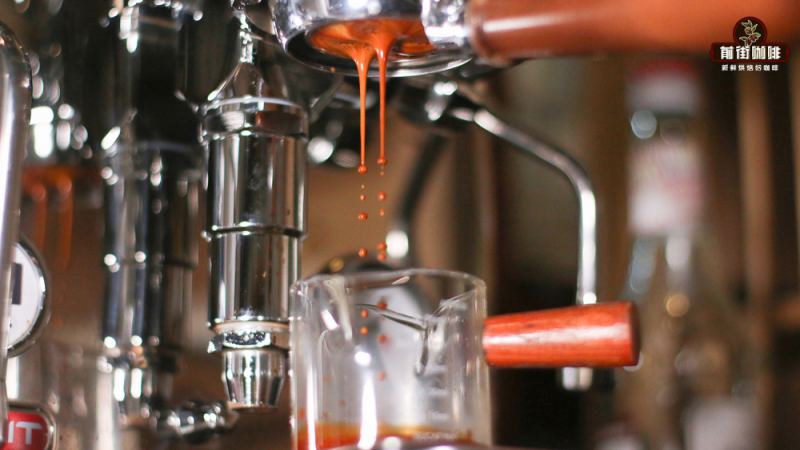
Espresso extraction is far more sensitive than pour-over, and any tiny deviation will be magnified exponentially in the flavor. This article systematically breaks down extraction parameters from six dimensions: coffee dose, brew ratio, extraction time, flow rate, pressure, and temperature, and provides quick correction ideas for grind size. At the same time, Front Street Coffee also offers practical suggestions for operational details such as weighing, distributing, tamping, and cleaning, helping you consistently reproduce a balanced espresso in your daily brewing.
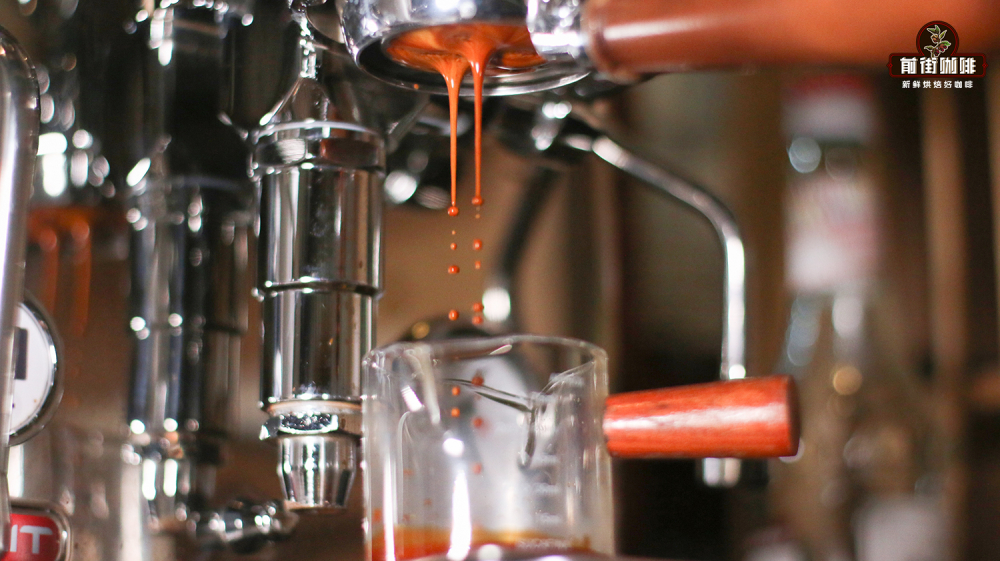
Front Street Coffee has always believed that the extraction parameters of pour-over coffee have a profound impact on the final flavor, and espresso is even more sensitive to parameters than pour-over. Espresso has much stricter requirements for concentration and extraction time than pour-over. Even a tiny fluctuation will be magnified exponentially in the flavor of the espresso. Therefore, truly understanding the extraction parameters of espresso is the prerequisite for making a good cup of coffee.
A delicious cup of coffee always starts with good beans. Below, Front Street lists several espresso beans suitable for most people:
"Front Street Specialty Blend Coffee Beans" 75 yuan/454g: composed of Colombian washed beans and Brazilian semi-washed beans, presenting flavors of nuts, dark chocolate, and caramel.
"Front Street Classic Blend Coffee Beans" 33 yuan/100g: Brazilian semi-washed beans paired with Indonesian Mandheling beans and Vietnamese beans, with rich crema and a mellow taste.
"Front Street Strawberry Candy Espresso" 43 yuan/100g: a combination of Costa Rican beans, Panamanian beans, and Ethiopian beans, with aromas of roses, strawberry candy, and glucose, bright fruity sweet-tartness, and a delightful taste.
Like pour-over coffee, espresso also emphasizes extraction parameters, and is even more demanding. Below, we analyze six aspects: coffee dose, brew ratio, extraction time, flow rate, extraction pressure, and extraction temperature.
Coffee Dose The dose is determined by the basket capacity. Coffee machine manufacturers usually provide double baskets in different specifications such as 16g, 18g, 20g, and 22g. These values are recommended capacities, and the allowable filling error should not exceed 1g. For example, the reasonable dose range for an 18g basket can be 17-19g.
Front Street does not recommend using a dose much lower or much higher than the basket capacity. The dose changes the density of the puck: under the same tamping force, too little coffee will cause the puck to be loose, the flow rate to be faster, and therefore underextraction; too much coffee will make the density too high, slow the flow rate, and even make it difficult to extract coffee liquid.
Brew Ratio Espresso uses the ratio of coffee grounds to espresso liquid, because it is impossible to calculate how much water was actually used for extraction. Of course, some new coffee machines install a flow meter at the water inlet to display the water volume. The earliest extraction standard was single-shot espresso, namely 7-8g of coffee extracted into 25-30ml of espresso liquid. The former is a unit of weight, and the latter is a unit of volume. The two are equivalent only when the density is the same, but the extracted espresso has golden crema, and the thickness of the crema depends on the roast level and freshness. Therefore, this measurement method will cause instability in the final product.
Thus the ratio of coffee grounds by weight to liquid by weight emerged, usually between 1:1.5 and 1:2.5, with 1:2 being commonly used, for example 20g of coffee extracted into 40g of liquid. The ratio is affected by two factors: dose and water amount. If the ratio is too low, the coffee tastes rich and heavy, and is prone to overextracted bitterness; if the ratio is too high, it tastes thin and bland, accompanied by the sharp acidity of underextraction.
Extraction Time Extraction time refers to the entire process from locking in the portafilter and pressing the extraction button to the end of extraction. There are two factors affecting time: grind size and ratio. The ratio is easy to understand: the higher the ratio, the more water is needed, and the longer the time naturally becomes. Grind size determines the coarseness or fineness of the coffee grounds, and the coarseness or fineness directly affects the density of the puck: the finer the coffee, the denser the puck after tamping, making it difficult for water to pass through, lengthening the time, and making overextraction easy. Generally speaking, the extraction time for one espresso is about 20-30 seconds.
Flow Rate Flow rate is the speed at which the coffee liquid flows down. The ultimate goal of all extraction parameters actually points to flow rate. Normal espresso should drip its first drop of coffee liquid about five seconds after pressing the extraction button, after which the flow rate should be relatively even. The speed of the flow rate directly reflects whether the grind size and ratio are appropriate. If it takes more than 10 seconds for the first drop to appear (excluding pre-infusion), the coffee may be too fine or tamped too hard; if the flow rate is too fast or even sprays, the coffee may be too coarse or channeling may have occurred.
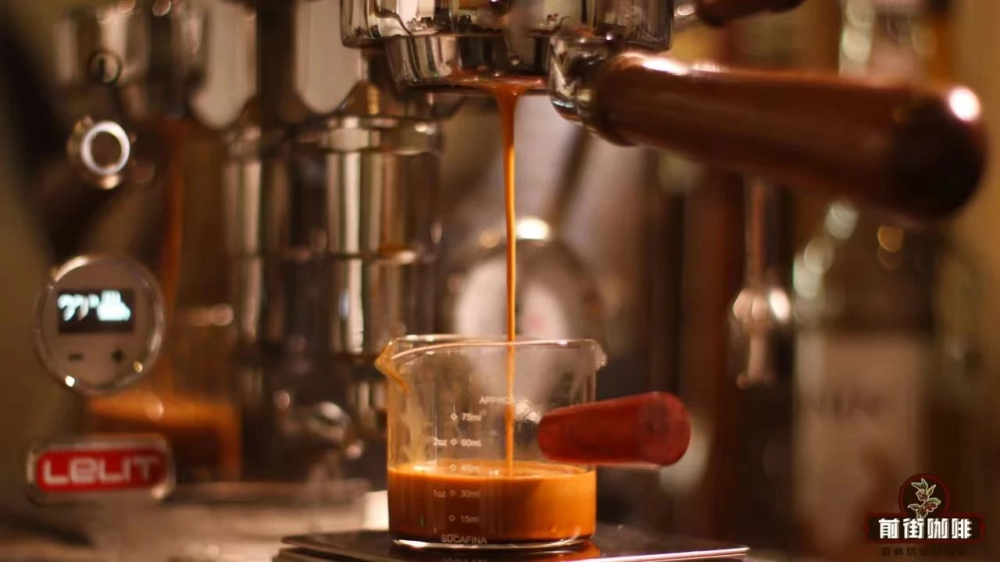
Extraction Pressure The extraction pressure of a semi-automatic coffee machine is generally around 9 bar, which is determined by the machine's performance. Today some coffee machines already have pressure-profiling extraction functions. Low pressure means low extraction efficiency; high pressure means high extraction efficiency.
Extraction Temperature The water temperature for extracting espresso is usually between 90 and 94 degrees Celsius. Too high a water temperature easily causes overextraction, with a bitter taste; too low a water temperature easily causes underextraction, with a sharp acidic taste.
So what details should be paid attention to when making espresso? The production process is roughly divided into several steps: weighing coffee, distributing grounds, tamping, machine extraction, and cleaning. Front Street has also mentioned before that distributing and tamping are crucial to a cup of espresso, while the other steps have secondary influence but still cannot be ignored.
There are two key points in weighing coffee: the influence of retained grounds and the accuracy of the dose. Carefully observe your espresso grinder. Whether it is a hopper type or direct-output type, there is a channel between the burrs and the discharge port, where coffee grounds from the previous grinding accumulate. If too much time has passed since the last grinding, the grounds in the channel have little flavor left. At this time, you should use a tool to empty the channel, or start the grinder and let subsequent coffee grounds push out the old grounds and discard them, then collect the coffee.
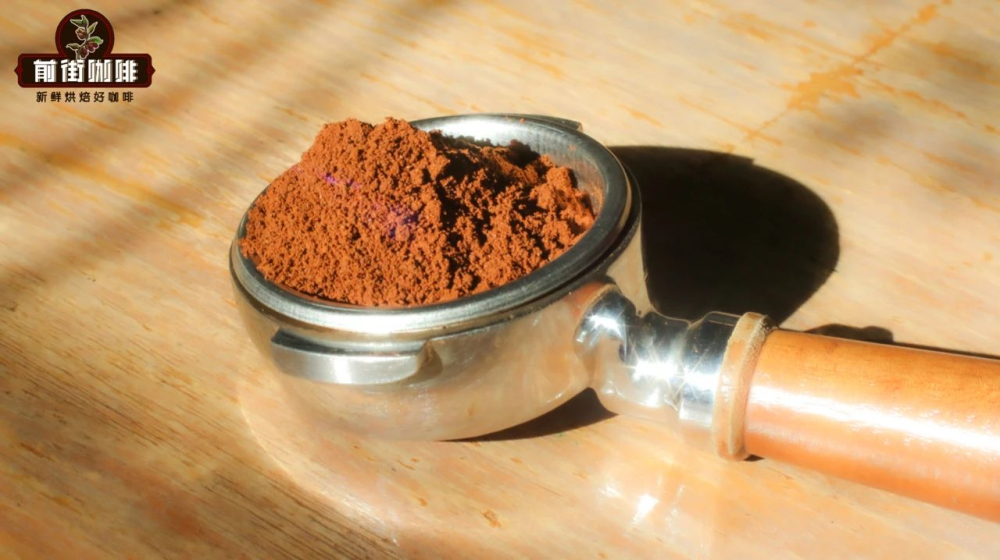
Take the Faema 900N grinder used by Front Street Coffee as an example. The coffee grounds retained in its channel weigh as much as 2 grams. If calculated based on 20 grams of coffee for a double espresso, this already accounts for one-tenth of the dose, and the impact is obvious.
The second issue is weighing accuracy. Taking the Faema 900N as an example, the version used by Front Street is non-quantitative and requires the assistance of a highly sensitive electronic scale. In order to produce accurately and consistently, coffee should be weighed every time before extraction. Front Street recommends controlling the error within plus or minus 0.1 grams.
If you are using a quantitative grinder, do not ignore this issue either. At present, most quantitative grinders use the timing principle (though there are exceptions, of course), and timing brings errors such as inconsistent rotation speed, different hopper pressure, and varying coffee bean size and density.
Inconsistent rotation speed: related to voltage. Domestic voltage fluctuates between 220V plus or minus 10V. When the voltage is high, the rotation speed is fast; when the voltage is low, the rotation speed is slow.
Different hopper pressure: the amount of coffee beans stored is different each time you grind, so the hopper pressure is also inconsistent. Unstable pressure will affect differences in the output dose.
Varying coffee bean size and density: there are differences in size and hardness among the varieties in a blend, and the proportion of varieties is different each time you grind, which can also lead to differences in dose.
Extraction should be orderly. From grinding beans, collecting grounds, distributing grounds, and tamping, to locking in the portafilter and pressing the extraction button, in theory this set of actions should be completed continuously and should not be interrupted. Therefore, before grinding, think clearly about what you are going to do next and what is not ready yet. If you are still unfamiliar with the operation, you can practice it many times, as practice makes perfect.
Develop a good habit of cleaning. First, a clean environment makes people comfortable; second, cleaning key parts will affect the quality of the next cup of coffee, such as the retained grounds in the grinder hopper mentioned earlier, as well as retained grounds on the distribution tool and tamper. At the same time, ensure that the distribution tool, tamper, basket, and other utensils that directly contact coffee grounds are dry, with no residual moisture, and rinse and clean them after each use.
After extracting an espresso, remember to clean the portafilter and group head at once (no matter how busy you are). These seemingly unimportant retained grounds will affect the quality of the next espresso.
For more specialty coffee knowledge, please follow: Front Street Coffee (Frontsteet Coffee)
The above content is compiled by CoffeeHunters, a coffee news website.


