







What Is Kona Coffee and How Does Blue Mountain No. 1 Compare?
Jamaican Blue Mountain No. 1 is a certified, high-grade coffee from Jamaica, and its washed and natural versions from Clifton Farm can be tasted side by side. The estate is the oldest in Jamaica's coffee history and holds Rainforest Alliance certification, the frog-marked standard that also covers other certified Washed coffees such as Kona and Geisha.
Blue Mountain beans are costly because strict grading keeps the output rate low. Roughly 15% of global Blue Mountain coffee is consumed in the Chinese market, while most No. 1 lots go to Japan, the United States, and Europe, with Japan alone holding about 90% of the share. Japan gained priority purchasing rights through past support for Jamaica's coffee industry.
Blue Mountain Coffee, as Jamaica's most renowned coffee representative, occupies a unique position in the global specialty coffee scene with its balanced and elegant flavor. The two Clifton Farm Blue Mountain coffees offered by Front Street Coffee—washed and natural—provide coffee enthusiasts with an opportunity for comparative tasting. This article will start with Blue Mountain Coffee's regional certification standards, grade classification system, and green bean identification methods, then provide a detailed analysis of the specific flavor impacts of washed versus natural processing, along with Front Street's brewing parameters and staged extraction technique, helping readers fully understand the characteristics and charm of authentic Jamaican Blue Mountain No. 1 coffee.
For more specialty coffee knowledge, please follow the WeChat public account: Front Street Coffee (FrontStreet Coffee)
After the third wave of specialty coffee swept across the globe, people's understanding of coffee varieties has continued to expand. Names like Panama Geisha and Hawaiian Kona have gradually become familiar, and among them, the most renowned is undoubtedly Jamaican Blue Mountain Coffee. Front Street currently offers two Jamaican Blue Mountain coffees: washed and natural.
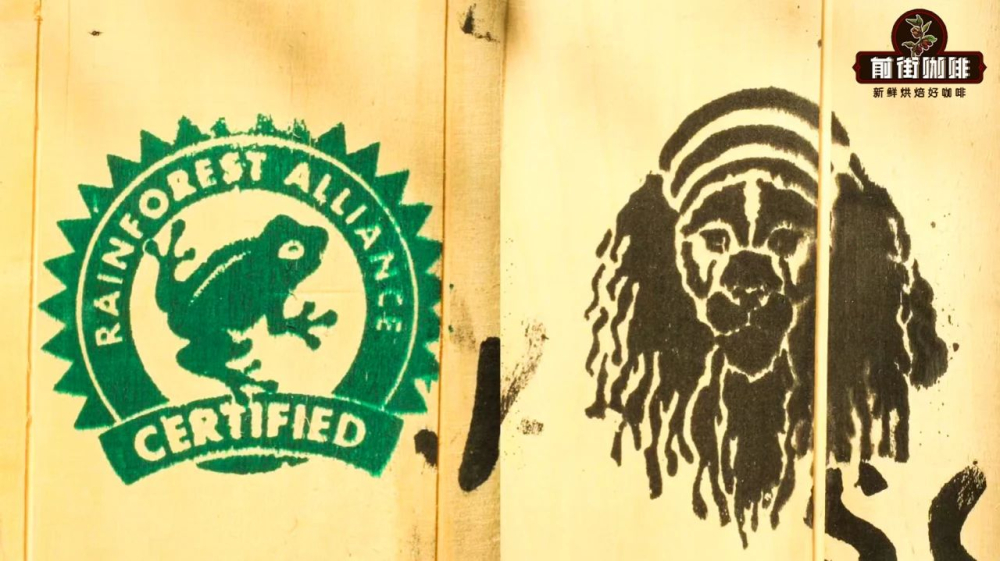
Both of these Blue Mountain coffees come from Clifton Farm. This farm is the oldest estate in Jamaica's coffee-growing history and is also the only coffee estate certified with the "Rainforest Water Frog" mark. Front Street has learned that the Rainforest Alliance certification logo features a prominent frog image, so certified coffees of this type are also vividly called "Frog Beans."
Authentic Jamaican Blue Mountain coffee beans are expensive, and the fundamental reason lies in the extremely low output rate caused by Blue Mountain Coffee's strict standards. According to Front Street's understanding, Blue Mountain Coffee consumed in the Chinese market accounts for about 15% of the global total, while the precious Blue Mountain No. 1 is mostly allocated to Japan, the United States, and Europe, with Japan alone occupying 90% of the share. This stems from Japan's past substantial support for Jamaica's coffee industry, which earned it priority purchasing rights for Blue Mountain Coffee; moreover, Blue Mountain Coffee's flavor happens to match Japanese taste preferences and is widely sought after there, so the already limited supply of Blue Mountain coffee beans flowing to other countries is even scarcer. Some of the authentic Blue Mountain No. 1 sold in the Chinese market is mainly exported to China through directly operated branches in Japan, Australia, and Europe. For this reason, Blue Mountain coffee beans have always maintained a very high-end positioning in China.
The reason Jamaican Blue Mountain Coffee has such an outstanding taste is not only due to terrain, climate, and environmental factors, but also closely related to Jamaica planting only high-quality Typica varieties. Typica is one of the oldest coffee varieties in the world, with a pure and delicate flavor, but its weak disease resistance leads to low yields, which is also one of the reasons Blue Mountain Coffee prices remain high.
The Jamaica Coffee Board has established strict standards to ensure the quality of Blue Mountain Coffee, with clear regulations on production regions, cultivation techniques, harvesting methods, roasting methods, and more. For example, it has designated four authentic coffee production regions for Blue Mountain, allows only 100% Arabica Typica coffee to be planted, and its harvesting standards are much stricter than those of most countries. The CIB regularly provides cultivation technique training to coffee farmers, guides correct coffee fruit harvesting methods, and on this basis improves coffee processing techniques.
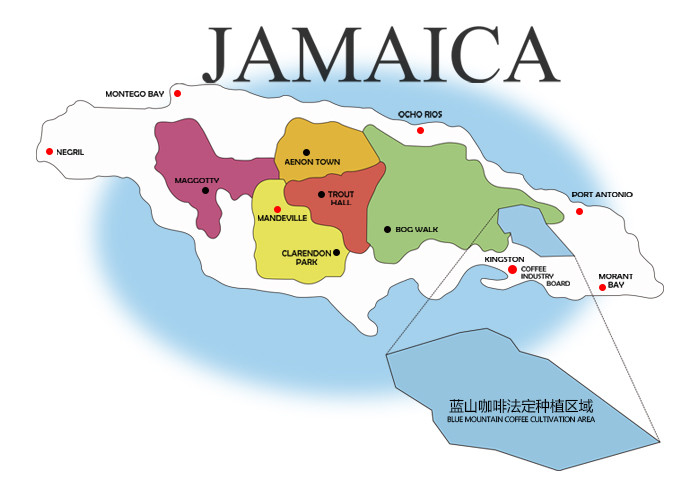
Strictly speaking, only coffee produced according to CIB standards and centrally purchased and processed by the four legally designated estates certified by the Jamaica Coffee Industry Board (CIB) can be called Blue Mountain Coffee. Jamaica's certified authentic coffee production areas are located in four eastern administrative districts: Saint Andrew, Saint Thomas, Saint Mary, and Portland. These four districts happen to fall within the Blue Mountain region. What Front Street usually calls authentic Blue Mountain refers to coffee grown in this area at an altitude of 1,000 to 1,700 meters. Coffee grown within the four administrative districts but at only 500 to 1,000 meters is downgraded to Jamaica High Mountain Coffee. Coffee below 500 meters belongs to the lower grade Jamaica Prime Coffee. Coffee grown outside this region cannot be called Blue Mountain Coffee. This shows that the Jamaican government's certification management of Blue Mountain Coffee is extremely strict.
Specifically, coffee from Jamaica's Blue Mountain region is divided into three grades: Blue Mountain Coffee, High Mountain Coffee, and Jamaica Coffee. According to Front Street's understanding, Blue Mountain Coffee and High Mountain Coffee are each further divided into two grades. Arranged from highest to lowest quality, they are: Blue Mountain No. 1, Blue Mountain No. 2, High Mountain No. 1, High Mountain No. 2, and Jamaica Coffee.
By quality from high to low, they are divided into: NO.1, NO.2, NO.3, and PB, where PB means Peaberry. According to CIB standards, the defect rate must be below 3%, and moisture content should be maintained at around 13%. The basic standard for NO.1 Blue Mountain green beans is beans of 17 screen size or above, NO.2 is 16 or above, NO.3 is 15 or above, and PB is about 14 or above. Jamaica High Mountain Coffee is similar in grade to Blue Mountain Coffee but has no Peaberry PB grade; Jamaica Coffee only has the prime grade, with screen sizes between 15 and 17.
Therefore, Front Street recommends that when purchasing Jamaican Blue Mountain Coffee, be sure to confirm the correct Blue Mountain Coffee information. In addition to checking the certification certificate issued by the Jamaica Coffee Board, you can also identify it from the coffee beans themselves. Below is the Jamaican coffee bean identification method summarized by Front Street:
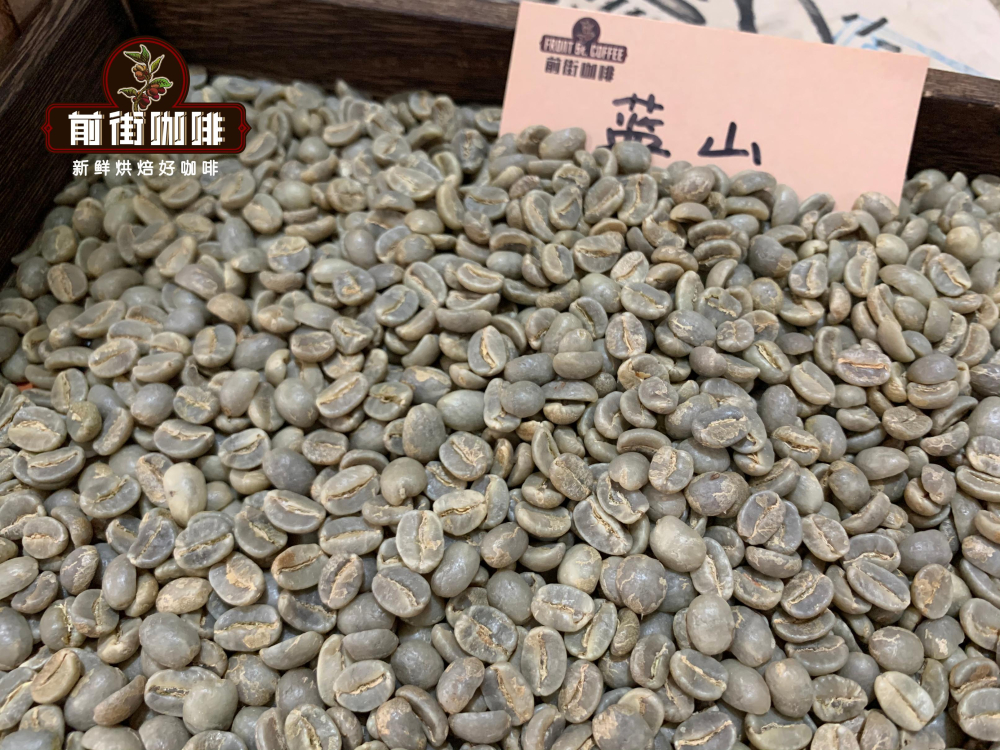
1. Appearance: Washed Blue Mountain Coffee green beans are bluish-green, neat in appearance, medium to large in size, and expand to a full size after roasting. Natural Blue Mountain Coffee green beans are yellow-green.
2. Aroma and taste: The aroma is very intense, which any inauthentic Blue Mountain coffee bean lacks. Authentic Blue Mountain Coffee has a balanced, rich taste, with sourness, sweetness, and bitterness in excellent balance.
3. Packaging: Jamaican coffee green beans are packed in wooden barrels. The barrels bear the tropical rainforest frog logo and come with a certificate issued by the Jamaica Coffee Board.
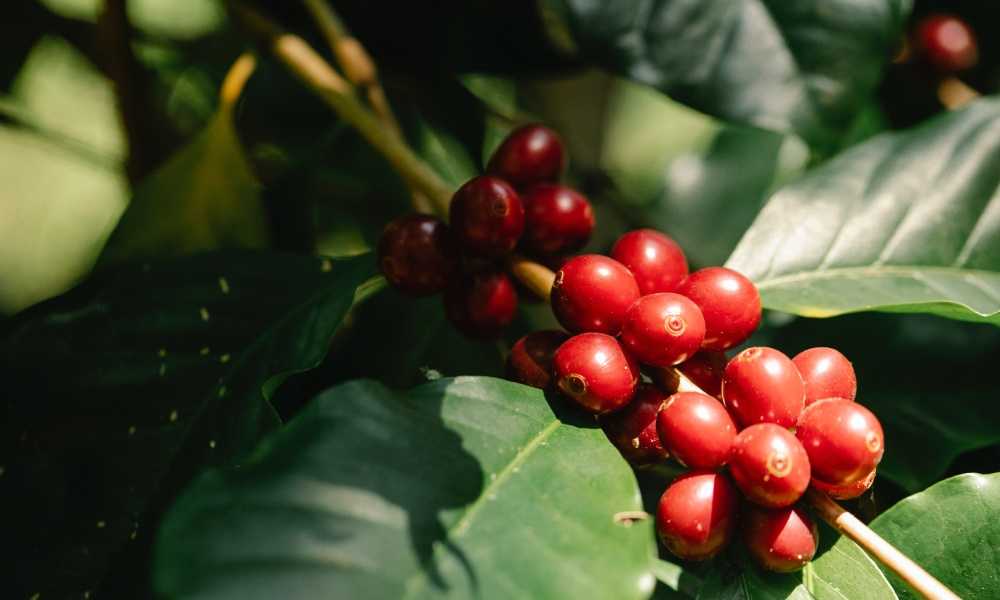
The authentic Jamaican Blue Mountain Coffee offered by Front Street is grown in the Blue Mountains, located in eastern Jamaica. Surrounded by the Caribbean Sea, whenever the weather is clear, sunlight shines directly on the blue sea, and the mountain peaks reflect the sea's brilliant blue glow, hence the name Blue Mountain. Front Street believes that perhaps it is precisely because the Blue Mountains are located in the coffee-growing belt, with fertile volcanic soil, fresh air, an unpolluted environment, and a humid, foggy, and rainy climate, that Jamaican Blue Mountain Coffee combines the characteristics of all good coffees. Jamaican Blue Mountain Coffee does not have the intense fruity flavor and fresh acidity of Front Street's Sidamo Huakui, but its taste is rich and mellow, with sweetness, acidity, and bitterness perfectly balanced.
If you are tasting Front Street's two Blue Mountain coffees for the first time, Front Street would suggest starting with the washed Blue Mountain Coffee. Clifton Farm's Blue Mountain Coffee has always used the washed method to process green beans. Harvesting is entirely manual, picking only fully red and ripe coffee cherries, with subsequent processing completed the same day. During processing, the skin and pulp are first removed, then the beans are fermented for 12 to 18 hours. After fermentation, the beans are moved back and forth in a pool, using friction between the beans and the force of flowing water to wash the coffee beans until they are smooth and clean. After washing, the coffee beans are still wrapped in mucilage, with a moisture content of 50%, and must be dried to reduce moisture content to 12% to 14%; otherwise, the coffee beans will continue to ferment and become moldy and spoiled, causing flavor problems. After processing, the coffee beans are sorted and then stored in dedicated warehouses.
The reason Front Street prioritizes recommending washed Blue Mountain coffee beans is that the washed method ensures Blue Mountain Coffee's rich aroma and balanced taste, and also represents the region's most basic flavor characteristics. Taking Front Street's Jamaican Washed Blue Mountain Coffee as an example, it has a very rich dark chocolate and nutty flavor on the palate, extremely high cleanliness, and prominent sweetness, acidity, bitterness, and body. Natural processing, on the other hand, adds sweetness and aroma on top of the washed base. This natural Blue Mountain coffee bean offered by Front Street tastes sweeter than the washed Blue Mountain, with a brown sugar-like mouthfeel, berry-like acidity, a creamy texture, rich and distinct layers, and a walnut aroma in the finish.
Generally speaking, Jamaican Blue Mountain Coffee uses washed processing, but Clifton Farm broke the established pattern and applied natural processing to Blue Mountain Coffee for the first time, thus bringing a naturally processed Blue Mountain Coffee to the market.
Jamaica's natural processing involves directly drying the coffee cherries, then removing the pulp and other parts after the moisture content drops to around 11%. Compared with washed processing, which removes the skin, pulp, and mucilage before drying, Jamaica's natural processing requires a longer drying time, and the lengthy drying process means the coffee beans face greater risks. On the one hand, more labor must be invested in care, turning the coffee cherries at intervals to prevent mold; on the other hand, natural processing is closely tied to weather conditions. The natural method is more suitable for hot, low-rainfall areas, while Blue Mountain's climate is exactly the opposite, with fog and rain year-round. For Clifton Farm, natural processing is an extremely difficult method.
Front Street believes that Clifton Farm took on this challenge mainly because competition in the coffee market is becoming increasingly fierce. The emergence of the Geisha variety and the unique fruity aroma of Yirgacheffe have dealt Blue Mountain Coffee a considerable blow. Therefore, Clifton Farm chose to innovate and launched a naturally processed Blue Mountain Coffee.
Driven by the market, Front Street also launched a naturally processed Blue Mountain Coffee, aiming to let everyone taste the diverse flavors of authentic Blue Mountain Coffee. When the Blue Mountain Coffee first arrived at Front Street's shop, the original packaging used wooden barrels to hold the green coffee beans. Authentic Blue Mountain Coffee is packed in wooden barrels for green beans, which is also what makes Blue Mountain Coffee unique compared with other coffees—Blue Mountain Coffee is currently the only coffee among all coffees that uses wooden barrel packaging for green beans. The wooden barrels can isolate the coffee aroma and ensure coffee quality. The above is an introduction to Front Street's authentic Jamaican Blue Mountain Coffee. Friends who like Blue Mountain Coffee are welcome to taste it at the Front Street Coffee (FrontStreet Coffee) shop.
Front Street brewing parameters
15 grams of coffee grounds
Dripper: KONO
Coffee-to-water ratio: 1:15
Grind size: medium-coarse grind (75% passing through a No. 20 sieve)
Water temperature: 87°C
Brewing method
Staged extraction: bloom with 30 grams of water for 30 seconds, then pour with a small stream at the center to 125 grams for the first stage. When the water level is about to expose the coffee bed, continue pouring to 225 grams and stop. When the water level is about to expose the coffee bed again, remove the dripper. The extraction time is 2 minutes.
The above content is compiled by CoffeeHunters, a coffee news website.


