








How Do Roast Curves Shape Yellow Bourbon Coffee?
Roast profile decides the direction of a coffee's flavor, and the same bean can taste completely different at different roast levels. Brazilian coffee generally shows low acidity, a heavy body and nutty-chocolate notes, so it suits medium roasting and often serves as a base for espresso blends. Queen Farm's yellow bourbon in the Mogiana region is the sample used to trace this logic.
Brazil is the largest coffee-producing country, with roughly 3.97 billion coffee trees, and small farms account for about 75 percent of national output. Its lower altitudes and improved Arabica tree types, planted in open sun rather than shade, produce softer acidity and prominent nutty sweetness. For home brewers, a moka pot takes only a few minutes, but roast level, not brew time, drives the cup.
The roast profile is the key factor determining the direction of coffee flavor, and the same bean can present completely different personalities under different roast levels. As the world's largest coffee-producing country, Brazil is known for its coffee with low acidity, heavy body, and nutty-chocolate notes. This article takes the yellow bourbon from Queen Farm in Brazil's Mogiana region as a sample, and presents a complete picture of the roasting logic and flavor expression of Brazilian coffee, from the region's background, variety characteristics, and fine sun-dried processing to Front Street Coffee's roast analysis and brewing parameters. Whether you are a beginner just getting into pour-over or someone who wants to understand more deeply how roast level affects the cup, this article can provide practical reference.
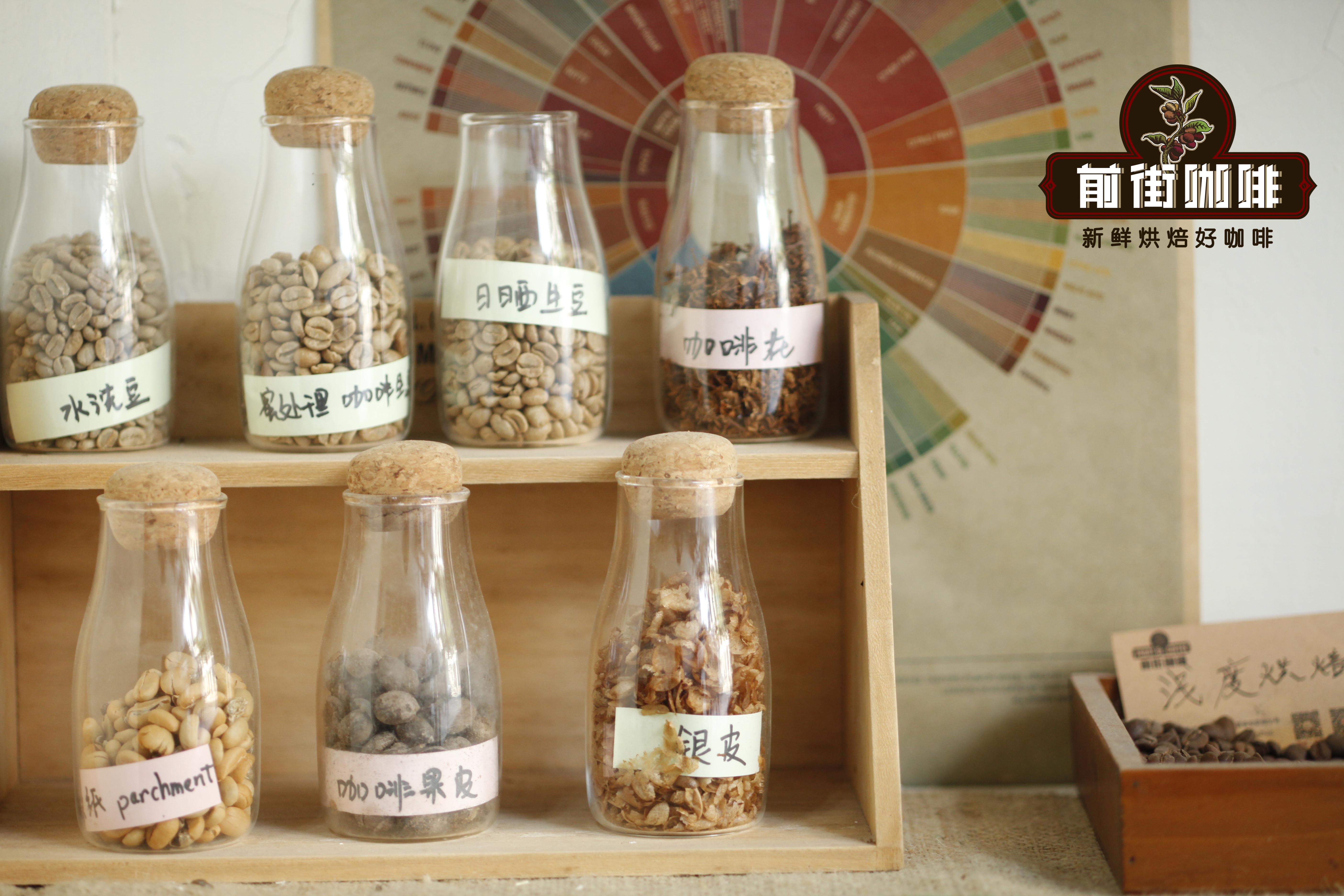
To get more knowledge about specialty coffee, you can follow the WeChat public account: Front Street Coffee (FrontStreet Coffee).
The typical characteristics of Brazilian coffee are relatively low acidity, rich oily mouthfeel, and solid body. It is very suitable for medium roasting and is also often used as a base bean for espresso blends. Brazil has long been known in the coffee world as a "giant" and a "monarch," because it is the country with the largest coffee production in the world. According to statistics, there are about 3.97 billion coffee trees planted in Brazil, and coffee produced by small farms already accounts for 75% of the country's total production. In addition, the population engaged in coffee cultivation in Brazil is two to three times that of Colombia.
Most of Brazil's coffee-growing regions are distributed in areas with gentle terrain. To adapt to these topographical conditions, local estate operators developed improved Arabica tree types decades ago. These trees do not require high-altitude environments or shade trees, and can be planted directly on plains or grasslands, receiving direct sunlight. This is clearly different from the traditional high-altitude shade cultivation method.
Brazil's overall altitude is relatively low among the countries of Central and South America, and it lacks microclimate conditions. Under the combined effect of these factors, Brazilian coffee beans have lower but sufficiently soft acidity, prominent nutty flavors, chocolate sweetness, and excellent body. However, some coffee lovers may feel that the acidity of Brazilian beans is too flat and lacks a wow factor. But Front Street believes there is one Brazilian bean that is quite outstanding, namely the yellow bourbon from Queen Farm in the Mogiana region. Front Street Brazil Queen Farm coffee has a rich nutty aroma and a balanced taste, suitable for a variety of extraction methods. It can be used to make moka pot coffee, Americano, siphon coffee, drip bag coffee, etc. Everyone can buy it at the Front Street Tmall flagship store.
Front Street Coffee (FrontStreet Coffee): Brazil Queen Farm Yellow Bourbon Coffee Beans Region: Mogiana Region Farm: Queen Farm Fazenda Rainha Altitude: 1400–1950m Variety: Yellow Bourbon Processing Method: Natural Process
Introduction to Queen Farm Queen Farm (Fazenda Rainha) (Queen Farm) is located in the Alta Mogiana region of São Paulo state (Sao Paulo), north of São Paulo city. This farm is very well known in Brazil and is owned by the Carvalho Dias family. The Carvalho Dias family owns four major farms. Since the first Brazil COE competition in 1999, they have won awards every year, with more than 12 awards over 7 years. In 2004, they even took first place, 9th place, and 11th place.
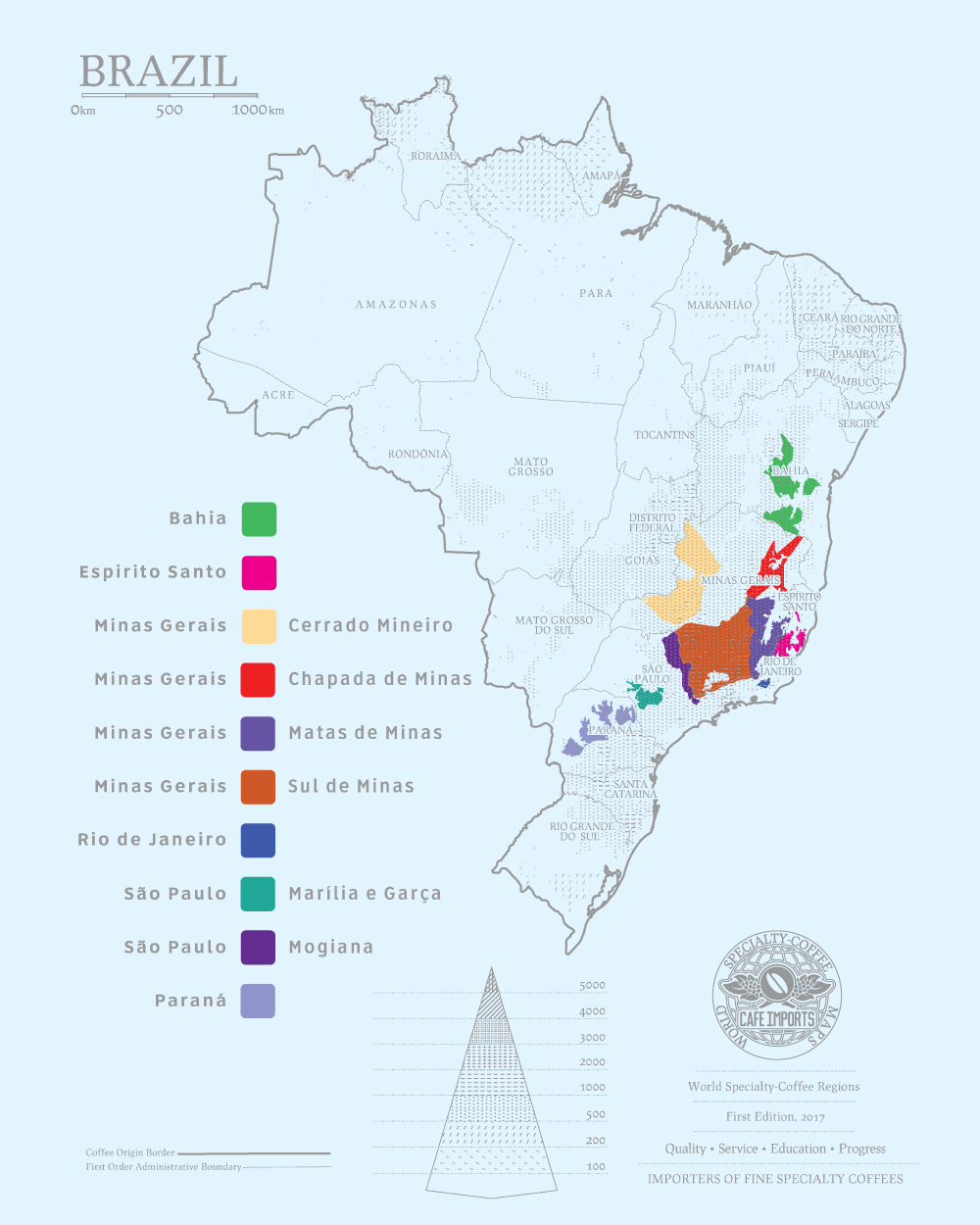
There are countless farms of all sizes in Brazil, and many farms have hoped for years to be shortlisted for the COE and win awards, but it is extremely difficult. Yet the four farms under the Carvalho Dias family have repeatedly taken home awards. Queen Farm (Fazenda Rainha)'s results are especially impressive: it won second place in 2000, third place in 2001, and ranked 29th in 2005. Up to now, Queen Farm has won awards three times. The yellow bourbon variety itself has high sugar content and good cleanliness. When processed by the natural method (or semi-natural), its acidity decreases slightly, but it combines very harmoniously with sweetness and carries tropical fruit aromas.
Queen Farm is a member of a medium-sized farm organization in the local Grama Valley, mainly exporting specialty coffee of the bourbon variety. The organization's office is located nearby in Pocos de Caldas, and they also have a national-level cupping laboratory, paired with a large warehouse. The organization also cooperates with local universities and other institutions on research, including Lavras University—the famous Dr. Flavio Borem comes from that university's agricultural research center.
Yellow bourbon is a bourbon variety grown in Brazil. Due to the influence of a recessive gene, its fruit turns yellow. Yellow bourbon coffee beans are naturally sweet and clean. Using the natural method will make its acidity slightly lower, but it still pairs well with sweetness, has good balance, and offers tropical fruit aromas. Of Queen Farm's 280 mu, 200 mu are entirely planted with yellow bourbon.
Estate Fine Natural Processing The most important reason Brazil uses semi-natural processing instead of traditional natural processing is that traditional natural processing cannot guarantee the quality of large batches of coffee beans. Queen Farm, however, uses small-scale fine natural processing, using African-style raised beds for natural processing, and during the natural process there are dedicated workers to turn the beans and check their moisture content. This improves the quality of the coffee beans.
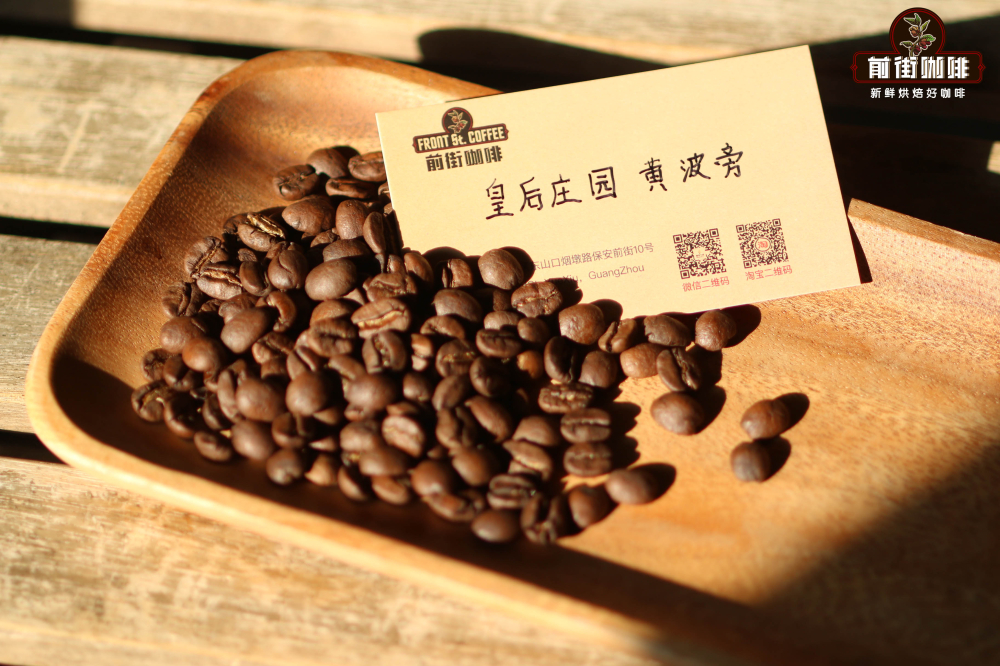
Front Street Coffee (FrontStreet Coffee) Roast Analysis When Front Street Coffee (FrontStreet Coffee) received this yellow bourbon coffee from Brazil Queen Farm, it roasted four batches in total and finally decided to discharge the beans when development reached two minutes after first crack. At this roast level, Brazil Queen has an obvious sweetness, but it is not a boring sweetness. In the background there is a faint lemon aroma, and this aroma is more prominent in the wet aroma stage. In the finish there is an obvious dark chocolate flavor. The overall impression is fairly round. While expressing Brazil's overall characteristics, it also retains a lively quality.
Front Street Coffee (FrontStreet Coffee) Brewing Recommendation Dose: 15 g Coffee-to-water ratio: 1:15 Grind size: medium-fine grind (BG#6S) Water temperature: 90°C Dripper: Hario V60
Brewing Method Pulse Pouring Extraction Use 30 g of water for a 30-second bloom. Pour in a slow circular stream until the water reaches 125 g, then pause. When the water level is about to expose the coffee bed, continue pouring until 225 g and stop. When the water level is about to expose the coffee bed again, remove the dripper. (Start timing at the beginning of the bloom.) The extraction time is 2'00".
Flavor Description Front Street Queen Farm coffee has an obviously sweet taste, with a faint lemon aroma, a rich nutty flavor, and an obvious dark chocolate note in the finish. The overall impression is fairly round. It is a coffee bean that can represent the overall characteristics of Brazilian coffee while also showing its own unique liveliness.
The above content is compiled by CoffeeHunters, a coffee news website.


