







Why Does the SL28 Coffee Variety Still Matter Today?
SL28 is one of Africa's notable coffee varieties, selected in Kenya in the 1930s and later spread to Uganda and other Arabica-growing areas, and now also planted in Latin America. It suits medium to high altitudes and tolerates drought well, though it is prone to coffee diseases. Its cup is elegant, often with floral notes, and Front Street's Little Tomato beans combine SL28 with SL34.
The variety's history runs from the former Scott Agricultural Laboratories to drought-resistant plants found in Tanzania and genetic testing that linked it to the Bourbon genome. Front Street's Kenyan Little Tomato comes from the Asali honey processing station at 1,550 to 1,750 meters, given a 72-hour wash, with notes of Sydney pear, smoked plum, yellow sugar and cherry tomato.
SL28 is one of Africa's most legendary coffee varieties. Since being selected in Kenya in the 1930s, it gradually spread to other African Arabica-producing regions such as Uganda, and today it has reached even further into Latin America. It is suited to cultivation at medium to high altitudes and has strong drought tolerance, yet is susceptible to coffee diseases. Its cup profile is elegant, often with floral notes. Front Street's Little Tomato coffee beans are precisely a combination of SL28 and SL34. This article traces the breeding history of SL28, from the establishment of the Scott Agricultural Laboratories to the discovery of drought-resistant plants in Tanzania, and then to genetic testing that confirmed its kinship with the Bourbon genome. It also presents the specific producing region, altitude, processing method and flavor description of Front Street's Kenyan Little Tomato, giving you a comprehensive understanding of this ancient and resilient variety.
SL28 occupies an extremely prominent position among African coffee varieties and is also one of the most highly regarded. After being bred in Kenya in the 1930s, it gradually spread to other parts of Africa, playing an especially important role in Uganda's Arabica-growing areas, and today it has crossed the oceans to take root in Latin America. This variety is suitable for growing at medium to high elevations. It shows strong tolerance under drought conditions, but is prone to attack by coffee diseases. Even so, its flavor performance is quite elegant, with floral notes often emerging. Front Street's Little Tomato coffee beans are precisely made from a combination of SL28 and SL34.
SL28 is known for its toughness and endurance—its quality is so excellent that it can go unused for years or even decades, and when production is later resumed it can still achieve success. Many old SL28 trees are scattered across Kenya, aged 60 to 80 years, and they are still bearing coffee fruit normally today.
Front Street Kenyan Little Tomato Coffee Beans
Country: Kenya Region: Asali (Honey Processing Station) Altitude: 1550-1750m Variety: SL28, SL34 Processing Method: 72-hour washed processing Flavor: Sydney pear, smoked plum, yellow sugar, cherry tomato, plum
Front Street Coffee has learned that the breeding of SL28 is closely related to the former Scott Agricultural Laboratories (now the National Agricultural Laboratories located in Kabete, namely NARL). Between 1935 and 1939, the Scott Laboratories carried out single-tree selection work, with all the codes beginning with SL. Researchers took samples from 42 trees of different origins and systematically evaluated their yield, quality, and drought and disease resistance. SL28 was selected in 1935 from a tree in a drought-resistant plant population named Tanganyika.
In 1931, AD Trench, then Senior Coffee Officer at the Scott Laboratories, traveled to Tanganyika (present-day Tanzania) for an inspection. According to historical records, in the Moduli area he discovered a variety that appeared to resist both drought and pests and diseases. Seeds were collected and brought back to the Scott Laboratories, where drought resistance was verified. The variety was once widely planted, and only later was it replaced by its descendant SL28. In recent years, genetic testing has confirmed that SL28 is related to the Bourbon genome.
The History of the Scott Agricultural Laboratories
The Scott Agricultural Laboratories (now called the National Agricultural Laboratories, or NARL for short) were established in Kenya in 1922 by the British colonial government to conduct agricultural research on behalf of the Ministry of Agriculture, while also providing technical advice and training to local farmers. The laboratories hired entomologists, mycologists and plant breeding specialists. The coffee department was originally located in the department's central office, moved to the laboratories in 1934, and set aside 24 acres of land specifically for coffee research. The name of the unit comes from the history of the buildings themselves.
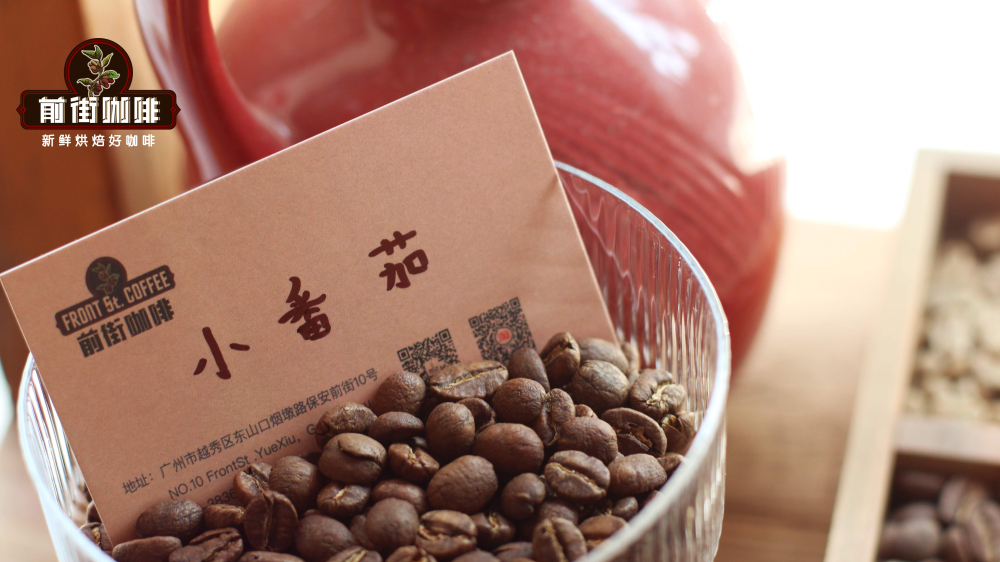
These buildings were constructed in 1913 and were originally used as a sanatorium. During World War I they were once requisitioned as a field hospital. The buildings were named after Dr. Henry Scott, a missionary from the Scottish Church. After the Ministry of Agriculture took them over in 1922, they were called the Scott Agricultural Laboratories. Kenya's Scott Agricultural Laboratories and the Lyamungo Research Station in Tanganyika later both developed into major coffee breeding centers in East Africa.
Research work was carried out in the laboratories and also in cooperation with private estate owners. The laboratories' historical records state: "The trial planting of introduced varieties was a notable feature of the laboratories' work... researchers would select from individual plants showing the desired traits." Other coffee-related work included comparative yield trials, grafting trials, evaluation of pruning effects, shade trials and cover crop research. In 1944, Kenya decided to transfer coffee research to a dedicated coffee research station in order to provide better facilities for field trials. Jacaranda Estates (located 20 miles north of Ruiru), covering 380 acres, was officially put into operation in 1949. Thereafter, substations were also established in Upper Kiambu in 1957, Meru in 1958, Kitale in 1938, Lake Victoria in 1959 and Kisii in 1957.
The above content is compiled by CoffeeHunters, a coffee news website.


