








How Do Growing Conditions for Coffee Shape Volcan Flavor?
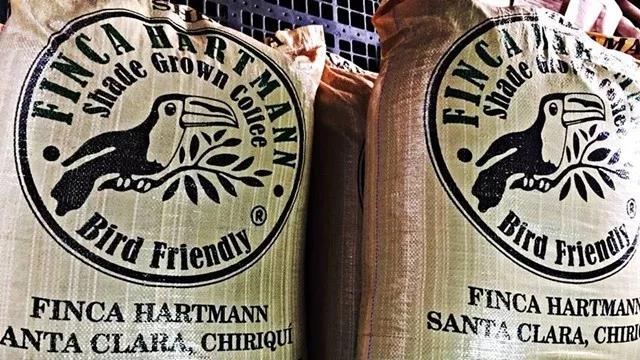
The Volcan region of Panama gives Hartmann Estate coffee its dried fruit sweetness and aroma, and those flavors start with growing conditions for coffee. Altitudes of 1,250 to 1,700 meters, rainfall lower than Boquete, and nutrient-rich soil around Baru Volcano let Catuai trees ripen slowly. Hartmann, a century-old family estate, shade-grows its trees and runs bird-friendly practices on land that includes Finca La Mula.
Front Street Coffee's Panama Hartmann Estate Red Wine Process coffee carries the SHG grade and a red wine fermentation step that layers tropical fruit onto the cup. Roasted light-medium, it shows how variety, terroir, and processing meet: the Catuai plant, the western-side microclimate, and the estate's long history of managing well-known Panamanian farms all feed into the final profile.
The Volcán region of Panama has risen to fame in the specialty coffee world in recent years, and Hacienda Hartmann was the pioneer who first broke ground in this land. As a family estate passed down for a century, Hartmann is not only known for shade-grown cultivation and bird-friendly practices, but also carries the responsibility of managing well-known estates such as Finca La Mula. This article focuses on Front Street Coffee's Panama Hartmann Estate Red Wine Process coffee, providing a complete analysis from the microclimate of the Volcán region, the legendary history of the Hartmann family, the fermentation principles of the red wine process, to the green bean characteristics of the Catuai variety, the light-medium roast profile design, and cupping and brewing performance, fully unraveling this unique coffee that combines red wine fermentation notes with tropical fruit flavors.
Panama Hartmann Black Winey
Front Street Coffee Panama Hartmann Estate Red Wine Process
Country: Panama
Grade: SHG
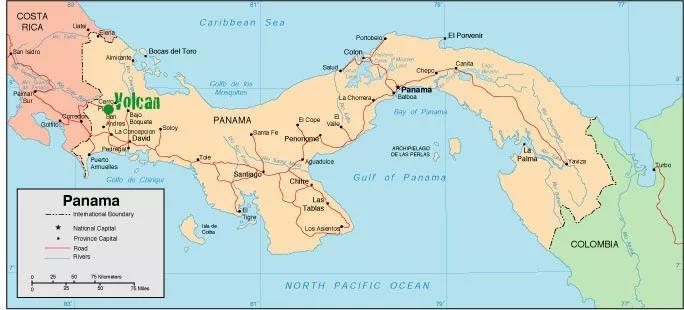
Region: Volcán
Altitude: 1250-1700 Meters
Process: Red Wine Process
Variety: Catuai
Estate: Hartmann Estate
01 | Region Introduction
The outstanding quality of Panama coffee is inseparable from its unique microclimate. The country borders Costa Rica and Colombia, and its east-west geographic layout allows cold air to flow along the Central Mountain Range, converging at elevations above 6,500 feet, thus forming a distinctive microclimate in the areas of Boquete and Volcán Candela, making the region a core producing area for Panama coffee. The surrounding soil is rich in nutrients, providing ideal growing conditions for coffee and giving rise to a large number of high-quality coffees with distinctive character.
Volcán Region
When it comes to Panama's coffee tradition, most people first think of the specialty region of Boquete, but in recent years, coffee from the Volcán region has gradually claimed a place in the specialty market, with many estates even placing in or winning the Best of Panama competition. Overall, Volcán's average annual rainfall is lower than Boquete's, and together with its geographic position on the western side of Barú Volcano, the coffee produced here has more pronounced dried fruit flavors, sweetness, and aroma than that of the Boquete region.
In the early days, the Volcán area mainly grew fruits, vegetables, and other cash crops, with very few farmers engaged in coffee cultivation. The first to open up coffee cultivation in this region was the well-known Hartmann family of Panama.
Hartmann Estate
As far as is currently known, two books have been published on the themes of bird-friendly practices and shade-grown cultivation at Hartmann Estate, and more than ten papers have been published in scientific journals, showing that its reputation extends beyond the coffee world—its commitment to environmental protection is equally well known in the scientific community.
Today, the estate continues to be run by the third generation of the family. Mr. Ratibor Hartmann and his four siblings each take on different responsibilities on the estate, living together on the estate and making coffee cultivation their livelihood.
The Legendary History of Hartmann Estate
The Hartmann story is as legendary as its coffee. Hartmann Estate is located in the city of Chiriquí, Santa Clara province. The founder was Mr. Alois St. Hartmann (Luis Hartmann), born on June 20, 1891, in the Moravia region of the Austro-Hungarian Empire, now the Czech Republic. He passed away on May 25, 1970, at the age of 78. After World War I broke out, he was abandoned while still young. Fortunately, with his mother's help, he hid aboard a ship bound for Pennsylvania, USA, and escaped disaster.
Both of his brothers died in battle after enlisting. Luis Hartmann and the friends he made traveled through many countries until arriving in Panama in 1911, settling in Chiriquí Province in 1912, mainly operating in the Candela area. He built his first small wooden cabin in that virgin forest. Today's Hartmann Estate is a family business, founded in 1940 by Ratibor Hartmann (son of Alois).
In 1966, Ratibor married Dinora Sandy from Costa Rica. Together they had five children: Ratibor Jr., Allan, Alexander, Alice, and Kelly. Each family member is responsible for coffee cultivation management, harvest processing, and estate tour reception. This family business has a provincial-level cupping lab and sample roaster, and cups every batch of coffee cherries with a rigorous attitude and strict standards. This ensures that Hartmann Estate's coffee quality remains consistent and always strives for improvement. Their scientific approach to coffee and nearly a century of family experience have produced outstanding results, and a family estate that has been growing coffee for over a hundred years is itself a legend.
The Hartmann family also provides management and coffee processing services for many estates in Panama, such as Finca La Mula, a frequent winner at Best of Panama, and 90+'s estate in Panama, both managed by the Hartmann family. The estate maintains an extremely low profile and is rarely seen at Best of Panama, but their coffee is one of the finest representatives of Panama. The Hartmann family deserves much of the credit for Panama coffee's fame today.
02 | Processing Method
Red Wine Process (also known as Carbon Dioxide Process)
Also called wine-like process, inspired by the winemaking craft of red wine. The red wine process can control pH value, and even temperature and humidity,
to ensure the quality of the coffee beans, while sealed fermentation also makes aromatic substances less likely to volatilize. Carbonic maceration is a new processing method applied in red wine processing,
which involves removing the pulp and skin from coffee beans and placing them in a stainless steel container, introducing carbon dioxide gas to create an oxygen-free state. Sealing the fermentation tank allows more aromatic substances to develop.
The Origin of the Red Wine Process
Traditional processing methods make it difficult to control the variable fermentation levels of coffee beans. The red wine process, however, can control pH value, and even temperature and humidity, to ensure coffee bean quality, while sealed fermentation also prevents aromatic substances from dissipating.
The red wine process for coffee beans, also called wine-like process, is inspired by the winemaking craft of red wine. For example, eight estates in Colombia have successfully brought coffee beans using this processing method to market. Based on the information from these eight estates, we can roughly categorize the red wine process into: acetic acid fermentation (Aerobic), lactic acid fermentation (Anaerobic), and mixed fermentation (Mix Fermentation = Aerobic + Anaerobic).
03 | Green Bean Analysis
The variety of [Front Street Coffee Panama Hartmann Estate Red Wine Process] is Catuai, with a grade of SHG, featuring orange, jasmine-like aromas, and red wine-honey-like mouthfeel
Catuai is also an Arabica hybrid variety, a cross between Mundo Novo and Caturra. It has relatively good resistance to natural disasters, especially wind and rain. It inherits the advantage of Caturra's low tree height, correcting the shortcomings of Mundo Novo; another advantage is that the fruit holds firmly and is not easily knocked off by strong winds, making up for Arabica's fragile fruit weakness. However, its overall flavor expression is more monotonous than Caturra, and also more monotonous than Mundo Novo with a lack of body—this is its greatest regret. In addition, its fruit-bearing harvest lifespan is only about ten years; its short lifespan is also one of its weaknesses.
04 | Roast Analysis
This Front Street Coffee Panama Hartmann Estate coffee has relatively small beans with slightly higher density and moderate moisture content. The roast target is around light-medium, different from the medium roast of other Front Street Panama beans. This Front Street Hartmann Red Wine Process uses a light-medium roast to preserve excellent acidity, tropical fruit flavors, and red wine-like fermentation notes, expressing an overall balance of sweet and sour, fresh and elegant.
In the first batch of roasting, the drop temperature was relatively high, with a charge temperature of 200°C and relatively high heat. During roasting, it was found that this Front Street Panama Hartmann bean's altitude is relatively low, but the bean quality is on the harder side, so a roasting approach of gradually reducing heat and steadily climbing was adopted. Heat was reduced at the yellowing point, after dehydration was complete, and before first crack, to avoid scorching the bean surface, and the drop was chosen between the密集 of first crack and the end of first crack, shortening the caramelization reaction time and preserving flavor cleanliness and floral-fruity aroma.
Roaster: Yangjia 600g Semi-Direct Fire
Charged at 200°C, air vent set to 3, after 30s adjust heat to 170°C, air vent unchanged, turning point at 1'39'', maintain heat, at 4'57'' the bean surface turns yellow, grassy smell completely disappears, entering dehydration phase, heat reduced to 130°C, air vent maintained at 3.5;
At 8'00'' dehydration is complete, heat reduced to 80°C. At 8'00'' the bean surface shows ugly wrinkles and dark patches, the toast smell clearly turns to coffee aroma, which can be defined as the prelude to first crack. At this point, listen carefully for the sound of first crack. At 8'43'' first crack begins, reduce heat to 60°C, open air vent fully to 5 (adjust heat very carefully, not so low that cracking sounds disappear), develop 1'43'' after first crack , drop at 195.5°C.
Front Street Coffee Panama Hartmann Estate Red Wine Process Cupping Report
Dry aroma: ripe orange, jasmine hints
Wet aroma: winy, honey-like,
Mouthfeel: smooth on entry, lively and bright acidity, soft acidity, rich layers,
Red wine finish, honey, and sucrose flavors are pronounced; after fully cooling, brown sugar flavors.
05 | Brewing Analysis
[Front Street Coffee Panama Hartmann Estate]
Brewing Method
Dripper: V60
Dose: about 15g
Brewing: coffee-to-water ratio: 1:15
Water temperature: 90°C
Grind size: medium-fine (granulated sugar size)
Sweetness: ☆☆ ☆
Acidity: ☆☆
Bitterness: ☆ ☆
This Front Street Panama Hartmann coffee bean has a relatively full body with pronounced sweet and sour notes. Smooth on entry with a very rich red wine mouthfeel, high sweetness, lively and bright acidity, soft acidity, rich layers, with pronounced tropical fruit, nut, red wine finish, honey, and sucrose flavors; after fully cooling, brown sugar flavors.
The above content is compiled by CoffeeHunters, a coffee news website.


