







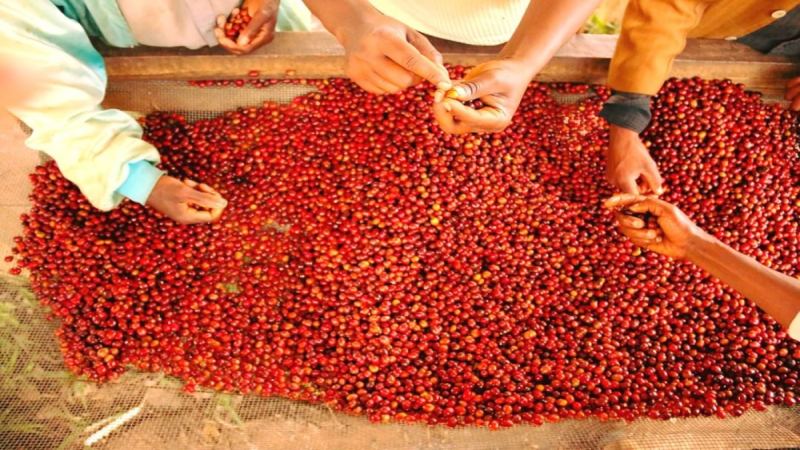
Yirgacheffe is Ethiopia's most iconic specialty coffee region, renowned worldwide for its citrus-lemon acidity and delicate floral and fruity aromas. FrontStreet Coffee has long been deeply engaged in the selection and roasting of Yirgacheffe coffee beans. This article will provide a complete overview of Yirgacheffe coffee's core knowledge—from the region's history, variety characteristics, the ECX grading system, and the differences between natural and washed processing methods, to roasting curve recommendations and brewing parameters—helping coffee enthusiasts gain a deeper understanding of the flavor logic behind this legendary region, and offering specific brewing recipes and flavor comparisons for FrontStreet washed Yirgacheffe and FrontStreet natural Yirgacheffe.
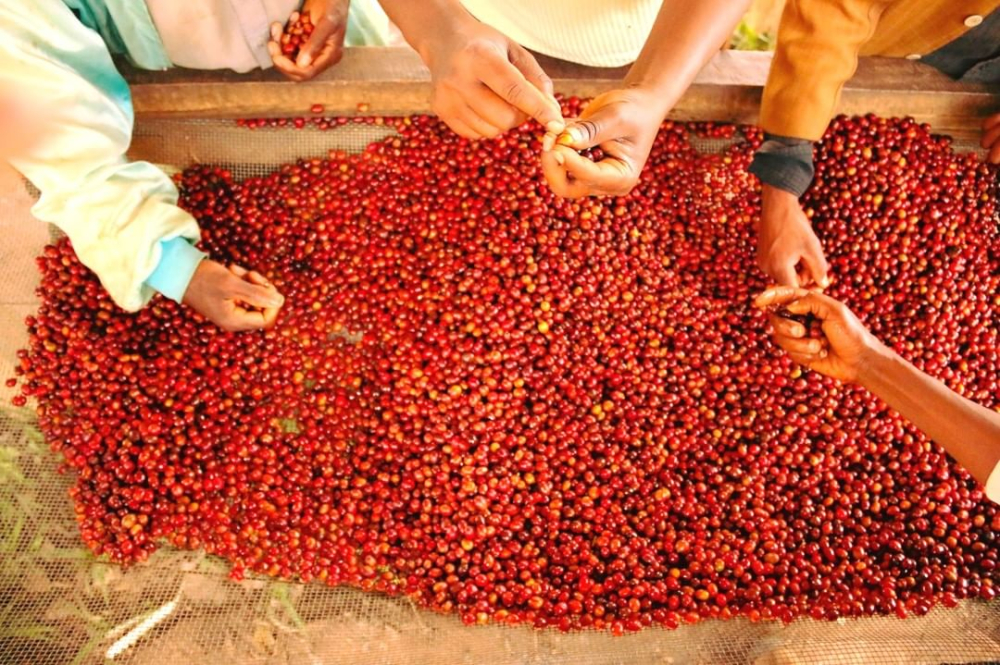
For more specialty coffee knowledge, please follow our WeChat official account: FrontStreet Coffee
Ethiopia is widely recognized as the birthplace of Arabica coffee. When selecting Ethiopian coffee beans, FrontStreet Coffee focuses primarily on the Yirgacheffe region while also paying attention to other outstanding regions. This year Ethiopia held the COE competition, and FrontStreet Coffee successfully bid on a FrontStreet Sidamo coffee bean that ranked 22nd. Yirgacheffe and Sidamo both belong to Ethiopia's most core specialty coffee-producing areas (FrontStreet Coffee highlights these two regions because they are the most well-known, but they are not the only regions producing specialty coffee). The reason FrontStreet Yirgacheffe is revered as specialty coffee lies in its light, transparent citrus-lemon acidity and its delicate floral and fruity fragrance. This highly recognizable flavor profile has made Yirgacheffe not just a place name, but a byword for a classic style of coffee flavor.
In terms of processing methods, Yirgacheffe can be broadly categorized into two types: FrontStreet natural Yirgacheffe and FrontStreet washed Yirgacheffe. Today FrontStreet Coffee will discuss the differences between the two. Beyond being easy to distinguish by appearance (natural beans have less residual silver skin, while washed beans have more), in terms of flavor, FrontStreet washed Yirgacheffe presents the most typical flavor profile of Yirgacheffe, while FrontStreet natural Yirgacheffe adds an extra layer of fermentative and sweet aromatic notes on top of that.
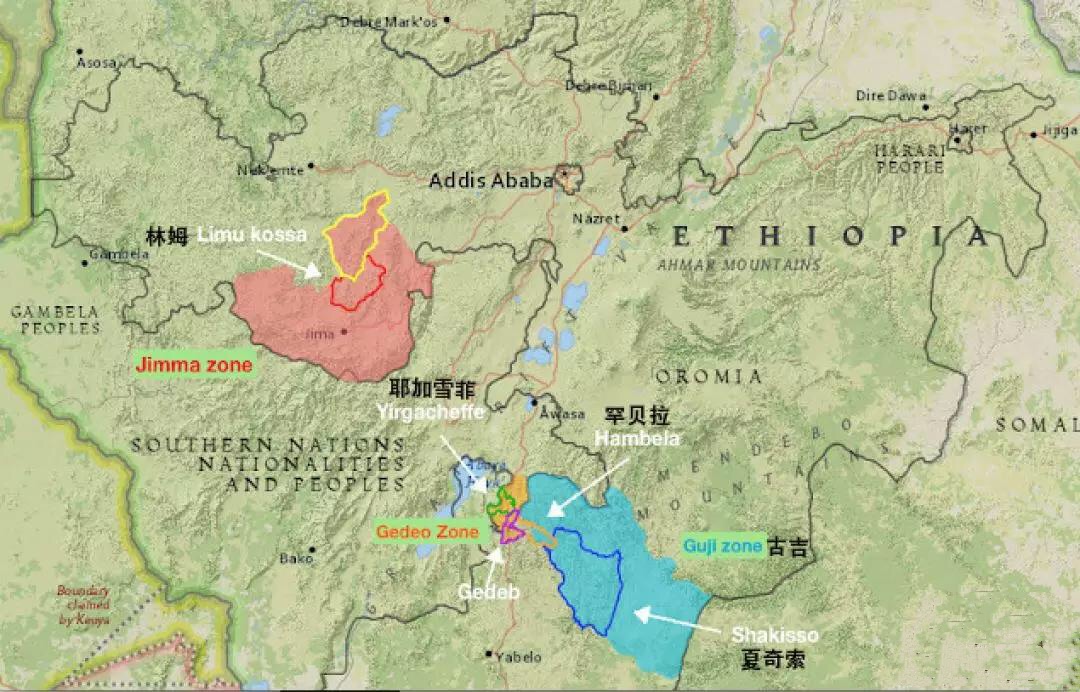
Yirgacheffe Coffee Region Yirgacheffe has always been one of Ethiopia's most important coffee regions. It was originally under the jurisdiction of the Sidamo region, but later, because its coffee beans had such a distinctive flavor, it was designated as an independent region. It can be said that Yirgacheffe is both a place name and a proper term for a specific flavor description. The region is located at a high altitude, approximately 2,000 meters above sea level. Within the Yirgacheffe region there are over forty cooperatives, with coffee cultivation primarily based on family-run operations. Within the Yirgacheffe region there are also many well-known micro-regions, such as Kochere, Misty Valley, Gedeb, and others. These micro-regions all have outstanding cooperatives, and the Yirgacheffe coffee beans they produce each have their own distinctive flavor characteristics.
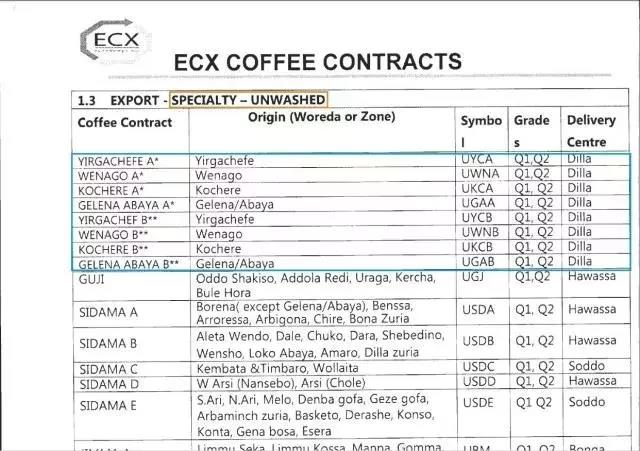
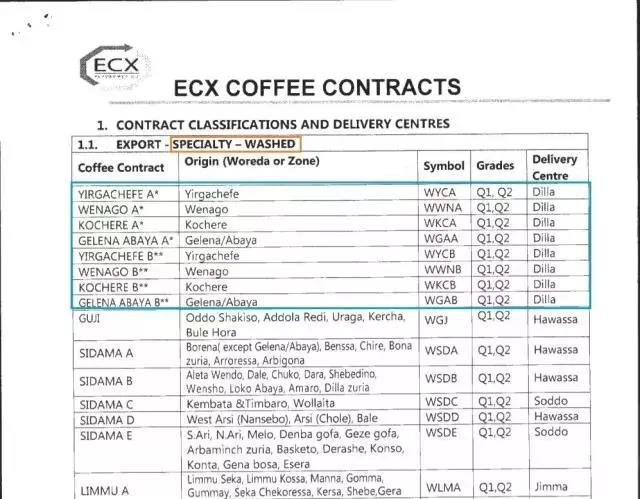
Yirgacheffe Coffee Bean Grading The coffee varieties of Yirgacheffe are local heirloom varieties, with beans that are relatively small and rounded, mostly between 14-15 screen sizes. The ECX (Ethiopian Commodity Exchange, established in 2012) grades Ethiopian coffee beans along two dimensions. The first dimension is defect rate. Regardless of whether the processing is washed or natural, if exported green beans contain no more than 3 defective beans per 300 grams, they are graded as G1; if there are 4-12 defective beans per 300 grams, they are graded as G2.
The second dimension is flavor evaluation. Referencing the SCA (Specialty Coffee Association of America) cupping standards to evaluate G1 and G2 grade coffee beans, those scoring above 85 points are rated as Q1, while those scoring 80-84.75 points are rated as Q2.
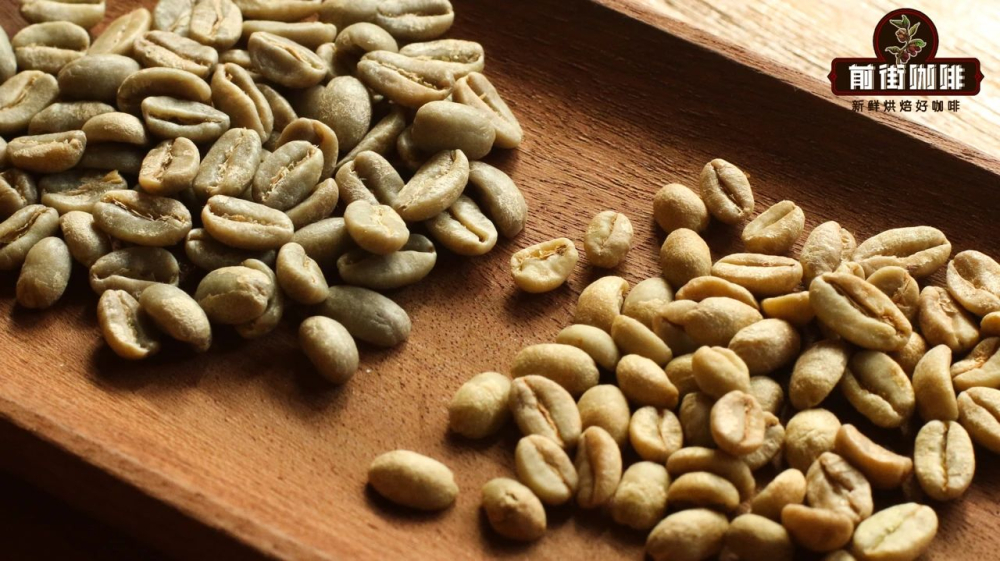
Yirgacheffe Coffee Processing Methods Ethiopia has traditionally used the ancient natural processing method, but since the introduction of the washed method in 1972, after decades of development, the application of the washed method has far surpassed the natural method. Washed processing can effectively reduce the defect rate of coffee beans and also presents a cleaner, more transparent flavor.
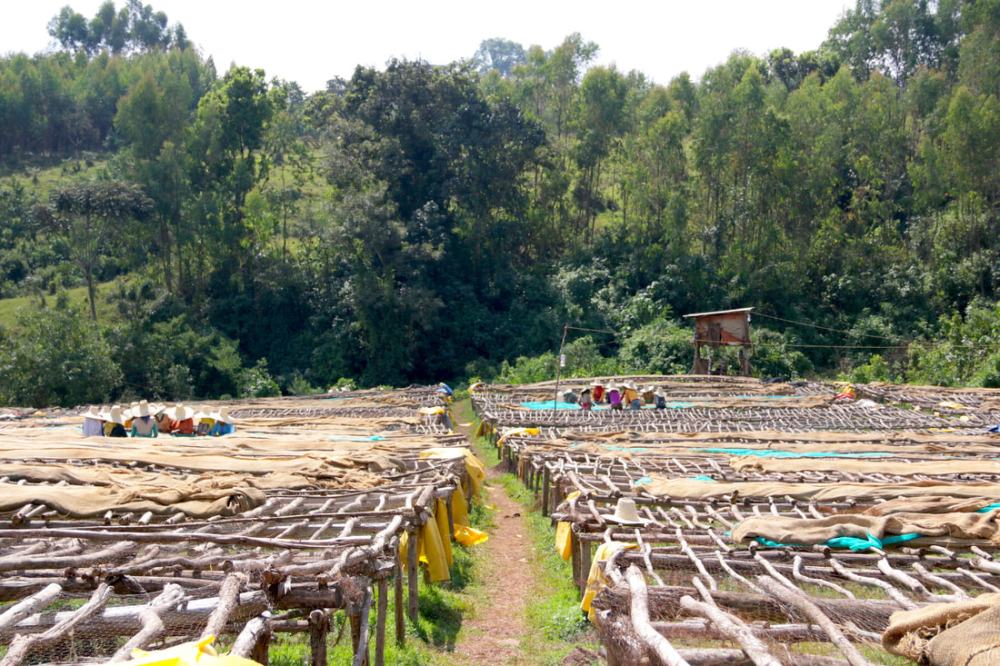
However, some farm owners still have a particular fondness for natural processing. Coffee merchant Baghshin, nostalgic for the flavor of traditional natural beans and unwilling to see natural techniques gradually replaced by the washed method, improved the natural processing method—enhancing flavor while reducing the defect rate. After launching several Misty Valley coffee beans with great success, natural Yirgacheffe regained its market position. The most fundamental difference between natural and washed is: natural processing retains the flavors contributed by the fruit pulp, while washed processing removes the influence of the fruit pulp. The difference in mouthfeel is obvious—washed is cleaner and more transparent, while natural has more layers of complexity. It is also easy to distinguish by appearance: washed green beans are typically bluish-green, while natural green beans tend toward yellow-green. After roasting, washed beans have visible silver skin, while natural beans have almost no residual silver skin, and the bean surface is relatively smooth.
Roasting Recommendations for Natural and Washed Yirgacheffe Coffee The most iconic flavor of FrontStreet Yirgacheffe coffee is its delicate acidity and rich floral and fruity aromas. To preserve this characteristic to the greatest extent, FrontStreet Coffee believes that a light roast is most ideal. Whether natural or washed Yirgacheffe coffee beans, a light roast brings out their special flavors to the fullest. Of course, there are also Yirgacheffe coffees on the market with medium or darker roasts. After tasting them, FrontStreet Coffee found that such roasts slightly weaken the acidity and enhance body. Which to choose depends on personal taste preference, but the mainstream still favors light-roasted Yirgacheffe.
Grade | Number of Defective Beans (per 300g) |
Grade 1 | ≤3 |
Grade 2 | 4-12 |
Grade 3 | 13-25 |
Grade 4 | 26-45 |
Grade 5 | 46-90 |
FrontStreet Coffee's FrontStreet Washed Yirgacheffe Gudingding Coffee Bean Roasting Curve
FrontStreet Coffee's FrontStreet Natural Yirgacheffe Red Cherry Coffee Bean Roasting Curve
Brewing Recommendations for FrontStreet Yirgacheffe Coffee (Natural and Washed) [Using FrontStreet Coffee's FrontStreet Washed Yirgacheffe Coffee and FrontStreet Natural Yirgacheffe Coffee as examples] For light-roasted coffee beans, FrontStreet Coffee recommends using a V60 dripper, with water temperature controlled at around 90°C, a water-to-coffee ratio of 1:15, a dose of 15 grams, and a grind size of BG#5F (80% passing through a Chinese No. 20 standard sieve). Here FrontStreet Coffee would like to clarify one point: why is sieving necessary before determining grind size? This is actually the grind reference standard given by the SCA (Specialty Coffee Association of America) for pour-over coffee. Through extensive testing, FrontStreet Coffee has found that different grind sizes produce significantly different brewing results, and the suitable grind size varies from one coffee bean to another—this is precisely the significance of sieving. If you don't have a sieve at home, FrontStreet Coffee suggests judging by observing the flow rate—if the flow is too fast, the grind is too coarse; if the flow is too slow, the grind is too fine.
FrontStreet Coffee uses staged extraction: the bloom water amount is twice the coffee grounds, i.e., 30 grams of water for a 30-second bloom; then pour in a slow circular motion up to 125 grams for the first stage; when the water level drops and is about to expose the coffee bed, continue pouring to 225 grams and stop. The entire extraction process takes about 2 minutes.
Flavor Description [FrontStreet Natural Yirgacheffe Coffee] Has a subtle fermented wine aroma, with a rich, full-bodied mouthfeel, presenting citrus notes, honey sweetness, and cocoa flavors, with a long finish. [FrontStreet Washed Yirgacheffe Coffee] Brighter, more lively acidity, with prominent citric acid and citrus notes, a refreshing mouthfeel, and some black tea notes in the aftertaste. Overall, both FrontStreet Natural Yirgacheffe Coffee and FrontStreet Washed Yirgacheffe Coffee have fruity acidity with a distinct juicy quality, and flavors close to fruits like lemon and citrus.
The above content is compiled by CoffeeHunters, a coffee news website.


