







How Do the Esmeralda Gesha Coffee Labels Differ in the Cup?
Gesha coffee, also written Geisha, is the variety behind the floral and fruity profile that made Hacienda La Esmeralda famous in Panama. Its Red, Green, and Blue Label lots and the newer volcanic rock Las Rocas series come from different altitude bands, plots, and processing methods, so each carries a distinct aroma, acidity, and body even though all are the same variety.
The variety was found in Ethiopia's Gesha forest in 1931, moved through Kenya, Uganda, and Tanzania around 1936, and reached Costa Rica in 1953 before Panama planted it. Today Panama gesha from Esmeralda sets the reference point, and the estate's record auction results pushed other farms to copy its model of separated lots, careful picking, and detailed roasting curves.
Gesha coffee, with its rich floral and fruity aromas, occupies an unshakable king-like position in the specialty coffee world. From an unknown variety in the forests of Ethiopia to a bidding-season champion single-handedly made famous by Hacienda La Esmeralda in Panama, Gesha’s origins are full of legendary color. In this article, Front Street Coffee will systematically sort out Gesha’s origin and spread, and deeply analyze the origin divisions, altitude conditions, processing methods, and cupping performance of Hacienda La Esmeralda’s Red Label, Green Label, Blue Label, and the all-new volcanic rock Las Rocas series. It will also include detailed roasting curves and pour-over parameter suggestions for each lot, helping coffee lovers fully understand the flavor spectrum of this top-tier variety.
For more specialty coffee knowledge, please follow the WeChat public account: FrontStreet Coffee
If one were to choose the coffee variety with the most outstanding floral and fruity expression, Front Street believes that Gesha coffee is undoubtedly among the very best. Every time Front Street brews Gesha coffee, it feels like a kind of enjoyment, with floral and fruity aromas surrounding you and a very fresh and wonderful flavor. So in this article, Front Street will talk about Gesha coffee.
Gesha coffee beans (Gesha or Geisha) are also called Geisha coffee beans because their pronunciation is similar to the Japanese word for “geisha.” Many people know about Gesha coffee beans because of Hacienda La Esmeralda. Indeed, FrontStreet Coffee has introduced in many articles that Hacienda La Esmeralda is not only the discoverer of Gesha’s flavor but also its promoter. Later, Hacienda La Esmeralda’s continuously record-breaking auction results and multiple competition championships earned it the title of top-tier coffee. FrontStreet Coffee believes that Hacienda La Esmeralda truly deserves this title, and many estates that later developed have more or less borrowed from its model.
Origin and history The generally accepted view is that Gesha produced in Panama is of the highest quality. But tracing the variety back to its source, Gesha was actually discovered in Ethiopia’s Gesha forest as early as 1931, then sent to the coffee research institute in Kenya, introduced to Uganda and Tanzania around 1936, and brought to Costa Rica in 1953. Panama began planting Gesha coffee in the 1970s.
Because yields have always been low, Gesha was ignored for a long time, and some coffee farmers even used it as a windbreak tree, not treating it as a proper coffee tree at all.
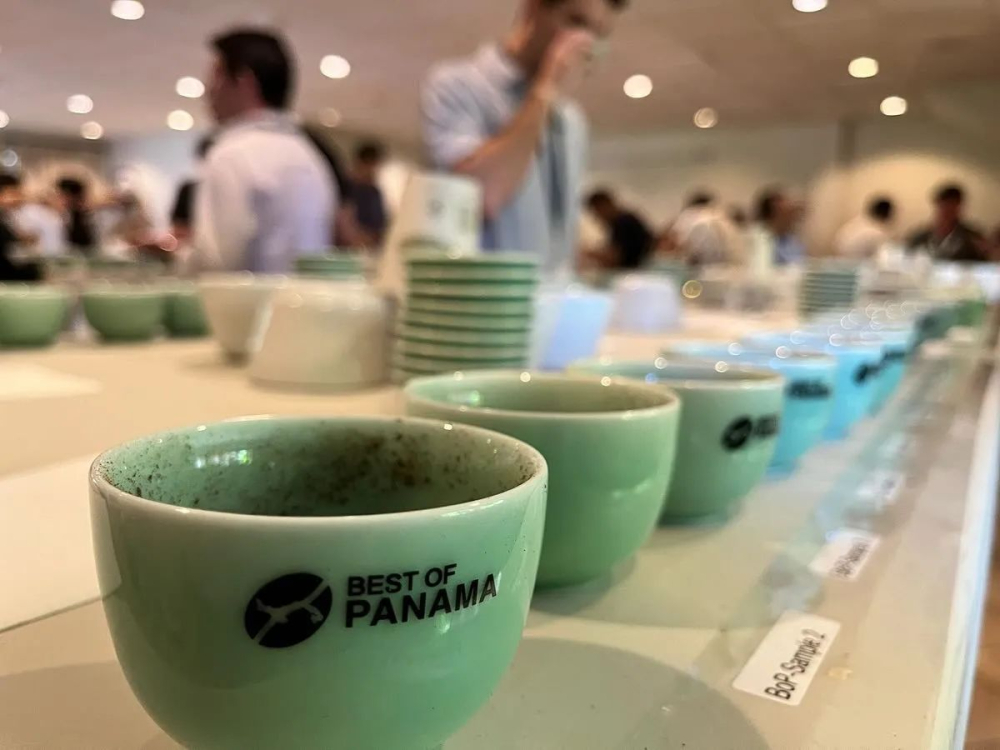
It was not until Daniel Peterson, owner of Panama La Esmeralda, participated in the 2004 Panama coffee cupping competition and became an instant sensation that Gesha began its unstoppable rise—or rather, its bean life. In countless green bean competitions and brewing competitions, Gesha has been the top contender’s best partner, and its price naturally soared all the way.
Panama La Esmeralda Panama is located in Central America, connecting North America and South America, and bordering Costa Rica and Colombia. Panama’s coffee path can be said to have been born with a silver spoon in its mouth. As is well known, the Panama Canal was built by the United States, and for a period after its completion it was controlled independently by the United States. It was precisely the construction of the Panama Canal that brought many American elites southward at the end of the 20th century, partly for work needs and partly to seek business opportunities.
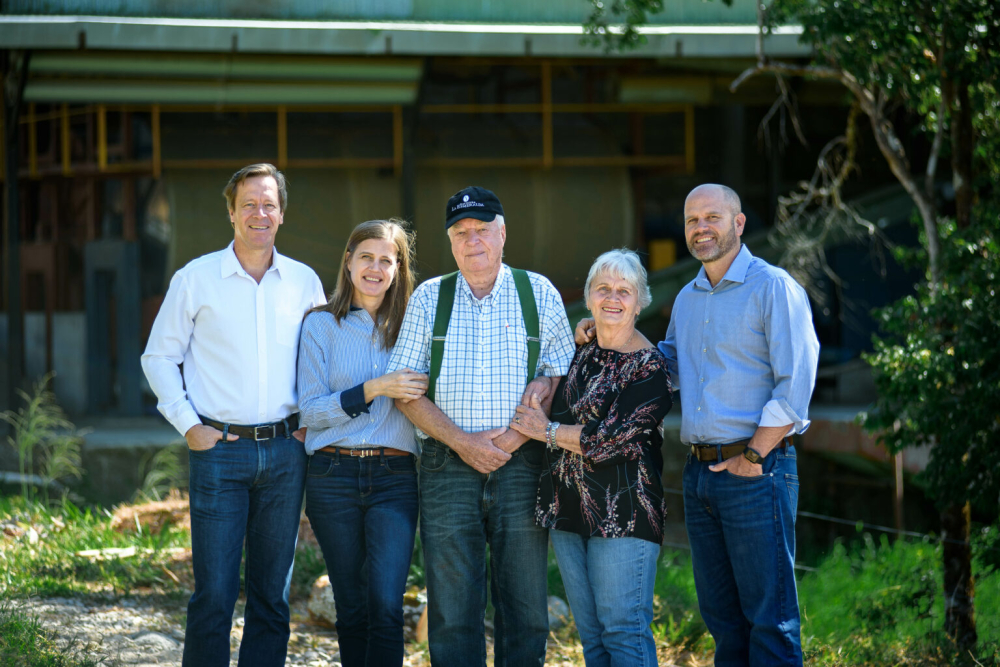
Hacienda La Esmeralda is a witness to that era. In 1964, American banker Rudolph Peterson retired, moved to Panama, and bought Hacienda La Esmeralda in Boquete, initially focusing on dairy. Later, his son Price resigned from his job as a doctor to help his father run the farm, introduced Caturra and Catuai coffee varieties in 1987, and established a wet-processing plant in 1994, from then on having its own coffee-processing facility. In 1996, he bought the nearby Jaramillo estate, which had superior geography and good flavor in its original coffee varieties, and merged it into Hacienda La Esmeralda.
The reason Jaramillo estate was favored by the Petersons was precisely that its originally planted coffee beans had a pleasant orange aroma and floral-fruity notes, different from the original taste of Panamanian coffee. After cupping coffee beans from different areas of the estate, it was discovered that the unnamed coffee trees growing at the estate’s highest point, because of their low yield, had merely been used by the previous owner as windbreak trees. But they were discovered by the Petersons, who decided to separate and cultivate the coffee trees in that area.
Starting with winning the 2004 Panama green bean competition BOP, it was astonishing all the way. Later, expert appraisal revealed that the coffee beans were the Ethiopian Gesha variety. After that, the Peterson family put most of its energy into developing infrastructure to support excellent lot separation and meticulous processing.
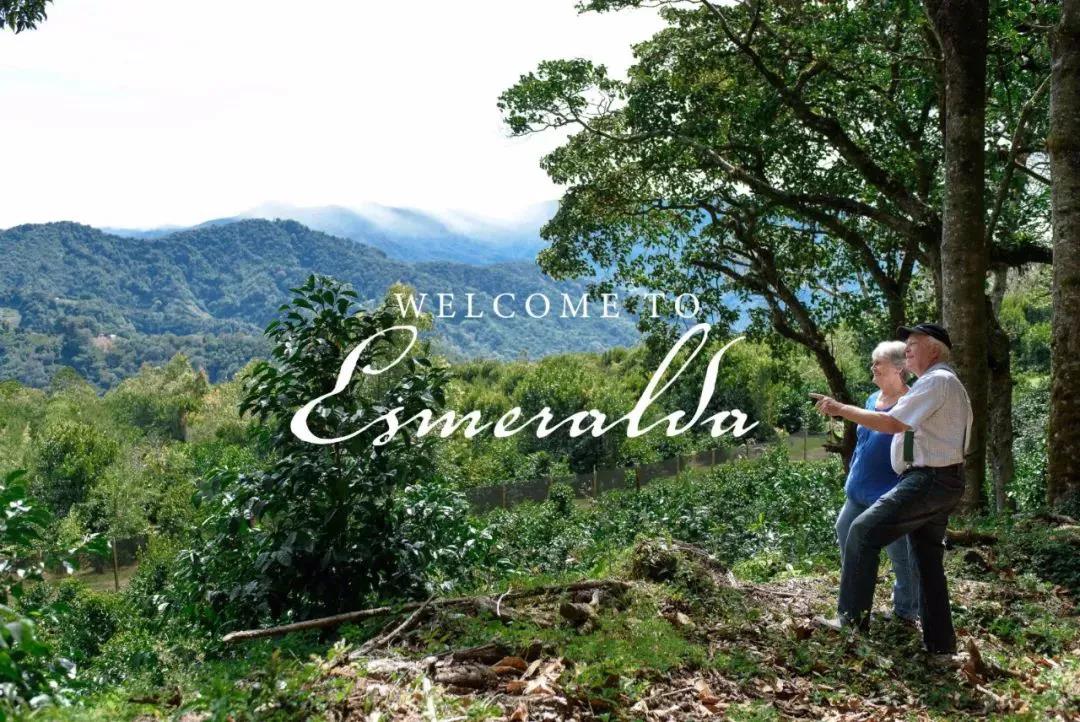
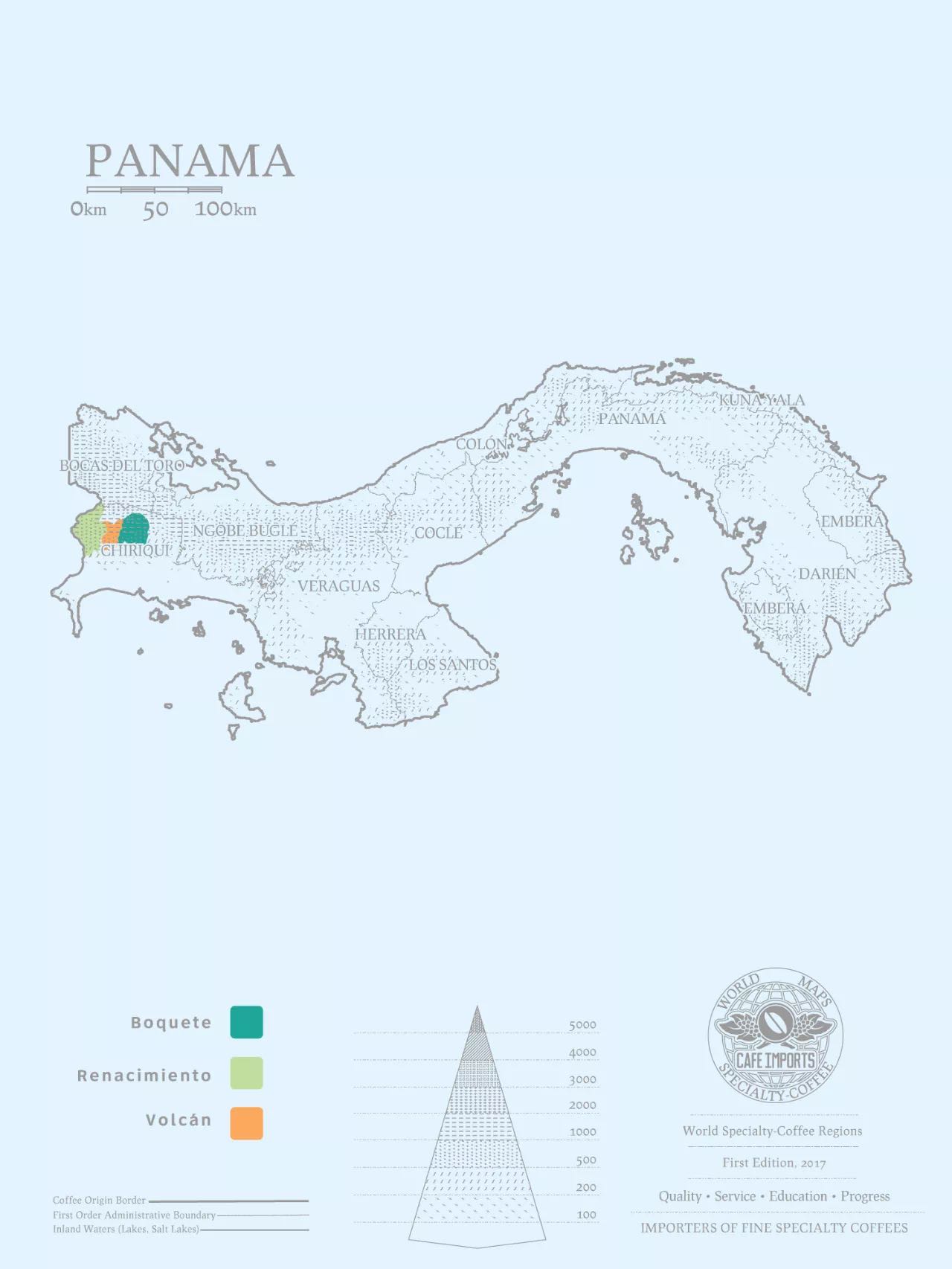
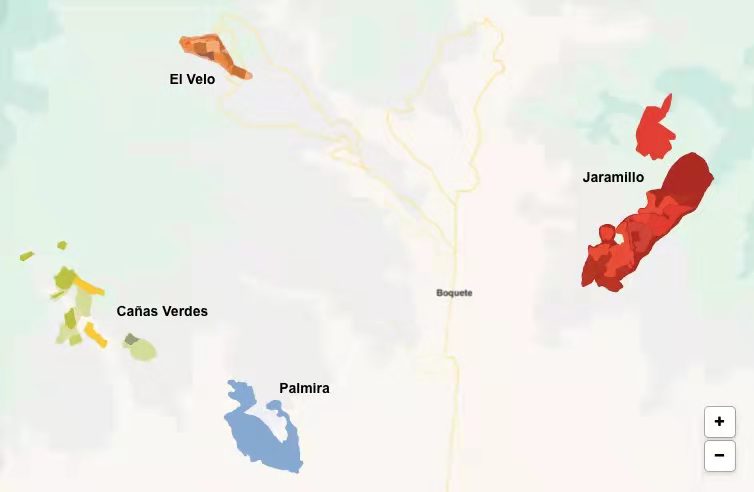
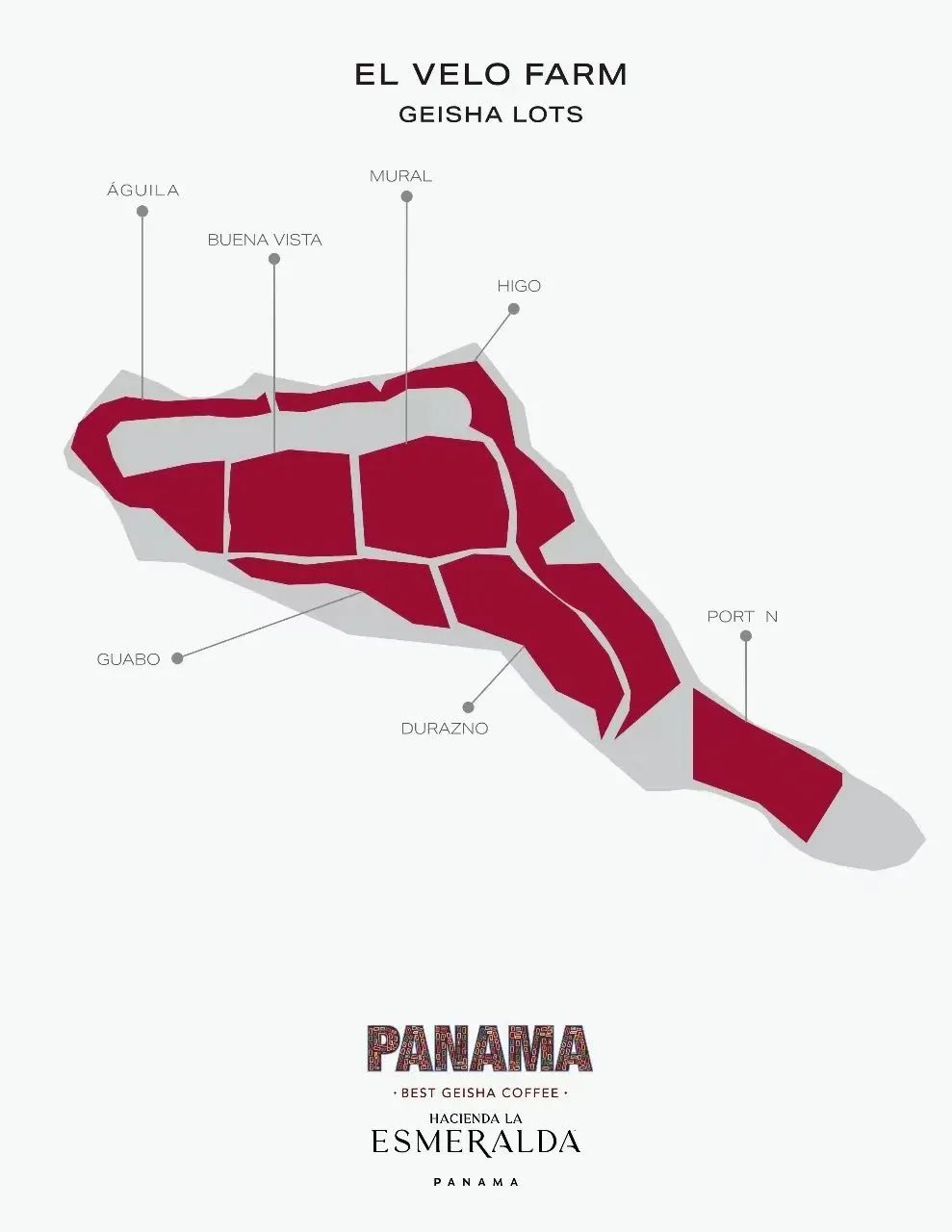
Plot divisions of Hacienda La Esmeralda Hacienda La Esmeralda is located in Panama’s Boquete production area, an important coffee-producing region in Panama. Many well-known coffee estates come from this region, such as Elida Estate and Kotowa Estate. Hacienda La Esmeralda divides its Gesha plots extremely finely, mainly into three plots: Jaramillo, Canas Verdes, and El Velo. Each plot is further divided into smaller plots.
High-quality Gesha mainly comes from the two plots Jaramillo and Canas Verdes. Jaramillo has annual rainfall of 4000 ml, average daytime temperature of 19-25°C, average nighttime temperature of 11-15°C, and average altitude of 1600-1700 m. Canas Verdes has annual rainfall of 3500 ml, average daytime temperature of 16-23°C, average nighttime temperature of 10-15°C, and average altitude of 1600-1800 m.
El Velo is the newest plot purchased by Hacienda La Esmeralda, with an average altitude of 1700-1900 m. In addition to planting Gesha and Catuai, this plot also has a small amount of other introduced varieties, such as Laurina, Pacamara, Mocha, and SL28.
Hacienda La Esmeralda’s Gesha Red Label, Green Label, and Blue Label Hacienda La Esmeralda’s marketing strategy differs from other estates. According to cupping performance, planted varieties, and planting plots, it is divided into five major brands. There are three brands for the Gesha variety: Esmeralda Special, Private Collection, and Geisha1500. There are two brands for the Catuai variety: Diamond Mountain grows and Palmyra.
Front Street Panama Hacienda La Esmeralda Red Label Gesha
Red Label [Auction Lot]
- Planting altitude 1,600-1,800 m
- Cupping score above 90
- Mainly produced from Jaramillo and Cañas Verdes estates, and also the highest-quality Gesha beans
- Gesha beans harvested from the highest areas of the Boquete mountains, with special, bright floral aroma and citrus notes
- Coffee of this grade is later made into sun-dried or washed green beans; in 2018, a yeast processing method was added
- Divided into auction lots and non-auction lots
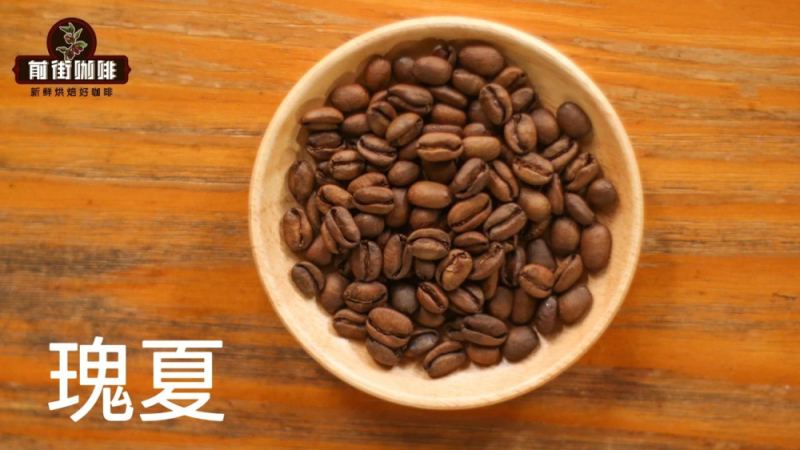
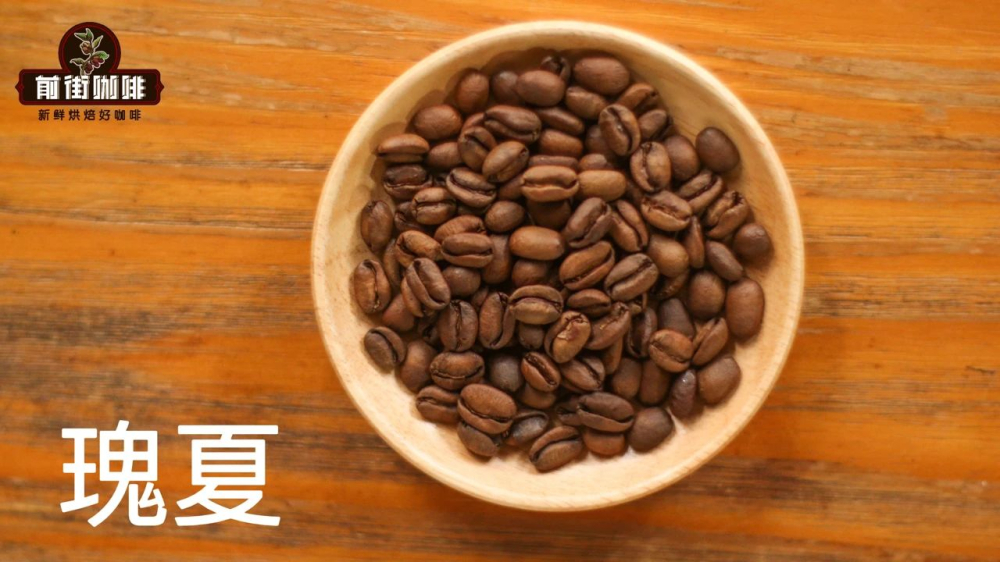
The Gesha produced under Esmeralda Special is what we often call Red Label. It uses Gesha coffee beans grown at an altitude of 1600-1800 m, with a cupping score above 90, from the two production areas Jaramillo and Canas Verdes.
Hacienda La Esmeralda’s own independent auction: only the Gesha lots put up for bidding from the divided plots are the auction Red Label. However, there are now also non-auction Red Labels on the market. These are actually Gesha selected from the same plots that were not put up for auction and then circulated to the market. The variety and quality are consistent; only the selling price differs.
Gesha of this grade uses sun-dried or washed processing, with flavors of special, bright floral aroma and citrus notes.
Front Street Panama Hacienda La Esmeralda Red Label Gesha
Country: Panama
Region: Boquete
Estate: Hacienda La Esmeralda
Altitude: 1700 m
Processing method: Sun-dried
Variety: Gesha
Harvest season: 2022
Processing method
This Front Street Panama Hacienda La Esmeralda Red Label Gesha uses the sun-dried processing method.
Hacienda La Esmeralda combines traditional patio drying and electric Guardiola dryers to complete it. Which technique is used depends on the specific coffee to be dried, how much available space there is on the patio and in the dryer, and what the weather is like during drying.
As long as the coffee lot allows, Guardiola is the preferred drying method. Guardiola can only handle large amounts of coffee. Guardiola is a horizontal rotating drum that allows constant hot air to flow around the beans, thereby removing moisture. Hacienda La Esmeralda uses a biomass furnace as the heat source. Drying coffee beans with Guardiola allows for better artificial control of quality rather than depending on weather conditions. Patio drying is the preferred method for small-batch production. During patio drying, the coffee is placed on the patio to dry through sunlight reflection. These coffees are spread in thin layers and turned regularly to ensure even drying.
Roasting curve
Roaster Yangjia 800N (roasting capacity 300 g)
Charge at a drum temperature of 150°C, power 120, damper opened to 3; turning point at 1'36", when the drum temperature is 140°C open the damper to 4, power unchanged; when the drum temperature is 147.6°C the bean surface turns yellow and the grassy smell completely disappears, entering the dehydration stage. When the drum temperature reaches 150°C, adjust the power to 100, damper unchanged;
At 7'38, ugly wrinkles and dark patches appear on the bean surface, and the toast smell clearly turns into coffee aroma, which can be defined as the prelude to first crack. At this time, listen clearly for the sound of first crack. First crack starts at 8'10", open the damper to 4, develop for 1'28 after first crack, and drop at 189.5°C.
Pour-over Front Street Panama Gesha coffee suggestions
Dripper: V60
Water temperature: 90-93°C
Coffee-to-water ratio: 1:16
Grind size: medium-fine grind (80% passing through China standard No. 20 sieve)
Front Street recommends using freshly roasted coffee beans for brewing, so you can experience the coffee’s rich flavors to the greatest extent. The coffee beans shipped by FrontStreet Coffee are all within 5 days of roasting, because Front Street deeply understands that the freshness of coffee beans has a great impact on flavor. Front Street’s roasting philosophy is “freshly roasted good coffee,” so that every customer who places an order receives the freshest coffee when they get it. Coffee’s resting period is about 4-7 days, so when customers receive it, it is exactly at its best flavor.
Brewing method: staged extraction. Use 30 g of water for blooming for 30 seconds, then pour in a small stream in circles until 150 g for a stage break. When the water level is about to expose the coffee bed, continue pouring until 240 g and stop. When the water level is about to expose the coffee bed, remove the dripper. (Timing starts at the beginning of blooming.) Extraction time is 2'00".
Flavor: smells of ginger flower and citrus; on the palate there are ripe fruit, black tea, citrus, and a sweet-tart fruit tea flavor; the finish has berry sweetness, with a relatively long-lasting sweet aftertaste.
Front Street Panama Hacienda La Esmeralda Green Label Gesha
Green Label [Private Collection Lot]
- Planting altitude 1,600-1,800 m
- Micro-lot coffee beans from three different estates: Jaramillo, Quiel, and Canas Verdes
- Although not the highest-grade auction beans, Gesha beans of this grade still carry the classic flavors of Gesha coffee beans: floral aroma, fruity notes, citrusy bright acidity, and a full, juicy body
- Selected from the most suitably ripe coffee cherries, creating a sweet, bright fruit acidity, and delicious flavor
- Gesha beans of this grade also have washed or sun-dried green beans available for selection
Private Collection, commonly known as Green Label, is not a lot from an independent competition. It is planted with Gesha varieties that do not participate in auctions but are still of excellent quality. It uses Gesha coffee beans grown at an altitude of 1600-1800 m from different plots such as Jaramillo and Canas Verdes, as a micro-lot blend.
Because it uses a blending model and no detailed plot notation is made, sometimes the flavor similarity between Esmeralda Green Label and Esmeralda Red Label can be very high, but the next release may differ again.
Although Esmeralda Green Label Gesha is not as high-grade as Esmeralda Red Label, it still carries Gesha’s classic flavors: floral aroma, fruity notes, citrusy bright acidity, and a full, juicy body. Green Label Gesha is likewise available in washed or sun-dried processing.
Front Street Panama Hacienda La Esmeralda Green Label Gesha
Country: Panama
Region: Boquete
Estate: Hacienda La Esmeralda
Altitude: 1600 m-1800 m
Processing method: Washed
Variety: Gesha
Harvest season: 2022
Roasting suggestions
Front Street Panama Hacienda La Esmeralda Green Label Gesha beans are relatively hard, and because they are beans from the new harvest season, their water activity is better. The green beans are slender with pointed ends, and the distance from the bean surface to the bean core is relatively short, so FrontStreet Coffee chooses a high-temperature rise, rapid dehydration method when roasting, with a faster roasting pace to express Front Street Esmeralda Green Label Gesha’s multi-layered fruit flavors and explosive floral aroma!
Roaster Yangjia 800N (roasting capacity 300 g)
Charge at a drum temperature of 160°C, power 110, damper opened to 3; turning point at 1'28", when the drum temperature is 140°C open the damper to 3.5, power unchanged; when the drum temperature is 153.3°C the bean surface turns yellow and the grassy smell completely disappears, entering the dehydration stage. When the drum temperature reaches 161°C, adjust the power to 90, damper unchanged;
At 6'54", ugly wrinkles and dark patches appear on the bean surface, and the toast smell clearly turns into coffee aroma, which can be defined as the prelude to first crack. At this time, listen clearly for the sound of first crack. First crack starts at 7'50", open the damper to 4, develop for 1'20 after first crack, and drop at 192.5°C.
Brewing parameters and method:
Because Front Street Esmeralda Green Label Gesha has many flavor layers and a rich floral aroma, FrontStreet Coffee recommends choosing the faster-flow Hario V60 dripper to show its rich layers and floral aroma; for the coffee-to-water ratio, you can choose 1:15. For beans with rich flavor layers, a larger coffee-to-water ratio can instead let us feel its flavors more clearly!
The design of the V60 dripper focuses on the speed at which the water level drops, allowing coffee grounds to achieve a relatively good extraction with a faster flow rate. The internal ribs use a curved spiral structure design to help speed up the water flow, extending from the bottom to the top, which indicates smooth venting. The curved ribs increase the water flow path to increase the contact time between coffee grounds and water.
Parameters: water temperature: 90-91°C; grind size: medium-fine grind (80% passing through China standard No. 20 sieve); coffee-to-water ratio: 1:16; use staged extraction for brewing.
Use 30 g of water for blooming, bloom for 30 seconds; pour in a small stream from the center until 150 g for a stage break. When the water level is about to expose the coffee bed, increase the flow and pour until 240 g, then stop. When the water level is about to expose the coffee bed, remove the dripper. (Timing starts at the beginning of blooming.) Extraction time 2'00".
Flavor: the wet aroma is rich ginger flower and jasmine; on the palate there are citrus, cream, lemon, sugarcane, and black tea flavors.
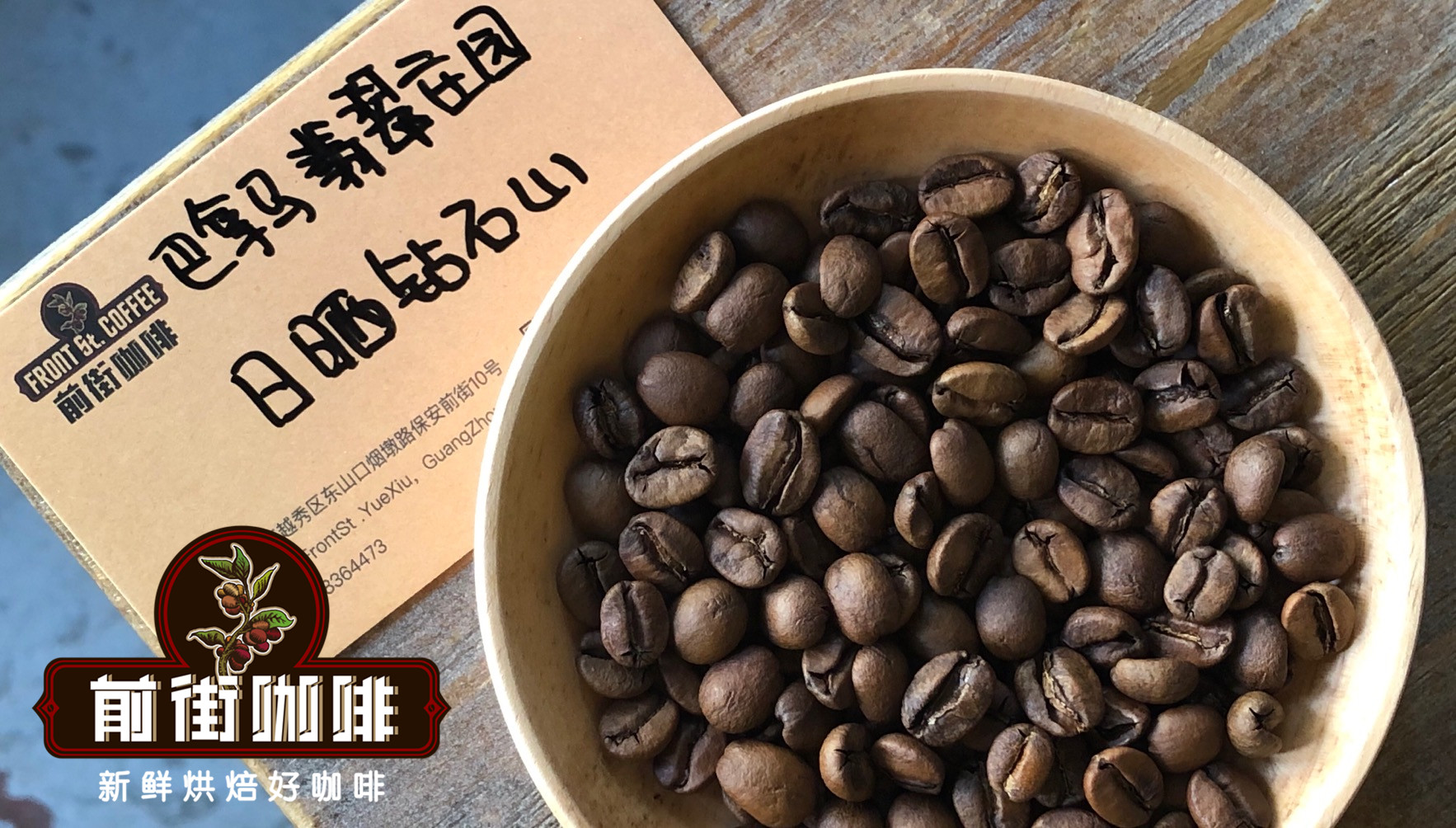
Front Street Panama Hacienda La Esmeralda Blue Label Gesha Coffee
The Geisha1500 brand is what we commonly call Blue Label Gesha. It uses beans grown at an altitude of 1400-1500 m from three different plots: Jaramillo, Canas Verdes, and El Velo, as a blend. The flavor has slight floral notes, fruit acidity, and sweetness; the body is relatively less full. Esmeralda Blue Label Gesha is only washed processed.
Blue Label [Selected Lot]
- Planting altitude 1,500 m
- A blend of beans from three different estates: Jaramillo, Canas Verdes, and El Velo
- Slight floral notes, fruit acidity, and sweetness; the body is relatively less full than Red Label, clean and fresh
- Gesha beans of this grade are only available as washed green beans
In 2021-2022, Hacienda La Esmeralda has discontinued the Blue Label series and replaced it with another new brand, “Las Rocas” (Volcanic Rock Gesha). Through comparison of green bean appearance and cupping flavor, Front Street confirms that this Front Street Panama Volcanic Rock Gesha indeed comes from Hacienda La Esmeralda’s Blue Label series.
Front Street Panama Volcanic Rock New Blue Label Gesha Coffee
Region: Boquete
Estate: Hacienda La Esmeralda
Altitude: 1500 m
Variety: Gesha
Processing method: Washed
Harvest season: 2022
Roasting suggestions
Because the new Blue Label coffee beans have clear floral and citrus-family flavors and very high cleanliness, in order to highlight these flavors, FrontStreet Coffee recommends a light roast. The darker the roast, the more these bright qualities will be consumed.
Machine: Yangjia 800N, green bean charge 550 g
Charge temperature: 180°C; turning yellow point: 5'20, 151.6°C; first crack point: 8'30, 181.8°C; development after first crack: 1'28, drop at 190°C.
Brewing suggestions :
Dripper: V60
Water temperature: 90°C
Coffee dose: 15 g
Coffee-to-water ratio: 1:16
Grind size: 80% passing through China standard No. 20 sieve
FrontStreet Coffee uses staged extraction: use 30 g of water for blooming for 30 seconds, then pour in a small stream in circles until 150 g for a stage break. When the water level is about to expose the coffee bed, continue pouring until 240 g and stop. When the water level is about to expose the coffee bed, remove the dripper. (Timing starts at the beginning of blooming.) Extraction time is 2'00".
Flavor: light jasmine and citrus aroma; on the palate there are obvious citrus and smoked plum, with fresh and bright acidity; the mid-palate has nuts, and the finish is honey sweetness, with lasting sweetness.
The above content is compiled by CoffeeHunters, a coffee news website.


