








How can buyers tell genuine Jamaican coffee from fakes?
Jamaican Blue Mountain coffee is known for balanced acidity, sweetness, and bitterness with a smooth, full body, yet the market is mixed with products labeled Blue Mountain flavor that contain little or none of the real thing. Buyers can verify authenticity through taste, certification, origin, packaging, grade, appearance, grind, and aroma.
Genuine Blue Mountain grows between Kingston and Port Antonio, where the range's highest peak reaches 2,256 meters, with low temperatures, mist, rainfall, and well-drained soil. The article also details the flavor of Clifton Mount Estate Blue Mountain No. 1 and a Kono dripper brewing recipe, adding a Caribbean origin reference point.
Jamaican Blue Mountain coffee has long ranked among the world's most prestigious coffees thanks to its balanced acidity, sweetness, and bitterness along with its smooth, full-bodied mouthfeel. However, the domestic market is a mixed bag, with products labeled "Blue Mountain flavor" bearing little resemblance to genuine Blue Mountain coffee. From the perspective of Front Street Coffee, this article systematically lays out eight practical methods for verifying the authenticity of Blue Mountain coffee, covering dimensions such as taste, certification, origin, packaging, grade, appearance, grind, and aroma, and also details the flavor profile of Clifton Mount Estate Blue Mountain No. 1 along with a kono dripper brewing recipe, helping coffee lovers make accurate judgments when purchasing.
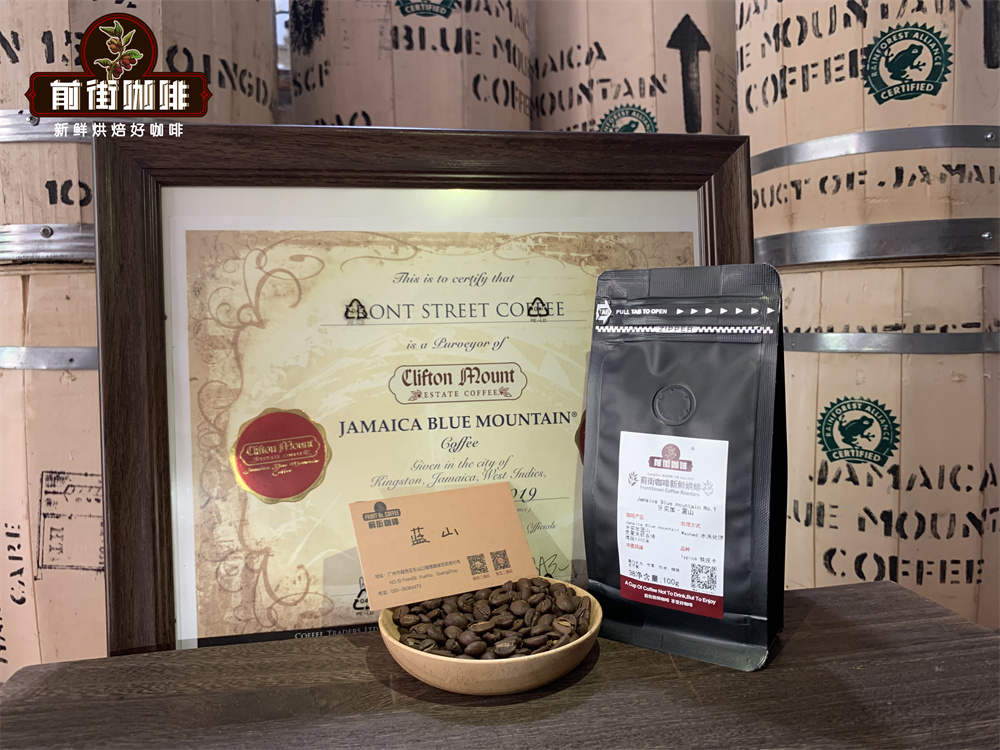
Jamaican Blue Mountain coffee occupies an extremely special place on the global coffee map, rare in output yet renowned far and wide. Its most striking characteristic lies in the exquisite balance among acidity, sweetness, and bitterness, with a silky, full-bodied texture on the palate. Jamaica has established extraordinarily strict quality standards for Blue Mountain coffee, standards so high that coffees from other regions struggle to match them. The cultivation history of Blue Mountain coffee can be traced back to the 18th century, when the beans were introduced to Jamaica and mainly planted in the area between Kingston in the south and Port Antonio in the north. The highest peak of this mountain range reaches 2,256 meters, making it one of the most majestic mountain systems in the Caribbean. The mountain area has consistently low temperatures, lingering mist, abundant rainfall, and fertile soil with excellent drainage, and is widely recognized as a prime region for coffee cultivation. It is precisely these exceptional natural conditions that have established Blue Mountain coffee's outstanding standing on the world coffee stage.
However, the market is full of cases of inferior goods being passed off as quality ones, and consumers often find it hard to tell the difference. Faced with a domestic coffee market of uneven quality, buyers need to stay constantly vigilant, systematically master the relevant knowledge, and be familiar with the signature characteristics of Blue Mountain coffee in order to effectively judge authenticity. The first thing to watch for is that many products are labeled "Blue Mountain flavor" rather than "Blue Mountain coffee." So-called "Blue Mountain flavor" may contain only a tiny proportion of Blue Mountain coffee beans and is an entirely different concept from genuine Blue Mountain coffee.
Front Street Coffee (FrontStreet Coffee) has compiled the following eight methods for verifying Blue Mountain coffee:
First: Taste the flavor For experienced coffee lovers, the palate is the most reliable tool for judgment. Genuine Blue Mountain coffee is smooth on entry, with an impressive fullness, performing almost perfectly overall. Counterfeit Blue Mountain coffee, by contrast, is either thin and bland or overly harsh, always lacking that balanced, harmonious quality.
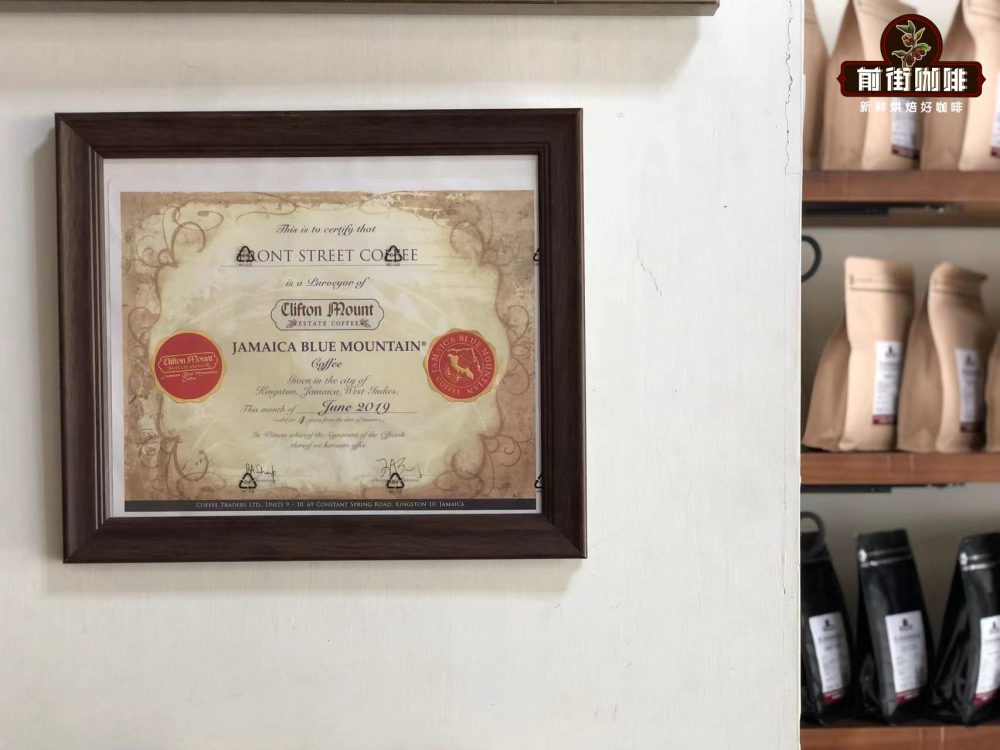
Second: Jamaica Coffee Industry Board certification As mentioned earlier, authentic Jamaican Blue Mountain coffee follows a strict standards system. Within Jamaica, only enterprises that have obtained review and approval from the Coffee Industry Board are qualified to export Blue Mountain coffee. The Jamaica Coffee Industry Board (CIBOJ) was established on June 2, 1950, under the Coffee Industry Regulation Act enacted in 1948, with the aim of promoting the growth of Jamaica's coffee industry and improving the welfare of those working in it. The agency's responsibilities include: issuing licenses to coffee processors and dealers, setting or reviewing coffee quality standards, serving as the sole certification body for Jamaican coffee exports and green bean exports, and also providing advisory services to farmers and industry stakeholders.
Starting January 1, 2018, CIBOJ's functions were taken over by the newly formed Jamaica Agricultural Commodities Regulatory Authority (JACRA), which is responsible for the regulation, promotion, standardization, and development of the agricultural commodity industry. The certificate for the Jamaican Blue Mountain coffee sold by Front Street Coffee (FrontStreet Coffee) is displayed at the store entrance for customers to inspect, and it also serves to share this knowledge with everyone.
Third: Confirm the origin Some may feel this is superfluous—Blue Mountain coffee's origin is naturally Jamaica, so is confirmation even necessary? That said, one should not forget that Blue Mountain coffee in the Asian market was long monopolized by the Japanese company UCC, so products almost always bear the UCC trademark, which is why confirming the source region remains very important.
Fourth, inspect the packaging In the early days, authentic Jamaican Blue Mountain coffee used sealed aluminum foil packaging with an outer burlap sack. In recent years, however, green beans have mostly been packed in raw wood barrels, and Jamaica is the only country in the world today that retains the tradition of wooden barrel packaging for coffee. Many counterfeit Blue Mountain coffees on the domestic market use wooden barrel packaging even for one-pound quantities, and the barrels are even treated with paint. Just think: coffee is a beverage that wins on taste—once it absorbs the smell of paint, how could anyone enjoy it? Jamaicans clearly would not do something so unwise.
Fifth, check the grade Blue Mountain coffee is divided into five grades: Blue Mountain No. 1, Blue Mountain No. 2, Blue Mountain No. 3, Blue Mountain PB, and Jamaica High Mountain coffee. Counterfeit Blue Mountain coffees on the domestic market often carry labels such as AAA, AA, A, and G1, which have nothing to do with Blue Mountain coffee's grading system and must be fakes, because Blue Mountain coffee has never had these grades.
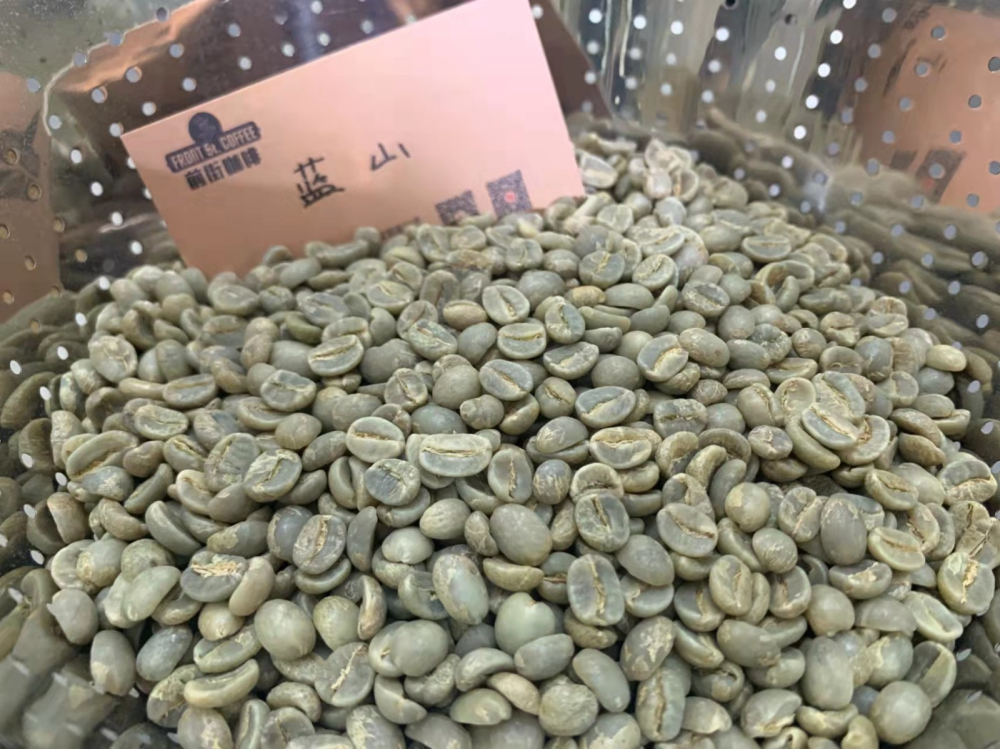
Sixth, inspect the appearance The green beans of authentic Jamaican Blue Mountain coffee are bluish-green, uniform in size, medium-small in body, with the two ends of the bean slightly upturned. After roasting, they expand in volume and the beans become plump and rounded.
Seventh, the grind Blue Mountain coffee grows at medium-to-high altitude, and the green beans have a relatively loose cellular structure. When ground with a manual grinder, there is a noticeably crisp sensation, with almost no resistance or hardness.
Eighth, distinguish the aroma Blue Mountain coffee has a rich fruity aroma and chocolate aroma (some also describe it as creamy). The aroma of roasted Blue Mountain coffee beans is heavy and grounded. By contrast, so-called Blue Mountain coffees blended with other varieties have a floating, frivolous aroma that lacks substance and disperses very easily.
Having covered the above methods for identifying real and fake Blue Mountain, Front Street Coffee (FrontStreet Coffee) will now introduce our best-selling Jamaican Blue Mountain No. 1 coffee from Clifton Mount Estate. Clifton Mount Estate is currently the largest coffee estate in the Blue Mountain region, though by international standards it still counts as small-scale cultivation. The estate was founded 270 years ago and is said to be one of the oldest coffee estates. It is also the only coffee farm in the area to have obtained Rainforest Alliance certification, which fully demonstrates that the estate's ecological environment is excellent.
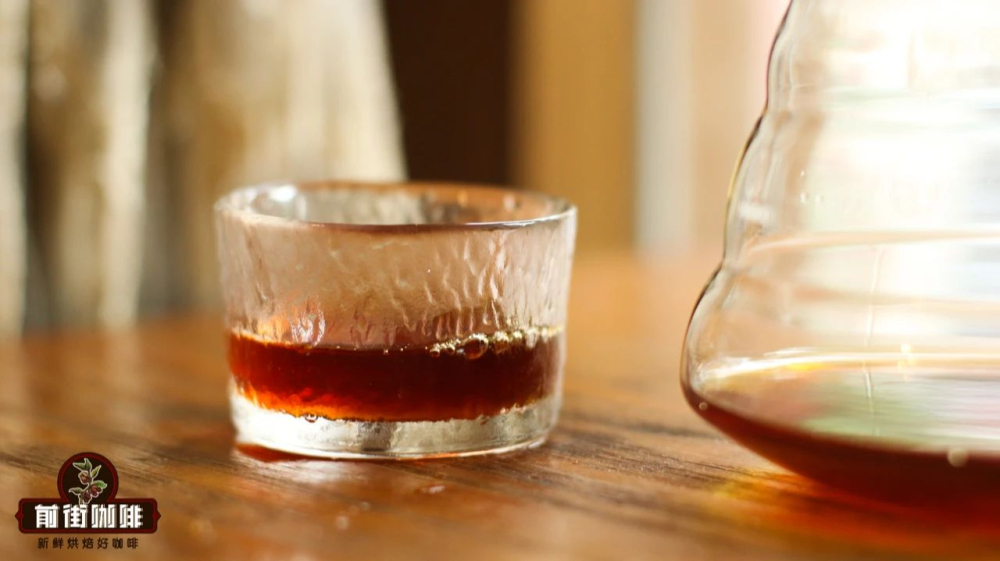
Front Street's Blue Mountain No. 1 coffee has a very clean, gentle flavor, with acidity, body, and aroma in perfect harmony, completely free of bitterness, with only a moderate and perfect acidity and a lingering fruity note on the finish. The dry aroma reveals roasted peanut and roasted hazelnut notes, while the wet aroma brings out oolong tea. On the palate it presents chocolate notes, with a caramel sweetness in the aftertaste. For those who have purchased Front Street Coffee (FrontStreet Coffee) Blue Mountain No. 1 coffee, here is the brewing recommendation from Front Street Coffee (FrontStreet Coffee):
Dripper: kono
Dose: 15 grams
Coffee-to-water ratio: 1:15
Water temperature: 88°C
Grind size: medium-coarse
The kono dripper is chosen because it allows the bloom to be more thorough. During brewing, as the water level rises, the filter paper clings tightly to the dripper wall, so air can only escape through the gap between the lower ribs and the filter paper. The interaction between water and coffee grounds creates a siphon-like effect, making the coffee's overall mouthfeel fuller.
Brewing method: First bloom with 30 grams of water for 30 seconds, then slowly pour in a circular motion from the center outward with a small stream up to 120 grams. When the coffee bed drops to the halfway point, switch to a larger stream and pour up to 225 grams. Once all the coffee liquid in the dripper has flowed into the server, remove the dripper to end extraction. Total brewing time is about 2 minutes.
Professional coffee knowledge exchange More coffee bean information Please follow Coffee Workshop (WeChat public account: cafe_style)
For more specialty coffee beans, please add the personal WeChat of Front Street Coffee (FrontStreet Coffee), WeChat ID: kaixinguoguo0925
The above content is compiled by CoffeeHunters, a coffee news website.


