







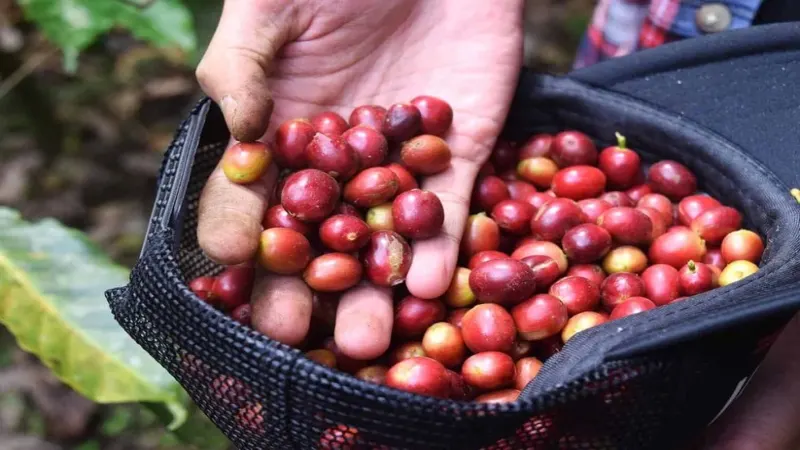
When it comes to Indonesian specialty coffee, most people first think of Sumatra's Mandheling. But among the Indonesian beans offered by Front Street Coffee, there is also a coffee from West Java whose flavor profile is completely different from the general impression of Indonesian coffee—no herbal or spicy notes, replaced instead by a soft tropical fruit acidity and the sweetness brought by honey processing. This article will comprehensively trace the origins of this bean, from the geography and climate of the West Java producing region, the cultivation history and variety evolution of Java coffee, the past and present of S795 (Jember), and honey processing techniques, to Front Street's roasting and brewing parameters. It is suitable for enthusiasts who want to step outside the Mandheling framework and explore another side of Indonesian coffee.
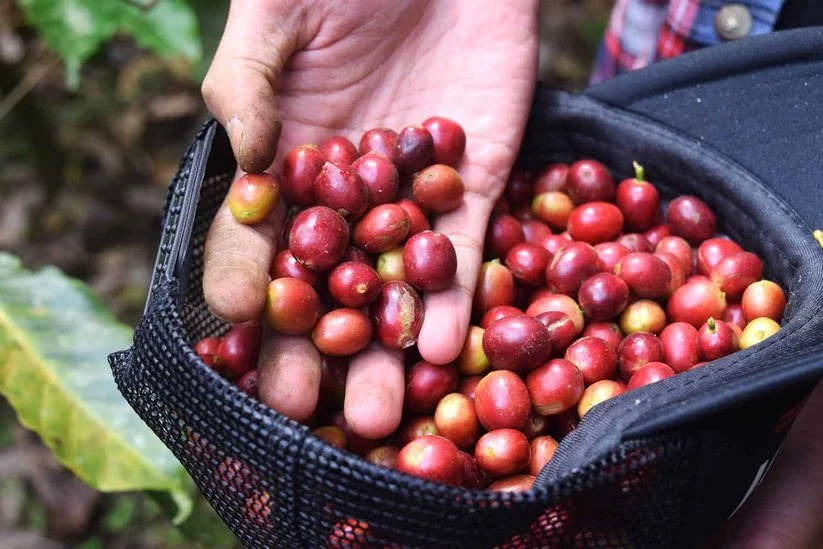
For more specialty coffee knowledge, please follow the WeChat public account: Front Street Coffee (FrontStreet Coffee)
When it comes to specialty coffee producing regions in Indonesia, everyone often blurts out Sumatra. Among the Indonesian beans sold by Front Street Coffee (FrontStreet Coffee), besides Sumatra's Mandheling, there is also a coffee from West Java. It differs greatly from most people's fixed impression of Indonesian coffee—you won't taste herbal or spicy notes; instead, it is dominated by soft tropical fruit acidity. Next, Front Street Coffee (FrontStreet Coffee) will introduce this West Java bean to everyone.
Introduction to the Coffee Producing Region West Java Province is a first-level administrative region of Indonesia, located in the western section of Java Island, with the Java Sea to the north and the Indian Ocean to the south, and includes nearby islands, covering an area of about 46,300 square kilometers. Java has a tropical rainforest climate, hot and humid year-round.
The northern coastal plains have the highest temperatures, while the mountainous areas are noticeably cooler. High humidity often creates a tiring climatic feeling. From November to March of the following year, affected by the northwest monsoon, it is cloudy and rainy; from April to October, it shifts to the southeast monsoon, with more sunny days and less rainfall. Jakarta's average annual rainfall is about 1,760 millimeters (69 inches), with an average daily high of about 30°C (86°F) and a low of about 23°C (74°F). In the highland area of Tosari (elevation 1,735 meters/5,692 feet), the average temperature ranges from 22 to 8°C (72 to 47°F). Volcanic ash periodically replenishes nutrients to the land, making Java's soil exceptionally fertile.
Java holds a pivotal position in coffee history. Unlike most other producing regions in Indonesia, Java's Arabica does not rely on primary processing by small farms, but grows on large farms or plantations, most of which are government-operated and use modern washed processing. The variety is S795, locally called Jember, which is artificially cultivated. The reason Front Street offers this bean is that it can present the refined aroma, relatively soft acidity, delicate mouthfeel, and good balance of the Java producing region. Java coffee's aroma and acidity are superior to those of Sumatra and Sulawesi coffee.
Coffee Cultivation History Mocha coffee was introduced to India around 1600 and planted in Ceylon in 1658, but the harvest was always poor. In 1699, the Dutch introduced seeds from India to Java Island, and in 1711 the first batch of seedlings was exported to Europe's Dutch East India Company (Dutch abbreviation VOC, Vereenigde Oost-Indische, founded in 1602). Within ten years, the export volume of JAVA coffee produced in Indonesia grew to 60 tons per year. Indonesia was also the first country after Yemen and Ethiopia to cultivate coffee on a large scale, and coffee was monopolized in trade by the VOC for more than sixty years (1725 to 1780).
During the early Dutch colonial era, Typica was planted, with seeds introduced from Ceylon Island (present-day Sri Lanka). In the 17th century, the Dutch colonial government first planted coffee in Batavia, then expanded southward to Sukabumi, and spread to central East Java, West Java, parts of Sumatra, and Sulawesi Island, opening the path of high-end marketing for coffee. Java Island's coffee trees were exported to the Netherlands in 1711 and cultivated in Amsterdam greenhouses, and in 1715 were sent to the Palace of Versailles in France. Afterward, the Netherlands and France spread coffee to Asia and the Americas, which is the origin of New World coffee.
In the late nineteenth century, Dutch colonists established large coffee plantations on the Ijen Plateau in eastern Java Island. By the 1920s, smallholders throughout Indonesia began to grow coffee as a cash crop. However, disaster struck in 1876 when coffee leaf rust swept through Indonesia, destroying most Typica varieties.
In the late 1880s, large numbers of coffee plantations were destroyed by pests and diseases, and the epidemic spread to central Java and East Java. In the early 20th century, Arabica coffee was again severely damaged by leaf rust, and most of the Dutch coffee variety system was destroyed. Therefore, in 1911 the Indonesian Coffee and Cocoa Research Institute (ICCRI) was established, continuing the knowledge base of coffee tree and cocoa cultivation introduced by the Dutch in the 16th century. ICCRI pioneered coffee and cocoa research activities and has a national mandate to carry out related research and development, committed to producing innovative technologies applicable from farm to processing stages. Its professionalism far exceeds that of the SCAA association, and it is a world-recognized international research institution.
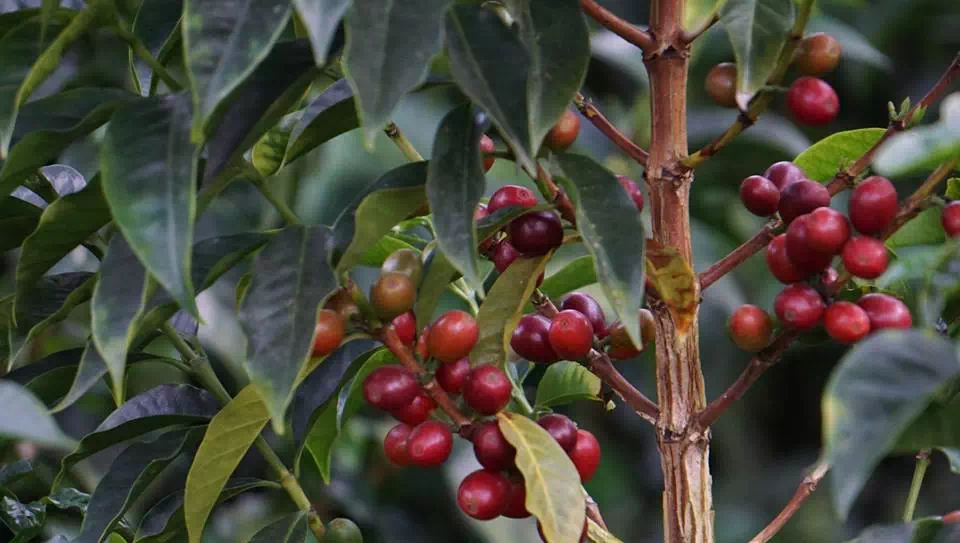
ICCRI provides services to coffee and cocoa growers, with the goal of solving long-standing problems and strengthening technology transfer. The institution consists of more than 300 employees, involving three major responsibilities: research, service, and commercial and support. Among them are 36 researchers, including 12 Ph.D.s, 7 master's degree holders, and 17 polytechnic university researchers, divided into 11 principal research scientists, 9 research scientists, 11 associate scientists, and 5 assistant scientists, and provides data and information to stakeholders such as smallholders, private and estate companies, national and regional governments, and associations.
Java Coffee was nationalized, planted on independent estates, and new Arabica varieties were vigorously promoted. These new varieties were given to smallholder farmers through the government and various development projects. More than 90% of Indonesia's coffee is grown on small farms with less than 1 hectare per capita, and most production is organic. Among them, 19 farmer cooperatives and exporters have obtained internationally certified organic coffee market qualification. There are more than 20 Arabica varieties commercially cultivated in Indonesia, which can be roughly divided into six major categories:
Typica was introduced by the Dutch and is the original variety. Most Typica disappeared in the late 1880s when coffee leaf rust swept through Indonesia. However, Typica mutant varieties in Bergandal and Sidikalang can still be found in the high-altitude areas of Sumatra.
Hibrido de Timor (HDT), also called "Tim Tim," is a hybrid of Arabica and Robusta, apparently originating from a single-origin coffee mutation between 1917 and 1918, and was planted in Aceh in 1979.
Linie S: This line originated in India and evolved from Bourbon. The most common are S-288 and S-795, often found in Aceh Province, Flores, and Lintong.
Ethiopian lines include Rambung and Abyssinia, varieties brought to Java in 1928 and continuously planted in Aceh. Another group of Ethiopian variant varieties was found in Sumatra, called "USDA," which was introduced to Indonesia in the 1950s.
Caturra variety: Caturra is a mutation of Bourbon, originating from Brazil.
Catimor: A cross between Arabica and Robusta made to improve flavor. There are many Catimor types, including the line named "Ateng-Jaluk," whose suitability for planting in Aceh and ability to achieve excellent cupping scores are currently being studied.
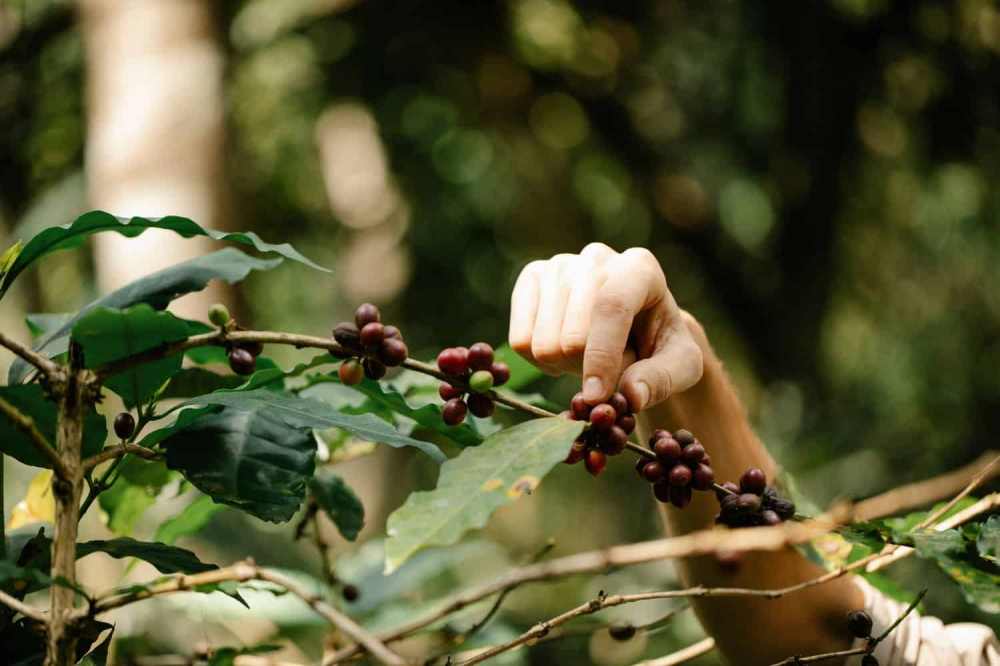
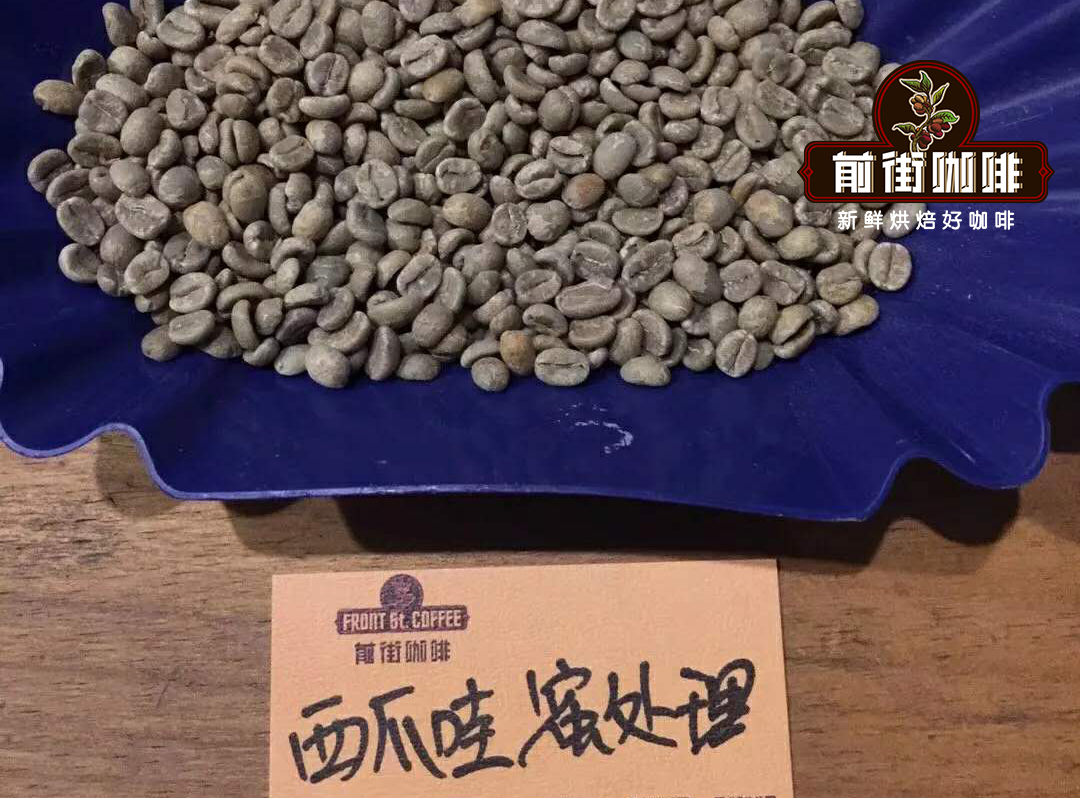
Front Street Coffee (FrontStreet Coffee): Honey-Processed West Java Coffee Beans Country: Indonesia Producing Region: West Java, Mount Tigula Estate: Amani Estate Altitude: 1400-1600 meters Variety: Jember Processing Method: Honey Processing
Coffee Variety S795 is locally called Jember, and the beans have a blue-green color. Its natural variation comes from S288, and S288 was originally an excellent hybrid variety cultivated in India in 1946. The predecessor of S288 was lineage S288 (first generation) crossed with Typica and named S26. Because the first-generation S288 bean was a cross between Arabica and Liberica, it always carried the earthy taste of Liberica. Indian botanists therefore crossed the first generation S288 with the Kent variety, which was a hybrid of first-generation S288 and Typica, and then crossed it with second-generation S288, ultimately forming today's S795.
The S795 planted in West Java was introduced from India by the Jember Coffee Research Center in East Java and then given to Java farmers to plant, so local Java farmers also directly call S795 Jember.
Processing Method Honey processing is a relatively complex, time-consuming, and difficult processing method. The first step is to select high-quality fruit, then remove the pulp and leave the mucilage, which is the core of honey processing. The mucilage is rich in sugar and acidity, and during the drying process, the sweetness and acidity slowly penetrate into the coffee beans. The second step is drying, which is also the most important condition for producing high-quality coffee beans. Honey processing allows the coffee to retain the cleanliness of washed processing. Although the brightness decreases somewhat, it increases sweetness and caramel mouthfeel. According to different degrees of honey processing, it is further divided into yellow honey, red honey, and black honey.
Front Street Roasting Parameters Front Street's roaster noticed that West Java green beans are high in density, so heat adjustment requires extra care, while also highlighting fruit flavor and sweetness. Therefore, a medium roast was chosen to fully express the uniqueness of the green beans. One minute after charging, the initial heat will be relatively high, until early in the dehydration phase when the heat is adjusted earlier, making the coffee's taste and aroma more uniform.
Front Street Cupping Report Through cupping, Front Street found that the main characteristic of this Java coffee lies in its complex sweetness and fruity aroma. Compared with Africa's Yirgacheffe, also known for floral aroma, a more obvious fruitiness is its main feature. Its flavor profile leans toward heavier tropical fruits such as mango and jackfruit, complex and steady, while the unique honey processing method brings a subtle red wine note.
Front Street Coffee (FrontStreet Coffee) Brewing Recommendation Water temperature: 90-91°C Grind size: EK43s setting 10 (fine granulated sugar size / 80% passing a No. 20 sieve) Coffee-to-water ratio: 1:15 Dose: 15 grams
Front Street brewing method: In the first stage, pour 30 grams of water for a 30-second bloom, then pour 95 grams (the electronic scale shows about 125 grams), completing the pour in about 1 minute; when the water level drops to two-thirds of the coffee bed, pour the remaining 100 grams (the electronic scale shows about 225 grams), completing the pour in about 1 minute 40 seconds. At 2'00", dripping is complete. Remove the dripper and extraction is finished.
Brewing flavor: Very rich tropical fruit flavors, the sweetness of fruits such as mango and jackfruit, with a fermented red wine note.
The above content is compiled by CoffeeHunters, a coffee news website.


