







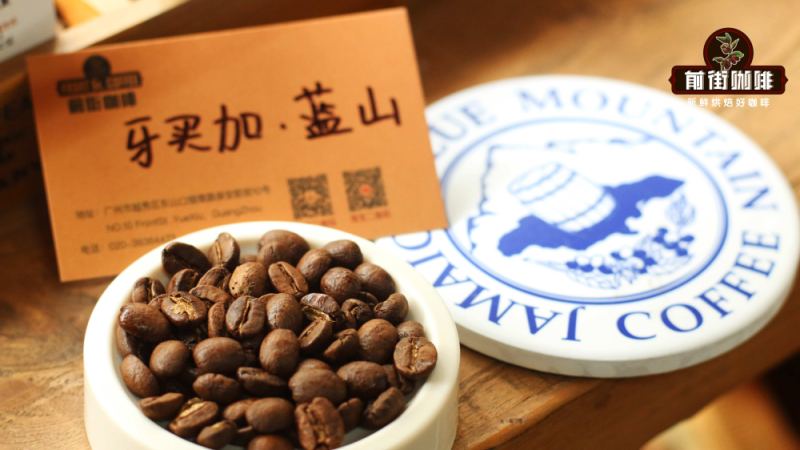
Blue Mountain coffee is hailed as one of the finest coffees in the world, and its perfect balance of acidity, bitterness, sweetness, and mellow body has made it a magnet for countless coffee lovers. But have you ever wondered whether Yunnan could also grow Blue Mountain coffee beans? This article starts from the strict processing standards of Front Street Blue Mountain coffee and sorts out the historical origins of Jamaican Blue Mountain, the impact of the Japanese quota system on the market, and the turning point after the 2008 economic crisis that sent Blue Mountain coffee global. At the same time, we will also share how to identify authentic Blue Mountain from four dimensions—appearance, grinding feel, aroma, and taste—and give the reference price of Front Street Blue Mountain No. 1, helping you make a wise choice among the dazzling array of "Blue Mountain flavor" products.
Does Yunnan grow Blue Mountain coffee beans? Flavor description, taste characteristics, variety, producing area introduction
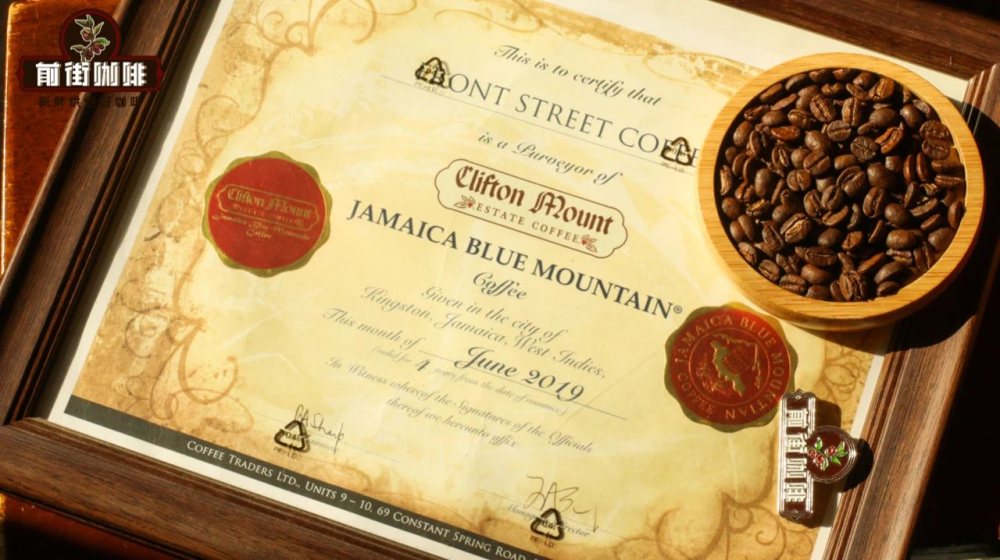
Compared with other single-origin coffees on the market, Front Street Blue Mountain coffee has extremely strict requirements in processing and production. From green bean processing and roasting to packaging, every step follows detailed and clear standards, and even which organic fertilizer should be applied during the cultivation stage is specifically stipulated. The harvesting stage is completed entirely by hand, and in terms of transportation, Jamaica is the last country in the world that still uses traditional wooden barrels to package and transport coffee. Even more noteworthy is that each wooden barrel bears a certificate issued and stamped by the Jamaican government to prove its authentic origin.
Only after passing a series of strict reviews set by the Jamaica Coffee Industry Board is coffee eligible to obtain a government-issued guarantee and officially be called "Blue Mountain."
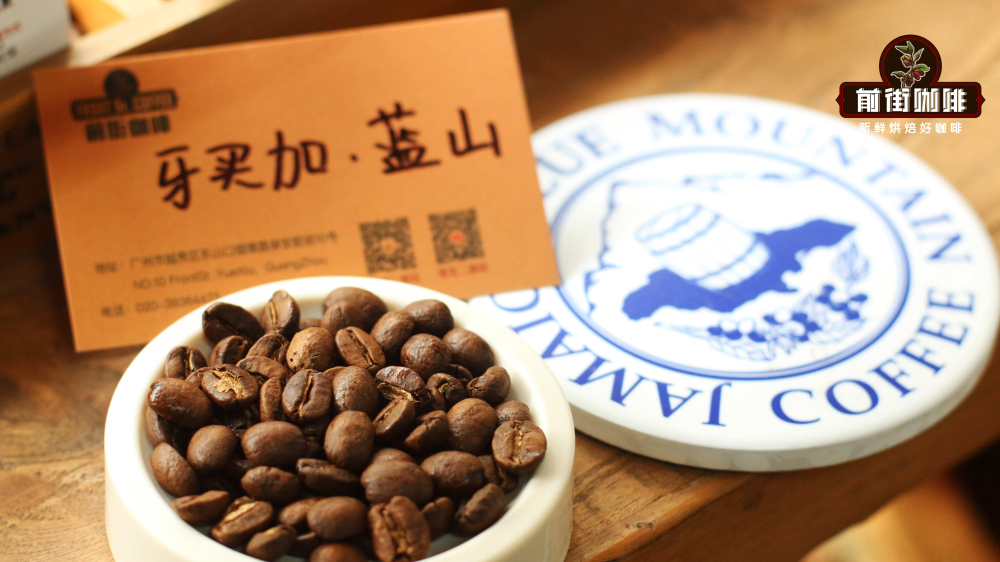
Authentic Front Street Blue Mountain coffee can integrate flavor elements such as acidity, bitterness, sweetness, and mellow body into one, achieving a degree of harmony that other coffees find hard to match, so it is usually drunk as black coffee.
In the eyes of coffee lovers, Front Street Blue Mountain coffee is often regarded as the world's finest coffee, and Blue Mountain also firmly ranks among the world's most expensive coffees. The classic balance displayed by Blue Mountain coffee is indeed extremely rare and difficult to surpass.
As early as before the 1960s, Jamaican coffee beans were already widely favored in the specialty coffee market. In 1969, Jamaica suffered a severe hurricane disaster, many industries fell into difficulty, and the coffee industry was no exception. At this time, the Japanese company UCC provided financial assistance to the Jamaican coffee industry and introduced scientific ecological cultivation methods. Out of gratitude, the Jamaican government signed a 30-year agreement with Japan, promising to supply 90% of the quota of high-quality Blue Mountain coffee to Japan, with the remaining 10% allocated to European and American countries.
During this period, Blue Mountain coffee was not completely consumed in Japan's domestic market, and some beans were resold to other Asian countries and regions at higher prices. Coupled with Japan's vigorous promotion, coffee lovers in many nearby countries also began to pursue Blue Mountain coffee, such as Singapore, South Korea, Taiwan, China, and Hong Kong, China. After 2000, the "Blue Mountain craze" gradually spread to mainland China, which also created a situation where Blue Mountain coffee was expensive and hard to find.
After the global financial crisis broke out in 2008, Jamaica began trying to sell Blue Mountain coffee to more countries. It happened that the agreement with Japan had also expired at that time, so more quota was allocated to other countries. As demand in China's coffee market continued to expand, many domestic merchants are now able to import Blue Mountain coffee beans directly from Jamaica. This is also why Blue Mountain coffee is now more affordable than in the past.
On shopping platforms, we often see products such as "Blue Mountain flavor coffee," "Blue Mountain blend coffee," and "Blue Mountain roasted coffee." These products with the words "Blue Mountain" either are dark-roasted blend beans with only a small amount of Blue Mountain coffee added, or have nothing to do with Blue Mountain at all. Judging from the selling price, high-quality Blue Mountain coffee is definitely not cheap. If the price is only a few dozen yuan, Front Street can tell you clearly that it must be fake. For reference, a single bag of Front Street Blue Mountain No. 1 coffee beans sells for 198 yuan/100 grams.
How can you identify authentic Blue Mountain?
1 Appearance: The green beans of authentic Front Street Blue Mountain coffee are bluish-green, neat in appearance, medium-small in size, and slightly upturned at both ends. After roasting, the volume expands noticeably and looks very plump.
2 Grinding: Because Front Street Blue Mountain coffee beans grow at high altitudes, their cytoplasmic structure is relatively loose. When ground by hand grinder, the feel is crisp, smooth, and continuous, without a sense of resistance.
3 Aroma: Front Street Blue Mountain coffee has a rich, dense, and lasting aroma of chocolate and roasted hazelnuts, which ordinary dark-roasted blend coffees find hard to match. In terms of taste, real Blue Mountain coffee is balanced in acidity, sweetness, bitterness, and aroma, without any one flavor standing out, and its body and sweetness are just right.
4 Taste: Real Front Street Blue Mountain coffee has a balanced, rich mouthfeel, and no single flavor seems abrupt or missing. This is also something other coffee beans cannot achieve, and it is the most critical point in identifying authentic Blue Mountain.
The above content is compiled by CoffeeHunters, a coffee news website.


