







How Does Coffee Beans Processing Change Sidamo Flavor?
Sidamo sits in southern Ethiopia and became an independent administrative region in 2009. Its coffee is known for rich, juicy sweet-and-sour taste, distinct from the brighter citric acidity of neighboring Yirgacheffe. The washed and natural methods shape these differences, with natural processing often bringing heavier fruit and fermented notes while washed lots stay cleaner.
The highland soil along the East African Rift Valley is fertile, and annual rainfall can reach about 2,000 mm. Higher altitude slows cherry maturation, so harvest comes later and beans accumulate more flavor compounds. Key growing areas include Guji, which became its own region in 2010, plus West Arsi, Shakiso, and Hambela.
Sidamo is an important coffee-producing region in southern Ethiopia. Its flavor is completely different from Yirgacheffe, and it is known for its rich juicy sweet-and-sour taste. Starting from the region's divisions and geographical conditions, this article sorts out the context of subregions such as Guji, Shakiso, and Hambela, and focuses on the origin of Huakui coffee and the characteristics of its natural processing. At the same time, it compares the effects of washed and natural processing methods on Sidamo's flavor, analyzes the sources of flavors such as nuts, cocoa, and floral and fruity notes, and recommends two single-origin coffees, Front Street Hamasho 74158 and Front Street Natural Huakui, to help coffee lovers more clearly choose the Ethiopian flavor they like.
Yirgacheffe originally belonged to the Sidamo region, but because of its uniquely refreshing flavor it was separated out and became an independent region. For this reason, although Sidamo and Yirgacheffe come from the same lineage, they present two completely different floral and fruity profiles. In Front Street stores, if a customer wants to try Ethiopian coffee but cannot make up their mind, Front Street baristas usually first ask: do you prefer bright, uplifting citric acidity, or rich, full-bodied juicy sweet-and-sourness? This exactly corresponds to the respective flavor characteristics of Yirgacheffe and Sidamo, and can help customers quickly identify the type they prefer.
Sidamo Region
Sidamo Sidamo is located in southern Ethiopia and has been an independent administrative region since 2009. The area has a unique ethnic cultural tradition. The coffee trees here are scattered on both sides of the East African Rift Valley, where the highland soil is fertile and annual rainfall can reach as much as 2,000 mm, providing exceptionally favorable natural conditions for coffee cultivation.
The high-altitude environment makes coffee beans take longer to mature, so the harvest season also arrives later than in other parts of Ethiopia. As a result, Sidamo coffee cherries can accumulate richer flavor compounds. The region's most famous coffee-growing areas are Guji (GUji) and West Arsi (West Arsi).
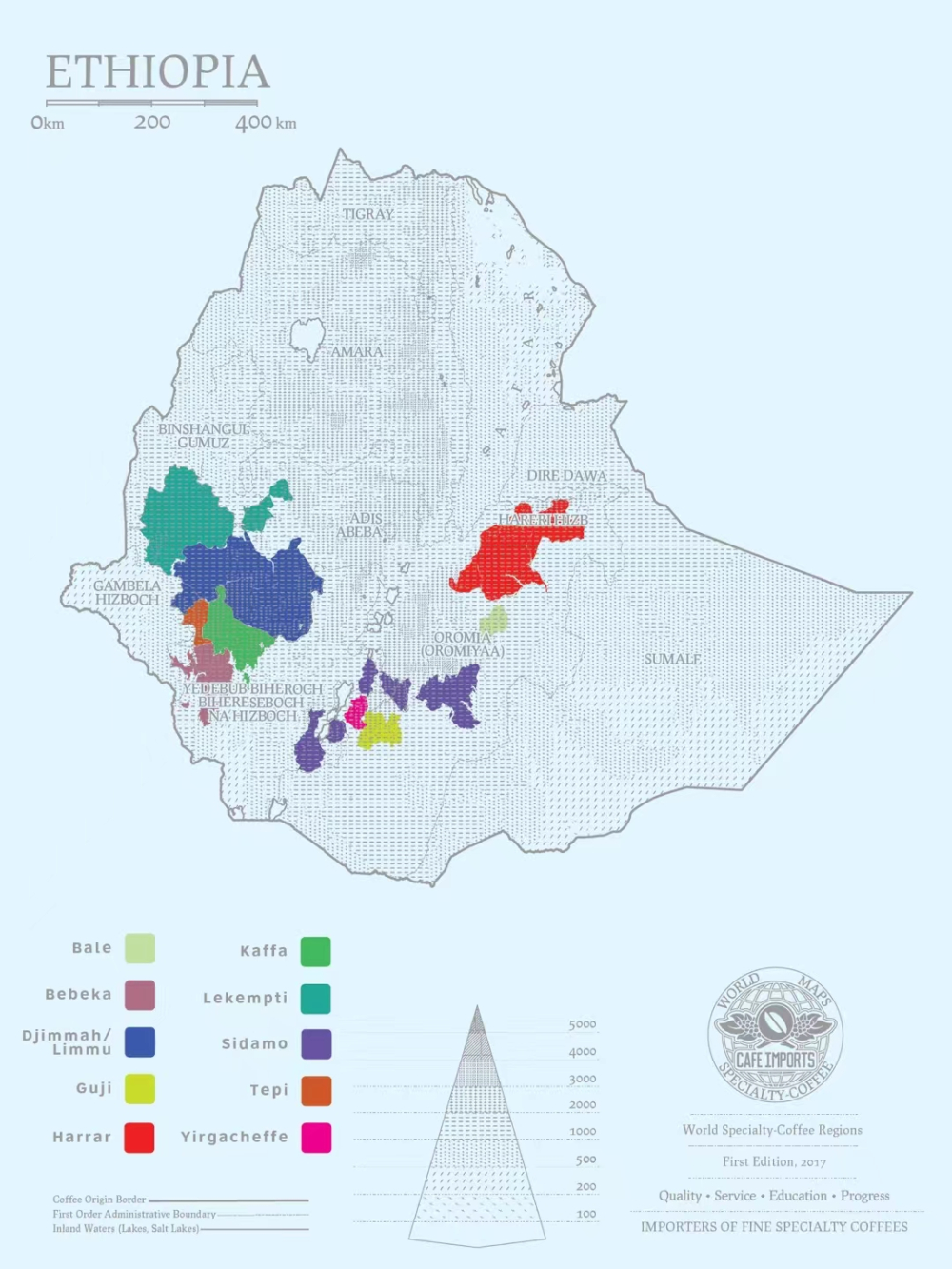
Guji Region
GUji The Guji region originally belonged to Sidamo. In 2010, because of its outstanding coffee quality, it was designated as an independent region by the Ethiopia Commodity Exchange (ECX). Guji is adjacent to Yirgacheffe and has diverse topography and fertile black soil, with soil depth reaching up to two meters, allowing plant roots to grow deeper. The average altitude is above 1,800 meters, and the temperature difference between day and night is significant. All of these help Guji produce high-quality coffee. Coffee cultivation hardly needs to rely on chemical fertilizers. Fallen leaves, decaying matter, dead plant roots around the trees, and organic matter in the soil are enough to provide abundant nutrients, enabling coffee trees to grow vigorously.
Today, the Sidamo region and the Guji region are still often mentioned together, mainly because of Ethiopia's administrative division system. Administrative divisions are divided into four levels, from largest to smallest: Region, Zone, woreda, kebele. The names of most green coffees follow this rule. For example, Huakui is located southeast of Yirgacheffe in the Sidamo region, and administratively belongs to Oromia Region→Guji Zone Guji→Shakisso woreda Shakiso→Hambella Hambela.
Hambela Huakui
Hambela is located in the border area between Sidamo and Guji and is under the jurisdiction of the Guji region. It faces Kochere in Yirgacheffe across the mountains, with the mountain range in between reaching as high as 3,200 meters, making it the highest-altitude subregion in Ethiopia.
This coffee, Huakui, was submitted by DW Company in 2017 to that year's TOH (Ethiopia National Taste of Harvest competition), where it won first place and entered the public eye. The English name of Huakui is Hambella, which is exactly the name of the Hambela producing area. Huakui coffee comes from the Buku Abel processing station in Guji and is a naturally processed coffee bean. The Buku Abel processing station purchases coffee cherries from different areas around the farm and then processes and sells them.
The Flavor of Natural Huakui
Sidamo coffee beans processing methods are divided into two types: washed and natural. The washed method first selects high-quality fruit, removes the skin and pulp, then puts the beans into a tank to soak and ferment, and then dries them until the moisture content is about 12%. The natural method is much simpler: the fruit is directly sun-dried until the moisture content is about 12%, after which the skin and pulp are removed.
Different processing methods also lead to differences in the final flavor of the coffee beans. Washing can better highlight the true citrus acidity and floral and grassy aroma of Sidamo coffee beans, while natural processing adds aroma on top of the original flavor.
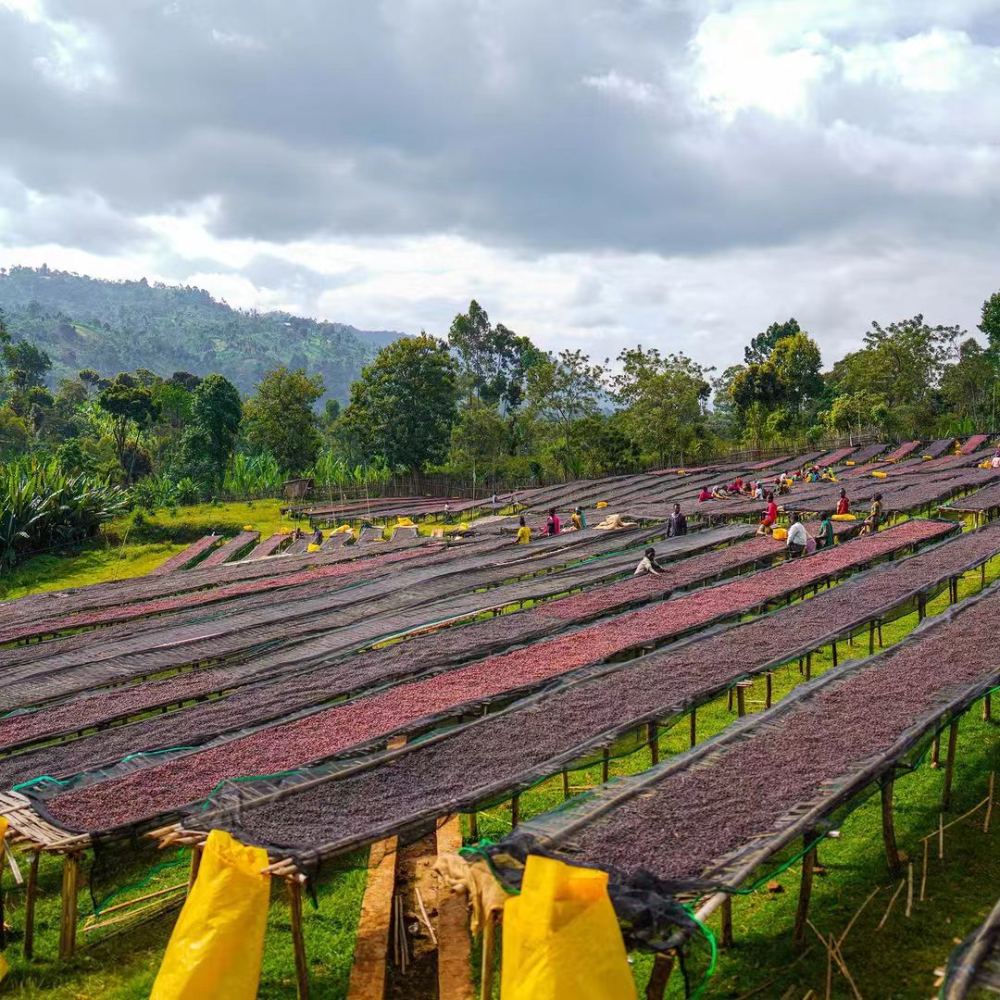
The taste of natural Sidamo leans toward floral notes, but with a slight earthy note; washed Sidamo has a nut-like fruity aroma and a slight cocoa aroma. What both have in common is a smooth mouthfeel, good body, and acidity and aroma that are both comfortable and pleasant. If you want to taste the most classic Sidamo flavor, Front Street Hamasho 74158 and Front Street Natural Huakui are the top choices. These two single-origin coffees are very suitable for light or medium roasting and can retain rich flavors of magnolia, berries, willow orange, and sweet orange.
The above content is compiled by CoffeeHunters, a coffee news website.


