







Which Arabica Variety Grows in Yunnan Coffee?
Yunnan small-bean coffee is Arabica, and the name mainly distinguishes it from the medium-bean Robusta grown in Hainan. Catimor is currently planted on a large scale in Yunnan, with only a small amount of other varieties such as Typica distributed. Pour-over is a common way to brew it, since the cup shifts in layers as the temperature drops.
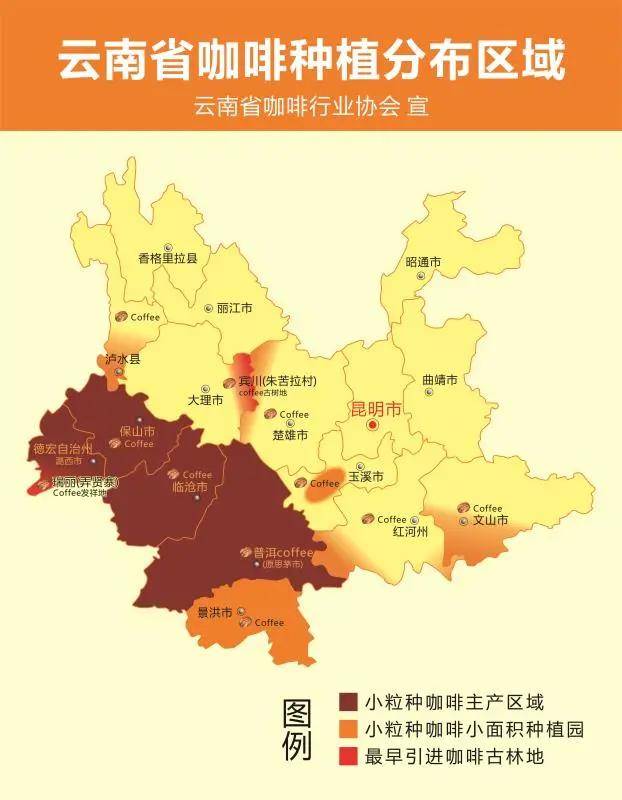
Coffee trees prefer warm conditions, roughly 16 to 21°C, and grow well between 25° north and 25° south latitude, a band called the coffee growing belt. Yunnan lies on it, with most areas 1,000 to 2,000 meters above sea level. Growing areas cluster in the southwest, including Baoshan, Dehong, Pu'er, and Lincang.
Yunnan small-bean coffee has drawn increasing attention from coffee lovers in recent years, and its balanced flavor profile and affordable price have made it a daily staple for many. Front Street Coffee has added two Yunnan beans from Baoshan and Lincang to its bean list, presenting the most authentic taste of Yunnan coffee through the two traditional processing methods of washed and natural. This article will start from the regional characteristics, variety distribution, and processing method differences of Yunnan small-bean coffee, analyze the flavor performance of Typica in detail, and provide Front Street Coffee's pour-over extraction plan and complete brewing steps for Yunnan beans, helping you easily recreate a cup of layered Yunnan pour-over black coffee at home.
When it comes to the extraction methods for Yunnan small-bean coffee, what Front Street recommends most is pour-over black coffee—as the temperature gradually drops, the taste layers will show distinct changes. Before the formal brewing, Front Street will first give everyone a brief understanding of what characteristics Yunnan small-bean coffee possesses.
Where is Yunnan small-bean coffee produced?
The name "small-bean coffee" is used to distinguish it from the medium-bean Robusta variety grown in China's Hainan production area. Essentially, like many coffee-producing areas, it belongs to the Arabica species. At present, the variety planted on a large scale in Yunnan is Catimor, with only a small amount of other varieties distributed.
Coffee trees prefer a warm climate. They can tolerate higher temperatures but fear the cold, and sufficient sunlight is more favorable for their growth. The ideal planting temperature range is 16 to 21 degrees Celsius. Centered on the equator, the zone between 25° north latitude and 25° south latitude is therefore called the "world coffee golden growing belt." Yunnan happens to lie on this golden belt. Most areas in the province are between 1,000 and 2,000 meters above sea level, with fertile sloping soil, abundant sunshine, plentiful rainfall, and significant temperature differences between day and night, all of which provide superior natural conditions for the growth of coffee trees.
Yunnan's coffee-growing areas are mainly concentrated in the southwestern part of the province, covering the four major production areas of Baoshan, Dehong, Pu'er, and Lincang. The two Yunnan coffee beans on Front Street's daily bean list are selected from Baoshan and Lincang respectively.
Baoshan's coffee-growing history can be traced back to the mid-1950s, when it was first introduced by the patriotic overseas Chinese Mr. Liang Jinshan. The local warm climate with no frost throughout the year fits the growth needs of small-bean coffee very well. In particular, the unique dry-hot valley climate of the Lujiangba area, where the annual temperature variation is small but the day-night temperature difference is obvious, gives Baoshan small-bean coffee a distinctive sweet aftertaste. In addition, the reasonably low rainfall creates extremely favorable conditions for the growth of coffee cherries. For this reason, Front Street has included Baoshan small-bean coffee among its representative production-area staple beans, giving more people the chance to taste the true flavor of Yunnan small-bean coffee.
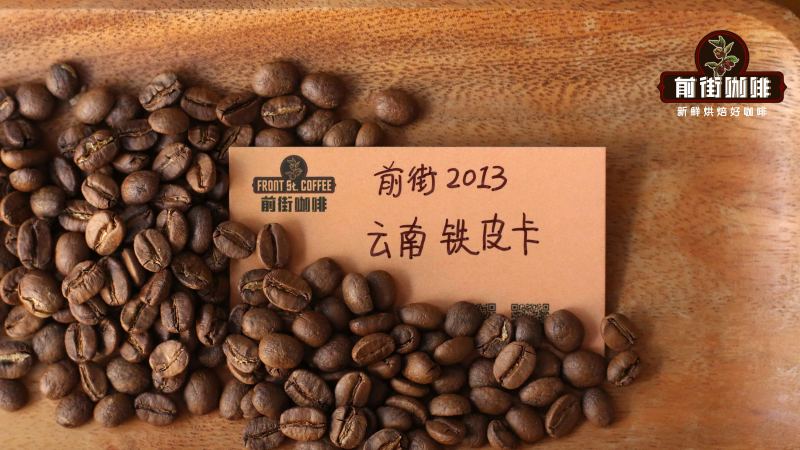
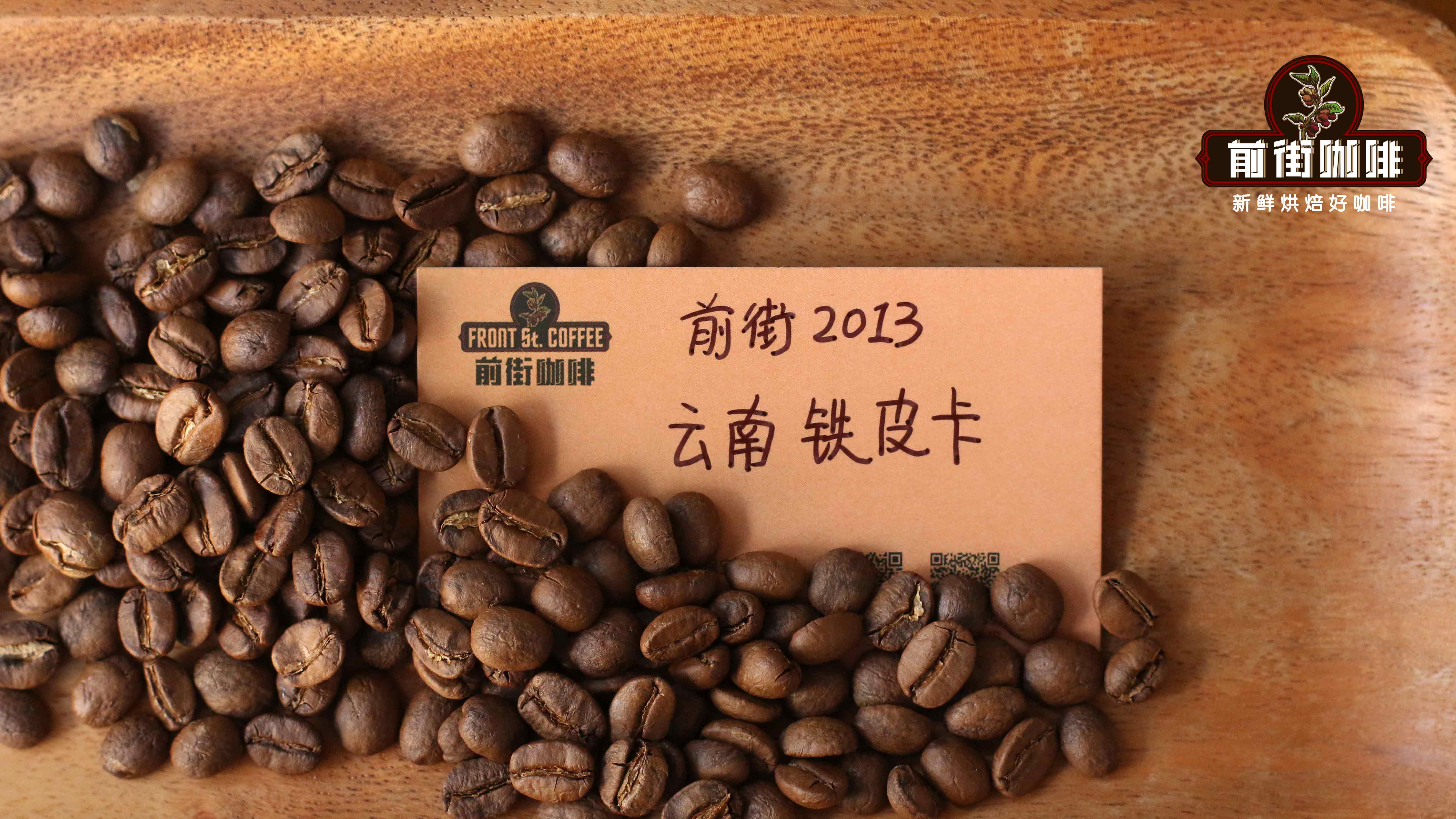
In the process of studying coffee knowledge, Front Street also had the experience of personally growing coffee. In 2013, Front Street established its own estate in Lincang, completing everything from site selection, seed selection, seedling cultivation, planting, harvesting, processing, and roasting entirely on its own, and thus accumulating a great deal of experience and insights. Lincang's average annual temperature ranges between 16.8 and 17.2 degrees Celsius, with distinct dry and wet seasons and good sunlight conditions. Front Street specifically chose the most original Arabica variety—Typica. After 5 to 6 years of cultivation, Front Street finally harvested its first results in 2020, produced using the natural process and named "Front Street 2013."
Processing methods for Yunnan small-bean coffee
Although there are many Yunnan coffee beans on the market that highlight aroma through special processing, Front Street believes that to truly understand Yunnan small-bean coffee, one should start with traditional natural processing methods and taste the flavor of Yunnan coffee itself. Therefore, the three Yunnan coffees retained on Front Street's bean list all use the two processing methods of washed and natural.
As the face of Yunnan, Front Street selected the washed process for its Yunnan Baoshan small-bean coffee. The washed method removes the mucilage layer through fermentation and washing before drying, allowing Yunnan small-bean coffee to show the flavor profile unique to its production area. Front Street 2013 coffee, on the other hand, uses the natural sun-drying method. Front Street first ensures that only fully red cherries with just the right ripeness are picked, and turns them at irregular intervals to ensure even drying. The mesh of the drying bed helps the cherries breathe and avoids undesirable over-fermented flavors. Through cupping, Front Street found that the naturally processed Typica coffee showed higher sweetness and aroma.
Front Street's reference for brewing Yunnan small-bean coffee
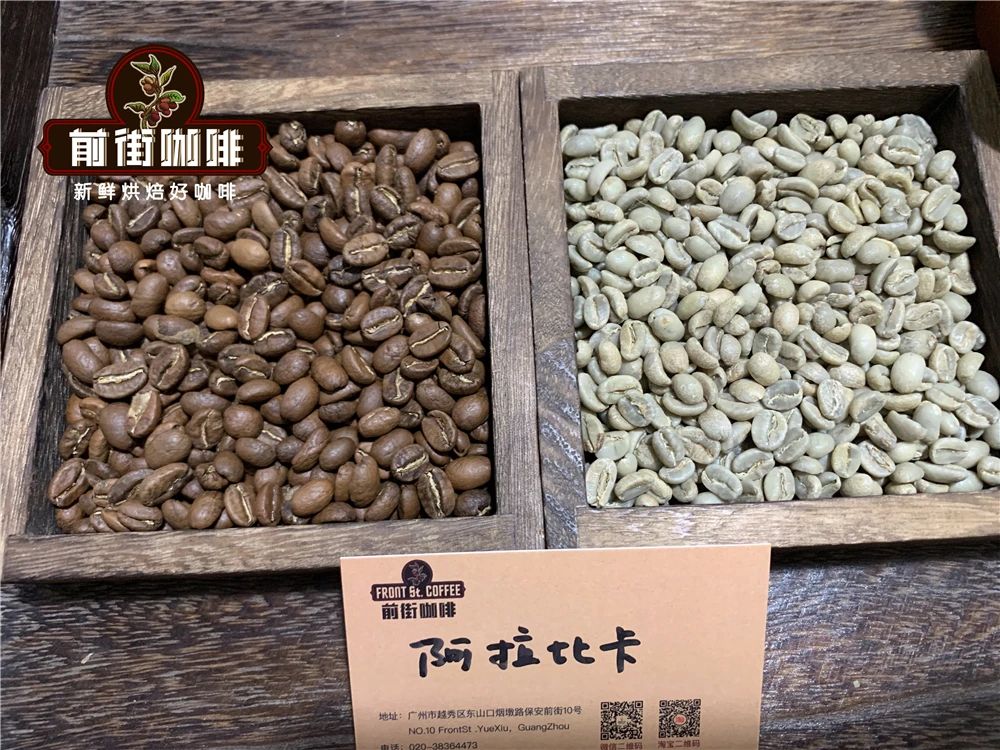
Front Street believes that Yunnan coffee's flavor profile is relatively neutral, that is, it has both acidity, sweetness, and bitterness, so a medium roast was chosen to highlight chocolate aroma while retaining some acidity. From cupping, Front Street tasted that the Yunnan small-bean staple beans present nutty and herbal aromas, brown-sugar-like sweetness, and plum-like acidity, with a balanced mouthfeel. The naturally processed Front Street 2013 has a more prominent fruity and melon-like sweetness, a black-tea-like full body, and a rich chocolate flavor, with an overall clear flavor and a clean finish.
Based on Yunnan coffee's balanced and neutral profile, the baristas at Front Street Coffee (FrontStreet Coffee) formulated corresponding extraction plans, used respectively for brewing these two Yunnan coffee beans.
For the pour-over water temperature, Front Street recommends controlling it between 88 and 93 degrees Celsius. Too high a water temperature easily produces a scorched bitter taste, while too low a water temperature may lead to under-extraction. Here Front Street uses a medium water temperature of 90 degrees Celsius. Compared with other conical drippers, the V60 dripper has a larger outlet diameter, and with the spiral guide ribs connecting the top and bottom, moisture is more easily released during extraction, thereby enhancing the flavor layers.
Brewing parameters for Yunnan small-bean staple beans: Dripper: V60, Water temperature: 90-92℃, Coffee-to-water ratio: 1:15, Grind size: medium grind (75% passing a Chinese standard No. 20 sieve), Three-pour extraction
First pour 15 grams of ground coffee into the dripper and tare the weight. For the first pour, add 30 grams of water to bloom for 30 seconds, and start timing at the same time. Throughout, pour in a small stream from the center point and spiral outward, making sure to wet the entire coffee bed. For the second pour, switch to a slightly larger stream and add 120 grams of water, with the aim of lifting the entire coffee bed. The water column should be poured vertically and evenly. At this point the scale shows 150 grams, and the pour is completed at about 55 seconds. When the liquid level drops to halfway, begin the third pour with a fine stream in a small spiral, adding 90 grams. Try to control the stream so the spiral is not too large, otherwise it may easily disturb the coffee bed and cause under-extraction. The final total water amount is 240 grams, and the drip completion time is about 2 minutes 10 seconds.
Before tasting, gently swirl the coffee liquid to feel the changes in flavor and mouthfeel that Yunnan coffee brings as the temperature drops.
Front Street's brewing suggestions
Front Street's above flavor descriptions of Yunnan coffee are all based on freshly roasted coffee beans. If beans stored for more than two months are used, the aroma may already have dissipated. After roasting, coffee goes through a 4- to 7-day resting period and then enters its optimal tasting period. Once this stage has passed, the coffee aroma will volatilize more quickly, and the flavor and mouthfeel will decline noticeably. To ensure that everyone drinks coffee in its best state, Front Street ships beans freshly roasted within 5 days, so the coffee beans everyone receives have the best aroma.
Some friends do not have grinding equipment at home and hope Front Street can help grind the coffee. Of course this is no problem; simply tell Front Street which extraction method you use. Whether grinding into powder or making drip bags, Front Street must remind you: after coffee beans are ground into powder, the contact area with air increases, and the speed of aroma loss also accelerates. Front Street suggests drinking it as soon as possible after receipt. If you want to taste the fullest flavor, Front Street thinks buying a grinder and grinding fresh right before brewing is the best choice.
In addition to pour-over, many other extraction methods can also showcase the characteristics of Yunnan coffee, such as moka pot, French press, AeroPress, drip bag coffee, and so on. Front Street believes that as long as the extraction parameters are controlled within a reasonable range, brewing a delicious cup of Yunnan coffee is not difficult.
For professional coffee knowledge exchange and more coffee bean information, please follow Coffee Workshop (WeChat public account: cafe_style)
For more specialty coffee beans, please add the private WeChat of Front Street Coffee (FrontStreet Coffee), WeChat ID: qjcoffeex
The above content is compiled by CoffeeHunters, a coffee news website.


