







Yirgacheffe's dazzling acidity has led many to mistakenly believe that Ethiopia has only this one star-producing region. In fact, Sidamo in the south also produces distinctive specialty beans. This article focuses on the Guji region under Sidamo, outlining its history of independence from Sidamo, the terroir conditions of the Hambela sub-region, and providing a detailed analysis of the rise of Flower魁 coffee beans, the natural processing techniques of the Buku Able processing station, the evolution of different batches, as well as the green bean analysis, roasting curve, cupping report, and V60 brewing parameters provided by Front Street Coffee, helping enthusiasts fully understand this Ethiopian natural bean with prominent sweetness.
For more specialty coffee knowledge, please follow our WeChat official account: Front Street Coffee (FrontStreet Coffee)
The Yirgacheffe region has gained massive attention for its bright acidity and refreshing flavors, so much so that many people equate Yirgacheffe directly with all of Ethiopian coffee, or even believe that Ethiopia only produces coffee beans in this one place, all of them clean and transparent in style. In this article, Front Street introduces another Ethiopian region famous for its unique flavors—Sidamo. Front Street Coffee (FrontStreet Coffee)'s Flower魁 5.0 coffee beans from the Guji region of Sidamo have won over wave after wave of loyal fans with their full-bodied juice-like mouthfeel.
Let's first get to know the Sidamo coffee region
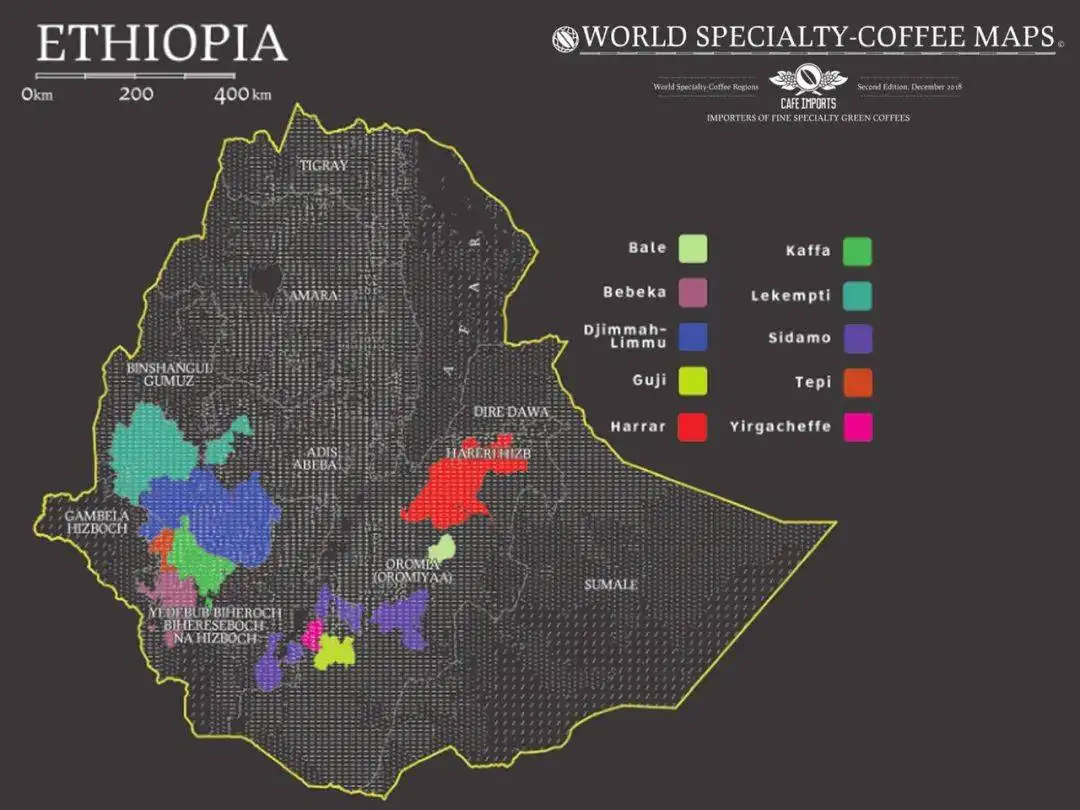
Sidamo is one of Ethiopia's specialty coffee regions, located in the south of the country, adjacent to the Yirgacheffe region. The coffee flavors produced in this region are quite diverse, because different areas have their own soil compositions, microclimates, and a vast number of native coffee varieties, making the coffee from each plot distinctly different and individual.
Front Street Coffee (FrontStreet Coffee) has found that coffee beans from different areas of Sidamo generally have abundant fruit acidity and rich aromas, making them very suitable for drinkers who prefer intense flavors but do not want an overly heavy mouthfeel, achieving a good balance between aroma and taste. The Flower魁 coffee beans discussed in this article come from the Hambela sub-region of the Guji region in Sidamo. This region came into public view in 2017 because Flower魁 coffee beans won an award. Let's first learn about the Hambela region.
Guji Coffee Region
The Guji region originally belonged to Sidamo, but was separated by the Ethiopia Commodity Exchange (ECX) in 2010 to become an independent region. It is located southeast of Yirgacheffe, with complex terrain featuring interlacing mountains, valleys, and plains. The soil in this area is fertile black soil (Vertisol), nearly two meters deep, with an average altitude exceeding 1,800 meters. The significant diurnal temperature variation brought by the geographical conditions provides the terroir foundation needed for producing high-quality specialty coffee.
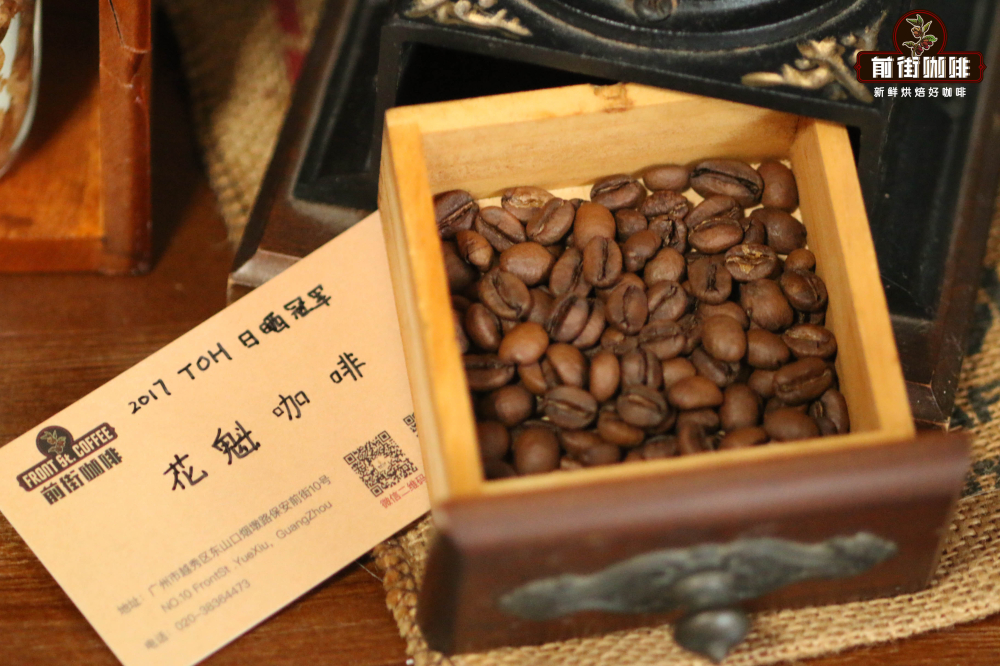
The most famous coffee bean from the Guji region is undoubtedly Flower魁. In 2017, it won the championship at the TOH (Ethiopia National Taste of Harvest Competition) with its outstanding strawberry cream flavor, truly earning the title of "Flower魁."
Before becoming "Flower魁," it was actually a competition-level award-winning bean. In February 2017, when Ethiopia's DW Coffee Company participated in the TOH green bean competition organized by the African Fine Coffees Association, it submitted a natural coffee bean from the Buku Abel processing station in Hambela, Sidamo. With its intense berry aroma and creamy texture, it won the natural group championship that year.
In the same year, this championship batch was spotted by a green bean trader in Beijing, who named it "Flower魁" due to its championship status and promoted it to the domestic market, symbolizing "the chief of a hundred flowers, outshining all others." Subsequently, this bean was used by a Chinese coffee brewing competition contestant as their competition bean, defeating several opponents using Geisha and winning the runner-up title that year, which was Flower魁's first "claim to fame" in China. As the competition gained popularity, this traditional natural bean from the Buku Abel processing station smoothly "debuted," and with its affordable price and appealing flavor, it quickly became a widely recognized high-quality Ethiopian coffee in the industry.
Buku Processing Station
The Buku processing station is located in Buku Abel village at an altitude of 2,200 meters. From the beginning, it chose to cultivate in nutrient-rich red-brown soil and provided shade for the trees, allowing Flower魁 to receive ample sunlight and develop rich aromas without consuming too many nutrients, thereby retaining more essence within the coffee cherries. The unique growing environment and natural climate of the harvest and processing season (December to January) created Flower魁's distinctive flavor.
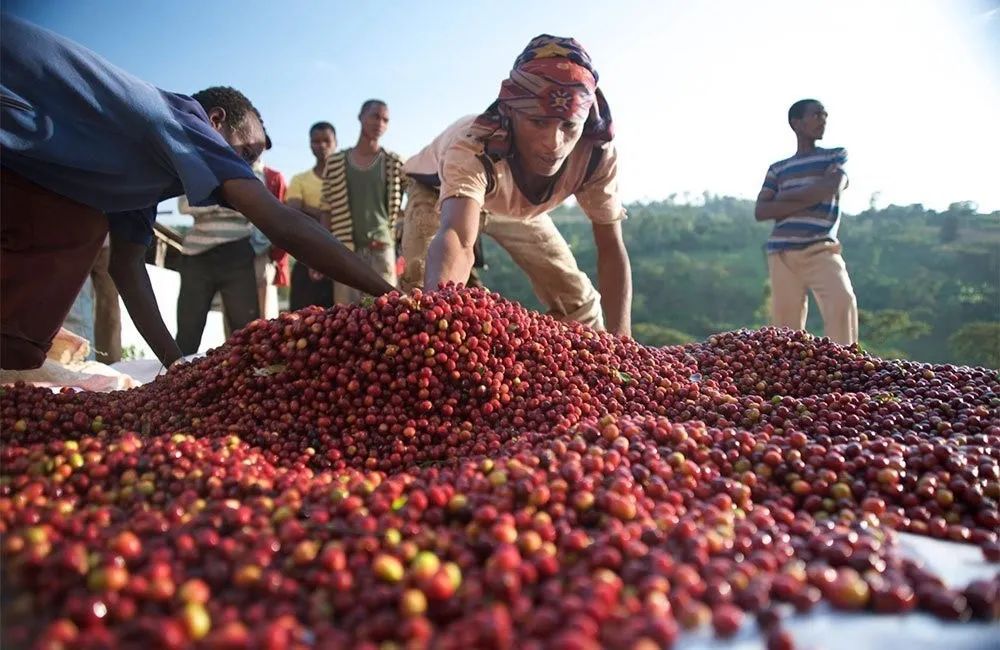
The Buku processing station requires that picked red cherries reach a sugar content of 30 or above before starting natural processing. During the first two days of natural processing, the humidity of the red cherries must be maintained to allow the fruit sugars to fully initiate fermentation reactions. At the same time, the low nighttime temperatures brought by the high altitude can drop to around 12 degrees Celsius, preventing overly fermented odors caused by excessive temperatures. When temperatures are higher at noon, shading is promptly applied to prevent the red cherries from sunburn.
The coffee farmers select only fully red cherries, meaning fully ripe coffee cherries, using manual picking and African raised-bed drying, limiting the thickness of the fruit layer, and turning them regularly every 24 hours to ensure even sun exposure and ventilation, allowing more precise control of the fermentation level. Front Street believes that because Flower魁 uses fully ripe coffee berries with high sugar content, after natural drying, the sugars in the pulp and pectin are absorbed by the coffee beans, so Flower魁's sweetness is more prominent than coffee beans from other Sidamo regions.
Flower魁 Coffee Beans
Years after the Buku processing station's Flower魁 coffee beans became famous, Flower魁 2.0 was released in 2018, and Flower魁 3.0 and 3.1 were released in 2019. Initially, Front Street tasted flavors similar to the 2017 Flower魁 in the 2018 and 2019 beans, but the body and aftertaste were not as good as the 2017 Flower魁.
By comparing different batches, we realized that the main source of the 2017 Flower魁's aroma was the presence of some particularly small-sized varieties among the Flower魁 coffee beans; similar small beans also appeared in the 2018 and 2019 Flower魁, with sometimes a few sacks of similar small beans appearing among ten sacks. In 2019, we confirmed this information and informed the green bean supplier. Starting from 2020, Flower魁 differentiated into two types: 4.0 and small-bean Flower魁, so small-bean Flower魁 does not belong to the [X.0] series.
Front Street Coffee (FrontStreet Coffee): Ethiopia Flower魁 5.0 Coffee Beans Region: Guji Hambela Processing Station: Buku Able Altitude: 2,350 meters Variety: Ethiopian native varieties Processing Method: Natural processing
Front Street Coffee (FrontStreet Coffee) Green Bean Analysis
Ethiopian native variety coffee beans appear to vary in size because Ethiopia has so many varieties, like a natural gene bank of Arabica. On one hand, the numerous varieties make identification and classification difficult; on the other hand, the Ethiopian government, for protection reasons, is unwilling to disclose information about these varieties, so they are collectively called Heirloom native varieties. Mixed planting and harvesting are also the main reasons for the varying sizes of Ethiopian beans. After receiving the green beans, Front Street Coffee (FrontStreet Coffee) noticed that the beans from the new harvest season had a relatively high moisture content, so the roaster extended the drying time to allow the bean surface and core to heat evenly. To showcase this bean's sweetness, acidity, and floral-fruity aromas, we used a medium-light roast level.
Front Street Coffee (FrontStreet Coffee) Roasting Record
Yangjia 800N, 480g bean charge: heated the drum to 175 degrees Celsius and charged, set airflow to 3, heat to 120. When it rose to 140 degrees, set airflow to 4. Roasted until 6'00'', temperature 151.7 degrees, bean surface turned yellow, grassy smell completely disappeared, dehydration complete. When the bean surface shows ugly wrinkles and dark streaks, and the toast smell clearly turns to coffee aroma, this can be defined as the prelude to first crack; at this point, listen carefully for the sound of first crack. At 9'50'', first crack began, airflow fully open, heat reduced to 80 at 188 degrees, first crack development time 1'40'', dropped at 196 degrees.
Front Street Coffee (FrontStreet Coffee) Cupping Report
Front Street Coffee (FrontStreet Coffee) conducts cupping within 8-24 hours after roasting sample beans. Front Street Coffee (FrontStreet Coffee) baristas typically use 200ml ceramic cupping bowls with 150ml and 200ml marked lines inside. According to SCAA standards, water TDS is controlled at around 150ppm; TDS too low easily causes over-extraction, while too high affects taste and easily causes under-extraction. Cupping water temperature is 94 degrees Celsius. Grind size is controlled so that 70%-75% passes through a No. 20 standard sieve (0.85mm). The ratio is 11 grams of coffee powder to 200 milliliters of hot water, i.e., 1:18.18, so that the extracted concentration falls exactly within the golden cup range of 1.15%-1.35%, with a steeping time of 4 minutes.
Dry aroma: citrus, berries
Wet aroma: blackcurrant, rose
Palate: almond, strawberry, blackcurrant, fermented note, persistent sweetness
Front Street Coffee (FrontStreet Coffee) Brewing Technique
Dripper: V60 #01 Water temperature: 90-91 degrees Coffee dose: 15g Coffee-to-water ratio: 1:15 Grind size: medium-fine grind / fine sugar size (77% passing through No. 20 sieve)
Front Street brewing method: First rinse the filter paper, preheat the dripper and coffee pot. Bloom with 30 grams of water for 30 seconds, then pour in a slow circular stream; when the water reaches 125 grams, pause, and when the water level is about to expose the coffee bed, continue pouring until 225 grams and stop. When the water level is about to expose the coffee bed again, remove the dripper. (Timing starts from the beginning of blooming.) Extraction time is 2 minutes 05 seconds.
Front Street Flower魁 coffee brewing flavor: almond aroma at high temperature, gradually revealing berry acidity and sweetness, blackcurrant juice-like mouthfeel, honey aftertaste, persistent sweetness.
The above content is compiled by CoffeeHunters, a coffee news website.


