







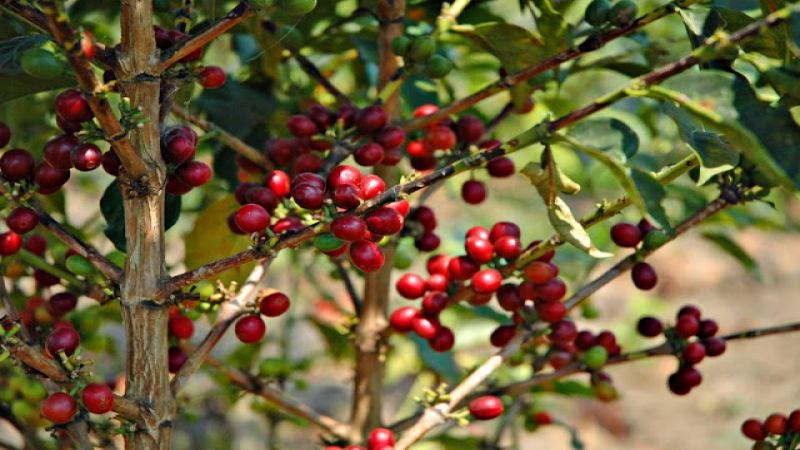
What makes Antigua coffee in Guatemala taste smoky and balanced?
Antigua coffee comes from Guatemala's volcanic highlands, where fertile ash-rich soil and more than three hundred microclimates shape a balanced cup with crisp fruit acidity, rich spice notes and a distinct smoky character. Guatemala mainly grows Bourbon, Typica, Caturra and Catuai, and washed processing keeps the terroir of each region readable in the cup.
Regions differ clearly: Antigua leans smoky and spicy, while Huehuetenango shows citrus and berry acidity, and Injerto Estate Geisha brings floral notes. Bourbon, a Typica mutation, delivers aroma and bright acidity with a red-wine hint. Roasting and brewing parameters should follow the region, so a lighter roast with a medium grind suits the fruitier lots. See the guatemala antigua starbucks story for how the name reached a wider audience.
Guatemala's fertile volcanic soil and more than three hundred microclimates give rise to layered, complex specialty coffee. This article systematically traces the flavor profile of Guatemalan coffee—from varieties and the eight major regions to the washed processing method and the Injerto Estate Geisha—and includes Front Street Coffee's roasting and brewing parameters. Whether you want to understand Antigua's smoky spice notes or Huehuetenango's citrus-berry acidity, you'll find the corresponding flavor coordinates and brewing approach here.
For professional coffee knowledge exchange and more coffee bean information, please follow Coffee Workshop (WeChat public account: cafe_style)
A person's wrinkles record the years they've walked through, while a cup of coffee's aroma preserves its origins: the terroir of its producing region, the harvest year, the method of roasting and grinding—linked together, these form the complete journey of coffee from seed to cup. Some also hold the view that coffee beans themselves differ little, and that what truly determines the flavor direction is the processing method. Front Street does not entirely agree. Coffee is, after all, an agricultural crop, and climate and geography inevitably have a profound influence on it; of course, different processing methods will also change the flavor expression—Costa Rica, for example, mostly uses honey processing. Washed processing, by contrast, can more directly present the terroir characteristics of the coffee's place of origin. Guatemala's fertile volcanic soil has shaped the unique character of Antigua coffee—balanced, crisp fruit acidity, rich spice notes, and a distinctive smoky note, as if telling the storied past of that land in Antigua.
Coffee Varieties
Besides processing method, variety is equally key in influencing coffee flavor. Different varieties lead to completely different flavor directions. Guatemala mainly cultivates Bourbon, Typica, Caturra, and Catuai. Bourbon and Typica both belong to the oldest varieties of Arabica and are mostly seen in specialty coffee. Typica is one of the varieties with the longest history, performs extremely well in flavor, and is often praised as the variety with the finest quality. Bourbon, mutated from Typica, often possesses even better aroma and bright acidity, with a touch of red-wine character. Guatemalan coffee belongs to the Bourbon variety, with relatively prominent acidity, a full body, and a slight wildness—very suitable as the base for blended coffee.
Front Street Coffee currently sells two Guatemalan coffees: one is Huehuetenango as an everyday drinking bean, with varieties Bourbon, Caturra, and Catuai; the other is the single-origin Guatemala Flor del Café, with varieties Caturra and Bourbon.
Guatemala
Guatemala is located in Central America, a presidential republic situated in the southern part of the North American continent. It borders the Pacific Ocean to the west, the Caribbean Sea to the east, Mexico to the north, and Honduras and El Salvador to the southeast. Coffee was introduced to Guatemala in 1750 by Jesuit priests, and in the late 19th century German colonists further promoted the development of the local coffee industry.
Guatemala has a land area of about 108,899 square kilometers, and its terrain can be divided into highland volcanoes, lowland tropical forests, volcanic sandy coastal plains along the Pacific, and the pristine zones along the Caribbean coast. The Sierra Madre mountain range runs across the country from west to east, occupying about two-thirds of the area, with 34 volcanoes distributed within its territory. Rivers and lakes dot the landscape, and equatorial forests and plains jungle cover large tracts of land. Today, coffee production is mainly concentrated in the southern region, which produces high-quality coffee beans.
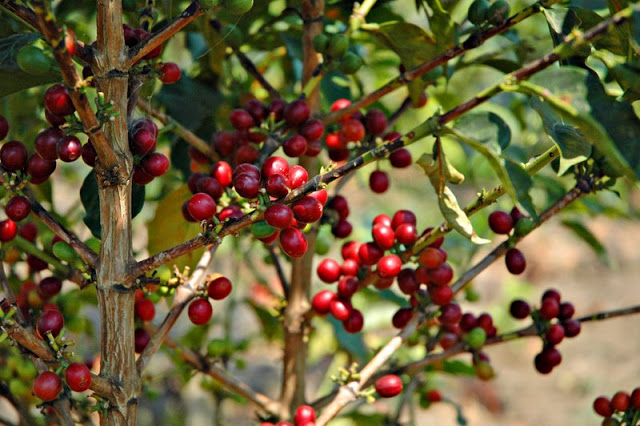
Few other places can offer such diverse and high-quality coffee beans as Guatemala. Guatemalan coffee is known for its elegant, lively acidity, clean and defect-free character, and distinct layers, with a flavor spectrum spanning green apple acidity, berry notes, jasmine florals, orange peel, green pepper, fruity sweet-tartness, chocolate sweetness, and even a smoky note in the finish. Such rich regional flavors benefit from the producing area's unique natural conditions: varied climates across regions, fertile soil created by volcanoes, abundant natural water sources, high-altitude mountains, and shade forests.
Guatemala Injerto White Stone Geisha
Injerto Estate is one of the most representative estates in Guatemala, having won numerous honors in global competitions. The area where the estate is located has fertile volcanic soil and a unique microclimate, and the coffee quality is extremely outstanding. EL Injerto cultivates two Geisha varieties, originating from Panama and Malawi respectively. The seeds of the Panama Geisha came from Hacienda La Esmeralda and, after careful cultivation, have become Injerto's most popular variety after Pacamara, with bidding prices even surpassing the long-leading Pacamara.
Guatemalan Coffee Producing Regions
Guatemala has eight major producing regions in total, five of which are volcanic producing regions and three are non-volcanic producing regions. The volcanic producing regions include: Antigua, Acatenango, Atitlan, Volcanic San Marcos, and Fraijanes. The non-volcanic producing regions are: Huehuetenango, Coban, and New Oriente. Guatemala has more than three hundred microclimates across its territory, the highest number in the world. Coffee flavors vary from region to region, but overall, Guatemalan coffee presents a mild, full-bodied texture, elegant aroma, and a pleasing acidity similar to fruit acidity, making it truly the nobility among coffees. Among them, Antigua Classic is deeply admired by coffee connoisseurs worldwide.
*Huehuetenango Highland Huehue
Among the three non-volcanic producing regions, Huehuetenango is the driest in climate and the highest in elevation, and also Guatemala's most rugged and remote area. The dry, hot winds from the Mexican plains enter the mountains, sparing the area from frost damage and allowing coffee to grow at elevations as high as 6,500 feet, with plump, solid beans. Huehuetenango coffee beans have a uniform, plump appearance, and are more regular than Ethiopian beans. Front Street's Guatemalan Huehuetenango coffee comes from this producing region.
*Antigua:
Rich volcanic soil, low humidity, strong sunlight, and cool evening breezes make up Antigua's regional character. Three active volcanoes—Yagua, Yepocapa, and Fuego—form a beautiful valley, with Fuego Volcano occasionally drifting hazy ash. Front Street's Guatemala Flor del Café coffee comes from this producing region, with a flavor cleaner than Huehuetenango and an even richer body.
Guatemalan Coffee Bean Processing Method
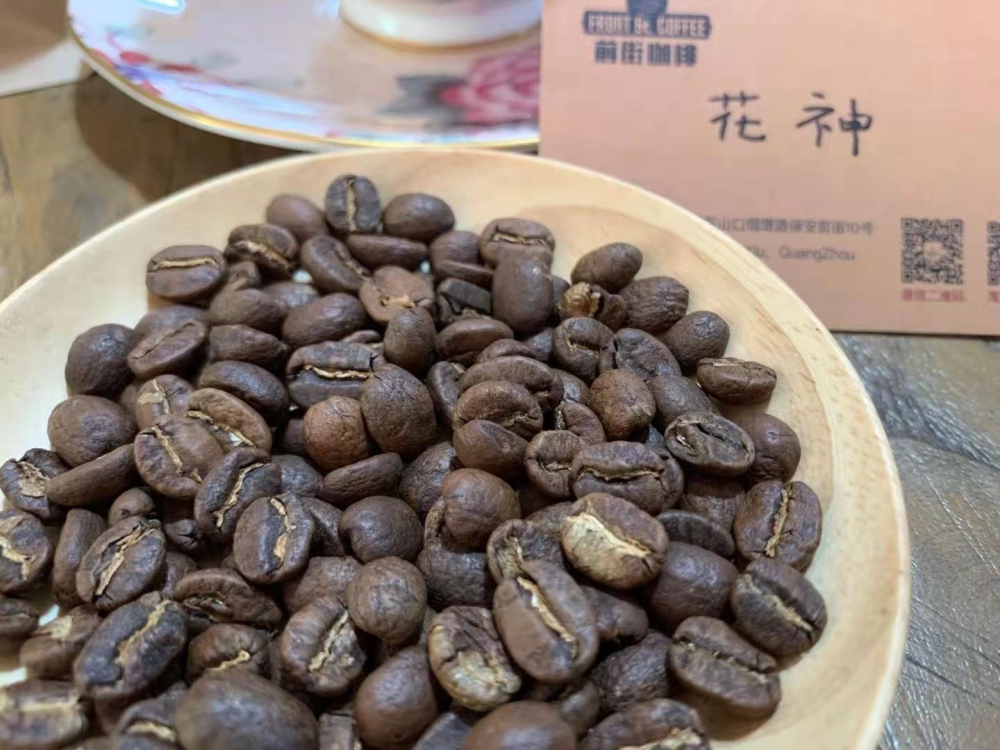
Guatemala's high altitude makes it highly prone to producing extremely hard beans, 45% of which reach specialty grade—a considerable proportion—along with a small amount of Robusta. Due to abundant rainfall, washed processing is commonly used locally.
Washed processing method: The sorted coffee cherries are sent to a depulper, where the skin and pulp are first removed. The green beans with residual pulp and mucilage are immersed in water to ferment for about 24 hours. After fermentation is complete, the green beans with parchment are placed in a flowing water channel to be washed, removing the pulp and mucilage. After washing, they are sun-dried or dried with a dryer until the moisture content drops to about 12%, and finally the parchment is removed.
Front Street Roasting Recommendations
Guatemalan coffee beans themselves carry the nutty, cocoa notes characteristic of Latin America, accompanied by faint floral aromas and soft fruit acidity. Front Street uses a medium-light roast to preserve more floral and fruity aromas and present a clean, bright acidity.
Front Street's Brewing Parameters for Guatemalan Coffee:
Light-roasted beans have a lower extraction rate of coffee solubles than dark-roasted beans, so Front Street recommends using a faster-flowing V60 dripper, paired with a higher water temperature and a finer grind. Front Street uses a medium-fine grind / fine sugar coarseness (80% passing rate through the China No. 20 standard sieve). Take 15 grams of coffee grounds, pair with a V60 dripper, 91°C water temperature, and a 1:15 coffee-to-water ratio, and brew using a three-stage pouring method.
Three-stage extraction: First bloom with water at twice the amount of coffee grounds, i.e., 30 grams of water for 30 seconds. The purpose of blooming is to let the coffee grounds release internal carbon dioxide, making the subsequent extraction more stable. Pour in a slow circular stream until reaching 125 grams, then pause, and continue pouring until 225 grams, then stop. After the water in the dripper has finished dripping, remove the dripper. Time from the start of pouring; the extraction time is 2'00". Swirl the entire cup of coffee to mix well, then pour into a cup to taste.
Flavor characteristics of Guatemalan Huehuetenango coffee: Citrus and berry acidity, lemon peel, nutty aroma in the mid-palate, with a tea-like finish.
Flavor characteristics of Guatemala Flor del Café coffee: Berry acidity, citrus, slight chocolate, rich layers, smooth body.
Front Street's Coffee Brewing Recommendations:
When it comes to coffee brewing, Front Street has always believed that the freshness of coffee beans has a major impact on flavor. The coffee beans shipped by Front Street Coffee are all within 5 days of the roast date. Front Street's roasting philosophy is "freshly roasted good coffee," so that every customer receives the freshest possible state when they get their coffee. The resting period for coffee is about 4 to 7 days, so when customers receive it, it is at its optimal flavor.
For friends who need ground coffee, Front Street warmly reminds you: once coffee beans are pre-ground, there is no need to rest them, because the pressure from carbon dioxide inside the packaging during transport can also mellow the coffee's flavor, and you can brew immediately upon receiving the ground coffee. However, ground coffee needs to be used up as soon as possible, because after contact with air it oxidizes quickly and the flavor dissipates at an accelerated rate. Therefore, Front Street recommends buying whole beans and grinding fresh for each brew to better taste the coffee's flavor.
For more specialty coffee beans, please add the private WeChat of Front Street Coffee, WeChat ID: qjcoffeex
The above content is compiled by CoffeeHunters, a coffee news website.


