







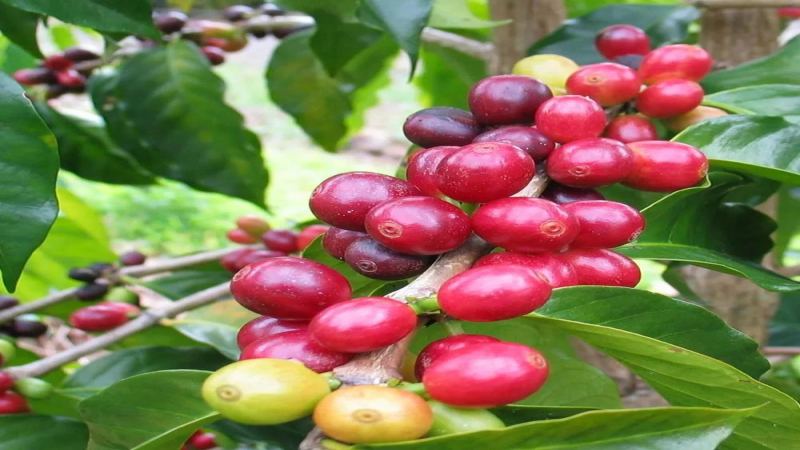
Geisha coffee has long been called the luxury item of the coffee world, and its delicate varietal characteristics and high price make the brewing process especially noteworthy. This article focuses on the natural-process Geisha from Panama's Aurora Estate, reviews the estate's outstanding results in BOP competitions and its processing methods, and shares Front Street Coffee's pour-over recipe tailored for Geisha—including a V60 dripper, 91°C water temperature, a 1:15 coffee-to-water ratio, and a three-pour technique. It also analyzes the flavor layers of Aurora natural-process Geisha—white floral notes, berry acidity, and honey sweetness—and offers advice on resting and freshly roasted beans, helping enthusiasts present this precious bean's full charm in a more reliable way.
A satisfying cup of coffee depends not only on the growing conditions of the beans themselves; Front Street believes the brewing method also plays a key role. With the same bean, changing the brewing approach sends the flavors in the cup in a different direction. If you mess up an everyday staple bean, you might just shrug it off; but if what you're holding is an expensive bean, once it's brewed poorly, that heartache is completely different. Today Front Street will talk about how exactly Panama Geisha coffee should be brewed.
The Geisha variety first took root in Ethiopia, where it was originally used only as a windbreak; because the tree is relatively tall and its fruit yield is low, it was long overlooked. Later, the owner of Panama's Hacienda La Esmeralda discovered it, and Geisha became famous overnight. After that, countries around the world began researching and planting Geisha, and other estates in Panama gradually joined in cultivation as well. In other words, La Esmeralda is not the only famous one; Geisha produced by quite a few Panamanian estates also performs excellently. For example, the Aurora Estate Geisha that Front Street will introduce next.
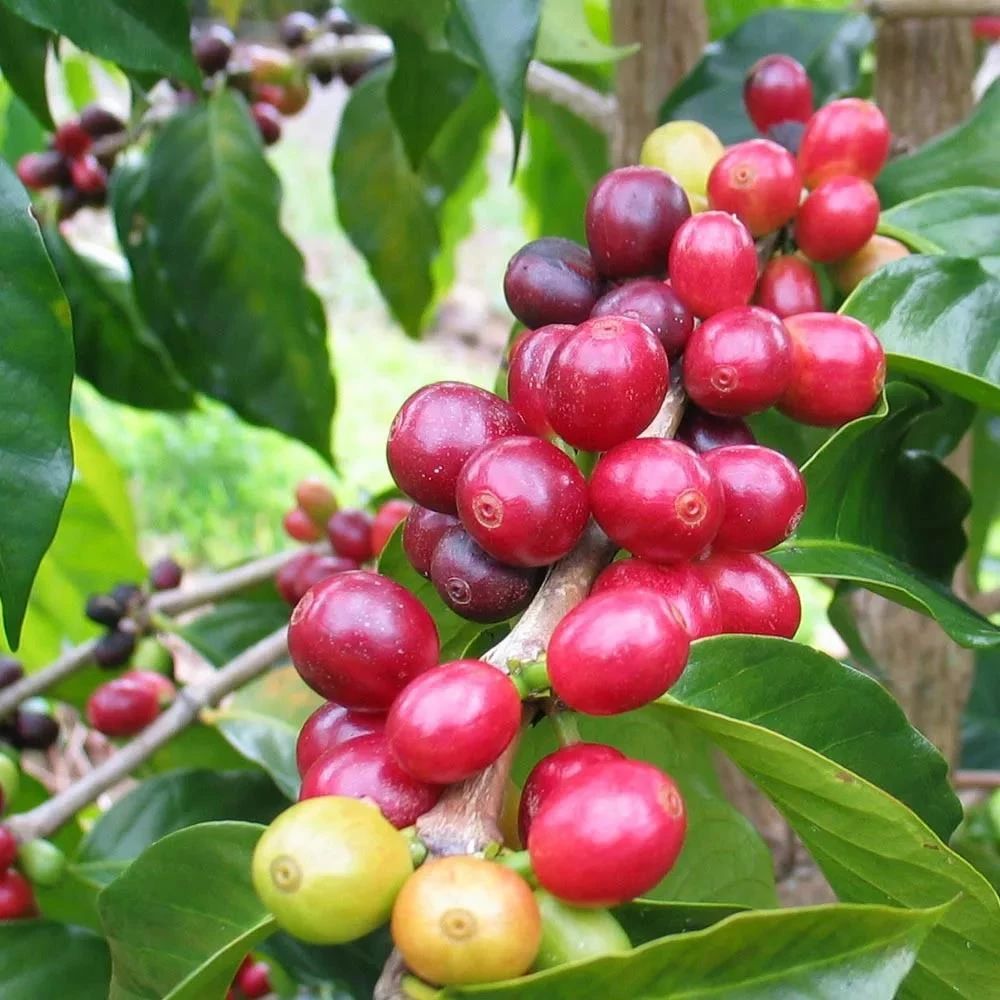
Geisha has now risen among the world's most expensive coffees. A coffee's flavor expression is directly related to its growing environment. The Geisha variety is quite "picky" about growing conditions: it must be planted at high altitude, sheltered by clouds and mist or large amounts of shade trees, and in fertile soil in order to develop layered floral aromas, delicate and elegant fruit acidity, and a tea-like sweetness that returns in the throat. Front Street Coffee (FrontStreet Coffee) has also been searching for Geisha across different producing regions, hoping to help everyone achieve "Geisha freedom" sooner and uncover those Geisha coffee beans that have both alluring floral aromas and relatively friendly prices.
What exactly makes Geisha so special?
Many people regard Geisha as a luxury item in the coffee world. What Front Street wants to say is that the name Geisha is actually a transliteration of Geisha; it is simply a coffee variety, on the same level of naming as Typica and Bourbon. In reality, we rarely see a product name directly called Typica coffee beans or Bourbon coffee beans; usually it is only quietly noted in the variety column. Geisha, however, is very different—it often appears directly in the product name.
The turning point for all of this came from the year Hacienda La Esmeralda won the BOP championship with Geisha. Geisha's flavor is extremely recognizable and very appealing in itself, clearly setting it apart from other varieties; combined with a series of promotional and marketing efforts, Geisha replaced the former Blue Mountain and became a new-generation king, even successfully breaking out of the niche.
Panama Aurora Estate
The Geisha produced by Panama's Aurora Estate is in no way inferior in quality to famous estates such as La Esmeralda and Elida. Its washed Geisha took first place in the 2013 BOP (Best of Panama), and its natural-process Geisha won the BOP championship again in 2016. Aurora Estate is located in Piedra Candela in the northwest corner of Chiriquí Province, in the Volcán region. The estate covers a total area of 31 hectares, of which 15 hectares are coffee-growing area between 1,485 and 1,700 meters above sea level, with an average growing elevation of about 1,600 meters, an average annual temperature of 16 to 25°C, and rainfall of 3,500 mm. The owner is extremely meticulous about processing natural beans, and the entire process is complex and time-consuming. At the top of the growing area there is a large tract of primary forest, and avocado trees are densely planted within the estate as shade. For natural beans, only cherries from the middle-to-late harvest are picked, giving the fruit higher ripeness and sweetness. After picking, they are spread on African beds covered with shade cloth to dry; the dense shade trees and shade cloth keep the temperature and humidity more stable during drying. Depending on the weather, the entire drying process lasts 20 to 30 days. The natural-process Geisha processed this way has a stunning purity and outstanding quality. The coffee trees all grow in the semi-shaded environment provided by avocado trees. In 2013, the estate's Ironman Geisha took first place in Best of Panama, while the natural-process Geisha is an extremely rare special lot from Aurora Estate.
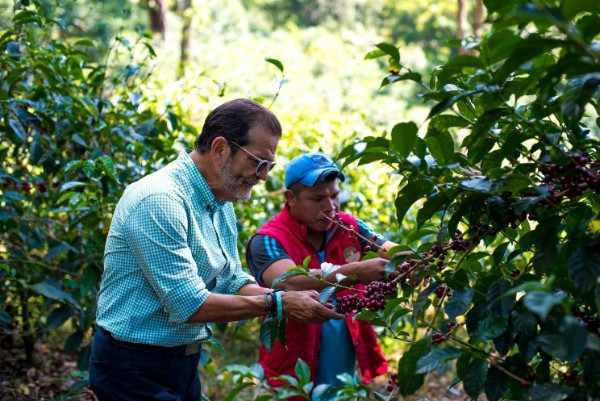
Natural-Process Geisha
Because estate owner Robert Bruns loves triathlon, when naming the estate's green bean lots he also incorporated triathlon elements, among which there is one called "Ironman," translated into Chinese as "铁人". The Aurora Estate Geisha that won the BOP championship in 2013 used the washed processing method, and because of this, when introducing Aurora Estate Geisha, many domestic consumers habitually call it "Ironman Geisha."
However, at the 2014 BOP competition, a natural-process Geisha from Aurora Estate placed 10th; this lot of natural Geisha was named after his beloved little granddaughter—Camilina Geisha. On the 2016 BOP stage, Aurora Estate won the BOP championship again that year with its natural-process Geisha, and this championship-winning lot of natural Geisha coffee beans was called Camilina Geisha.
Aurora Estate's fame naturally also attracted the attention of Front Street Coffee (FrontStreet Coffee). To see its splendor with one's own eyes, of course one had to get hold of an Aurora Estate Geisha. Front Street chose Aurora Estate's natural-process Geisha. After workers pick coffee red cherries at just the right ripeness, they are evenly spread on raised beds and carefully tended to ensure every fruit dries evenly, thus giving Aurora Estate's natural-process Geisha a more pronounced sweetness and a richer flavor.
So how should Geisha coffee be brewed?
Faced with such an expensive coffee bean, how should it be brewed to better release its flavor and avoid waste? Front Street has customized a brewing recipe for Geisha. Of course, once you are proficient, you can absolutely adjust it according to your own taste.
Front Street Aurora coffee brewing parameter suggestions:
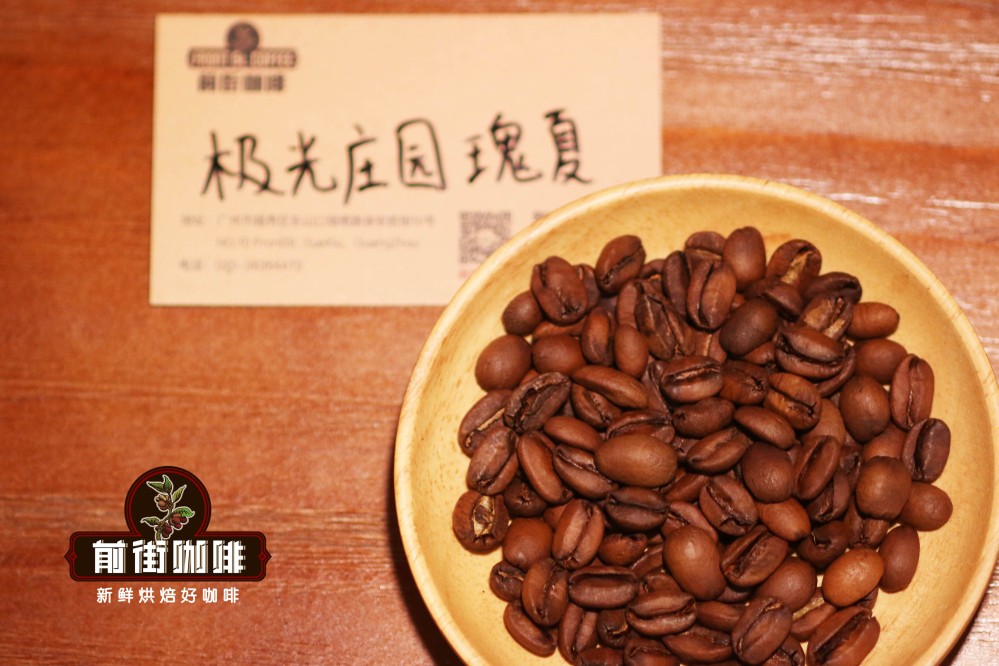
When roasting this bean, Front Street Coffee's (FrontStreet Coffee) roaster used a light roast to highlight Panama Geisha's elegant white floral notes and full juicy body. Therefore, when brewing, Front Street recommends using a finer grind and a higher water temperature.
Dripper: Hario V60
Water temperature: 91°C
Dose: 15 g
Coffee-to-water ratio: 1:15
Grind size: 80% passing a Chinese standard No. 20 sieve
Front Street Aurora Estate natural-process Geisha coffee flavor: Just past the resting period, the white floral aroma is fragrant and striking; on the palate it has berry acidity, obvious sweet orange flavor and green tea-like body, along with honey-like sweetness.
First pour 30 g of hot water and bloom for 30 seconds, then pour from the center in a thin stream while slowly circling to 130 g for the first stage; when the water level in the dripper drops to just before exposing the coffee bed, continue circling and pouring to 240 g; when the water in the dripper has completely dripped into the server below, the dripper can be removed. The total extraction time is about 2 minutes.
You may notice that Front Street Coffee (FrontStreet Coffee) mostly uses a three-pour method when brewing. The three-pour style, represented by multiple pours, can give coffee a richer sense of layering and make sweetness more prominent. It is also relatively easy for beginners to master and can brew a good flavor.
Of course, regarding brewing, Front Street has always recommended using freshly roasted coffee beans, as this allows you to experience coffee's rich flavors to the greatest extent. The coffee beans shipped by Front Street Coffee (FrontStreet Coffee) are all within 5 days of the roast date, because Front Street deeply understands the huge impact of bean freshness on flavor. Front Street's roasting principle is "freshly roasted good coffee," so that every customer who places an order receives coffee in its freshest state. Coffee's resting period is about 4 to 7 days, so when customers receive it, it is exactly at its best flavor.
As Geisha coffee becomes more and more well known, many friends want to give it a try. Front Street believes: Hacienda La Esmeralda's Geisha is relatively expensive; if you want to drink Geisha without spending too much, Geisha from other producing countries or other Panamanian estates is not as expensive, such as Front Street Coffee's (FrontStreet Coffee): Panama Aurora Estate Geisha, Colombia Hanami Geisha, Costa Rica Geisha blend Mirasu, and so on—all are well worth trying!
Professional coffee knowledge exchange For more coffee bean information, please follow Coffee Workshop (WeChat public account: cafe_style)
For more specialty coffee beans, please add the private WeChat of Front Street Coffee (FrontStreet Coffee), WeChat ID: qjcoffeex
The above content is compiled by CoffeeHunters, a coffee news website.


