







Is drip bag coffee the same thing as instant coffee? Many friends who are just getting into coffee have this question. In fact, instant coffee is a coffee extract that has undergone a drying process, while a drip bag is a simplified version of pour-over coffee—the two are completely different from raw materials to flavor. This article will start from Front Street's professional perspective and systematically explain the origin of drip bag coffee, its pros and cons, how many times it can be brewed, purchasing advice, and specific brewing steps, while also answering the question about the shelf life of filter-style drip bag coffee packs. Whether you're a coffee beginner or a daily drinker, you'll find practical reference information here.
Many friends ask Front Street: what exactly is the drip bag coffee that sells well in coffee shops? Is it the same product as instant coffee? How should it be brewed to taste better? Today Front Street will answer these questions one by one.
The production principle of instant coffee is to remove the water from coffee extract to obtain a dried coffee extract. It can dissolve quickly in hot water, while taking up less space during transport and storage, and also having a longer shelf life.
Compared with the traditional coffee brewing method that involves many steps, instant coffee has gained broad market recognition for its convenience. But it should be pointed out that the coffee beans used as raw materials for instant coffee are usually the lowest grade in bulk purchasing, and are basically never sold separately as single-origin coffee beans—they can only be used for instant processing. In addition, the production process of instant coffee causes the coffee's natural aroma and essential components to be almost completely lost during processing. Most of the coffee flavor you perceive comes from artificial flavoring.
The portable drip bags that Front Street mentioned at the beginning, however, free specialty coffee from the constraints of complicated equipment—no need to worry about coffee bean grind size, and no need to master a specific pouring technique. Tear open the filter bag, hang it on the rim of a cup, pour in hot water, and you can enjoy an experience close to pour-over coffee. Some people think drip bag coffee packs lower the status of specialty coffee. Front Street thinks there's no need to belittle its existence so much—after all, if a food wants to enter everyday life, it needs a quicker and more convenient form.
When was drip bag coffee born?
In 2001, Japan's UCC Ueshima Coffee invented drip bag coffee and applied for a patent, then launched it on the market. In Japanese, it is called "one-cup extraction coffee." The principle is to put ground coffee into a non-woven fabric or cotton paper filter bag, with two paper side flaps attached to the outside. When opened, it can rest on a narrow-mouthed cup. After brewing, simply remove it and you get a rich cup of black coffee.
Pros and cons of drip bag coffee packs
Pros: A drip bag coffee pack is essentially a minimalist version of pour-over coffee. Its structure is a filter bag with "ears," containing a fixed amount of pre-ground coffee. It eliminates the tedious steps in pour-over such as grinding coffee beans and preparing filter paper and a dripper, going directly to the brewing stage.
Cons: Convenience comes at a cost. Because the coffee is pre-ground, even with individually sealed packaging, the aroma cannot be preserved for long. Therefore, Front Street only stocks drip bag coffee packs within 5 days of production, and recommends drinking them within 30 days. It is not advisable to stock up too many at once. In addition, the structure of the drip bag filter makes it difficult for the coffee bed to be evenly distributed, so it cannot achieve the even extraction effect of brewing with a dripper, and the layering of the coffee flavor will be somewhat compromised.
How many times can drip bag coffee be brewed?
Front Street Coffee believes that drip bag coffee is equivalent to a simplified version of pour-over. Like pour-over, it can only be brewed once, and the ratio must be controlled well. Too much water will make the coffee taste weak. The reason is that the extractable substances in coffee beans account for only about 30% of the bean weight, so no matter how much water you pour, it will not make the coffee taste better.
How should coffee beginners choose drip bag coffee packs?
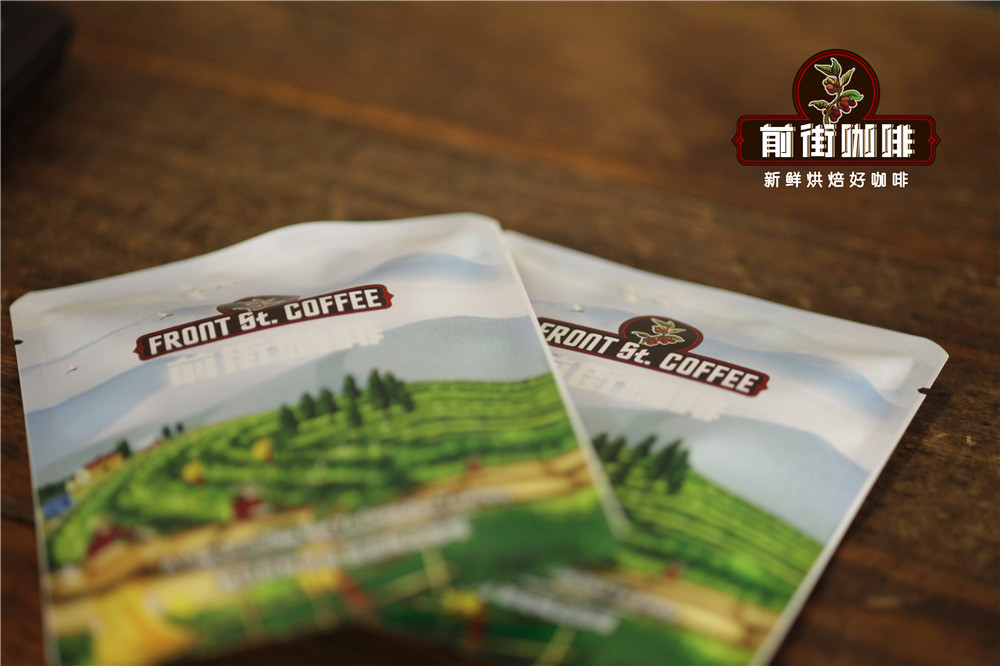
If you usually prefer a rich taste, Front Street Brazil Seasonal Drip Bag is recommended, presenting a rich nutty profile with a smooth texture like peanut butter, no acidity, and a mellow mouthfeel.
If you can accept acidity, Front Street Yirgacheffe Seasonal Drip Bag is recommended, with lemon-like acidity and white floral notes, bright acidity, and a refreshing mouthfeel. If you like a fruit-forward style, Front Street Natural Huakui Drip Bag is recommended, showing flavors of floral notes, cream, mango, and strawberry jam.
How to brew drip bag coffee packs?
Each pack of Front Street drip bag coffee is set at 10 g of coffee powder. It is recommended to brew at a coffee-to-water ratio of 1:15, meaning one drip bag with 150 g of hot water.
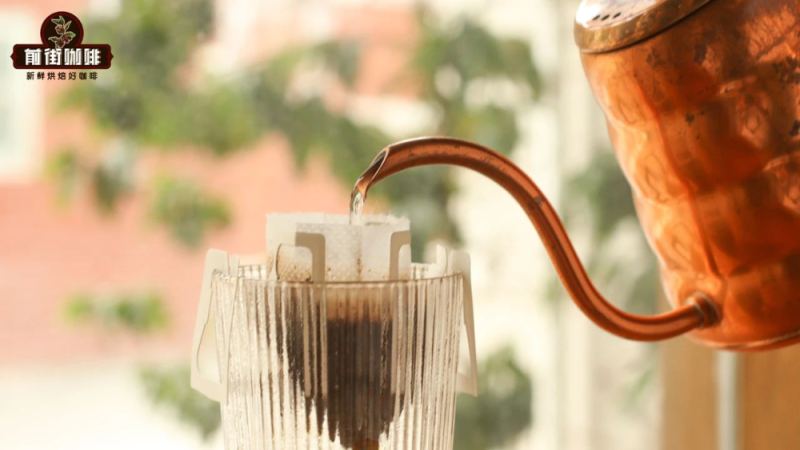
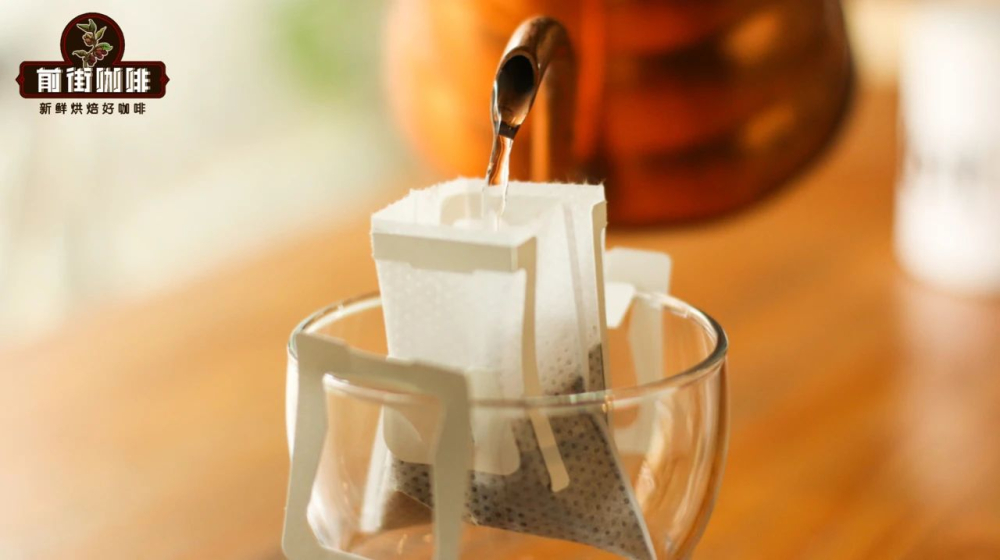
1. Tear open the outer packaging bag, take out the drip bag, tear it open along the opening, unfold the small ears on both sides and hang them on the rim of the cup (note that the cup rim diameter should not be too large, otherwise it won't hang securely), and at the same time prepare hot water at 15 times the amount of coffee powder.
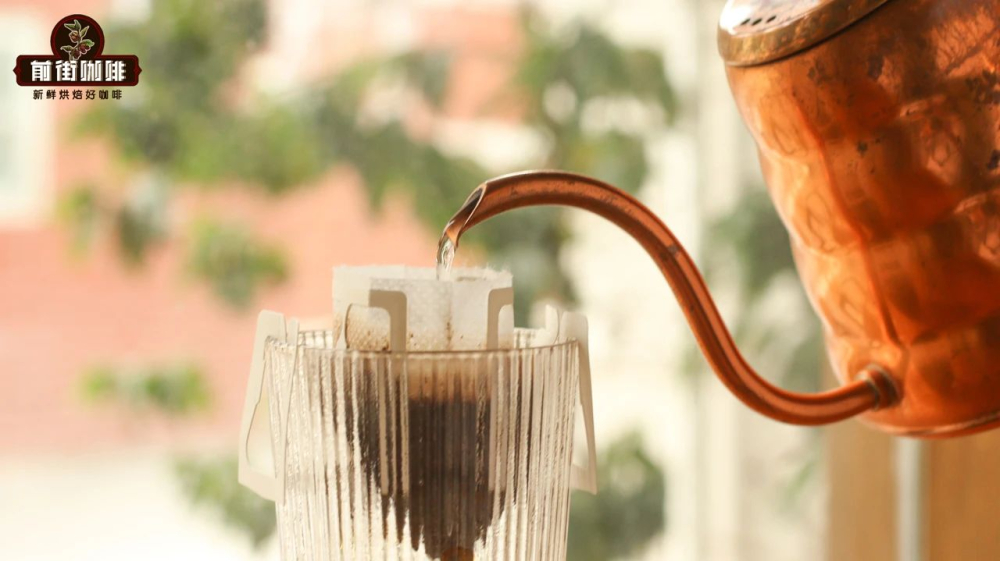
2. The brewing technique for drip bag coffee is basically the same as pour-over, except it does not need to be as strict as pour-over. However, the water temperature and blooming step still cannot be omitted. Front Street Coffee's parameters for brewing drip bag coffee can be used as a reference: water temperature 90°C, bloom for about 10 seconds, and the bloom water amount should be equal to the coffee powder.
3. After the coffee powder slightly sinks, pour in the second pour of water until the drip bag is nearly 80% full, let the coffee liquid slowly filter through, then repeat the second pour again until 80% full, and finally wait until all the coffee liquid has filtered through before drinking.
What should be noted when brewing drip bag coffee?
Similar to pour-over, the flavor of drip bag coffee depends on the coffee beans used, and different producing regions have different flavor profiles. The difference is that the coffee powder in drip bags is already pre-ground, so the aroma is not as rich as freshly ground. If left for too long, the coffee powder will age and develop a "woody taste." After coffee beans are ground into powder, the contact area with air increases greatly, and the internal gases and aroma substances dissipate faster. The optimal flavor period is correspondingly shortened, the brewed coffee aroma is not full enough, and it also tastes weak and thin. Therefore, when buying drip bag coffee, pay attention to freshness and drink it as soon as possible after buying it to enjoy a fuller aroma.
The brewing water temperature is also key. Usually, the water temperature for pour-over is best controlled between 86 and 93°C. A lower water temperature will reduce extraction efficiency and easily lead to under-extraction. If the water temperature cannot be increased, then extend the contact time between the coffee powder and hot water, that is, let it steep longer.
The amount of water poured and the flow rate also affect the strength of drip bag coffee. Front Street recommends controlling the coffee-to-water ratio at 1:15, then adjusting up or down according to personal preference for strength. In addition, a flow rate that is too fast will shorten the extraction time of the coffee powder, and the taste will easily be too light, so it is best to maintain a steady, small stream throughout to make the coffee bed extract more evenly.
The above content is compiled by CoffeeHunters, a coffee news website.


