







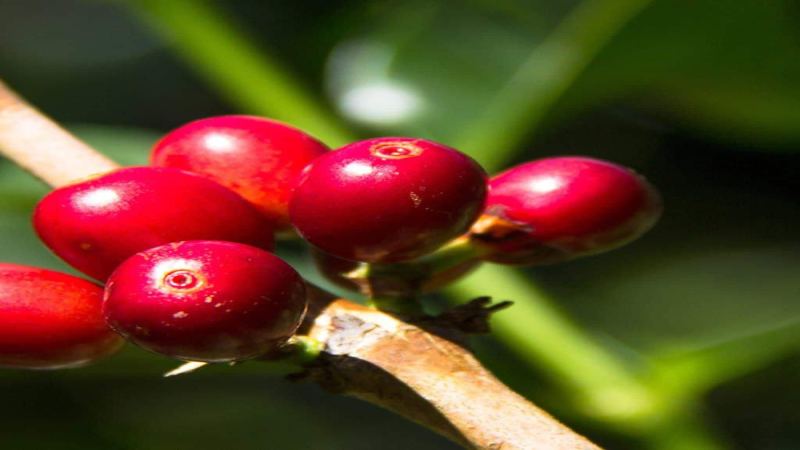
Ethiopia, as the birthplace of Arabica coffee, is home to over 3,500 native coffee varieties, and the Sidamo region, with its diverse flavor expressions and sun-dried processing tradition, has become an indispensable part of the specialty coffee landscape. And Huakui is precisely an outstanding representative of sun-dried beans from this land. This article will start from the geography and terroir of the Sidamo and Hambela regions, trace the naming lineage of Huakui from the 2017 TOH champion bean to version 6.0, analyze how the sun-dried processing method endows coffee beans with tropical fruit-like sweetness and acidity and a mellow layered complexity, and at the same time present Front Street Coffee's brewing parameters and flavor records for Huakui 6.0, bringing you a comprehensive understanding of this outstanding Ethiopian sun-dried coffee's varietal charm and taste characteristics.
When Ethiopia is mentioned, most coffee lovers' first reaction is—this is the birthplace of the Arabica species and one of the oldest coffee-consuming countries recognized worldwide. Precisely because of this, the coffee varieties on this land are extremely rich, with the total number of local indigenous varieties at roughly more than 3,500, so many Ethiopian coffee beans simply mark their variety column directly as "heirloom varieties."
At the mention of Ethiopia, what immediately comes to many people's minds is the bright citric acidity and floral notes of Yirgacheffe, and some even directly equate Yirgacheffe with Ethiopian coffee itself. Although the washed beans of the Yirgacheffe region are famous, Ethiopia as a whole actually has sun-dried processing as its mainstream, and even today, the sun-dried method still accounts for about 70% of the country's production. Washed Sidamo presents a light green color, with somewhat small beans in a long oval shape, plump fruit, excellent average quality, fragrant and mellow aroma, and a long finish after sipping, carrying a kind of wild beauty. It is elegant yet lively, gentle and comfortable on entry, followed by bright lemon fruit acidity bringing a strong taste collision, with a unique and mellow mouthfeel, a distinctive and pleasant sweet aftertaste, and a slowly rising finish hiding a unique sweetness—washed Sidamo is just this elegant yet not lacking in playfulness. The flavor of sun-dried Sidamo leans toward floral notes, but with a slight earthy taste; the washed version has a nut-like fruity aroma and a slight cocoa note, and what the two share is a smooth mouthfeel and viscosity, as well as a comfortable and pleasant acidity and aroma. Light or medium roast is suitable for single origin, while medium or dark roast is suitable for use in blends and as the base for premium Espresso.
Ethiopian coffee is usually named after the place of origin, for example, coffee produced in the most familiar Yirgacheffe region is called Yirgacheffe coffee, and coffee produced in the Sidamo region is called Sidamo coffee. Although these two regions both belong to Ethiopia, their processing methods are completely different: Yirgacheffe coffee beans use washed processing, while coffee beans from the Sidamo region use sun-dried processing. If one were to name the representative of Sidamo sun-dried beans, it would have to be "Huakui." Whether in popularity or flavor performance, Huakui can be said to be the leader among sun-dried Ethiopian coffee beans.
Sidamo Region
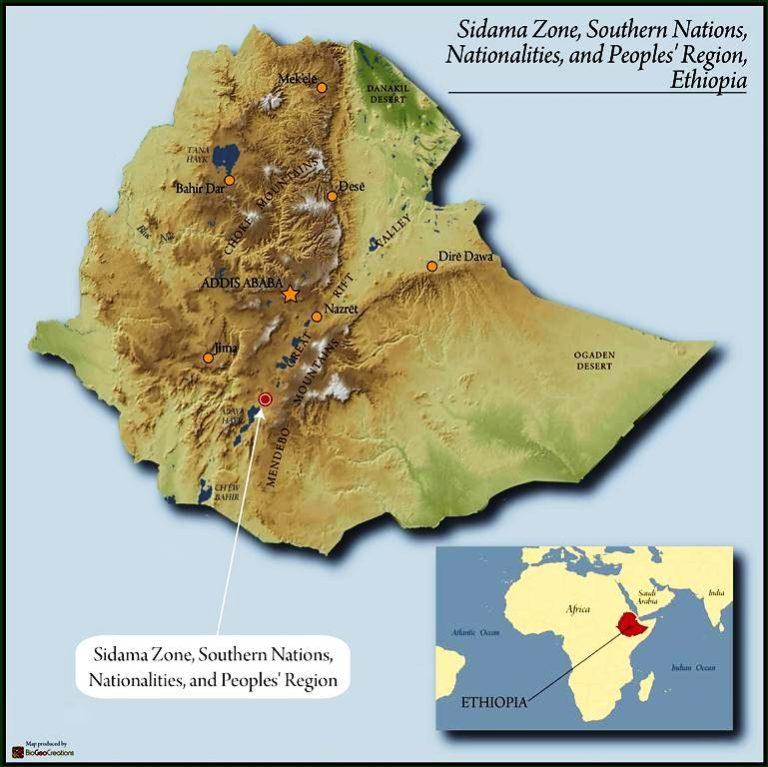
The Sidamo region, with an altitude between 1,400 and 2,200 meters, is a famous specialty coffee area in southern Ethiopia, bordering Kenya. Washed Sidamo is light green, with beans that are not large, growing into an oval shape, plump fruit, good average quality, fragrant and mellow aroma, and one sip leaves an endless aftertaste, possessing a wild beauty. The coffee flavors of Sidamo are extremely diverse; different soil types, microclimates, and countless native coffee varieties create obvious differences and characteristics among coffees produced in various towns. In the 2010 to 2012 period, this region continuously received high scores of 92 to 94 from the authoritative American coffee evaluation website CR. This shows the extraordinary strength of the green beans from this region. The territory has towering mountains, highlands, plateaus, valleys, and plains interwoven, with rich and varied terrain. The geology of this area belongs to fertile, well-drained volcanic soil, with a soil layer nearly two meters deep, and the surface soil is dark brown or brown. The greatest advantage here is that soil fertility is maintained through the cycling of organic matter, using fallen leaves from surrounding trees or residual plant roots as fertilizer. Unlike general African coffee, Sidamo has clear fruit acidity, a smooth mouthfeel, and delicate floral and herbal aromas.
Hambela Region
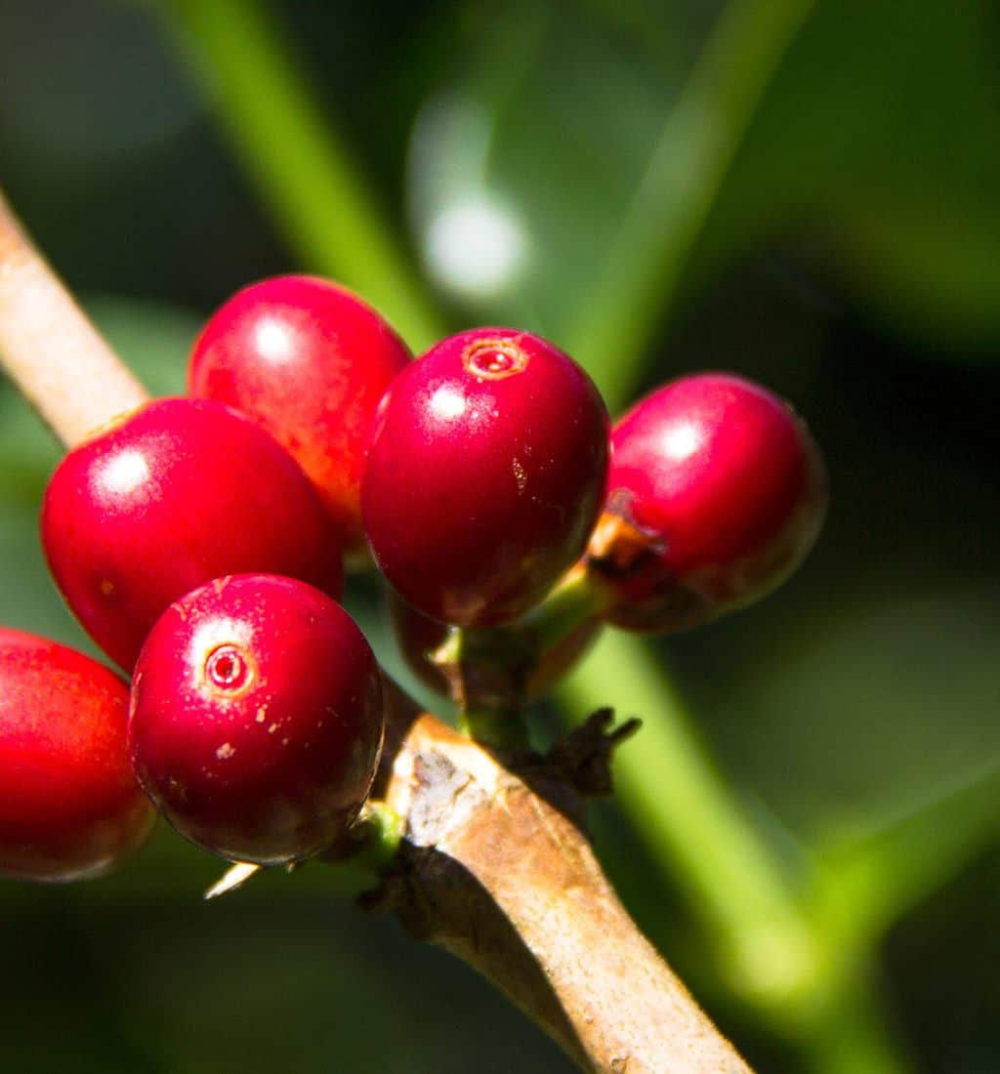
Huakui coffee comes from the Hambela region of Sidamo. Hambella's west faces Yirgacheffe's Kochore across the mountains, and its southeast and north border other Guji sub-regions Shakiso, Uraga, and Kercha respectively. In the Hambela mountains, villagers live in deep mountains at an altitude of 2,000 meters, with no roads and no electricity, and the government-supported water tap at the village entrance is the only drinking water source for the whole village. Despite the lack of living conditions, Hambela's farmers still carefully tend every single Huakui coffee bean. At present, the Hambela region has about 20 processing plants of various sizes. And the Huakui coffee beans that made the Guji region famous come from the Buku processing plant. The Buku processing plant is located in Buku Abel village at an altitude of 2,200 meters. From the very beginning of cultivation, it was given a noble "family environment"—humus-rich red-brown soil—and provided shade and care from "Enset" trees, allowing Huakui to receive sufficient sunlight and produce rich flavors without consuming too many nutrients, thereby retaining more essence within the coffee cherries. During the harvest and processing season (December to January), its unique growing environment and natural climate create Huakui's distinctive flavor.
Sidamo mostly processes coffee cherries using the sun-dried method. Front Street Coffee believes that processing coffee beans produced in Sidamo with the sun-dried method can better express the region's clear fruit acidity and smooth mouthfeel. The sun-dried method, also called the "natural drying method," involves placing coffee beans directly under the sun to dry for as long as 27 to 30 days. The moisture is reduced from 60% to only about 12% to complete the process. Front Street Coffee finds that it carries a tropical fruit sweet-and-sour sensation, preserves the coffee beans' natural mellow richness, has rich flavor layers, and sometimes also carries a slight wine-like fermented aroma.
Huakui Coffee
How did Huakui get its name? It is called Huakui in China because that year this batch of green beans was introduced by a Beijing green bean trader, and because in the 2017 China coffee competition, Li Jianfei stood out from many Geisha coffee competitors with this coffee bean and won second place. You should know that almost all the competition beans that year were Geisha exclusives, and suddenly a non-Gesha coffee bean appeared and defeated this legend, which can be said to be of extraordinary significance. And because the English word for Geisha, "Geisha," is homophonous with the Japanese word for geisha, in order to highlight the status of this coffee bean, it was named Huakui, meaning the chief of geishas.
Huakui's Coffee Variety
As the birthplace of coffee, Ethiopia possesses a huge number of coffee varieties, whether unknown or known, Ethiopia is like a treasure trove of varieties. For example, the owners of Gesha Village Estate, the husband-and-wife duo, once followed the owner of Hacienda La Esmeralda to search in the wild forest and found two varieties, Gori Gesha and Gesha 1931.
Huakui coffee's processing method is sun-dried processing. Ethiopia has always been dominated by sun-dried processing. Although after the Yirgacheffe region introduced washed processing in the 1970s and became popular in the global coffee circle, the proportion of washed processing rose somewhat, sun-dried processing has always occupied the main part of Ethiopia, and about 70% of Ethiopia today is sun-dried processed.
The sun-dried processing method is one of the oldest and most classic processing methods. The steps of sun-dried processing are simpler than other processing methods: the coffee cherries are dried in the sun, and the drying time lasts as long as several weeks. Once the coffee's moisture content drops to about 11%, a machine can be used to remove the skin, pulp, and other parts of the coffee cherry all at once, and then it is stored in a warehouse waiting for export.
Huakui coffee beans are also a kind of agricultural product, and of course are related to climate, so the flavor each year is still a little different. First, let us return to 2017, when a sun-dried coffee bean from DW Company's "Buku Abel" processing plant won the TOH sun-dried group championship. At that time, a Chinese green bean trader introduced this champion bean into China and named it "Huakui." DW Company increased its processing plants in the Hambela region to 4, namely "Buku Abel," "Buku Saysay," "Haro Soresa," and "Tirtiro Goye." Strictly speaking, only the sun-dried coffee beans processed by the "Buku Abel" processing plant can be called Huakui coffee beans. The naming method of Huakui X.0 is based on the year: in 2018 Huakui 2.0 was launched, in 2019 Huakui 3.0 and 3.1 were launched, in 2020 Huakui 4.0 was launched, and in 2021 Huakui 5.0 was launched. This year, 2022, shouldn't Huakui 6.0 also be launched? Then let us look forward to meeting Huakui 6.0 in 2022!
Front Street Coffee Brewing Suggestions Front Street recommends using freshly roasted coffee beans for brewing, as this allows you to experience the coffee's rich flavors to the greatest extent. The coffee beans shipped by Front Street Coffee are all within 5 days of the roasting date, because Front Street deeply understands that the freshness of coffee beans has a great impact on flavor. Front Street's roasting principle is "freshly roasted good coffee," so that every customer who places an order receives the freshest coffee when they get it. Coffee's resting period is about 4 to 7 days, so when customers receive it, it is exactly at its best flavor.
Dripper: Hario V60, water temperature: 90°C, coffee dose: 15 grams, coffee-to-water ratio: 1:15, grind size: medium-fine grind (80% passing rate on China standard No. 20 sieve)
Use staged extraction, blooming with 2 times the amount of coffee powder in water, that is, 30 grams of water for a 30-second bloom, then pour in a small stream in circles until 125 grams for the stage break, continue pouring until 225 grams and stop, then after the water in the dripper has dripped through, remove the dripper, and start timing from the beginning of pouring; the extraction time is 2'00".
【Flavor characteristics of Huakui 5.0】: floral notes, the sweet-and-sour sensation of berries, citrus, and plum, mango juice, honey, with a finish of black tea sweetness.
Front Street deeply understands that coffee beans from the same producing country and the same producing region can have different flavors, so Front Street obtains some coffee beans from the same producing region, such as: Kochere, Red Cherry, Yirgacheffe, Aricha, Konga, etc. from Yirgacheffe. Front Street Coffee also has more than 50 single-origin coffee beans with different tastes, and we believe they can give you a completely new experience!
Kochere flavor characteristics: melon, cocoa, lemon, citrus, ginger, spiced tea, light floral notes
Red Cherry flavor characteristics: lemon, licorice, citrus, berries, sweet orange, with relatively high overall sweetness, a sweet aftertaste with caramel and cream flavors, and a finish with black tea aroma
Aricha flavor characteristics: aroma of ripe fruit, with an obvious fermented aroma on entry, green grapes, and as the temperature drops slightly, there is citric acidity, cream, and a grape juice sensation in the tail section
Konga flavor characteristics: citrus, jasmine, honey, berries
For professional coffee knowledge exchange and more coffee bean information, please follow Coffee Workshop (WeChat public account: cafe_style)
For more specialty coffee beans, please add the private WeChat Front Street Coffee, WeChat ID: qjcoffeex
The above content is compiled by CoffeeHunters, a coffee news website.


