







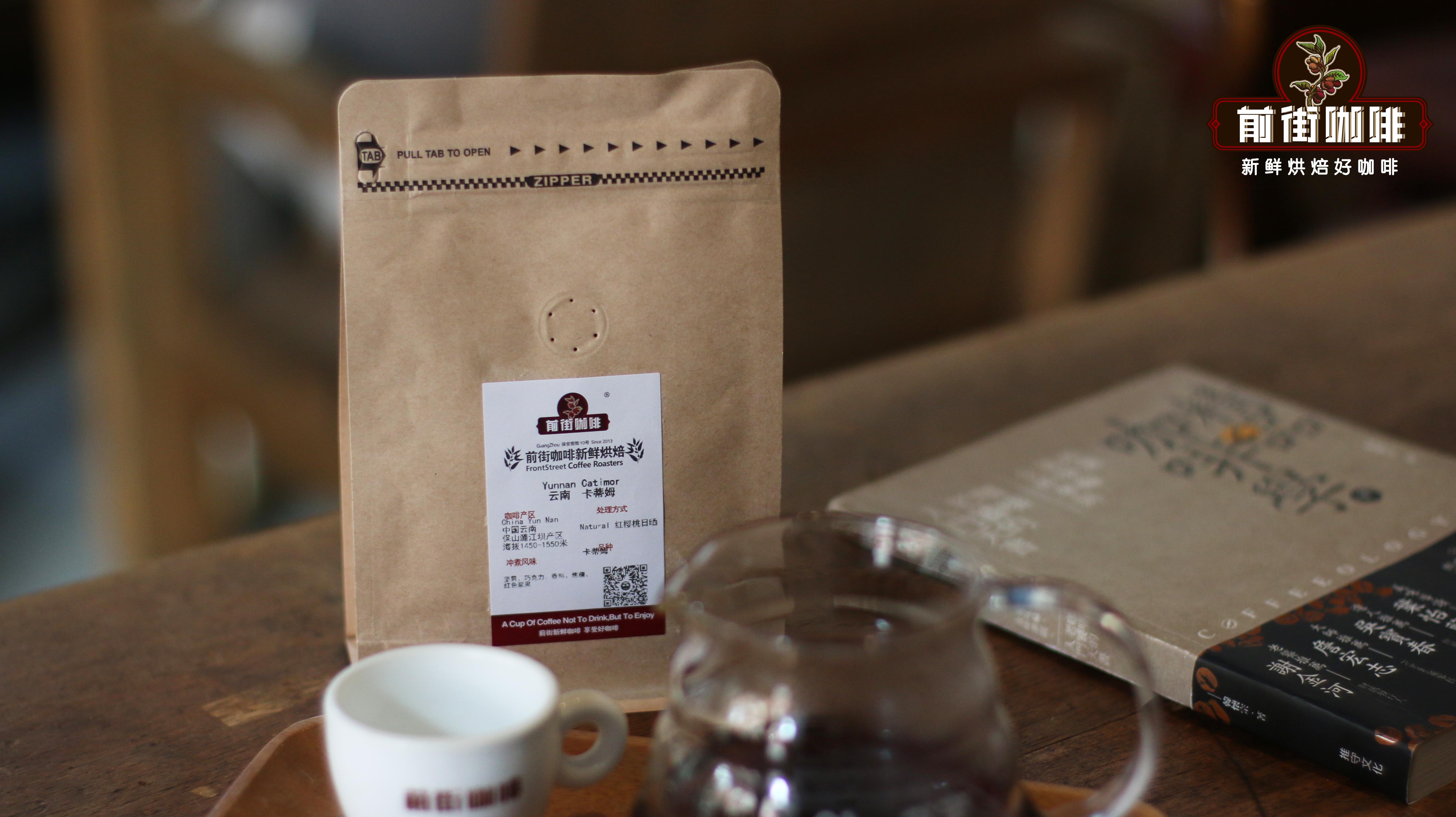
Yunnan coffee has made a name for itself in the specialty circle in recent years, with more and more cafés adding Yunnan beans to their menus. Front Street Coffee's roasted bean list also features several Yunnan options, including Baoshan small-bean everyday beans, 2013 Typica, and an exclusive sun-dried Typica. Starting from flavor and mouthfeel, this article reviews the washed and sun-dried expressions of Yunnan small-bean coffee, traces the history of Typica's introduction and the practical reasons why Catimor replaced Typica, and introduces Front Street's planting and processing experience at its own estate in Lincang. It also includes the full parameters for Front Street's pour-over Yunnan small-bean everyday coffee at its café, making it suitable reading for enthusiasts who want to understand Yunnan coffee varieties and flavors in depth.
In recent years, the rise of Yunnan coffee has been plain for all to see, and many specialty cafés carry at least one Yunnan bean. Front Street's own roasted bean list likewise offers several Yunnan coffees to choose from: Yunnan Baoshan small-bean everyday coffee, Front Street 2013 Typica coffee beans, and Front Street's exclusive 2013 sun-dried Typica coffee beans.
What does Yunnan coffee taste like? The several Yunnan beans Front Street currently offers all use natural processing methods — that is, washed and sun-dried. Some Yunnan coffees on the market use special processing to highlight a certain aroma; while they smell intense, they cover up Yunnan coffee's original flavors. Front Street believes that to truly get to know Yunnan small-bean coffee, it is best to start with traditional, natural processing methods and experience its original taste — which is also why most of Front Street's everyday beans use washed processing. Washed coffee is clean, stable, low in defects, and has brighter acidity, better showcasing the coffee's own flavors.
After cupping, Front Street's washed Yunnan small-bean coffee gives off aromas of roasted hazelnut when ground, with chocolate, nut, and brown sugar notes on the palate; as it cools, plum acidity and a tea-like quality emerge, with overall balance and good body. Friends who drink single-origin coffee regularly should know that coffee flavor is tied to variety, growing environment, fruit picking, green bean processing, roasting, brewing, and more — and Yunnan coffee is no different.
The dominant variety in Yunnan coffee is Catimor. Like many producing regions, the first variety introduced to Yunnan was Typica, brought in 1904 by the French missionary Tian Deneng to Zhukula Village in Binchuan, Yunnan. Typica is pure Arabica; the world's commercially grown coffee is mainly divided into two categories — Robusta (medium bean) and Arabica (small bean). To distinguish Yunnan coffee from Hainan's medium-bean coffee, Yunnan farmers called Yunnan coffee "small bean."
Robusta has a higher chlorogenic acid content and is less vulnerable to pests and climate, usually grown at low elevations, with high yields and fast-ripening fruit. Arabica, by contrast, is "delicate," with weak disease resistance and lower yields per plant. High-elevation environments bring pronounced day-night temperature differences, stretching out the fruit's ripening period so the coffee cherries accumulate more nutrients and form richer aromas. Each region's microclimate also provides Arabica with diverse growing conditions, creating unique flavors.
The ancient Typica is widely recognized as a high-quality variety — the famous Jamaican Blue Mountain belongs to Typica — with rich aromas and a refined, ever-changing flavor, but extremely low yields and susceptibility to coffee leaf rust, requiring more labor to manage. Coffee is, after all, a crop Yunnan farmers depend on for their livelihood; if yields are too low and income can't be guaranteed, it's hard to keep growing it.
After Nestlé set up a branch in China in 1988, it not only introduced the high-yield, disease-resistant Catimor but also promised to buy Yunnan coffee beans as raw material at then-current U.S. futures prices. Later, brands like Starbucks and Maxwell House also built plants in Yunnan to purchase green beans, further expanding Yunnan's coffee planting area and motivating coffee farmers. From then on, Yunnan switched large areas over to Catimor, with other varieties accounting for only a minority. In other words, what is called Yunnan small bean today basically means Yunnan Catimor.
Although Catimor falls under Arabica, its lineage is not pure — it carries 25% Robusta genes. The Robusta genes give Catimor strong pest and disease resistance and high yields. Catimor trees are shorter, smaller, and heavily branched, allowing dense planting, and they grow vigorously without shade. They not only have strong resistance to leaf rust but also a degree of tolerance to coffee berry disease, helping raise the fruit set rate; the fruit also ripens faster than other varieties, so yields are naturally higher. Unfortunately, the Robusta genes also bring shortcomings in flavor. If Catimor is grown at low elevation, it tastes bitter, and with improper processing it can have harsh astringency, mustiness, and earthy notes. Grown at 1,200 meters, its aroma is fairly mediocre, and its richness falls short of pure Arabica varieties like Caturra.
Front Street's Yunnan small-bean everyday coffee uses Catimor, while the coffee Front Street grows itself in Yunnan uses the Typica variety, processed naturally by sun drying.
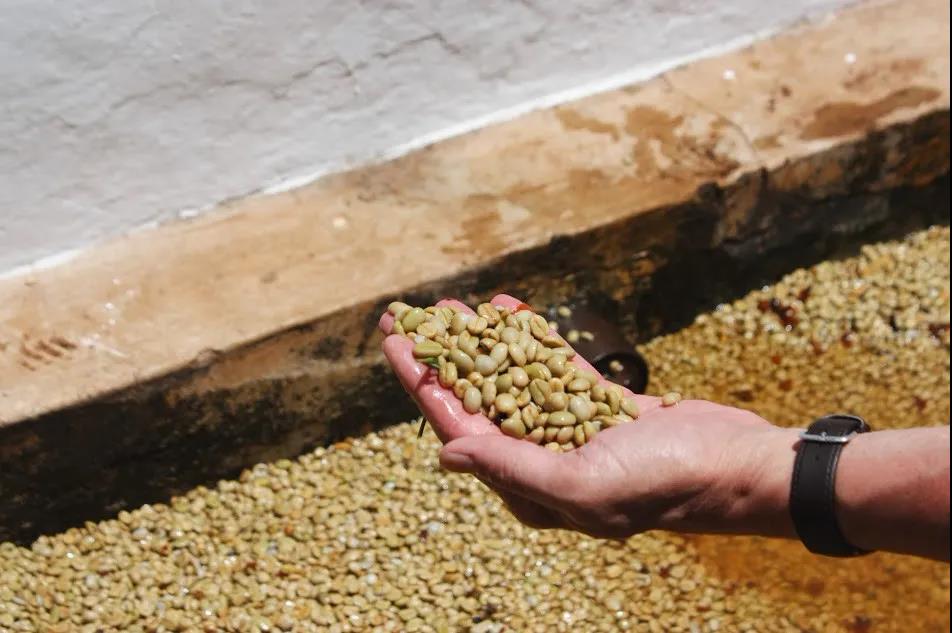
Front Street Yunnan Coffee Estate
To explore more coffee knowledge, in 2013 Front Street established its own estate in Lincang, "Front Street Estate," handling everything from site selection, seed selection, seedling cultivation, planting, harvesting, processing, and roasting — and gaining a great deal of experience along the way. Lincang is influenced by warm, moist air from the Indian Ocean and the southwest monsoon; the four seasons are not sharply distinct, but the dry and wet seasons are, with plenty of rain and long sunshine hours — average annual sunshine exceeds 2,000 hours — a short frost period, and some areas frost-free year-round. The pronounced vertical climate makes it very suitable for growing small-bean coffee.
Front Street plants its coffee at 1,300 meters among the trees; the high elevation brings a certain day-night temperature difference, letting Typica absorb more nutrients and ripen later than coffee at lower elevations. Every winter, Front Street begins its busy harvest, first making sure to pick only fully red cherries at just the right ripeness, turning them at irregular intervals to ensure even drying; the mesh of the drying beds helps with airflow and avoids negative over-fermentation flavors. This sun-dried Typica from Front Street has a heavier mouthfeel, with citrus and berry notes, plus a hint of fermented wine aroma and caramel sweetness.
Front Street Coffee (FrontStreet Coffee) Pour-Over Recommendations
For roasting, Front Street believes Yunnan coffee should have both a rich coffee aroma and a certain acidity, so a medium roast level is used. For every high-quality single-origin bean, Front Street's favorite method is pour-over to extract more layers of flavor.
No matter the extraction method, the premise is that the coffee beans must be freshly roasted. After roasting, coffee goes through a 4-to-7-day resting period and then enters its optimal flavor window; past that time, aromas volatilize faster and flavor drops sharply. Front Street knows well the importance of freshness — the coffee beans it ships are freshly roasted within 5 days, so customers receive them right at their flavor peak.
Below, Front Street brews a cup of its own roasted Yunnan small-bean everyday coffee the way its café does. Considering that Yunnan small-bean coffee tends toward balance and shouldn't be too sour or too bitter, a V60 dripper is chosen, with a medium-fine grind and medium water temperature for extraction.
Dripper: V60
Water temperature: 90°C
Grind size: 80% passing a No. 20 standard sieve
Coffee-to-water ratio: 1:15
Coffee dose: 15 g
Using a three-stage extraction, pour the ground coffee into the filter paper, start pouring 30 g of water from the center and bloom for 30 seconds, keeping a steady small stream circling gently from inside outward throughout; for the second stage, pour 95 g of water, and when the coffee liquid is nearly drained, begin the third stage with 100 g; once all the coffee has filtered through, remove the dripper. Total time is about 2 minutes, with a margin of about 10 seconds either way.
Small-bean Catimor coffee has a dry aroma of nuts and berries, with a sweetness of nuts, herbs, chocolate, and brown sugar on the palate, a balanced plum acidity, and a finish with a faint fruity tartness.
For professional coffee knowledge exchange and more coffee bean information, please follow Coffee Workshop (WeChat official account cafe_style)
For more specialty coffee beans, please add the private WeChat of Front Street Coffee (FrontStreet Coffee), WeChat ID: qjcoffeex
The above content is compiled by CoffeeHunters, a coffee news website.


