







Brazil is the world's largest coffee producer, and its beans are known for their smooth mouthfeel and nutty notes. This article begins with the historical origins of Brazilian coffee, traces how the Bourbon variety replaced Typica to become the mainstay, and highlights two Brazilian Bourbon coffees on Front Street Coffee's bean list—the Red Bourbon from the Cerrado region in Minas Gerais and the Yellow Bourbon from Queen Farm in São Paulo. The article also provides a detailed analysis of the differences between the pulped natural and natural processing methods, the purpose of medium-dark roasting, and brewing recommendations for the KONO dripper, giving you a comprehensive understanding of the flavor code of Brazilian specialty coffee.
For more specialty coffee knowledge, please follow: Front Street Coffee ( Frontsteet Coffee )
Brazil is the country with the highest coffee production in the world, producing coffee beans of many grades and categories. Brazil's domestic coffee consumption accounts for about one-third of the global total, and it also occupies an important position in the international coffee trading market. Although Brazil faces a much higher risk of natural disasters than many other producing regions, its vast cultivable area is enough to offset these disadvantages. However, whenever there are signs of any natural or man-made disaster in Brazil, international coffee futures prices often fluctuate accordingly.
The position Brazilian coffee beans hold today is the result of more than three hundred years of accumulation. Coffee originally originated in Ethiopia. As Europeans' demand for coffee continued to rise and their explorations expanded, coffee trees gradually spread around the world.
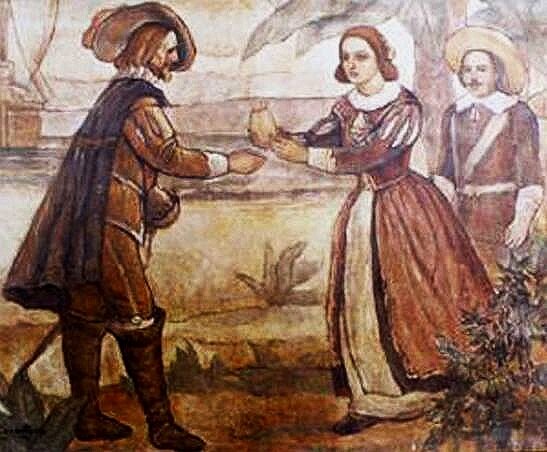
The history of Brazilian coffee beans can be traced back to the 1720s. At that time, a Portuguese naval officer was ordered to go to the island of Guiana to handle a territorial dispute between France and the Netherlands, but he developed romantic feelings for the wife of the local governor of Cayenne. When the officer was preparing to return, the governor's wife gave him a bouquet as a token of longing, and coffee tree seeds were hidden within the bouquet. After coffee arrived in Brazil, it quickly adapted to the local climate, grew vigorously, and gradually spread to most states in Brazil.
The role of the United States cannot be ignored in enabling Brazilian coffee bean production to achieve such rapid growth. In order to break away from British royal rule, the United States dumped all the tea that the British loved and established coffee as a patriotic drink. As the number of American coffeehouses surged, demand for Brazilian coffee beans also rose sharply. Coffee created considerable economic revenue for Brazil, and railways were even built directly to coffee plantations, greatly improving transportation efficiency.
Afterward, the American Civil War broke out, coffee became a military necessity, and demand for Brazilian coffee beans further expanded. However, at that time the main variety of Brazilian coffee beans was Typica. Although Typica has an elegant flavor, its yield is relatively low. So people began to look for high-yield varieties, and the Bourbon variety from Réunion was therefore introduced to Brazil. By the 1870s, Bourbon had become the main cultivated variety of Brazilian coffee beans.
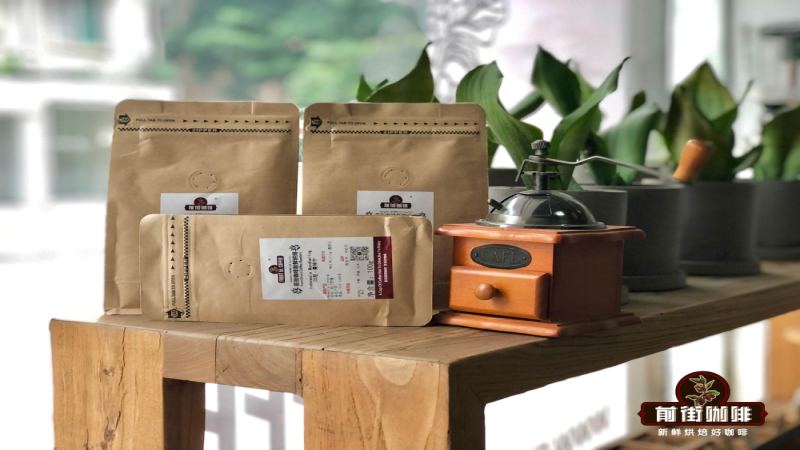
On Front Street Coffee's bean list, there are two coffees from Brazil, both belonging to the Bourbon variety. The soft-bean flavor of Brazilian coffee, smooth on the palate with mild acidity, has long been widely known, and this is also the signature mouthfeel characteristic of Brazilian coffee beans. This soft-bean flavor is formed because coffee cultivation in Brazil mostly uses sun-exposed methods. Coffee cherries need to absorb a certain amount of heat during growth, and the coffee trees are directly exposed to sunlight, allowing the fruit to obtain enough heat and ripen in a relatively short time, resulting in coffee beans with a softer texture. If you grind Brazilian coffee beans and Ethiopian coffee beans separately with a hand grinder, you can clearly feel less resistance when grinding the Brazilian beans.
On Front Street's bean list, Brazilian Red Bourbon is included in the daily bean series. The original intention behind Front Street's daily bean series is to help coffee beginners quickly build an understanding of the basic flavors of various producing regions with better value for money, and then discover the flavor characteristics of each region. Front Street's Brazilian daily bean comes from Minas Gerais, Brazil's largest coffee-producing state, and its subregion Cerrado is Brazil's first coffee-producing region to obtain origin certification.
The daily bean series mostly uses the washed processing method. Through years of cupping many coffees, Front Street has found that washed coffee beans have flavors closer to the basic profile of the producing region, while the natural processing method adds fruity notes to the aroma, with richer sweetness and a heavier mouthfeel.
Front Street Coffee Brazilian Red Bourbon Coffee Beans
Region: Cerrado, Minas Gerais, Brazil
Altitude: 1,000 meters
Variety: Red Bourbon
Processing method: Pulped natural
However, the Brazilian Red Bourbon coffee beans in Front Street's daily bean series use its traditional pulped natural processing method. The background to the birth of this processing method is: in the 1990s, Brazilian authorities hoped to increase coffee bean exports and planned to adopt the washed processing method, but the area lacked both sufficient water resources and enough funds, so the pulped natural method (Pulped Natural) came into being. Specifically, the skin and pulp of the coffee cherries are removed, and the sticky parchment beans that still retain the mucilage layer are sun-dried, which both shortens drying time and improves green bean quality.
Sharp-eyed readers should be able to notice that Brazil's pulped natural processing method is quite similar to the later honey processing method. In fact, Costa Rica's famous honey processing method evolved precisely by drawing on Brazil's pulped natural processing method.
Because Front Street's Red Bourbon coffee beans use the pulped natural processing method, part of the mucilage is retained and participates in drying, allowing more sugars to penetrate into the green coffee beans. Therefore, this Brazil Cerrado coffee bean characteristic also has a rich nutty aroma and a creamy, silky, heavy mouthfeel.
Another coffee on Front Street's bean list comes from one of Brazil's oldest coffee-producing regions—São Paulo. This coffee from São Paulo is the Yellow Bourbon coffee bean produced by Queen Farm. Since the first Cup of Excellence (COE) competition in Brazil in 1999, Queen Farm has won awards for many years, once setting a record of 12 awards in 7 years.
Front Street Coffee Brazilian Queen Farm Coffee Beans
Region: Mogiana, São Paulo, Brazil
Farm: Queen Farm
Altitude: 1,400 meters—1,950 meters
Variety: Yellow Bourbon
Processing method: Natural
The farm has a planting area of more than 280 hectares, of which more than 200 hectares are planted with the lower-yield but better-flavored Yellow Bourbon variety. Yellow Bourbon is a natural mutation of Red Bourbon and was discovered in São Paulo in 1871. Later, scientific verification found that this variety has a thicker mucilage layer, and the mucilage layer is rich in sugars.
This Yellow Bourbon coffee bean from Queen Farm on Front Street's list uses the natural processing method. Compared with Brazil's traditional pulped natural method, the natural processing method requires more labor and time costs, and large-volume natural processing makes it difficult to guarantee the quality of green coffee beans. Queen Farm uses small-scale natural processing, with workers frequently turning the cherries, thereby minimizing the probability of unpleasant acidity and fermented flavors, while placing the coffee cherries on raised beds away from the ground to avoid picking up earthy odors. Naturally processed Yellow Bourbon makes the already sweet Yellow Bourbon coffee even sweeter and more delicious.
When roasting these two Brazilian coffees, Front Street used a medium-dark roast level in order to highlight the soft acidity, nutty notes, and rich mouthfeel of Brazilian coffee beans. For brewing, Front Street recommends using a water temperature of 88°C, a medium-coarse grind size, and the KONO dripper with a three-pour method.
Dripper: KONO dripper
Water temperature: 88°C
Dose: 15 grams
Coffee-to-water ratio: 1:15
Grind size: 75% passing through a China standard No. 20 sieve
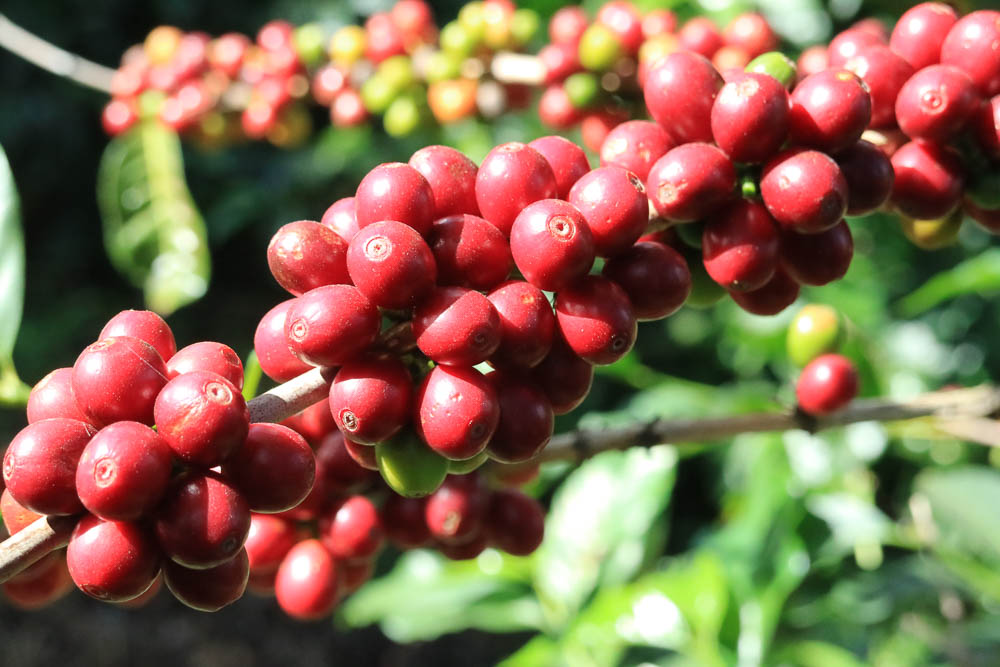
[Brazil Red Bourbon] Rich nutty and chocolate flavors, caramel sweetness, smooth and silky mouthfeel, overall balanced.
[Brazil Queen] Rich nutty flavor, with clean sugarcane sweetness, a faint lemon aroma, dark chocolate finish, lively and layered, smooth and rounded mouthfeel.
The above content is compiled by CoffeeHunters, a coffee news website.


