







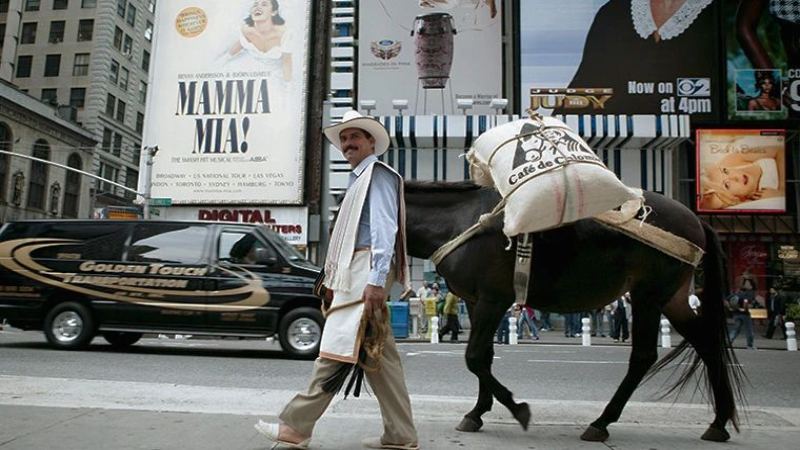
Colombian coffee, with its mild, rich aroma and consistent high quality, has long ranked among the top coffee exporters globally, and it is also a frequent guest on Front Street Coffee's bean list for both pour-over and espresso blends. This article starts from the geographical conditions of the Andes Mountains to analyze why Colombian coffee has accumulated such an excellent reputation, and outlines the role of FNC in the industry as well as the distribution of specialty production regions. The article also provides a detailed introduction to green bean screen size grading and the Excelso export standard, helping readers understand Colombia's coffee grading system. Finally, using Front Street Coffee's Huila daily-drinking beans as an example, it gives a specific brewing recipe and flavor performance for the KONO dripper, for coffee lovers to reference and practice.
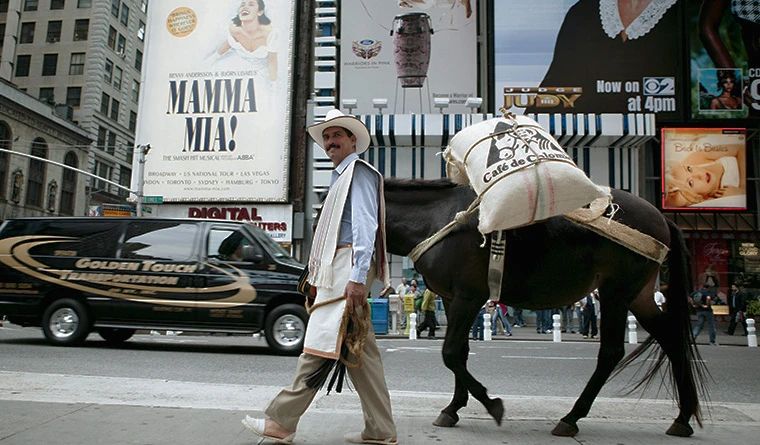
Colombian coffee has always enjoyed a very high reputation in coffee circles, with a mild yet richly layered aroma, and its export volume has long ranked among the top in the world. Whenever quality coffee is discussed, Colombia is almost an unavoidable name. On Front Street Coffee's bean list, Colombian coffee beans can be found among both pour-over single origins and espresso blends, which shows just how popular they are.
Why is Colombian coffee so favored?
Similar to many crops, the quality of coffee beans depends on many factors such as variety, climate, altitude, field management, picking methods, and post-processing. Coffee is a tropical cash crop, suitable for growing in high-altitude areas without frost. For every 100 meters rise in altitude, the temperature drops by 0.6°C. A low-temperature, oxygen-poor environment causes coffee cherries to mature more slowly. During this process, the coffee tree sends most of its nutrients to the fruit, so the beans become denser and harder in texture, while also having more time to accumulate and store nutrients in the form of sugars. The Andes Mountains within Colombia happen to possess exactly these near-demanding natural conditions.
The Andes Mountains are located in western Colombia and consist of three longitudinal high mountain ranges. These mountains have fertile soil rich in organic matter, and coffee trees are planted at altitudes between 800 and 2,300 meters, receiving both sunlight and moderate shade from clouds. The climate among the mountains is diverse, allowing the local area to be in harvest season throughout the year. Different varieties of coffee mature one after another at different times, so in every season one can see the busy scene of picking in the groves. Local growers are accustomed to planting coffee trees under shade trees, mostly tall trees or banana trees. During the seedling stage, they also build shade frames to ensure the cool and humid conditions needed for coffee growth. In the coffee groves, humidity is high and temperature differences are small, so the beans mature slowly, which is conducive to the accumulation of caffeine and aromatic substances, resulting in better quality performance.
Colombian coffee's success, of course, does not rely only on the geographical environment. Coffee is a national beverage there, and the passion, study, and dedication of coffee farmers are difficult for other production regions to match. In recent years, with the development of the industry, Colombian coffee, supported by hand sorting, fine fermentation, and professional cupping, has presented even richer flavors and has naturally become a preferred choice for coffee lovers.
Where does Colombia's specialty coffee come from?
Early Colombian coffee was exported under production region names, and even specialty-grade beans mostly appeared in the form of local micro-lots. Colombian smallholders generally farm on a small scale, and those with their own processing equipment are even fewer. From the twentieth century onward, the local coffee industry began to develop vigorously, thanks to the establishment of Federación Nacional de Colombia (FNC, the Colombian Coffee Growers Federation).
FNC is Colombia's only official professional coffee association, representing more than 560,000 coffee-growing families, and has become one of the largest agricultural non-governmental organizations in the world. FNC is responsible for promoting the brand image of Colombian coffee globally and supervising the quality of every exported coffee bean. In addition to promotion in international markets, FNC also invests substantial manpower and resources within Colombia to support farmers' cultivation, production, management, and sustainable operations.
Under FNC's management and protection, 590 municipalities and 14 coffee-growing regions in Colombia grow coffee, covering about 875,000 hectares, most of which comes from small coffee farms. Smallholders usually cultivate around 2 to 3 mu, send their coffee to community processing stations for washing, or set up their own green bean processing facilities at home, and finally submit it for inspection and grading.
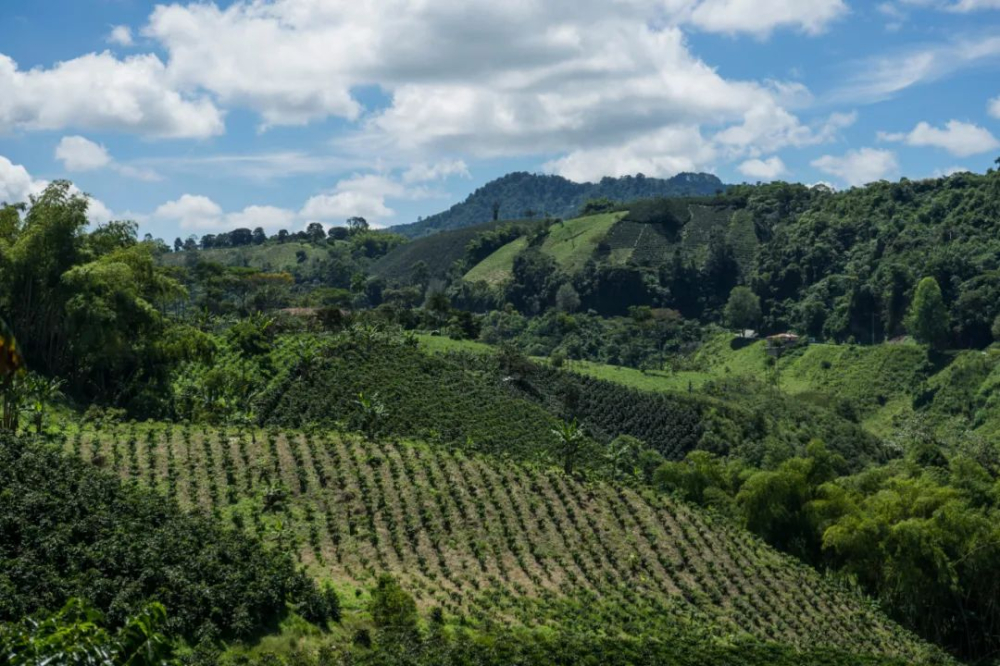
Looking at the map, Colombia's coffee production regions are clearly divided, forming three major areas from south to north: north, central, and south. Specialty bean production areas are mainly concentrated in the south, at altitudes above 1,500 meters, including San Augustin, Huila; Popayan, Cauca; Nariño Department; and Tolima Department. Coffee produced in these places has delicate acidity and berry aromas, accompanied by caramel notes and abundant sweetness.
Colombia grows a rich variety of coffee, mainly traditional Arabica varieties such as Caturra, Bourbon, Typica, and Pacamara, as well as some popular rare varieties such as Gesha, which has been reaching the market in small batches in recent years. Front Street Coffee's selected Colombian daily-drinking beans come from Huila, of the Caturra variety widely planted locally, using natural washing processing, and after roasting they are balanced in acidity, sweetness, and bitterness.
In Colombia, are larger coffee beans always better?
Before export, Colombian green coffee beans are graded by screen size, usually using fixed-size screens, with different specifications corresponding to different hole diameters. For example, if the mesh is 17 screen, beans larger than that size cannot pass through, so the larger the screen number, the larger the beans retained on the screen. The most common export grades are UGQ, EP, and Supremo.
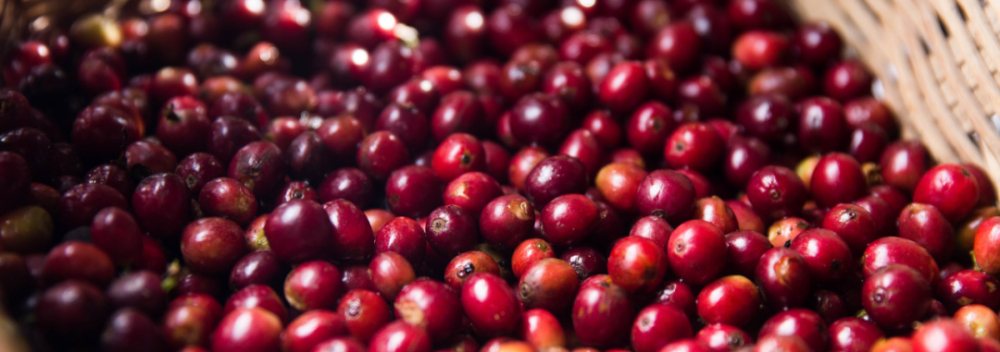
Regardless of which grade the green bean screen size belongs to, as long as it is used for export it belongs to the Excelso grade. In other words, on most burlap sacks of Colombian green coffee beans exported around the world today, the word Excelso must be marked. Excelso is currently the most widely adopted export standard grade by FNC, and it is also the highest grade for Colombian green bean exports. The Excelso grade must meet the following: in 500 grams of green beans, sizes are above 14 screen, with no more than 5% of green beans allowed between 12 and 14 screen, and overall at least 50% of green beans must be larger than 15 screen; free of insect damage, uniform in color, free of off odors, and clean in flavor; moisture content not exceeding 12.5%, and cumulative defects not exceeding 24 points.
Each farmer reports a number and enters green bean information, making later traceability easier. The names of Colombian exported green coffee beans are usually given in the format country + production region + grade + other details, for example, the green beans of Front Street Coffee's Huila daily-drinking beans are Colombia Huila Supremo SC17/18 FNC.
How should Colombian coffee be brewed to taste good?
The flavor description of every Front Street Coffee coffee is based on freshly roasted beans. If coffee beans are stored for more than a month, much of the aroma has likely been lost, and it is difficult to reproduce it during brewing. Front Street Coffee deeply understands the importance of freshness, so it only ships coffee beans freshly roasted within 5 days, allowing everyone to enjoy the fullest peak flavor period upon receipt.
Considering that the Huila daily-drinking beans use a medium-dark roast, with flavors leaning toward a rich, mellow profile like nuts and chocolate, the darker roast makes the coffee beans more porous and the coffee grounds more absorbent, so a medium grind is chosen. To avoid extracting too many undesirable flavors, Front Street Coffee slightly lowers the water temperature, using a medium 90°C water temperature, paired with a KONO dripper for extraction. Unlike the V60 dripper, the only exhaust area of the KONO dripper is at the quarter ribs. When the water level rises above the ribs, the water volume inside the dripper keeps increasing, and pressure is increased by the weight of the water. Because the outlet is relatively small, it can extend the contact time between coffee particles and water, and as water is poured in it more effectively brings out soluble substances, thereby enhancing the coffee's mellow, rich mouthfeel.
Brewing parameters: KONO dripper, 90°C water temperature, grind size with 75% passing a No. 20 standard sieve, 1:15 coffee-to-water ratio, 15 grams of coffee, three-stage extraction
Pour the coffee grounds into a V60 dripper, wet the coffee bed with twice the amount of water as the coffee grounds, forming a dome and letting it bloom for 30 seconds, then pour in a thin stream in circles from the inside out until 125 grams, pausing at that stage; wait for the coffee bed to drop to halfway down the dripper, then continue pouring the third stage with the same thin stream to 225 grams, until all the coffee liquid has finished filtering, then remove the dripper. The time is about 2 minutes.
This Colombian Huila daily-drinking bean has obvious roasting aromas of chocolate, nuts, and caramel on the palate, smooth and sweet, with moderate body and a clean mouthfeel. As the temperature drops, a pleasant, soft acidity can be felt.
The above content is compiled by CoffeeHunters, a coffee news website.


