







On the coffee map of Africa, besides the two jewels of Ethiopia and Kenya, Tanzania is also an origin worth paying attention to. When people mention Tanzania, many first think of Kilimanjaro coffee, which enjoys the reputation of "coffee gentleman" thanks to its rich body, moderate acidity, and fragrant aroma. Front Street Coffee has also released a Kilimanjaro coffee, using Bourbon variety, washed processing, AA grade, showing citrus and berry notes, honey sweetness, and a light tea aftertaste. This article will take you through Tanzania coffee's producing regions, variety characteristics, grading system, washed processing flow, and Front Street's roasting and brewing plans for this type of bean, so you can fully understand the coffee charm of this East African producing country.
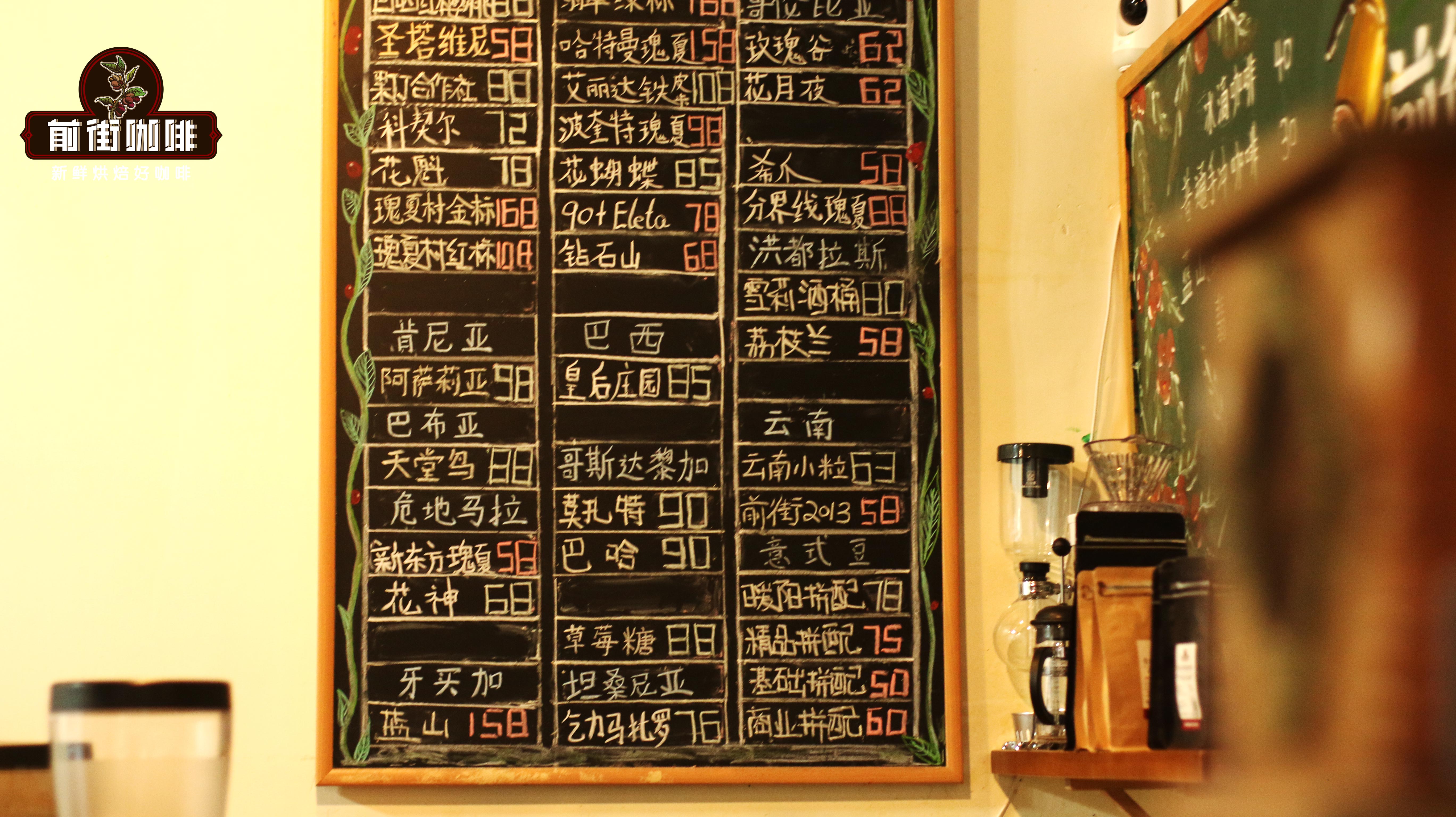
Have you ever visited Front Street's physical stores? Have you ever carefully looked through Front Street's coffee bean list?
At a glance, the bean list is densely packed with producing regions and varieties from all over the world. A rough count shows probably more than fifty offerings, covering almost every coffee origin in the world (a slight exaggeration). However, even Front Street, which is called a "coffee bean encyclopedia," still has corners it has not yet covered. Here's a hint: Africa. When people talk about African coffee, they naturally think of Ethiopia and Kenya. But if you broaden your view to the entire African continent, there are still many high-quality coffees worth trying. For example, the Tanzania coffee that Front Street Coffee is going to discuss today.
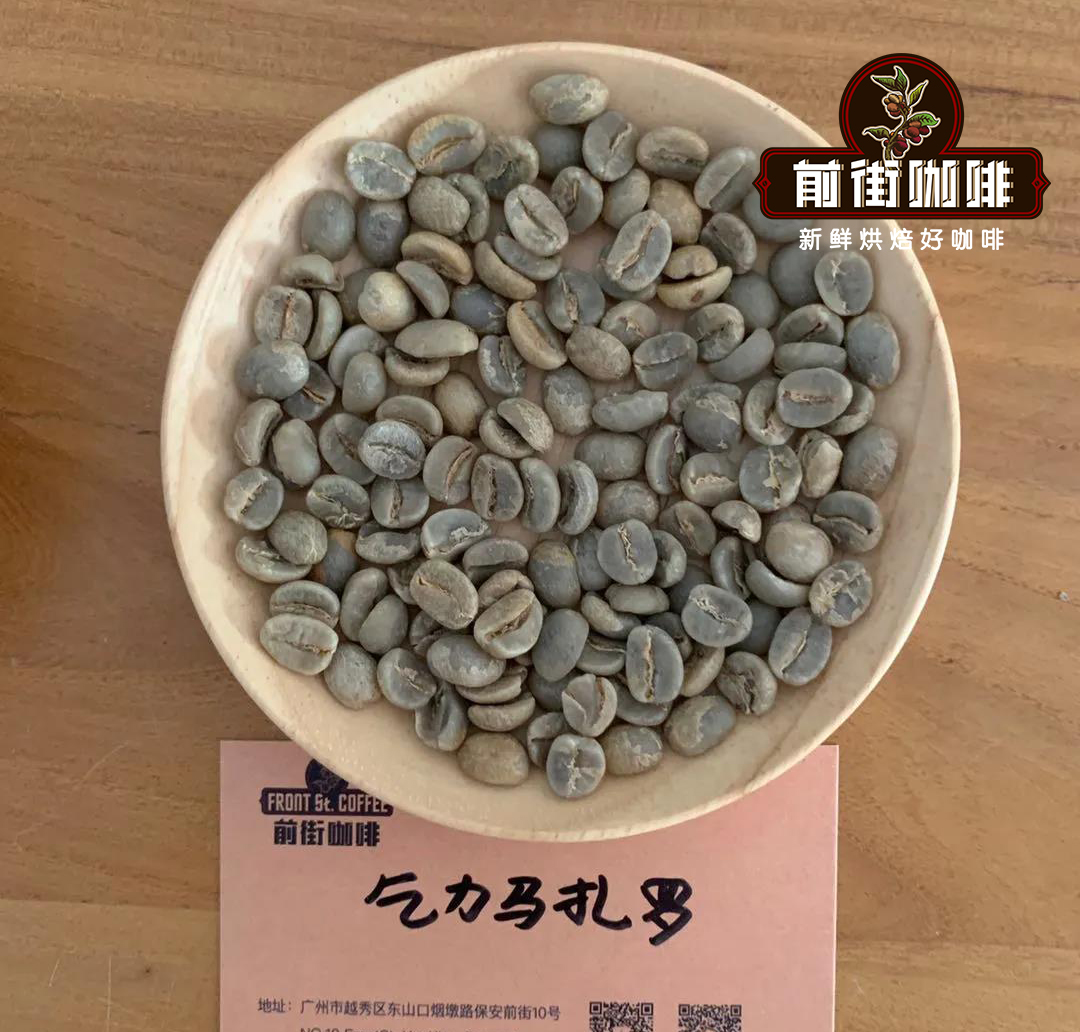
When people mention Tanzania, those in coffee circles most often think first of Kilimanjaro coffee. That's right, it is a distinctive "Kilimanjaro flavor," with a full and rich mouthfeel, just-right acidity, and a strong, pungent aroma, which is why it is praised as the "coffee gentleman." Long ago, Front Street also listed a Kilimanjaro coffee. Below is its green bean profile:
Front Street Coffee: Tanzania Kilimanjaro Coffee Region: Northern Highlands, Mount Kilimanjaro area
Variety: Bourbon
Processing method: Washed
Grade: AA
Altitude: 1300-2000m
This bean shows a very typical African style: citrus and berry notes, honey-like sweetness, and a faint tea-like sensation in the finish. If you say it's special, it is special; if you say it's not special enough, that also seems fair. Front Street Coffee compares Tanzania coffee with neighboring Kenya. Compared with high-quality Kenyan beans, Tanzania coffee's bright acidity is a bit weaker, and the overall profile is softer and gentler, with more prominent sweet aroma. Although a rich red wine character is also one of Tanzania's features, when placed together with other coffee beans of similar attributes, this bean lacks a distinctive label that makes people remember it. So nowadays, when you go to Front Street for coffee, you no longer see this bean on the menu.
That said, many regular customers still fondly remember the taste of that Kilimanjaro coffee and try to understand Tanzania coffee from the perspective of its producing regions. Tanzania is a typical East African country, bordering Kenya and Uganda to the north, Malawi, Mozambique, and Zambia to the south, and Rwanda and Burundi to the west. Although its fame is not as great as other African beans, Tanzania's annual output is actually comparable to Kenya's, reaching about 50,000 tons. The earliest Arabica seeds were introduced from Réunion, and were first planted in the Bayamoyo and Mogoro producing regions.
At present, coffee cultivation in Tanzania is mainly concentrated in Kilimanjaro and the southern region:
Southern coffee-growing region
The southern region covers RUVUMA and MBEYA. The altitude range is between 1200-2000m. The southern region is regarded as an area with the potential to produce high-quality coffee. In the past, development was constrained by a lack of funds. In recent years, it has attracted the attention of many certification bodies and non-governmental organizations, and efforts are currently being made to improve the situation in which southern coffee is not highly regarded. The harvest period in the southern producing region is from June to October each year, and the main planted varieties are Bourbon, Typica, and Kent.
Kilimanjaro Coffee Growing region
Mount Kilimanjaro is the highest peak on the African continent, with an altitude of 1050-2500m. Sufficient altitude, volcanic soil, and pure snowmelt water make this one of the most suitable areas for growing coffee. Some coffee trees planted here are already more than a hundred years old. Coffee was first introduced and planted by Christians from Kenya. Coffee trees need careful care. In addition to weeding and fertilizing, old branches must also be pruned to encourage new growth, thereby ensuring the quality of the coffee beans.
The harvest period in the Kilimanjaro producing region is from July to December each year, and the main planted varieties are Bourbon, Typica, and Kent. Kilimanjaro is Tanzania's largest coffee-producing region, and Kilimanjaro coffee is also an important pillar of Tanzania's economy. Kilimanjaro coffee comes from Mount Kilimanjaro, the highest mountain in Africa, in northeastern Tanzania. Local smallholder coffee farmers grow it at altitudes between 1300-2000m. Nourished by volcanic ash and combined with the high-altitude environment, the coffee beans produced are generally of excellent quality.
Allow me to indulge a little personal bias. Because this Front Street coffee belongs to the Typica variety, I will only introduce Typica here:
Typica carries a rich aroma of its own. As a high-quality coffee variety, it is still widely planted around the world today, and the most well-known among them is undoubtedly Jamaican Blue Mountain coffee. It is not easy to grow Typica coffee beans with elegant and pure flavor. From innate terroir conditions, plant management, and fruit picking to post-processing, every step needs to be fully ensured before the coffee beans can develop positive flavors and mouthfeel. This also means that producing high-quality Typica requires more labor costs and technical study, so it makes sense that Blue Mountain coffee and Kona coffee are expensive.
For this reason, the variety Front Street invested in planting in Yunnan is precisely Typica, and it uses natural processing. When brewed, it has balanced notes of nuts, brown sugar, and dried fruit. If you want to find out for yourself, you can place an order on Front Street's Tmall flagship store or Front Street's Taobao store.
From the green bean information Front Street provided earlier, it can be seen that this coffee uses the most basic washed processing method. In fact, most Tanzania coffee uses washed processing. After picking, coffee farmers send the coffee cherries to the nearest processing station as soon as possible for processing.
Steps of the washed processing method: 1. Screen out and remove impurities mixed in with the coffee cherries, 2. Remove the coffee pulp and outer skin, 3. Put them into a fermentation tank, and through fermentation remove the pectin layer attached to the parchment, 4. After washing clean, carry out the drying process.
Of course, choosing washed-processed coffee beans is actually also a little "trick" of Front Street's. Coffee lovers who have already gotten started should know that washed processing does not destroy the coffee beans' original flavor and can preserve the most classic producing-region flavor. Of course, besides washed processing making experienced drinkers excited, the AA grade makes them even more wide-eyed. In their view, AA represents excellent quality. In fact, Tanzania coffee's grading method is the same as Kenya's: both are graded according to coffee bean size. Friends who are interested can keep reading:
Because these lovely coffee beans are all large beans of uniform size, Front Street also specially designed a roasting plan for them:
Charge at a drum temperature of 175°C, heat power 120, damper set to 3; turning point at 1'33", when the drum temperature is 115°C open the damper to 4 and keep the heat power unchanged; when the drum temperature is 151.6°C the bean surface turns yellow, the grassy smell completely disappears, and it enters the dehydration stage; at 9'30" ugly wrinkles and dark streaks appear on the bean surface, and the toasted bread smell clearly turns into coffee aroma, which can be defined as the prelude to first crack. At this time, you need to listen clearly for the sound of first crack. First crack begins at 10'16", open the damper to 5, develop for 1'48 after first crack, and drop at 192°C.
The purpose of light roasting is to emphasize this coffee's sweetness and light acidity. Front Street amplified this coffee's strengths, making it taste with stronger acidity and a sweet aroma, with the best flavor.
So how should this coffee be brewed? Don't worry, Front Street also has a brewing standard suitable for it:
Dripper: V60 dripper
Water temperature: 90°C
Dose: 15 grams
Coffee-to-water ratio: 1:15
Grind size: medium-fine grind (78% passing rate with a No. 20 standard sieve)
Pulse extraction: Use 30 grams of water for a 30-second bloom, pour in a small stream in circles until 125 grams for the pulse, and when the water level is about to expose the coffee bed, continue pouring until 225 grams and stop. When the water level is about to expose the coffee bed again, remove the dripper. (Start timing at the beginning of the bloom.) Extraction time is 2'00".
The above content is compiled by CoffeeHunters, a coffee news website.


