







How did Geisha coffee transform from an overlooked variety into a brilliant star in the global coffee scene? This article begins with the history of Panamanian coffee, delving into the Boquete Valley in Chiriquí Province to explain how volcanic soil and microclimates give Geisha its unique floral and fruity aromas. We will also walk through Front Street Coffee's brewing method, presenting the complete process of making a Geisha Flat White step by step, and experiencing the flavor changes that occur when milk and coffee blend together.
Although Panama's coffee-growing history is not considered long among Central American countries, it is full of drama. Today, from street-side cafes to fine dining establishments, the most common drink on Panamanians' tables is coffee produced in their own country.
According to historical records, coffee beans first set foot on Panamanian soil in 1742. A merchant ship from a French Caribbean island—possibly Martinique, or perhaps Haiti, which was already producing coffee at the time—passed through the coffee-free port of Cartagena and finally docked at Portobelo. A barrel of coffee beans was listed on the cargo manifest. However, written evidence of actual coffee cultivation in Panama did not appear until 1780. Settler Pedro Antonio de Ayala y Arza attempted to grow coffee around Portobelo during the 1780s and 1790s, but he soon discovered that the local natural conditions were not suitable for coffee cultivation.
By the 1820s, coffee cultivation gradually spread across other regions of Panama and replaced chocolate as the main beverage, competing with tea imported from Europe. Panama still holds the world record for the highest price per pound of Geisha variety, and also produces some of the most sought-after high-altitude coffees in the world.
Panamanian Coffee Regions
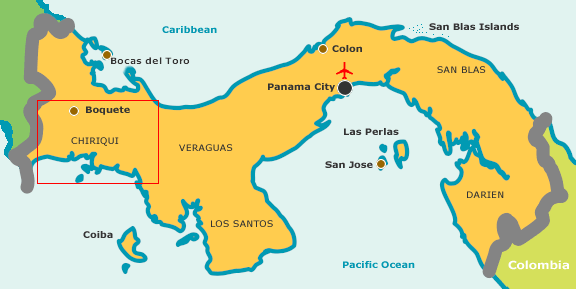
Panama's coffee planting area is approximately over 20,000 hectares, of which nearly 16,000 hectares are planted with Arabica. The country's main coffee-producing region is located in Chiriquí Province in the west near the Costa Rican border, which includes three renowned growing areas: Boquete, Volcán, Renacimiento, and Santa Clara.
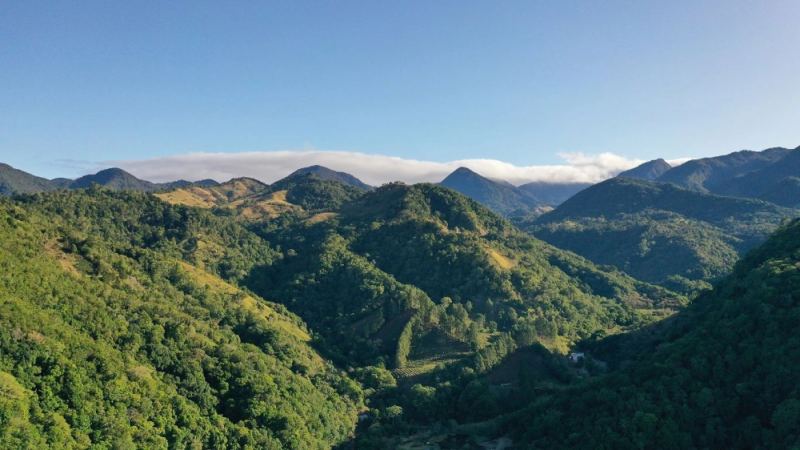
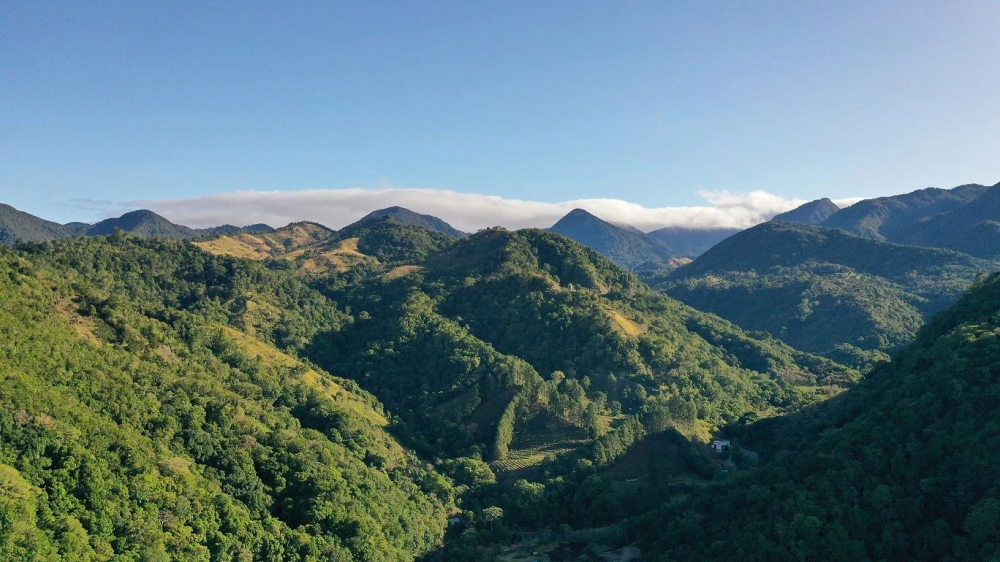
These producing regions are adjacent to one another, all situated on the Central American mountain range, alongside the majestic but not very active Barú Volcano, whose highest peak reaches 3,475 meters. Thanks to the variable climate and fertile volcanic soil, Chiriquí Province shows great potential in agriculture and animal husbandry, with activities such as thoroughbred breeding, flower cultivation, cherries, and bananas all developing here, but the most famous is specialty coffee.
The cool and picturesque Boquete Valley is known as the birthplace of Panama's coffee industry. In the late 19th century, a group of European immigrants—mainly Swiss, Yugoslavs, Swedes, and Germans—came to this area. They found that the surrounding regions (Panama was still part of Colombia at the time, until 1903) had outstanding coffee-growing results, so they decided to devote themselves to coffee bean production. Currently, there are approximately 50 to 75 coffee estates and about 15 coffee processing plants in the Boquete area.
Boquete covers an area of 514 square kilometers with a population of about 15,000, mainly growing coffee, flowers, citrus fruits, strawberries, and various vegetables. Most coffee farms in the area are located at around 1,600 meters above sea level. In fact, this land is almost entirely composed of nutrient-rich volcanic soil, providing ample nutrition for coffee trees. The climate is cool and slightly dry, especially in summer, with an almost imperceptible drizzle falling every day, and mist shrouding every coffee farm. This moisture-laden mixed wind is precisely the reason why Boquete coffee cherries ripen slowly. The resulting coffee has medium to high acidity, accompanied by various floral and fruity aromas.
First time trying Panamanian coffee? Which variety should you choose?
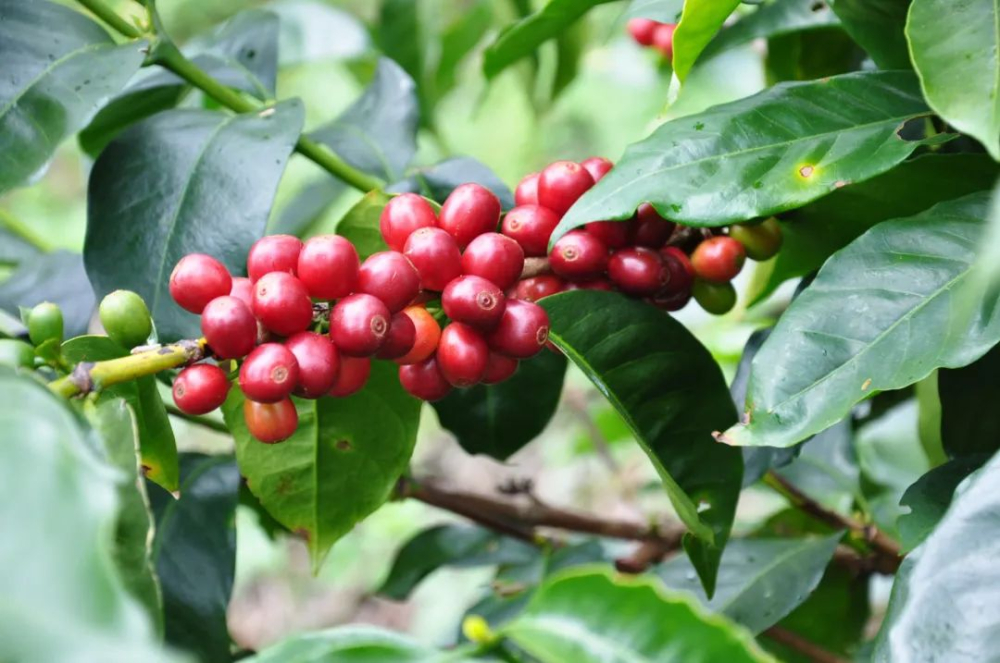
As the place where Geisha rose to fame, Panamanian Geisha is undoubtedly a must-try specialty. If you are new to this region, we recommend Front Street Coffee Boquete Geisha, a washed Geisha coffee that, under medium-light roasting, displays white floral notes with bright citrus, grapefruit, and green tea tones, intertwining in the mouth like a musical movement.
Before Geisha became famous, due to its tall and slender tree shape, weak disease resistance, low yield, and mediocre flavor when planted at low altitudes, it did not attract much attention from growers. It was not until 2004 that Geisha truly stepped onto the international coffee stage—the BOP "Best of Panama Green Bean Competition"—stunning all the judges with its delicate jasmine fragrance and deep fruity aromas, scoring an unprecedented high score and winning the championship that year. Since then, the price of Geisha coffee has repeatedly hit new highs, and its fame has spread throughout the global coffee community.
What makes Geisha win the favor of coffee lovers is that, unlike the traditional impression of strong black coffee, it is more like a cup of fresh floral and fruity tea. It carries rich fragrance and complex fruit flavors, reminding one of a series of unusual aromas. At different temperatures, one can feel the delicate texture and sweet-tart fruit flavors filling the entire mouth.
How to make a Flat White with the aromatic Geisha?
At Front Street Coffee, a double shot is generally used. Today's extraction parameters are 20 grams of grounds extracted for 26 seconds to yield 35 grams of liquid, served in a 200ml ceramic cup, so 150ml of steamed fresh milk needs to be added. The specific parameters and steps are as follows:
Coffee beans: Front Street Coffee Panama Geisha
Coffee grounds: 20g
Coffee liquid: 40g
Grounds-to-liquid ratio: 1:2
Extraction time: 26–32 seconds
Grind setting: Galileo 2.0
The espresso machine used at Front Street Coffee is equipped with a double basket, requiring 20 grams of coffee grounds each time, with an extraction ratio of 1:2, meaning 40 grams of coffee liquid is yielded within a reasonable time. The extraction duration is related to the flow rate of the coffee grounds, and a single extraction is usually controlled between 20 and 35 seconds. Less than 20 seconds tends to produce a thin and bland coffee taste, while more than 35 seconds tends to over-extract and bring out a burnt bitter flavor, so Front Street Coffee controls the espresso time within the range of 26 to 32 seconds.
Before extraction, wipe the basket dry, turn on the grinder, grind out a double dose of coffee grounds, and place it on an electronic scale to measure until it reaches 20 grams. Then use a distribution tool to level the coffee grounds, and use a tamper to press down vertically with force, compacting the coffee puck to ensure more stable extraction.
Then turn on the extraction switch and let water run for 1–2 seconds to moisten the group head while washing away any stuck coffee grounds. Place an electronic scale under the cup for the espresso, tare it to zero, and place it together under the group head during extraction. Gently lock the portafilter onto the group head and flip down the extraction switch. Observe the changes in the extracted liquid. When the electronic scale shows 40 grams of coffee liquid extracted, at about 30 seconds, flip the extraction switch down, then pour the coffee liquid into a cup and set aside.
Prepare 150ml of fresh milk, pour it into a milk pitcher and steam to 55–60°C with a layer of about 0.3cm milk foam, then blend it evenly with the coffee, pouring a small white heart. A Geisha Flat White is now complete.
The taste of this Geisha Flat White is consistent with Front Street Coffee's expectations. Because of the addition of milk, the acidity of the coffee is masked, the sweetness is enhanced, and the flavors are more balanced. In terms of flavor, we can still taste white floral and citrus notes, and even a caramel biscuit flavor appears after blending with milk. Although the flavor is not as rich as black coffee, the mouthfeel is more mellow and the sweetness is higher.
The above content is compiled by CoffeeHunters, a coffee news website.


