







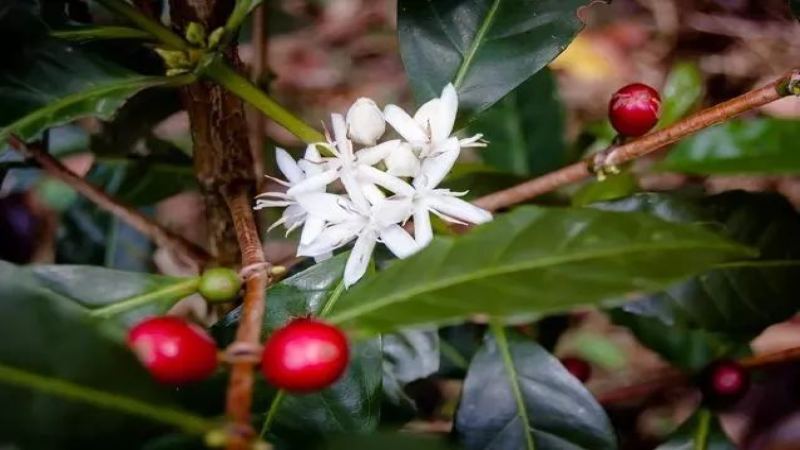
The coffee world is complex and diverse, but ultimately it comes down to three native species: Arabica, Robusta, and Liberica. As the birthplace of coffee, Ethiopia has nurtured countless undiscovered varieties, collectively known as "heirloom varieties," and is renowned worldwide for its two specialty regions: Yirgacheffe and Sidamo. From the perspective of Front Street, this article systematically outlines the characteristics and differences of the three major species, provides an in-depth introduction to the most famous of Ethiopia's nine major regions—Yirgacheffe and Sidamo-Hambela—analyzes the flavor differences brought by washed and natural processing, and includes Front Street Coffee's brewing parameters and purchasing recommendations, taking you on a comprehensive journey through the infinite charm of Ethiopian coffee.
There are many varieties of coffee, but what Front Street wants to tell you is: all varieties can actually be classified into three major categories, and all other varieties are derived from these three.
These three categories are: Arabica, Robusta, and Liberica. According to ICO (International Coffee Organization) statistics, after excluding domestic transactions within producing countries, Arabica accounts for about 65% of coffee circulating in the global market, while Robusta accounts for about 35%.
Ethiopia is the birthplace of coffee, and many coffees have been introduced from this country. As the place of origin, it has an extremely rich variety of species, and due to various factors, a large number of varieties remain undiscovered. Therefore, Ethiopian coffee beans are often labeled as "heirloom varieties." Of course, the vast majority of coffee produced in this country belongs to the Arabica species.
So what are the differences between coffee beans of these major species? Arabica beans are slender and flat, while Robusta beans are more round. If we also count hybrids of Arabica and Robusta (such as the Castillo variety, which is the main variety of Colombian coffee and carries one-quarter Robusta lineage, giving it strong resistance to leaf rust and high yield) and their mutant varieties, the classification becomes even more complex. Some Arabica varieties are very close to heirloom varieties, while others resemble Robusta quite closely.
Front Street will guide you through these three major coffee species one by one.
1. Arabica variety, scientific name Coffea Arabica, originally from the Abyssinian Plateau in Ethiopia (now the Ethiopian Highlands). It was initially used mainly for medicinal purposes, and it was not until the 13th century that the habit of roasting it for drinking was developed. In the 16th century, it spread through the Arab region to Europe and eventually became a beverage loved by people all over the world. This variety has weak resistance to natural stresses such as drought, frost, and pests and diseases, and is especially susceptible to coffee's natural enemy—leaf rust. Arabica is mainly grown in South America, Central America, Africa (East African countries), and Asia (including Yemen, India, and parts of Papua New Guinea). Its caffeine content is about 1.5%.
2. Robusta variety, scientific name Coffea Robusta Linden, a leaf-rust-resistant variety discovered in Congo, Africa, with stronger disease resistance than Arabica. It is actually a mutant of Coffea canephora. The name Robusta is already commonly used by the public and is often regarded as the same category as Coffea canephora. This variety has a unique aroma (an off-flavor called "Robusta flavor," which some consider musty) and bitterness. It is generally used in instant coffee, canned coffee, liquid coffee, and other industrial coffee products, or used in small amounts in coffee blends. Its caffeine content is about 3.2%.
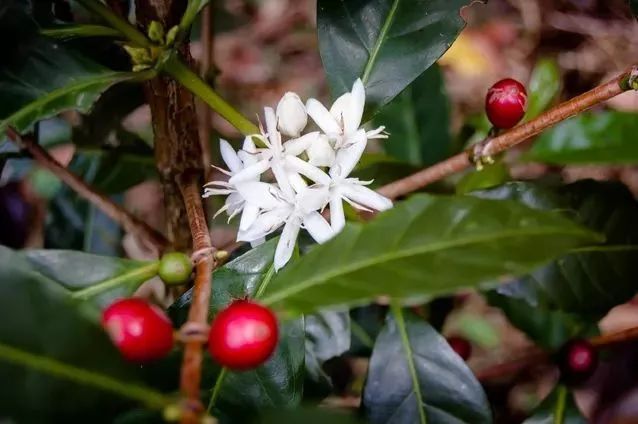
3. Liberica variety, scientific name Coffea liberica, originally from West Africa. It has strong adaptability to both high and low temperatures, and to humidity or dryness, but it is not resistant to leaf rust, and its flavor is also inferior to Arabica varieties.
The above is an introduction to the three major coffee species. Of course, as the birthplace of coffee, Ethiopia is where many coffee varieties originated. It is precisely because of this abundance of varieties that you will find coffee beans of different sizes, yet their flavors are unforgettable.
Today Front Street will introduce you to Ethiopia's most famous specialty coffee regions—Yirgacheffe and Sidamo.
Ethiopia has nine major coffee regions: Sidamo, Yirgacheffe, Harar, Gimma, Limu, Illubabor, Gimbi (Lekempti), Tepi, and Bebeka. Among them, the most well-known are Yirgacheffe, Sidamo, and Harar. Within the major regions there are also smaller regions, such as Kochere and Aricha in the Yirgacheffe region, and below that there are even smaller village-level regions. Coffee estates are not very prominent in Ethiopia; coffee is usually divided by major region, smaller region, village-level region, and washing station.
1. Yirgacheffe Coffee Region
Yirgacheffe is a famous specialty coffee region in Ethiopia, mainly known for washed processing. The coffee here has rich floral and citrus flavors. One of Front Street Coffee's daily beans uses washed Yirgacheffe as the representative of the Ethiopian region. Its fresh and bright citric acidity and citrus sweetness leave an endless aftertaste—once you drink it, you will fall in love with it.
Yirgacheffe is a small town in Ethiopia, with an altitude between 1,700 and 2,100 meters, and can be called synonymous with Ethiopian specialty coffee. This place has been a wetland since ancient times. In the ancient language, "yirga" means "to settle down," and "cheffe" means "wetland." Therefore, Yirgacheffe means "to settle down in this wetland." At first, Yirgacheffe was a sub-region of Sidamo Province, located northwest of Sidamo, and is one of the highest-altitude coffee regions in Ethiopia. Because its production methods and flavors were too outstanding, Ethiopian coffee farmers took pride in their coffee having Yirgacheffe flavor, and it therefore became independent from the Sidamo region, becoming Africa's most famous coffee region.
2. Sidamo-Hambela Coffee Region
As a specialty coffee region, Sidamo includes both washed and natural processing methods. The most representative one at Front Street Coffee is the natural coffee Huakui 5.0. Huakui 5.0 has floral, tropical fruit, berry, and citrus sweetness, with a rich mouthfeel, making it very popular at Front Street. Hambela was originally a sub-region of Guji, which was itself a sub-region under Sidamo. It is governed by Oromiyaa, the southernmost administrative state in Ethiopia. To the west, it faces Kochere in the Yirgacheffe region across the mountains at a distance of 3,200 meters; to the east it borders Shakiso; to the south it borders Uraga; and to the north it borders Kercha.
At present, there are about 20 processing stations in Hambela, distributed across different villages and estates in the sub-region, varying in size. In 2017, a coffee from the Hambela region won the championship in the natural category at Ethiopia's TOH, and Hambela rose to fame from then on. That year, after this champion bean came to China, it was renamed "Huakui" by the importer, and subsequent coffees in the Huakui series have all been produced in Hambela.
Of course, the coffee flavors of every producing country and every region are different, especially in Ethiopia's coffee regions, where the cupping flavors of each region vary. To let everyone better taste Ethiopian coffee flavors, Front Street Coffee's single-origin lineup includes more than a dozen Ethiopian beans, which shows just how popular Ethiopian coffee is!
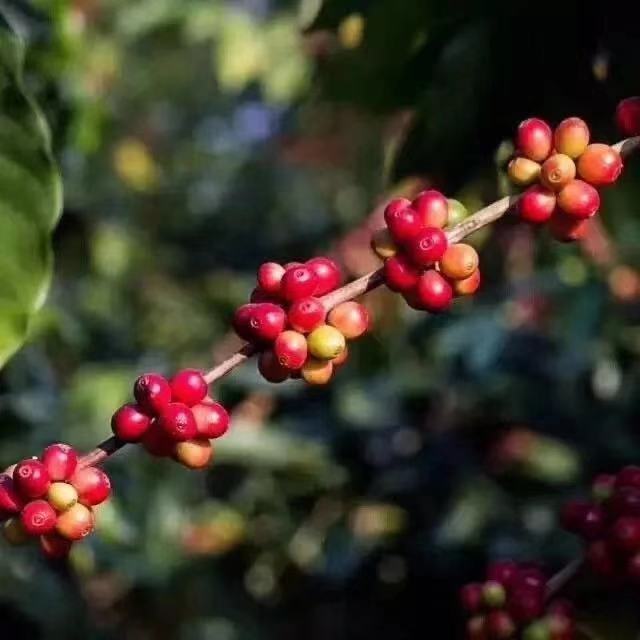
So why is Yirgacheffe coffee so popular? Front Street believes: Yirgacheffe gives off an extremely complex aroma and displays an exceptionally outstanding mouthfeel that is hard to describe. Light roast has a unique aroma of lemon, flowers, and honey-like sweetness, soft fruit acidity and citrus notes, and a fresh, bright mouthfeel. With no milk and no sugar, let the rich body and unique soft floral aroma brush across your taste buds, leaving an endless aftertaste... That is why it is so popular, especially among female friends.
Front Street Coffee Brewing Recommendations
For coffee brewing, Front Street recommends using freshly roasted coffee beans, as this allows you to experience the coffee's rich flavors to the greatest extent. The coffee beans shipped by Front Street Coffee are all within 5 days of roasting, because Front Street knows well that the freshness of coffee beans greatly affects flavor. Front Street's roasting philosophy is "Freshly Roasted Good Coffee," so that every customer who places an order receives the freshest coffee. The resting period for coffee is about 4-7 days, so when customers receive it, it is exactly at its best flavor.
Of course, the premise of all this is ensuring the freshness of the coffee beans. Front Street Coffee knows well that the freshness of coffee beans greatly affects flavor. Front Street's roasting philosophy is "Freshly Roasted Good Coffee," so that every customer who places an order receives the freshest coffee. Therefore, the coffee beans shipped by Front Street Coffee are all within 5 days of roasting, and the resting period for coffee is about 4-7 days, so when customers receive it, it is exactly at its best flavor.
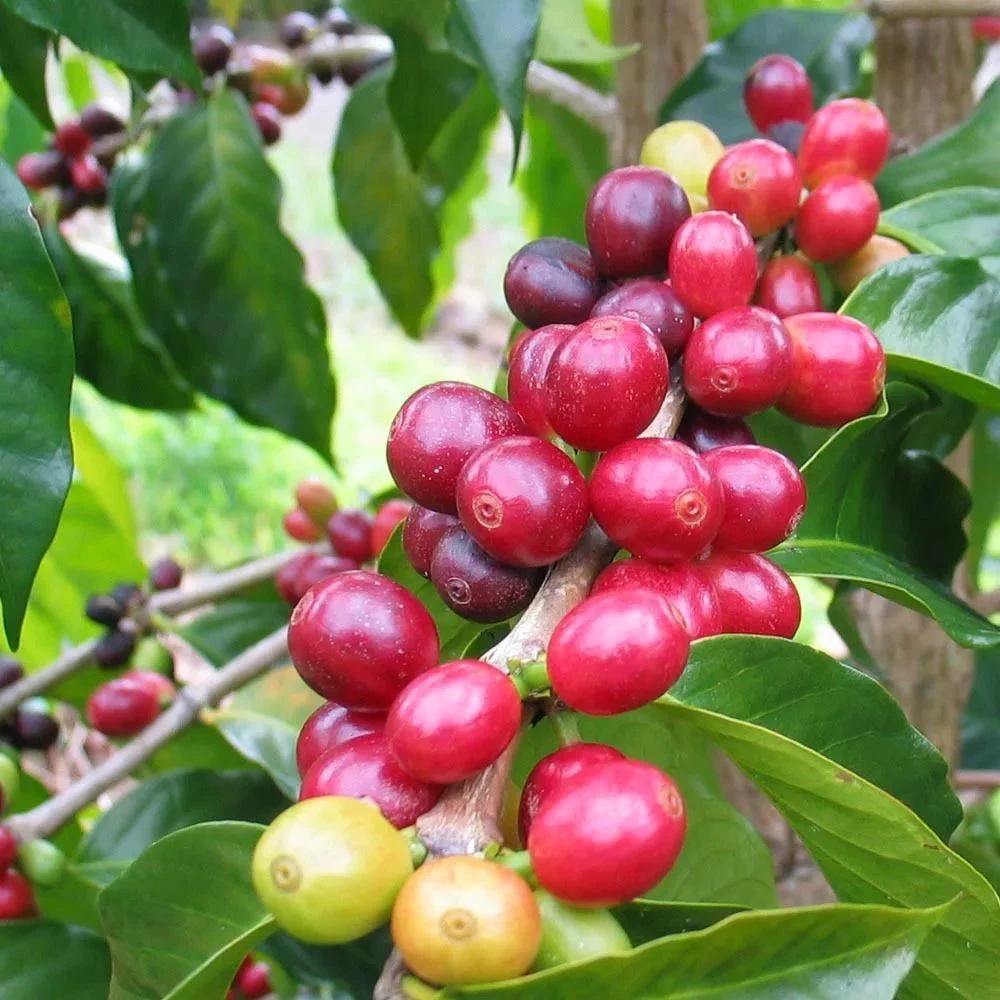
Of course, some customers also need Front Street to help grind the coffee, and that is no problem, but Front Street must remind you: once coffee beans are ground in advance, they no longer need to rest, because during transportation the pressure from carbon dioxide inside the package can also make the coffee flavor rounder, so once you receive the ground coffee, you can immediately brew a cup and drink it. However, ground coffee needs to be brewed promptly, because after coffee grounds come into contact with air, they oxidize relatively quickly, and the coffee flavor will dissipate faster and become less good. Therefore, Front Street recommends buying whole beans and grinding fresh before brewing, so you can better taste the coffee flavor.
Front Street's brewing parameters for Ethiopian coffee:
In order to fully extract the rich layering of Ethiopian coffee beans, Front Street uses a higher water temperature and a finer grind, but to avoid over-extraction caused by high temperature, it uses a faster-flow dripper, such as the V60. The V60 dripper is a 60° cone, and the cone angle allows the coffee grounds to gather together. When pouring, the water flow also automatically converges toward the center of the dripper, ensuring sufficient contact time between water and coffee grounds, thereby extracting a suitable cup of coffee. In addition, the ribs on the inner wall of the V60 extend in a clockwise spiral from the bottom to the top, leaving enough space between the filter paper and the dripper so that water flow is smooth. Combined with the large hole at the bottom, the flow rate is relatively faster than that of many drippers.
Dripper: Hario V60, water temperature: 90°C, dose: 15g, coffee-to-water ratio: 1:15, grind size: medium-fine (80% passing through a Chinese standard No. 20 sieve)
[Washed Yirgacheffe Coffee Flavor] Brighter and livelier acidity, citric acidity, citrus aroma, a refreshing mouthfeel, and some black tea tea-like notes in the finish.
[Natural Sidamo Huakui 5.0 Coffee Flavor] Floral notes, sweet-and-sour notes of berries, citrus, and plum, mango juice, honey, with a sweet black tea finish.
Front Street Coffee has more than fifty single-origin coffees, covering various producing countries and regions. Coffee lovers can freely choose the coffee they like. Of course, for coffee beginners, Front Street also has 8 representative coffee beans from various producing countries, with very high cost performance, making them very suitable for beginners.
For professional coffee knowledge exchange and more coffee bean information, please follow Coffee Workshop (WeChat public account: cafe_style)
For more specialty coffee beans, please add the private WeChat of Front Street Coffee (FrontStreet Coffee), WeChat ID: qjcoffeex
The above content is compiled by CoffeeHunters, a coffee news website.


