







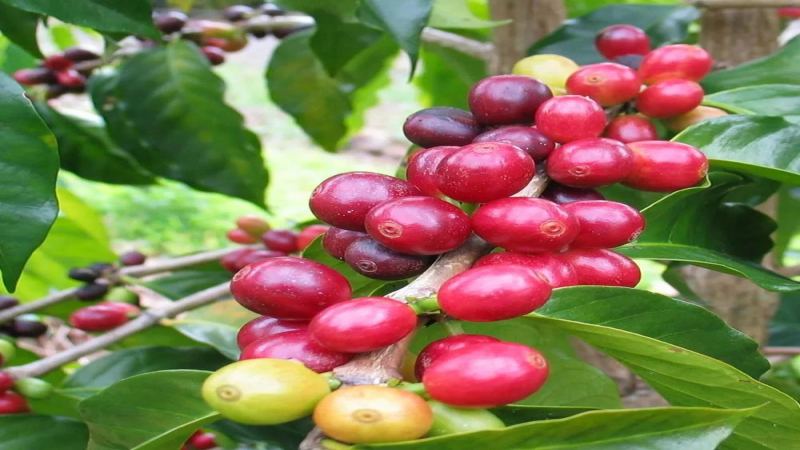
Ecuador's Galapagos Islands: A Unique Coffee Origin
Ecuador stands out in South America for producing both Arabica and Robusta coffee beans. Its finest coffee comes from San Cristobal Island in the Galapagos, where a maritime climate and volcanic soil create ideal growing conditions. Freshwater streams rich in minerals nourish the land, supporting healthy coffee growth. This unique environment yields beans with floral and fruity notes, balanced by caramel sweetness, earning recognition among specialty coffee enthusiasts.
The history of San Cristobal coffee began in the 19th century when Cobos established the Hacienda plantation. The Gonzalez family later expanded cultivation, helping the industry survive various challenges. Today, the region is known for its organic practices and distinctive flavor profile. For those interested in robusta coffee beans, Ecuador offers a rare combination of both species, with San Cristobal representing the pinnacle of its Arabica production.
In South America, Ecuador is one of the few countries that produces both Arabica and Robusta coffee beans. The country's finest coffee comes from San Cristóbal Island in the Galápagos Islands. This place has a unique maritime climate and volcanic soil, combined with freshwater streams rich in minerals, providing exceptional conditions for coffee cultivation. From Cobos establishing the Hacienda coffee plantation in the 19th century to the González family expanding cultivation, San Cristóbal coffee has weathered ups and downs, and today it is known for being organic with floral and fruity notes and caramel sweetness. This article will take you through an in-depth understanding of the history and flavor characteristics of this producing region, along with brewing suggestions from Front Street Coffee.
Ecuador is rather special among South American countries because it cultivates both Arabica coffee and produces Robusta coffee. Ecuador's most outstanding coffee comes from San Cristóbal Island in the Galápagos Islands. This island possesses the natural geographical conditions for nurturing top-quality coffee: although the altitude is not particularly high, regulated by the ocean, the local climate is equivalent to an inland environment of 1,000 to 1,800 meters, which is very suitable for coffee growth. San Cristóbal is one of the larger islands in the Galápagos archipelago, and at an altitude of 410 meters there is a small lake called El Junco. The lake water forms several streams that flow down the southern slope of the island along rocks and volcanic stone, and the mineral-rich freshwater continuously nourishes the land, keeping the soil moist and fertile, creating extremely rare conditions for coffee cultivation.
This small lake at an altitude of 410 meters on San Cristóbal Island forms several streams whose waters flow down the southern slope along rocks and volcanic stone. The mineral-rich freshwater nourishes this land, keeping the soil consistently moist and fertile, providing precious conditions for coffee growth.
The Galápagos Islands are about 1,000 kilometers from the Ecuadorian mainland, situated at the confluence of the eastern Pacific and three major ocean currents. In 1978, UNESCO listed them as a "World Natural Heritage" site. The archipelago is hailed as a "living museum of biological evolution" and a "melting pot of marine life," and it was here that Darwin drew inspiration for writing "On the Origin of Species." Most countries in the world produce only one type of coffee bean, but Ecuador is one of the few countries capable of producing both Arabica and Robusta coffee beans. Recently, an Ecuadorian coffee tasting event hosted by the Ecuadorian Consulate General in Guangzhou was held at the Yiwai Coffee Shop inside the Guangdong Museum.
The organic beans carry floral, fruity, and caramel aromas. According to Ms. Marlena, Consul General of the Consulate General of Ecuador in Guangzhou, Ecuador is located in South America, with the equator running through the country, which is why it is called the "Country of the Equator." Its advantageous geographical location, fertile soil, and special climate create a favorable natural environment for coffee bean cultivation.
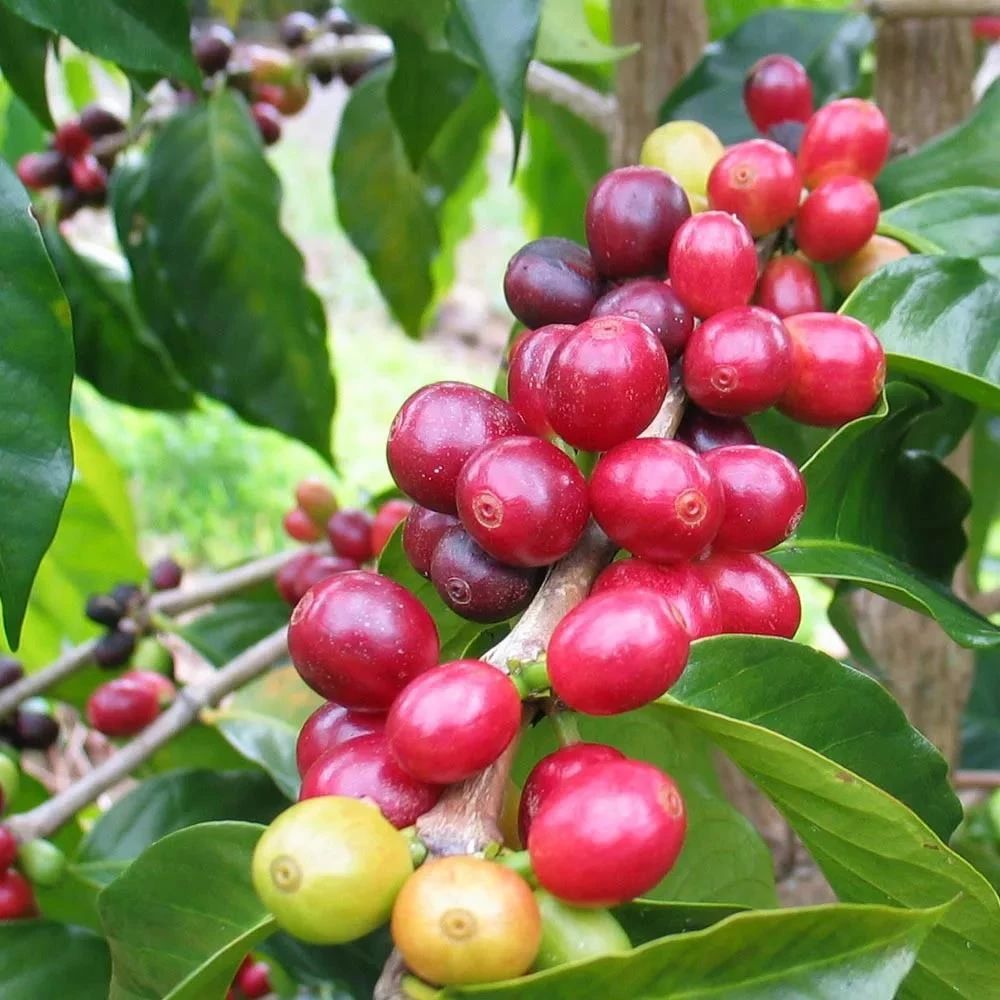
Ecuador's best coffee comes from San Cristóbal Island in the Galápagos Islands, which possesses unique natural conditions for nurturing the world's top coffee. A cup of Galápagos coffee, like the archipelago's beautiful scenery, is sure to leave a deep impression.
In the mid-15th century, legends about magical islands circulated among fishermen fishing in the western Pacific off South America. It was said that these islands were sometimes clearly visible in the distance, but when a boat approached they would instead disappear; sometimes they looked like large sailing ships, and sometimes like the shape of a witch. The fishermen called them "enchanted islands," believing they were ruled by monsters similar to the sirens of the sea in the "Odyssey." And this place called the "enchanted islands" is precisely today's Galápagos Islands.
In 1535, Fray Tomás de Berlanga of Spain and others accidentally discovered the Galápagos Islands. Tomás was born in 1487 by the Duero River in the province of Soria, Spain, and was then the fourth Bishop of Panama, ordered to go to Peru. The ship he was on departed from Panama on February 23, was struck by a powerful ocean current, and was carried to unknown waters in the open ocean, and on March 10 discovered a small island in the archipelago. At the time, the ship's freshwater was only enough for two days. The sailors landed by lifeboat and found the island inhabited by large numbers of seals, sea turtles, giant tortoises capable of carrying people, and iguanas resembling venomous snakes, but they did not find freshwater, so they sailed toward another larger island more than 20 kilometers away. Because there was no wind at all, it took them several days to arrive, the water was soon finished, and they had to endure hunger and thirst, and even the horses on the ship had no grass to eat.
After Tomás and the crew landed on this island, they frantically searched for water, and when unbearably thirsty they squeezed juice from the thick pads of cacti to drink. Eventually they found a water source in a rocky ravine. Tomás regarded it as a gift from God, because that day was Good Friday, and before setting out to search for water they had devoutly celebrated Mass. However, Tomás would never know that the island they landed on was precisely the only island in the Galápagos archipelago with abundant freshwater, namely today's San Cristóbal Island.
Three hundred and forty years after Fray Tomás de Berlanga discovered the island, that is, in 1875, an indigenous man named Cobos came to San Cristóbal Island and established the Hacienda coffee plantation, planting about 100 hectares of Arabica Bourbon coffee trees. The plantation is located between 140 and 275 meters above sea level, with a climate equivalent to an inland environment of 915 to 1,830 meters. The exceptional geographical conditions are very suitable for the growth of high-acidity Strictly Hard Bean (SHB) coffee, and high-quality coffee took root here from then on.
As coffee was consumed by consumers worldwide, the global coffee industry developed toward a mass-production model, and a smaller-scale coffee industry like San Cristóbal's, where quality was difficult to guarantee, fell into difficulty and might ultimately be abandoned for being unprofitable. It was not until the early 1990s that the González family bought the Hacienda coffee plantation. The local microclimate caused by the Humboldt Current, the intense equatorial sunlight, and the sharp temperature changes (43°C at sea level, 10°C to 16°C at 275 meters above sea level) provided favorable conditions, prompting the González family to expand the coffee plantation. By cultivating early land, they doubled the planting area. Because of the Galápagos Islands' unique role in the course of history, the Ecuadorian government made them a national park, not only no longer allowing new agricultural land to be cultivated, but also strictly prohibiting the use of chemical agents such as fertilizers, insecticides, and herbicides. Therefore, coffee produced in the Galápagos Islands is widely recognized as a natural green product. Coffee beans produced in Ecuador's Galápagos Islands are organic coffee beans. This is thanks to superior ecological conditions such as volcanic soil and microclimates, plus the absence of any fertilizers and insecticides, and they are widely recognized as natural green specialty coffee. This naturally grown coffee has a mild taste with subtle floral and fruity notes and caramel aromas.
Front Street Coffee brewing suggestions:
Regarding coffee brewing, Front Street has always believed that the freshness of coffee beans greatly affects flavor, so the coffee beans shipped by Front Street Coffee (FrontStreet Coffee) are all within 5 days after roasting. Front Street's roasting philosophy is "freshly roasted good coffee," so that every customer who places an order receives the freshest coffee. The coffee resting period is about 4 to 7 days, so when customers receive it, it is exactly at its best flavor.
For friends who need ground coffee, Front Street warmly reminds you: once coffee beans are ground in advance, there is no need to rest them anymore, because during transportation the pressure from carbon dioxide inside the packaging can also make the coffee flavor rounder, so you can immediately brew a cup upon receiving the ground coffee. However, ground coffee needs to be brewed promptly, because after contact with air it oxidizes quickly and the flavor dissipates faster, making the coffee taste less good. Therefore, Front Street recommends buying whole beans and grinding fresh before brewing, so you can better taste the coffee's flavor.
For professional coffee knowledge exchange and more coffee bean information, please follow Coffee Workshop (WeChat public account cafe_style)
For more specialty coffee beans, please add the private WeChat of Front Street Coffee (FrontStreet Coffee), WeChat ID: qjcoffeex
The above content is compiled by CoffeeHunters, a coffee news website.


