







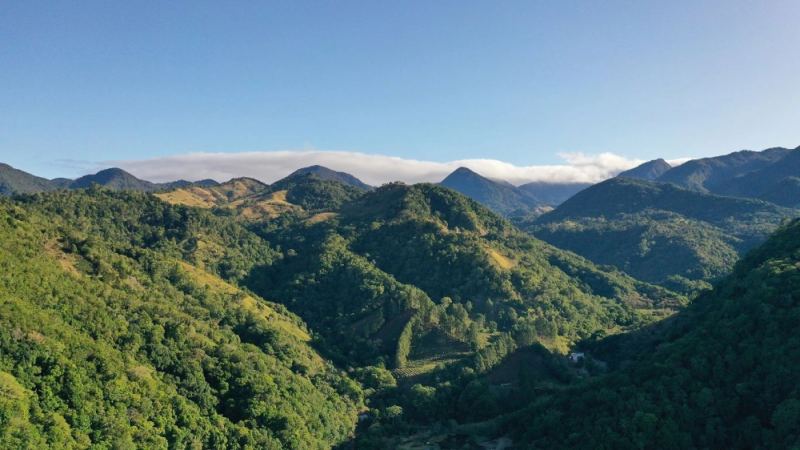
Panamanian coffee is renowned worldwide for Hacienda Esmeralda's Geisha, and the starting point of it all is precisely the Boquete region in Chiriquí Province. This land at the foot of the Barú Volcano, with its fertile volcanic soil, high altitude, and unique microclimate, has nurtured many world-class specialty coffees. Front Street Coffee brings you several Boquete beans, from Esmeralda Red Label to the high-value Butterfly, and Elida Estate's Typica. This article will guide you through Boquete's terroir conditions, main coffee varieties, and how to brew great flavors with Washed Butterfly and Natural Elida.
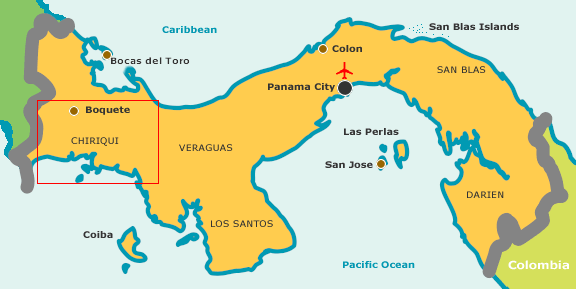
Panama is located in Central America, bordered by Costa Rica to the west and Colombia to the east. Anyone with even a passing interest in specialty coffee likely knows that Panamanian coffee rose to fame thanks to Hacienda Esmeralda's Geisha. After Esmeralda's Geisha won the BOP championship in 2004, the names Panama and Geisha became inextricably intertwined, each elevating the other. Over a decade later, Panamanian coffee has become almost synonymous with top-tier coffee, and whenever people list the world's best coffees, Panama is always among them. It can be said that this is a country that continually refines coffee quality and produces outstanding coffee.
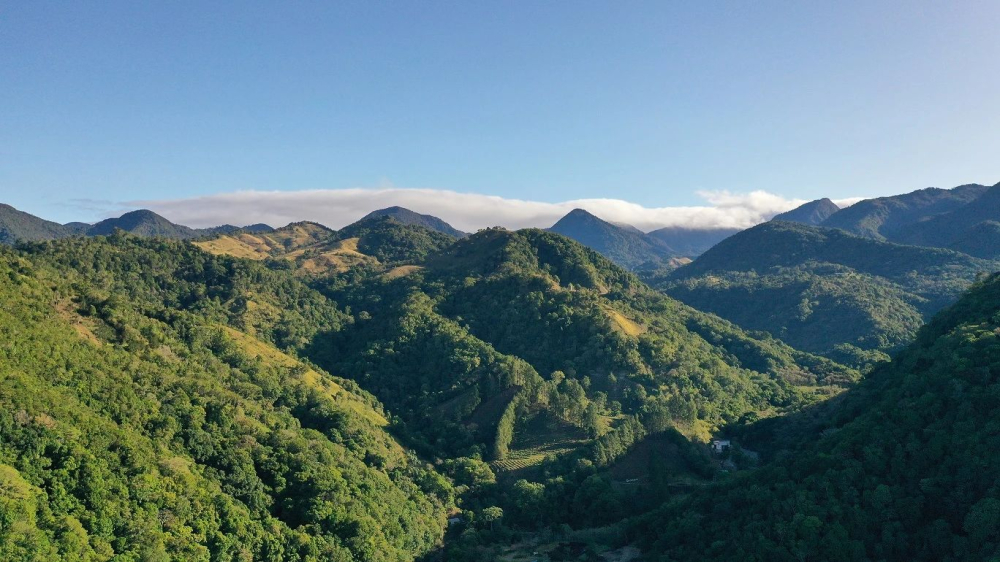
Panamanian coffee is widely known for Hacienda Esmeralda's Geisha, and the region where Esmeralda is rooted is equally famous — Boquete in Chiriquí Province. Boquete is a town under Chiriquí Province, located near the border between Panama and Costa Rica, adjacent to the famous Barú Volcano. It boasts beautiful scenery, deep and fertile soil, and a climate and soil quality highly suitable for producing high-quality coffee.
At Front Street Coffee, there are several outstanding beans from the Boquete region, the most famous including Esmeralda's Red Label and Green Label, as well as Elida Estate. Such excellent beans naturally depend on the region's environment, climate, varieties, and processing methods. Let's follow Front Street to explore what makes this region so special.
Regarding translation differences, Boquete is sometimes rendered as 博克特, 博奎特, or 波奎特, all referring to the same place. This article uniformly uses 波奎特 (Boquete).
Panama has two main coffee-producing regions: Boquete and Volcán. Both are located within Chiriquí Province. In the pre-Columbian era, in the language of the indigenous people who lived here, "Chiriquí" meant Valley of the Moon. Chiriquí Province is located in western Panama, facing the Pacific Ocean to the south, just a three-hour drive from the Caribbean Sea, and bordering Costa Rica to the northwest.
Speaking of these two regions, one cannot fail to mention a volcano in Chiriquí, which has a name we are more familiar with — Barú Volcano.
Barú Volcano (Volcán Barú)
Chiriquí Volcano (Volcán de Chiriquí), also known as Barú Volcano (Volcán Barú), is the highest peak in Panama, with a summit height of 3,474 meters. This volcano extends approximately 35 kilometers along the border between Panama and Costa Rica. Thanks to the volcano's high altitude and Panama's narrow, elongated shape, on clear days one can see both the Pacific Ocean and the Caribbean Sea from the mountain.
Barú Volcano is a dormant volcano, and the nearest potentially active volcano is located within Chiriquí Province on the western side of the North American continental divide. The volcano is surrounded by fertile highlands, and the mountains give rise to numerous rivers, mainly the Chiriquí River and the Caldera River. Most local villages are concentrated on the western side of the volcano, but there are exceptions — for example, the town of Boquete, with a population of about 19,000, is located on the eastern side.
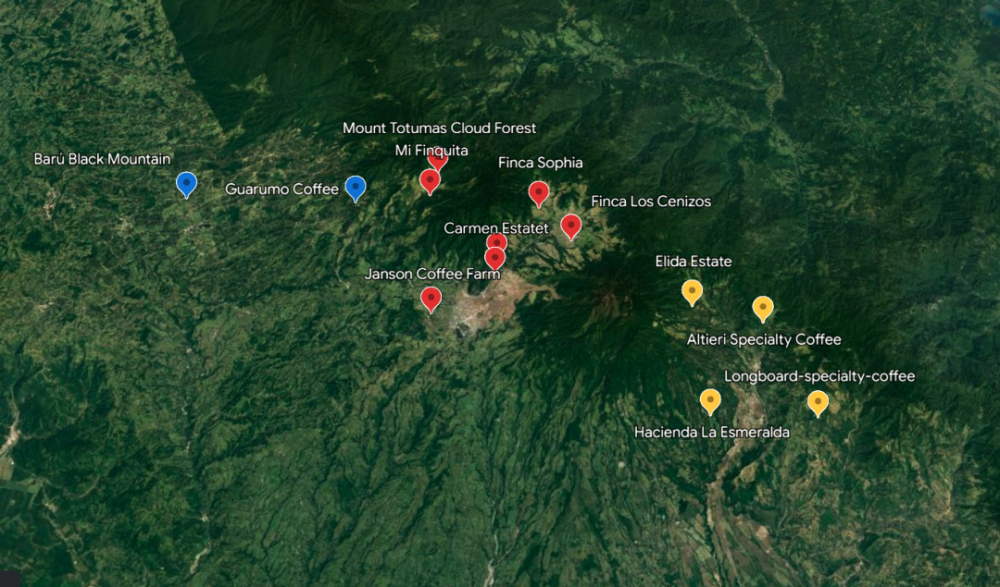
(Reference: Distribution of famous estates in Panama)
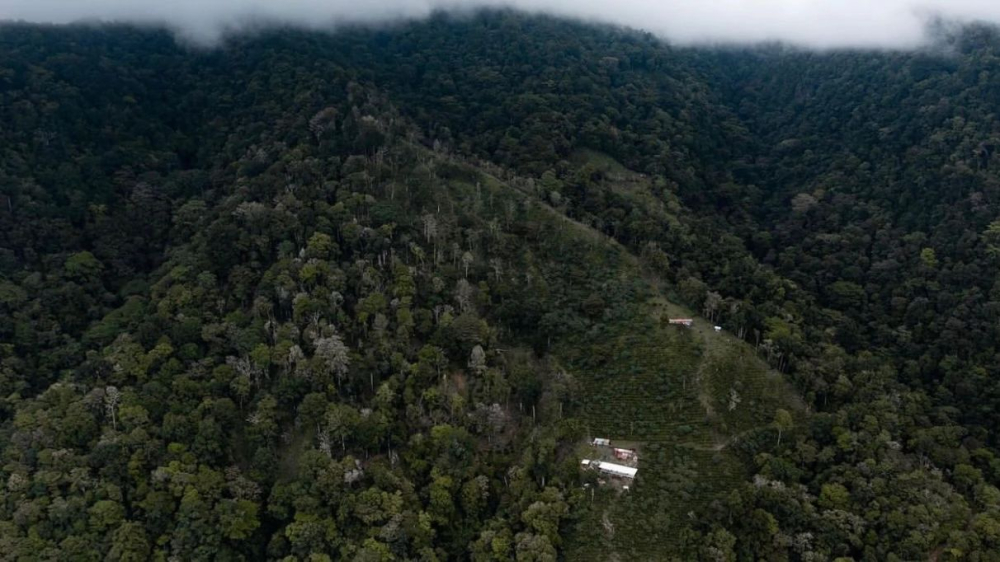
Barú Volcano is not only the highest mountain range in Panama, but the sediments left by early volcanic activity and eruptions also brought abundant fertile soil. These soils are rich in minerals, and the volcanic ash contains abundant phosphorus and sulfur. Combined with unique climate patterns, this has created an environment suitable for growing high-quality coffee, while dense forests and rich species diversity further contribute to biodiversity.
The area around Barú Volcano possesses superior conditions for growing coffee: moderate rainfall, high altitude, and cloud cover shade help coffee trees grow slowly and accumulate nutrients; Panama's distinct dry and wet seasons facilitate natural processing — this is the heavenly timing. Meanwhile, Barú Volcano provides nutrient-rich volcanic soil, and the many mountain rivers and abundant water resources make washed processing convenient — this is the earthly advantage. Such favorable conditions lay the prerequisite for growing high-quality Panamanian coffee.
Boquete
Boquete is known to us as one of Panama's coffee-producing regions, located on the eastern side of Barú Volcano. Boquete's growing conditions are extremely ideal, with coffee planted between 1,200 and 2,000 meters. The lowest temperature is about 11°C and the highest about 27°C, so there is neither frost nor excessive heat, along with a large diurnal temperature difference.
In his book "The Coffee Bean Hunter," Mr. Hsu Pao-lin describes Boquete as follows: "The mild climate, fertile young volcanic soil, moderate rainfall, and variable microclimates have earned the mountainous areas around Boquete the reputation of a 'coffee paradise.'" "The hot, humid, and unbearable climate of the capital, Panama City, forms an extreme contrast with the forests, blue skies, clean air, and pleasant temperatures of the producing region Boquete. The capital has a typical equatorial climate, while Boquete makes one feel as if they are in New Zealand or Switzerland in summer."
From Mr. Hsu's description, it is easy to imagine what a pleasant producing region Boquete is, and it is precisely such a refreshing place that grows high-quality coffee. Within the Boquete region, there are also many excellent estates, including not only the aforementioned Esmeralda but also Elida Estate, Kotowa Duncan Estate, and others, all producing优质 specialty coffee.
In addition to the estates, Front Street Coffee also offers a coffee from the Boquete region, composed of 70% Geisha variety blended with Caturra and Catuai, making this coffee a highly cost-effective Geisha entry choice in the minds of many consumers. This particularly outstanding value bean has a very beautiful name — Butterfly. You can place orders at Front Street's Taobao store or Front Street's Tmall flagship store.
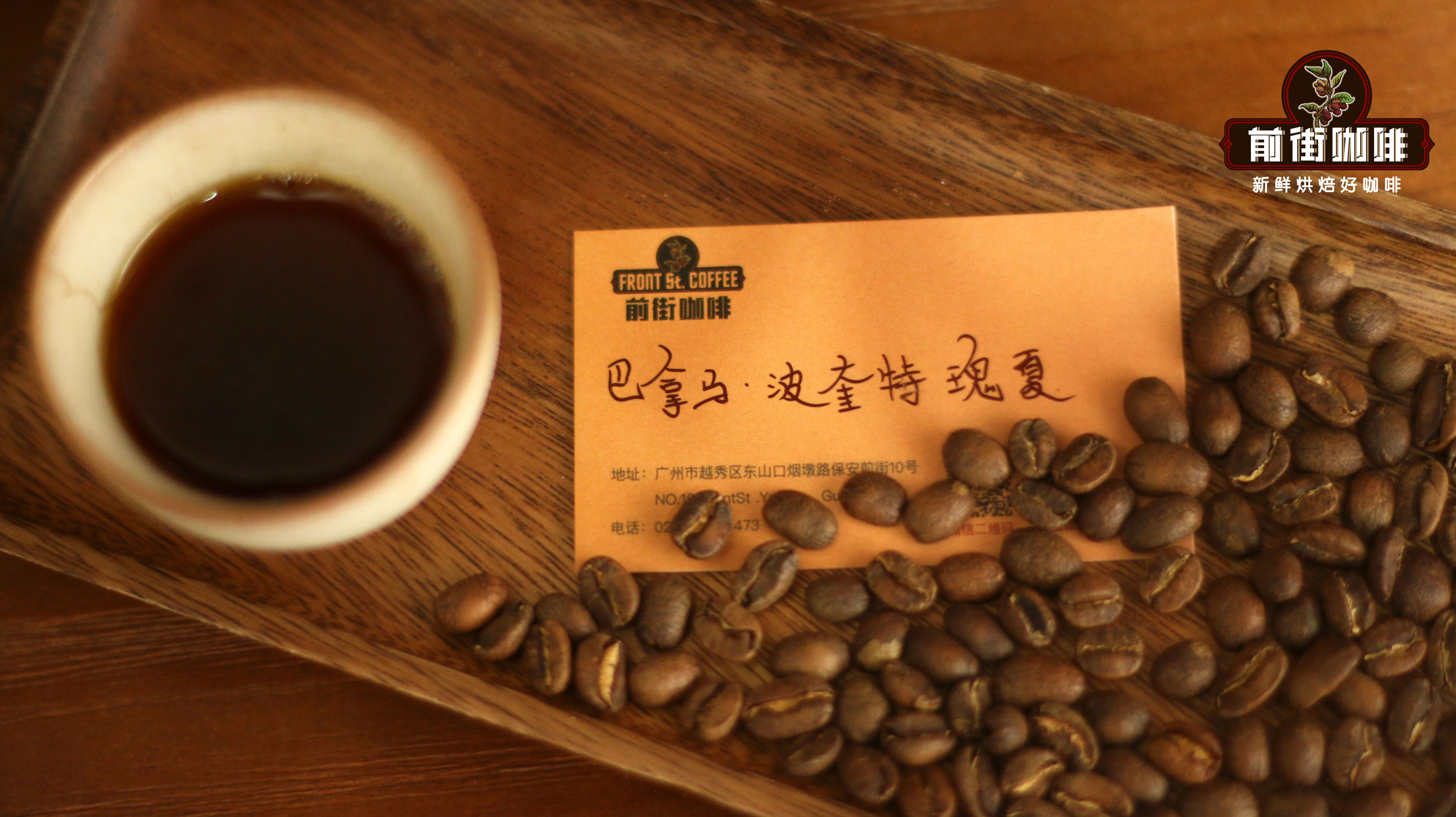
Front Street Coffee: Panama · Washed Butterfly Coffee Beans
Coffee region: Panama, Boquete
Altitude: 1,600 meters
Varieties: Geisha, Caturra, Catuai
Processing method: Washed
Butterfly coffee is composed of 70% Geisha variety, specifically including three varieties: Geisha, Caturra, and Catuai. Planted in the Barú Volcano area of Boquete, growing at an altitude of 1,600 meters in the volcanic zone. The processing plant uses a meticulous washed processing technique. Panama's special microclimate provides abundant rainfall, large diurnal temperature differences, and the unique volcanic soil of the area, combined with careful harvesting and meticulous processing, give this coffee outstanding performance in body, acidity, and floral aroma.
There is another important factor: the microclimate of the Boquete highlands is a unique and important resource for Boquete's specialty coffee. Panama's east-to-west orientation allows cold air currents to converge above 6,500 feet along the central mountain range, creating diverse microclimates in the Boquete area, with temperatures and rainfall highly suitable for plant growth, so coffee trees planted here grow in excellent condition.
Introduction to Panamanian Coffee Varieties
What makes Geisha special is its very distinct and clear floral and citrus flavors, extremely high cleanliness, soft and elegant acidity, persistent and smooth sweetness, and a mouthfeel like fine black tea. The floral aroma and intense tropical fruit-like sweetness bring a unique floral and fruity fragrance.
Caturra
Caturra is a mutation of the Bourbon variety, discovered in Brazil in 1937. Its productivity and disease resistance are both superior to Bourbon, and the tree is shorter, making harvesting easier. It has strong adaptability and does not require shade trees — it thrives even under direct sunlight, commonly known as Sun Coffee. Caturra is suitable for planting from low altitudes of 700 meters to high altitudes of 1,700 meters, with strong altitude adaptability, but the higher the altitude, the better the flavor, though productivity relatively decreases. Caturra is characterized by bright acidity and low to medium body. It has less clarity and sweetness than Bourbon, with a lemony or citrusy acidity in the mouthfeel.
Catuai
Catuai is a hybrid of Mundo Novo and Caturra, with good resistance to natural disasters, especially wind and rain. It inherits Caturra's advantage of a short trunk, correcting Mundo Novo's shortcoming; another advantage is that the fruit holds firmly and does not easily fall off in strong winds, compensating for the fragile nature of Arabica cherries.
Typica
Typica is one of the oldest varieties of Arabica coffee trees discovered to date, the other being Bourbon. The Arabica species originated in Ethiopia, and this tree species still grows naturally in the local pristine rainforest highlands. Typica beans are slender, the tree is tall, the cherries are oval, and the branches are slightly inclined. Typica's four branches are long and spreading, at an angle of 50–70 degrees. Each tree's coffee yield is very low, but the cupping score is very high.
The Elida Estate bean offered by Front Street Coffee — Panama · Elida Estate — is precisely the Typica variety.
Elida Estate mainly cultivates three varieties: Catuai, Typica, and Geisha.
Front Street Coffee: Panama · Elida Estate Coffee Beans
Region: Boquete, Panama
Estate: Elida Estate
Altitude: 1,850 meters
Variety: Typica
Processing method: Natural
Elida Estate is located in the Boquete region, at an altitude that is almost the highest in all of Panama, with nearly half of its area within a national protected park — a rare ultra-high-altitude estate in Central America! Elida Estate covers a total area of 65 hectares, of which more than half lies within Barú Volcano National Park. 30 hectares are planted with coffee trees, and the remaining 35 hectares are virgin forest. Coffee is grown at altitudes from 1,670 meters to 1,850 meters, making it one of the two highest coffee estates in Panama (the other estate with such altitude should be Carmen Estate in the Volcán Valley).
Coffee Bean Processing Methods
Natural
In natural processing, coffee cherries delivered to the washing station are first sorted by hand to remove less dense defective cherries. The qualified cherries are then spread flat on raised drying beds for drying. Natural processing takes about 21 days to dry the cherries to around 12% moisture content. After completing the natural processing procedure, the cherry skin, pulp, and parchment are removed with a huller, then bagged and stored. Front Street believes that naturally processed coffee has the lowest acidity, highest sweetness, and clearest mouthfeel, though slightly lower cleanliness. In terms of flavor, it produces more berry-like notes and is more complex.
Washed
There are now many washed processing methods, but generally they all involve removing floating beans after the coffee cherries are harvested, then depulping, and soaking the coffee beans in fermentation tanks. Enzymes in the water soften the mucilage attached to the parchment, and natural yeasts break down the sugars in the mucilage — this process is called fermentation. After fermentation is complete, the coffee beans are moved to drying beds to dry. During the drying process, the beans need to be constantly turned to ensure even drying. Finally, they are stored in parchment in warehouses, and hulled and bagged after green bean buyers place orders. Coffee processed this way has a clean mouthfeel, emphasizing bright and lively fruit acidity, along with lifted fruit flavors and floral aromas.
Since most coffee produced in Panama is grown at high altitudes, with flavors primarily characterized by acidity, Front Street's roasters use medium-light roasting. Based on Front Street's brewing experience, harder coffee beans require higher water temperatures for brewing, with the aim of increasing the extraction rate. Using a V60 dripper can make the flavors of both coffees more layered.
Dripper: V60 Water temperature: 91–92°C Dose: 15g Coffee-to-water ratio: 1:15 Grind size: fine sugar (80% passing through a No. 20 sieve)
Three-stage extraction: For the first stage, use 30g of water for a 30-second bloom. For the second stage, pour 95g of hot water. When the coffee bed drops to halfway, begin pouring the third stage of 100g, until all coffee has dripped through. Note to start pouring from the center point, using a gentle, small stream in circular motions throughout to avoid uneven extraction.
The above content is compiled by CoffeeHunters, a coffee news website.


