







How Does the K72 Roasting Process Shape Kenyan Coffee?
Kenyan coffee stands apart from Ethiopian coffee with heavier acidity, a juicy mouthfeel, and fuller body. Cupping across Kenya's growing regions shows that juicy body is consistent, while acidity and flavor shift with climate and soil. The SL28 and SL34 varieties and the K72 washed processing method are central to that profile.
The K72 method uses a long soak that helps build the berry and citrus character Kenya is known for, and roast level then decides how much of that acidity reaches the cup. For a medium-light roast, such as Asaliya from the Thika region, a three-pour hand-brew with moderate temperature keeps the result bright and clean rather than sharp.
Kenya and Ethiopia are both representatives of African specialty coffee, but Kenyan coffee stands out with its substantial acidity, intense juicy mouthfeel, and full body. Through extensive cupping, Front Street Coffee has found that coffee beans from various Kenyan regions generally exhibit a full juicy mouthfeel, with flavor variations due to differences in climate and soil. This article systematically reviews Kenya's geography and climate, the distribution of its six major regions, the characteristics of SL28 and SL34 varieties, and the K72 washed processing method. Using the Asaliya coffee from the Thika region as an example, it provides a detailed explanation of the three-pour hand-brewing parameters and pouring techniques under a medium-light roast, helping you brew a bright and clean cup of Kenyan coffee.
For more specialty coffee knowledge, please follow our WeChat official account: Front Street Coffee (FrontStreet Coffee)
Kenya and Ethiopia are both exemplars of African coffee. Ethiopia's floral and fruity acidity is particularly bright, while Kenya's acidity is more substantial, and its mouthfeel is richer. The acidity of both is unforgettable.
Many people have a particular fondness for Kenya's intense berry notes, especially the small tomato flavor, which some even consider a hallmark of Kenya—if it doesn't taste like small tomatoes, it's not Kenyan coffee. Front Street believes it is inappropriate to define a bean from a Kenyan region in this way. The original flavor foundation of Kenyan regions is a substantial juicy mouthfeel. For all plants, soil and environment affect their growth, and coffee trees are no exception. Changes in regional climate, soil, and other conditions cause fluctuations in flavor from one harvest season to another. Front Street has cupped several Kenyan coffees in recent months and found that regardless of the region, they all possess a full juicy mouthfeel. Of course, they are not entirely identical—there are still differences in acidity and flavor.
Kenya is located in East Africa, with the equator crossing its center. It borders Somalia to the east, Tanzania to the south, Uganda to the west, Ethiopia and Sudan to the north, and the Indian Ocean to the southeast. The country is dominated by highlands, with an average elevation of about 1,500 meters. Kenya has a diverse climate; the entire country lies in a tropical monsoon zone, with hot and humid coastal areas, mild highlands, and occasional snowfall on mountains above 3,500 meters. The annual maximum temperature is 26°C and the minimum is 12°C. South of the equator, the climate is mainly tropical forest and tropical savanna; the coast has a tropical climate with high temperatures and abundant rain year-round; the further inland, the drier the climate, with desert and semi-desert areas in the north accounting for about 56% of the country's land area. Influenced by monsoons, Kenya does not have distinct four seasons, only a rainy season and a dry season.
Kenya Coffee Main Producing Regions
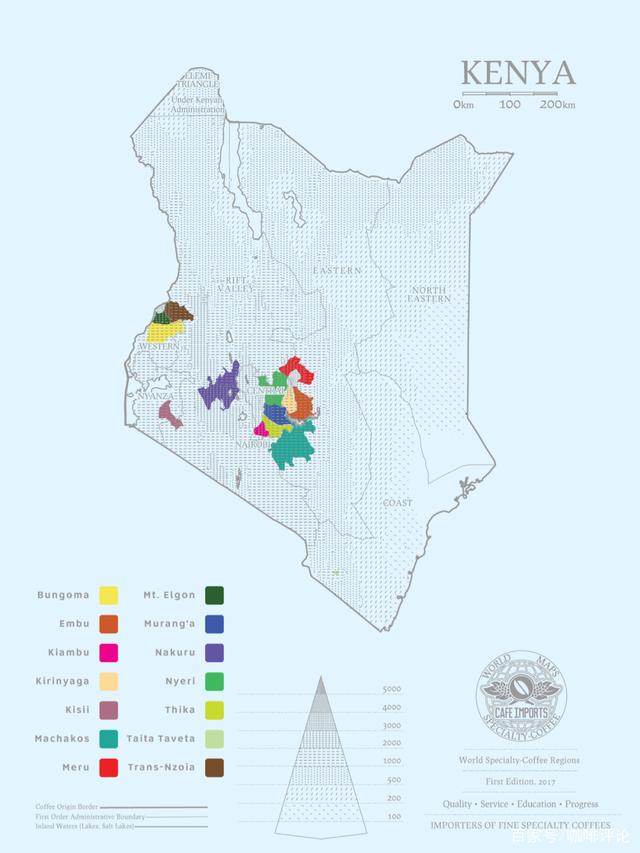
Kenya's coffee-producing regions are mainly distributed in the central and western parts of the country, covering Thika, Kirinyaga, Mt. Kenya West, Nyeri, Kiambu, and Muranga. The harvest period for the six major regions is concentrated from October to December (main crop season) and June to August (fly crop season).
Among them, Thika and Kirinyaga best represent the flavor of African regions.
Thika
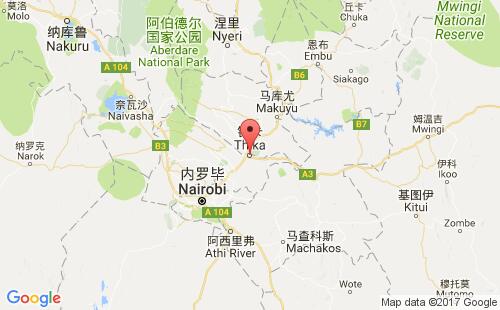
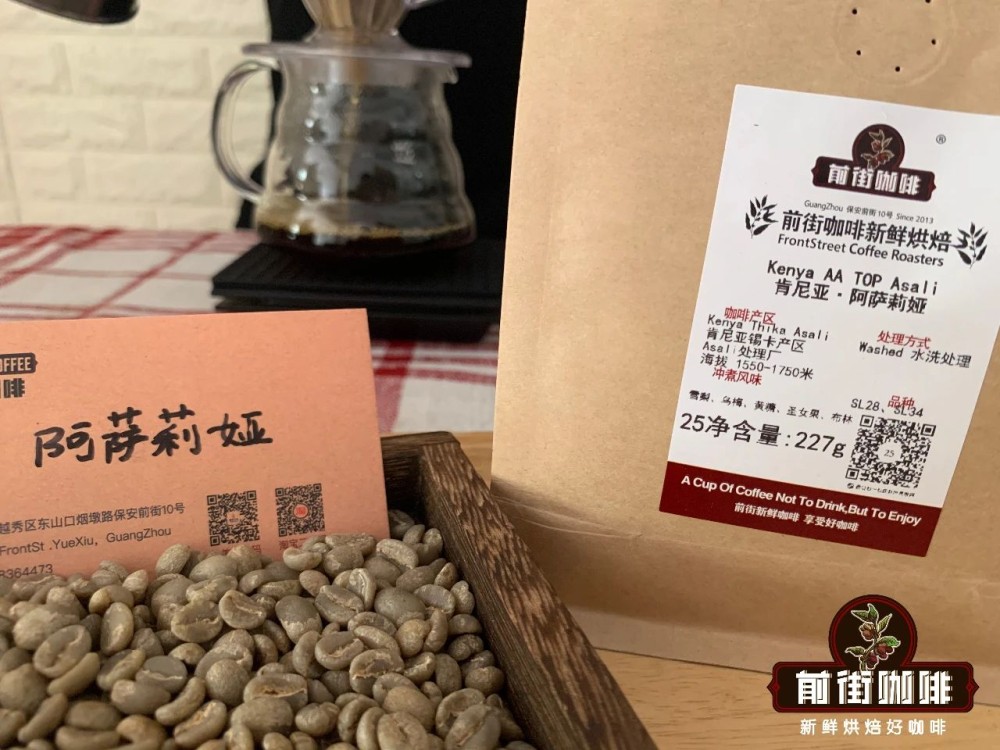
Thika is a small town near Kenya's capital, Nairobi. Surrounding Nairobi are large coffee fields, and although Thika is an industrial town, it is surrounded by agricultural areas and waterfalls. The area has about 2,000 farmers. The history of coffee cultivation in Thika, Kenya, can be traced back to the late 19th century, when coffee trees were introduced from neighboring Ethiopia to the north. After local variety improvement, commonly grown varieties now include Bourbon, Kents (SL34, SL28), Typica, and Riuri 11. Today, about 90% of the planted varieties are SL34 and SL28. The new variety Batian, released in 2007, has not yet been widely planted. The flavor profile of this region features bright fruity acidity, a substantial berry juice mouthfeel, and honey-like sweetness. Altitude: 1,550–1,750 meters. Varieties: SL-28, SL-34.
This Asaliya coffee from Front Street comes from the Asali processing plant in Kenya's Thika region. The Thika region is located in central Kenya and has the highest-altitude coffee-growing area in the region. Thika is a secondary area within this growing region, situated at the foot of the Aberdare Range, with red volcanic soil rich in organic matter.
Kenyan Coffee Bean Varieties
The high-altitude plateau areas near Mount Kenya provide the best growing environment for coffee, including the Aberdare Range, Nyanza, Kisii, Bungoma, Kericho, and Nakuru. The Arabica varieties grown in these areas were first introduced from Ethiopia.
As early as the 1930s, Kenya selected and bred SL28 and SL34 through the Scott Laboratories and promoted their cultivation nationwide. Because these two varieties have exceptionally excellent berry-like acidity, they were later introduced by some Central American estates. The variety of the Costa Rica COE champion coffee from two years ago was precisely SL28 and Geisha. Since then, Kenya has spared no effort in breeding leaf rust-resistant varieties.
SL28 and SL34: both are genetic variants. They account for the vast majority of Kenya's high-quality coffee production, though these varieties are susceptible to leaf rust. SL34 has French Missionary, Bourbon, and more Typica ancestry. The bronze leaf color and broad bean-shaped beans bring excellent sweetness, balance, and complex, variable flavors, along with notable citrus and smoked plum characteristics.
Kenyan Coffee Bean Processing Method
The Kenyan-style washed process uses a repeated fermentation-and-rinsing cycle: on the day of harvest, the finest coffee cherries are selected, pulped, and fermented for 24 hours, then rinsed with clean river water. Next, they are fermented again with clean river water for another 24 hours and rinsed again. This cycle is repeated three times, totaling 72 hours, hence the name Kenyan-style 72-hour fermentation washed process, or K72 for short. This processing method allows the beans to ferment for a long time at low temperatures, giving them a brighter, cleaner, and fuller flavor.
How can you brew that rich juicy mouthfeel of Kenyan coffee?
To brew a good cup of coffee, Front Street always first understands the basic information of the coffee beans, such as where the beans come from, what flavor characteristics they have, and what variety they belong to. Front Street first roasts based on this information, then performs cupping and brewing.
Front Street Coffee (FrontStreet Coffee) believes that to brew a good pot of coffee, you mainly need to focus on four aspects: water temperature, grind size, coffee-to-water ratio, and brewing technique.
1. Water Temperature
When doing pour-over, Front Street Coffee (FrontStreet Coffee) chooses different water temperatures based on different roast levels. During roasting, the substances inside the coffee beans are lost as the roast level deepens, so dark-roasted beans are brewed at lower temperatures to avoid extracting too many off-flavors. For medium-light roasted beans, Front Street Coffee (FrontStreet Coffee) recommends a water temperature of 90–91°C; for medium-dark roast, a water temperature of 88°C is recommended.
2. Grind Size
The grind size of coffee is also related to the roast level. Grind size refers to the size of the coffee particles, because grind size affects the contact time between coffee and water. The finer the coffee grounds, the more substances water can extract in the same amount of time, but too fine a grind easily leads to over-extraction; conversely, the coarser the grind, the fewer substances are extracted in the same amount of time, but too coarse a grind easily leads to under-extraction. In addition, everyone's grinder is different, so the parameters vary. Here Front Street recommends buying a No. 20 cupping calibration sieve with an aperture of 0.85 mm. Take 10 g of coffee beans, adjust to an approximate grind size and grind into coffee grounds, pour into the sieve and sift, then weigh the sifted coffee grounds (you must sift until no more coffee grounds can pass through to consider the sifting complete).
A passing rate of 70%–75% (7–7.5 g from 10 g of grounds) is the most suitable grind size. For pour-over, the grind size is: 80% for light roast, and 75% for medium-dark roast. If the passing rate exceeds the suitable range, adjust the grind coarser; if it does not reach the suitable passing rate, adjust the grind finer.
3. Coffee-to-Water Ratio
This is the pour-over coffee water-to-coffee ratio extraction parameter and flavor difference that Front Street Coffee (FrontStreet Coffee) derived based on the SCAA Golden Cup extraction theory. Front Street uses 15 g of coffee grounds to produce a cup of coffee. The choice of dose is usually based on the size of the dripper design, and Front Street's dripper is suitable for 1–2 servings, so it can be between 15–20 g. Too much coffee is harder to control, and the extracted coffee flavor is prone to becoming muddled.
Regarding the coffee-to-water ratio, 1:15 is the most commonly used, and any ratio within 1:14–1:16 works. Those who like a rich mouthfeel can choose 1:14, while those who prefer clearer flavors can choose 1:16. Front Street believes everyone's taste is different, so it takes the middle value of 1:15.
Therefore, Front Street Coffee (FrontStreet Coffee) suggests using the foolproof 1:15 coffee-to-water ratio when brewing coffee.
4. Brewing Technique
Finally, the pour-over technique is also very important. Commonly seen methods include the three-pour method, one-cut flow, and drip method, among others. Here Front Street Coffee (FrontStreet Coffee) recommends beginners use the three-pour method to brew, because this technique is suitable for light, medium-light, and medium-dark roasted coffee beans. The three-pour segmented extraction method can clearly define the front, middle, and back-end flavors of the coffee, which helps ensure the flavor presentation of the coffee. Next, Front Street Coffee (FrontStreet Coffee) will teach everyone how to do the three-pour pour-over coffee.
Front Street's three-pour brewing parameters and technique for Kenyan coffee: (When Front Street Coffee (FrontStreet Coffee) roasted this Kenyan coffee bean, considering the need to highlight its rich fruity acidity and full berry juice mouthfeel, a medium-light roast was used.)
Using a V60 dripper gives a richer coffee flavor. Water temperature 91°C, coffee-to-water ratio 1:15, dose 15 g, grind size (80% passing rate on the China No. 20 standard sieve).
First Pour: Bloom (to help degas)
First wet the V60 dripper, which helps the filter paper fit the dripper better, pour out the water in the server, and add 15 g of coffee grounds, then bloom with 30 g of water for 30 s. Many coffee enthusiasts don't know why pour-over coffee needs blooming. In fact, blooming is necessary because during the roasting process from green beans to roasted beans, a series of chemical reactions and physical changes occur. After reaching a certain degree of roasting, a large amount of gas (mostly carbon dioxide) accumulates inside the coffee beans.
Generally, the fresher the coffee and the closer to the roast date, the more bubbles appear during blooming. Dark-roasted beans also release more gas during blooming than light-roasted beans. Front Street Coffee (FrontStreet Coffee)'s coffee beans are all freshly roasted, so customers are generally advised to rest the beans for three days first, letting the coffee beans release carbon dioxide first, which avoids instability and under-extraction during brewing.
After the gas is released during blooming, the coffee particles can absorb water evenly, allowing for even extraction later. A good bloom allows the coffee grounds to degas quickly, fully, and evenly, while also allowing the coffee grounds to fully and quickly contact the water, helping the coffee grounds be extracted evenly. These are precisely the purpose and significance of blooming in pour-over coffee.
Second Pour
After blooming for 30 s, proceed with the second pour, starting with a small stream in a circular motion from the center until reaching 125 g, then stop. To concentrate the penetrating force of the water stream, the circular movement range should be small—about the size of a one-yuan coin—and then spiral outward. From the second pour onward, pay attention to the water volume, trying not to exceed the height of the coffee bed. In other words, when the water stream circles close to the filter paper, you can stop pouring.
Third Pour
Wait until the coffee bed drops to half the height of the dripper, then begin the second stage with the same technique, pouring until 225 g. Once all dripping is complete, remove the dripper.
From the third pour onward, observe the rate at which the water level drops. Again, start pouring from the center in a circular motion, and do not let the water exceed the height of the coffee bed. At this point, you will also observe that the foam has covered the entire surface. The third pour should increase the tumbling of the coffee particles, so that all the settled particles tumble and thereby dissolve soluble substances.
The rolling particles will begin to settle once the water is stopped. At this point, the flow rate caused by the dropping water level creates friction between the coffee particles. So once pouring stops, the coffee particles sink and cause clogging, so pay special attention to the rhythm of pouring. If you pause too many times, it is equivalent to letting the coffee particles sit in water the whole time, which will cause astringency and off-flavors in the final stage of extraction.
Start timing from the beginning of pouring; the extraction time is 2'00". Next, pick up the entire cup of coffee and swirl it to mix evenly, then pour it into a cup for tasting.
Flavor characteristics of Kenyan Asaliya coffee: the wet aroma has ripe tomato and floral notes. When hot, the entry is caramel and yellow sugar sweetness. As the temperature drops slightly, cherry tomato and smoked plum acidity emerge, with bright acidity and a clean mouthfeel. The mid-palate has prominent sweetness and a juicy mouthfeel.
The above content is compiled by CoffeeHunters, a coffee news website.


