







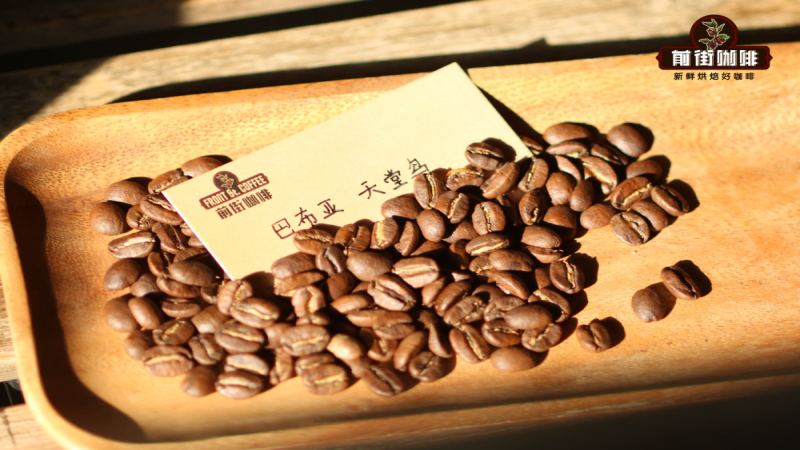
Why is PNG coffee called Little Blue Mountain?
Papua New Guinea coffee, often shortened to PNG, is nicknamed Little Blue Mountain because its Typica variety came from Jamaica's Blue Mountain. The Bird of Paradise lot from Sigri Estate shows a different profile: bright fruit acidity and a jasmine aroma, grown at roughly 1,500 meters in the Waghi Valley of the Western Highlands Province on volcanic soil.
PNG sits around 6 degrees south latitude, closer to the equator than Blue Mountain at about 18 degrees north, so the cup adds a dark fruit sweet-and-sour note. Within PNG coffee brands, estates such as Sigri rely on coffee cultivation that hand-picks fully red cherries and applies washed fermentation before drying.
Papua New Guinea coffee is called "Little Blue Mountain" because it was introduced from Jamaican Blue Mountain Typica, yet its flavor has a dark fruit sweet-and-sour note different from Blue Mountain. This year Front Street Coffee has selected the Bird of Paradise coffee from Sigri Estate to guide you through this country's coffee cultivation model, main producing regions, and processing methods. Bird of Paradise Estate is located in the Waghi Valley of the Western Highlands Province, at an altitude of about 1,500 meters, with volcanic soil and a cool climate, insisting on hand-picking fully red cherries and the washed fermentation process, creating bright fruit acidity and a delicate jasmine aroma. This article, based on Front Street's cupping and brewing experience, provides a comprehensive analysis of this coffee's origin background, varietal lineage, and flavor characteristics.
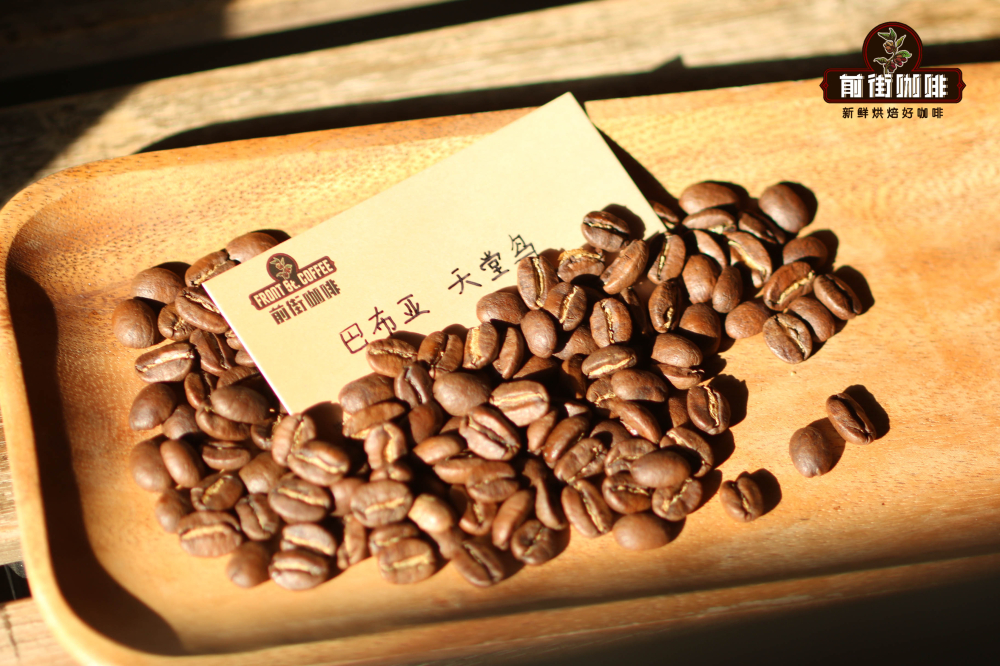
For more specialty coffee knowledge, please follow: Front Street Coffee (Frontsteet Coffee)
Papua New Guinea coffee beans are hailed as "Little Blue Mountain," and therefore often attract everyone's attention. Initially, Front Street, with a curious mind, acquired a batch of coffee beans from Papua New Guinea and conducted a comprehensive study of these beans through roasting, cupping, and brewing.
The vast majority of the territory of Papua New Guinea lies on the island of New Guinea, where a straight dividing line splits the island into east and west halves, with the west belonging to Indonesia and the east belonging to Papua New Guinea. Because the name is too long, it is generally simplified to "Papua" or its English abbreviation "PNG."
Many people call Papua's coffee Little Blue Mountain, but this is because Papua's coffee variety is the Typica introduced from Jamaican Blue Mountain, and the growing environment, altitude, and rainfall are very similar. The introduced Typica quickly adapted to the environment of the island of New Guinea, and from the perspective of both variety and the similar island-type environment, it fully deserves to be called Little Blue Mountain. Papua's coffee-growing regions (about 6 degrees south latitude) are closer to the equator than Blue Mountain (about 18 degrees north latitude). Upon careful tasting, its flavor is still slightly different from Blue Mountain; Papua coffee's flavor has an added dark fruit sweet-and-sour note.
Coffee Cultivation Model In Papua New Guinea, about 75% of coffee products come from small local farms. Many farms clear land in forest areas, and some farms are deep in the forest, almost completely isolated. The country's coffee is all grown in highlands at 1,300–1,800 meters, hence the high quality. Although coffee is also grown in some lowlands, the yield is relatively extremely small. Most locally grown coffee relies on natural conditions, because transporting fertilizers and pesticides to the farms is problematic and costly.
Coffee-Growing Regions Papua New Guinea specialty coffee beans are mainly grown in the Waghi Valley and Sigri Estate of the Western Highlands, and the Arona, Kimel, and Arokare estates of the Eastern Highlands, with Goroka Estate being the most famous. Because the coffee varieties differ from those of Indonesia, and the altitude is higher than Sumatra's, and the coffee beans produced in this country are processed by the washed method, Front Street believes that the regional flavor of Papua New Guinea coffee is completely different from the spice, herbal, and deep notes of Indonesian coffee beans; instead, it has brightness, sweet-and-sour notes, and floral and fruity aromas, closer to the flavors of South America.
Bird of Paradise Coffee This year Front Street Coffee (FrontStreet Coffee) has chosen the Bird of Paradise coffee from Sigri Estate. Here we should explain the origin of Bird of Paradise coffee. The two Papua coffees most commonly circulating in China come from Sigri Estate and Purosa Estate, and the coffee burlap bags they export are printed with the image of the bird of paradise, which is Papua's national bird.
The first Papua coffee beans introduced came from Sigri Estate, and at that time the beans were given the name "Bird of Paradise" in China. Later, the coffee burlap bags introduced from Purosa Estate were also printed with the bird of paradise image, but in order to distinguish these two beans, the later-introduced one could only be called by the estate name. Although this seems somewhat unfair to the latecomer, after many years of subtle influence, Sigri has subconsciously become bound together with Bird of Paradise.
However, Sigri Estate is absolutely worthy of the name Bird of Paradise; this year's green coffee beans are plump, emerald green, and excellent in appearance.
Sigri Estate was established in 1950 and has now been around for more than 60 years, making it a pioneer of the local coffee industry. Bird of Paradise Estate is located in the Waghi Valley of the Western Highlands Province, at a high altitude of about 1,500 meters, with mineral-rich volcanic soil, a cool climate, fertile soil, and abundant rainfall. Bird of Paradise Estate also places great emphasis on ecological protection; in order to protect the soil and water sources, it refuses to use chemical fertilizers and pesticides, and cares for the ecology and nearby birds.
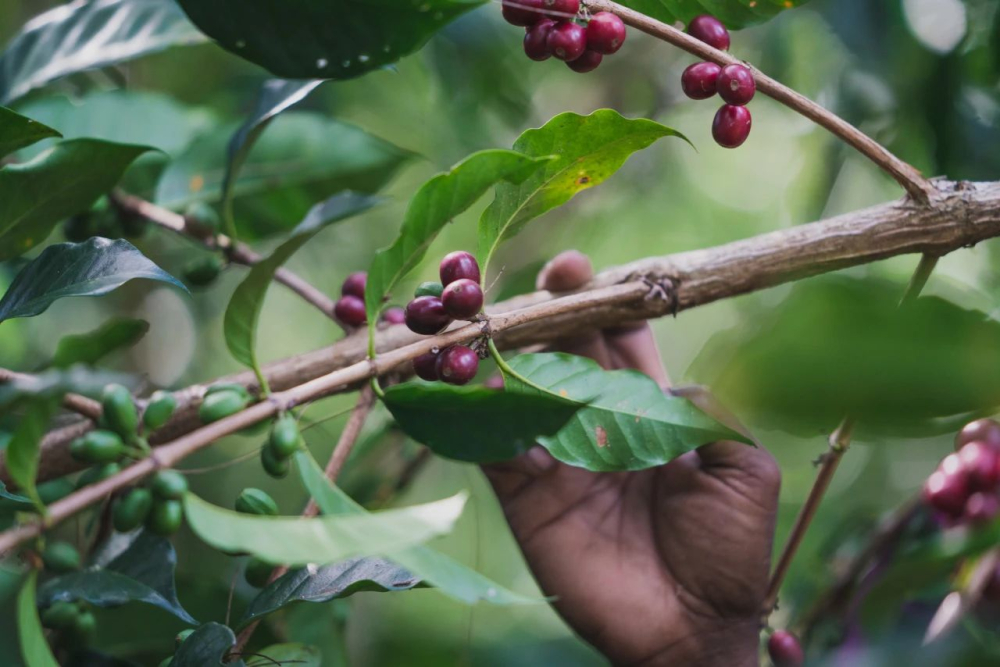
For many years, Bird of Paradise Estate has consistently adhered to a high-standard cultivation and processing system. During the harvest season from April to September each year, only fully ripe red coffee cherries are hand-picked, achieving a perfect balance of acidity and sweetness in the coffee cherries. At Bird of Paradise Estate, cupping is conducted every day to ensure that the plantation provides customers with consistently top-quality coffee. As a result, Bird of Paradise Estate has become a classic among the world's specialty coffees.
Coffee Bean Processing Method Papua New Guinea coffee is mainly washed processed, with a brighter flavor profile and more fruit acidity, similar to the flavor of Central American coffee. Large estates and plantations usually have their own wet-processing mills, while smaller individual coffee farmers are better able to control the quality and flavor expression of their output.
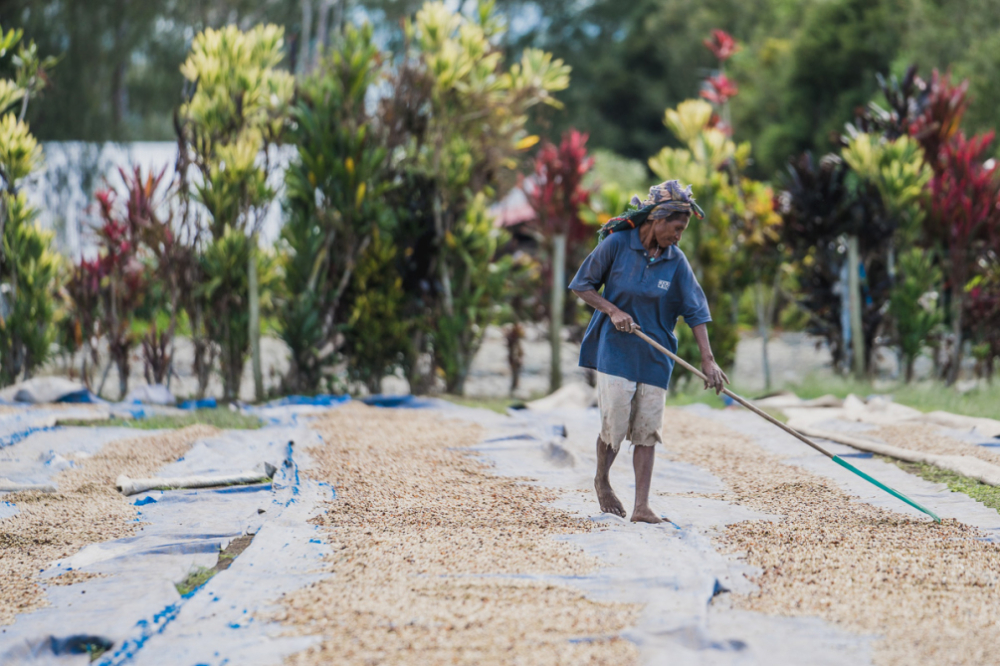
After harvesting ripe, fully red coffee cherries, they are sent to the estate's own wet-processing mill for processing. Papua New Guinea's local washed processing differs from the washed processing methods of Central and South America. It uses three rounds of washing and fermentation, each soaking for about 24 hours, with clean water replaced to control the coffee's flavor; after washing is completed, the green beans have their husks removed and are then graded in various ways, such as AA, AB, PB peaberry, and so on. This finely crafted post-processing method brings the coffee itself a bright and delicate fruity acidity, along with a clean and lingering sweet taste.
The above content is compiled by CoffeeHunters, a coffee news website.


