








Yirgacheffe, as Ethiopia's most renowned specialty coffee region, produces distinctly different flavor profiles through its washed and natural processing methods. The washed process delivers bright acidity and white floral notes, while the natural process presents intense berries and fermented sweetness. Front Street Coffee uses the Banko Gotiti Cooperative's washed beans and the Operation Cherry Red natural beans as examples to explain in detail the process flow, quality control, and brewing performance of both processing methods, guiding you to a deeper understanding of the flavor logic behind Yirgacheffe processing methods and the significance of quality innovation represented by Operation Cherry Red.
In Front Street Coffee's coffee bean list, Ethiopian region coffee beans are often the most numerous.
1. There is the Banko Gotiti Cooperative, which split off from the Worka Cooperative due to its exquisite flavor; 2. There is also Ethiopia's rare estate planting model — Gesha Village Estate's Front Street Gold Label Geisha, Front Street Red Label Geisha, and Front Street Chaka Geisha; 3. And the classic berry-flavored Front Street Sidamo Natural Huakui Coffee.
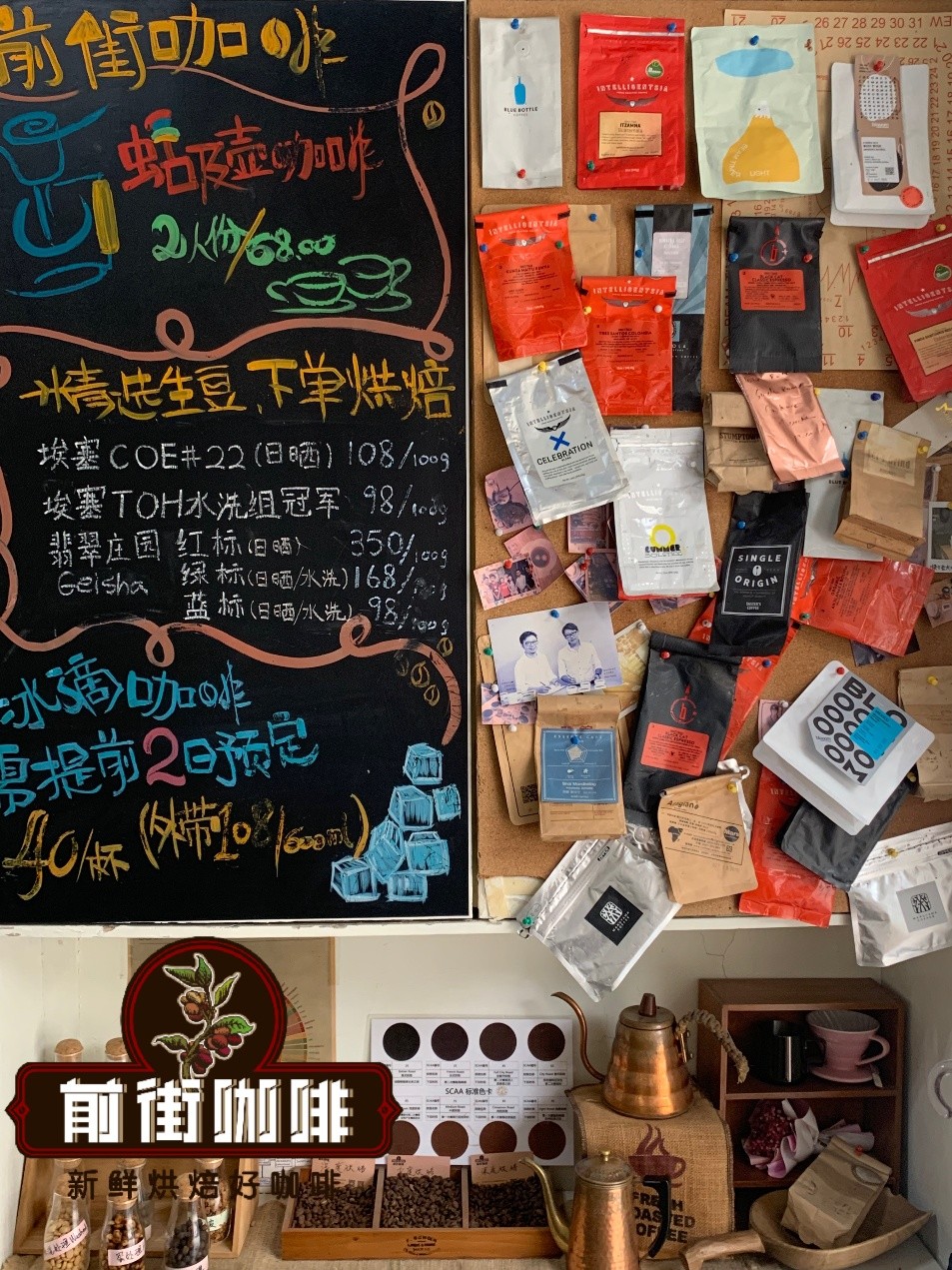
Front Street Coffee understands every coffee bean's region, and even different coffee bean varieties within the same region, different processing methods of the same coffee bean, and so on. For example: natural coffee beans and washed coffee beans have different flavor profiles. Similarly, different coffee bean regions differ from one another. Front Street establishes corresponding databases for all this information one by one, providing more and more detailed coffee information for those who love coffee and enjoy coffee, so that more people can understand the world of coffee.
Yirgacheffe Coffee Region
The Yirgacheffe region is located in Ethiopia and was originally a sub-region under the Sidamo region. Its coffee flavor is bright and delicate, forming a distinctive coffee flavor within the Sidamo region. Due to its high recognizability, coffee farmers competed to take pride in their coffee beans having a Yirgacheffe flavor, so it became independent from Sidamo and became today's most renowned Yirgacheffe region.
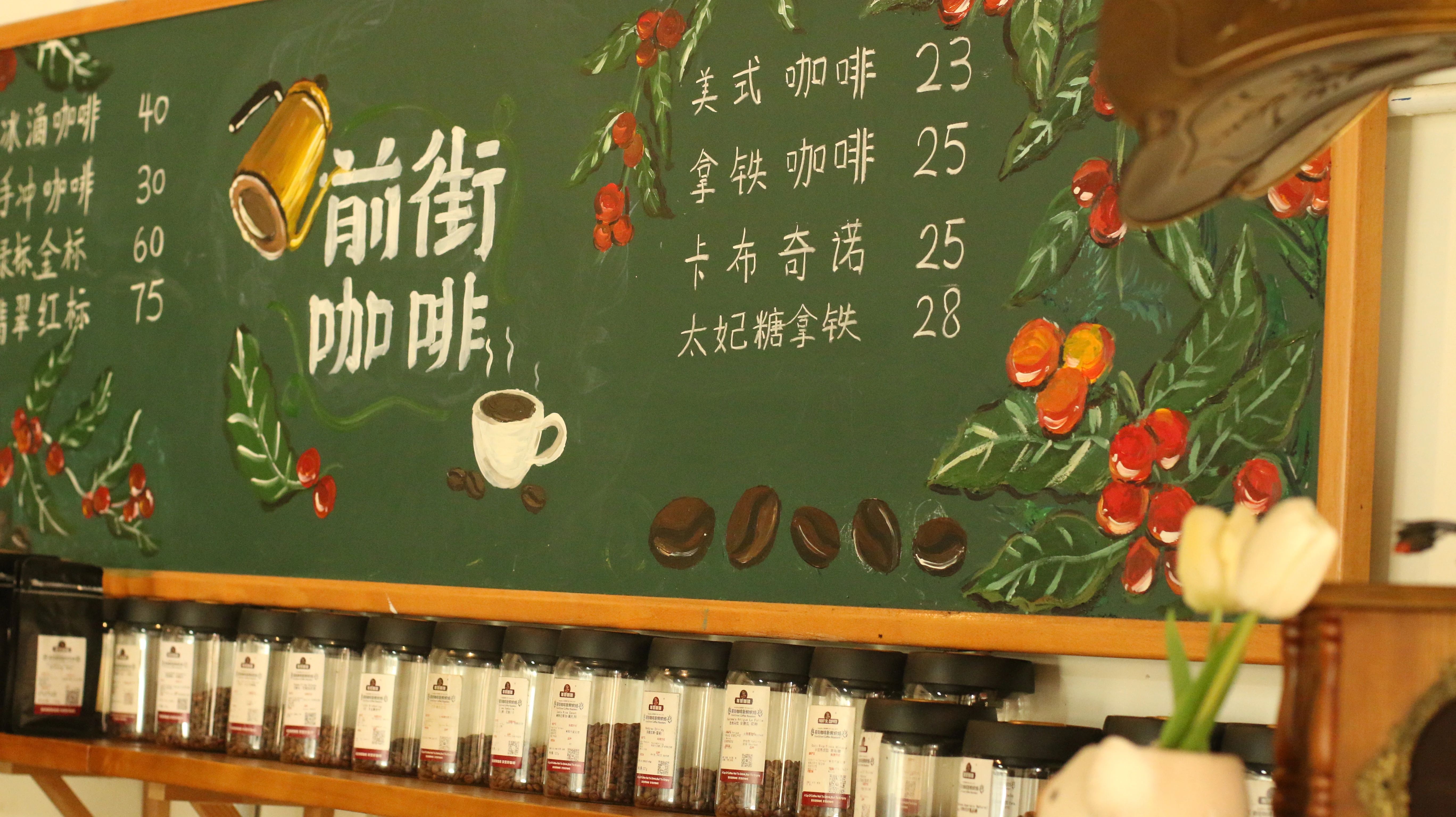
Initially, the Yirgacheffe region used the most traditional natural drying method to process coffee beans. Later, after the Ethiopian government introduced the washed processing method from Central and South America, the quality of Yirgacheffe coffee beans instantly improved. Its bright, uplifting acidity and white floral flavor characteristics quickly won over a large group of loyal fans. The Yirgacheffe coffee region is considered a high-altitude coffee region, with elevations around 2,000 meters. The Yirgacheffe coffee region has over 40 cooperatives, mainly managing coffee cultivation through family-run operations. Under the Yirgacheffe coffee region, there are also many well-known micro-regions, such as Kochere, Misty Valley, Gedeb, and so on. These micro-regions all have excellent cooperatives, and the Front Street Yirgacheffe coffee beans they produce each have their own unique flavor characteristics.
Banko Gotiti Cooperative
The Banko Gotiti Cooperative is located in the Worka region at the southeastern end of Yirgacheffe. It was originally part of the Worka Cooperative under the Yirgacheffe Coffee Farmers' Cooperative Union (YCFCU). Later, as people pursued traceability of green coffee beans, "single-origin" was unearthed one by one by coffee hunters around the world.
In 2012, Banko Gotiti, with approximately 300 farmer members, independently established the "Banko Gotiti Cooperative." Banko Gotiti village was the first village area to become independent. Many smallholder farmers were also originally members of the Worka Cooperative, so their coffee production skills are beyond question. The Banko Gotiti Cooperative is called the last pure land of Yirgacheffe, so the green bean processing methods used are also very traditional (washed and natural processing methods).
Coffee Bean Processing Methods Front Street Yirgacheffe Banko Gotiti Cooperative coffee beans use the washed processing method. A depulper is first used to remove the skin/flesh of the cherries, then they are left to rest in fermentation tanks for 18-36 hours until the mucilage layer decomposes (the duration depends on local temperature and humidity conditions). Next, the parchment beans are washed through washing channels for 30-60 minutes.
At this point, through the channel design combined with water flow, low-density, poor-quality beans can be removed. The high-quality parchment beans are then placed on African raised beds to dry for about 14 days. After drying is complete, they are first stored in the processing plant's warehouse. Before export, the parchment beans are sent to a Dry Mill for hulling, and go through a series of complex screening processes including foreign matter removal, silver skin polishing, gravity separation, and color sorting, before finally being bagged for export.
Front Street Ethiopia Yirgacheffe Washed Banko Gotiti Coffee Beans
Region: Yirgacheffe Gedeo Zone
Altitude: 1900-2300m
Variety: Heirloom
Processing Method: Washed Grade: G1 Flavor: Berries, cream, honey, citrus, juicy
Those familiar with Ethiopian coffee will surely also be familiar with Operation Cherry Red. Front Street Coffee will now share with everyone just what Operation Cherry Red is.
About Operation Cherry Red — Introduction
The core of Operation Cherry Red is processing with fully red coffee cherries to improve coffee quality. Looking at it today, processing with fully red cherries doesn't seem like anything new (isn't using fully red cherries a given?). But in 2007, this was a landmark innovation.
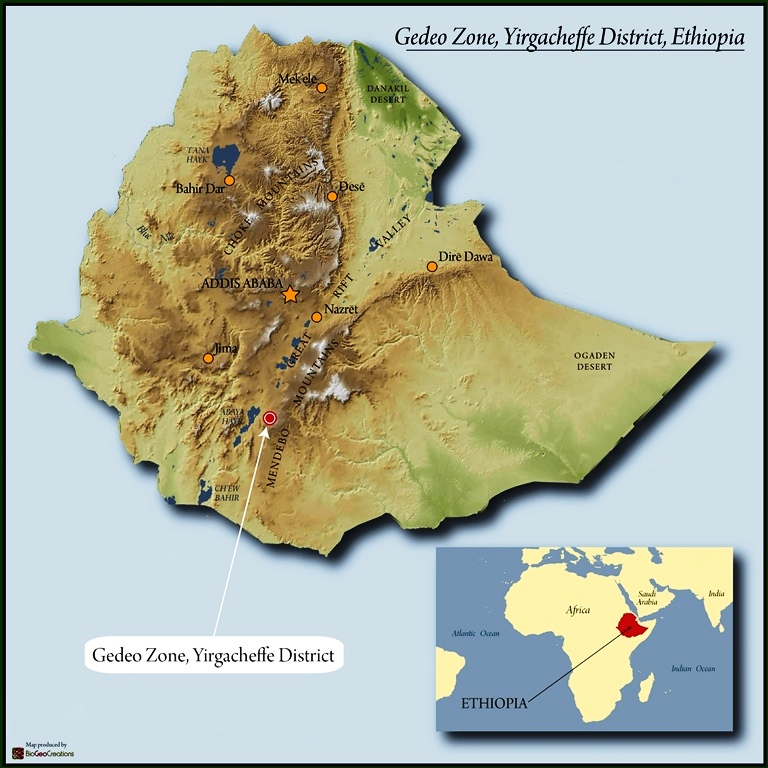
In 2007, Trabocca, the largest green bean trader in the Netherlands, in pursuit of high-quality Ethiopian beans, proposed "Operation Cherry Red," a project to improve the production quality of small-scale farms. Previously, whether local processing stations or green bean traders, all would压低 the purchase price of coffee cherries as much as possible to achieve higher profits. For coffee farmers, the quantity of coffee cherries sold determined their income, so they didn't care about quality. The exploitation by green bean traders and the farmers' pursuit of quantity created a vicious cycle in coffee bean quality. Therefore, Trabocca saw this and knew the cycle had to be broken, so the win-win "Operation Cherry Red" came into being.
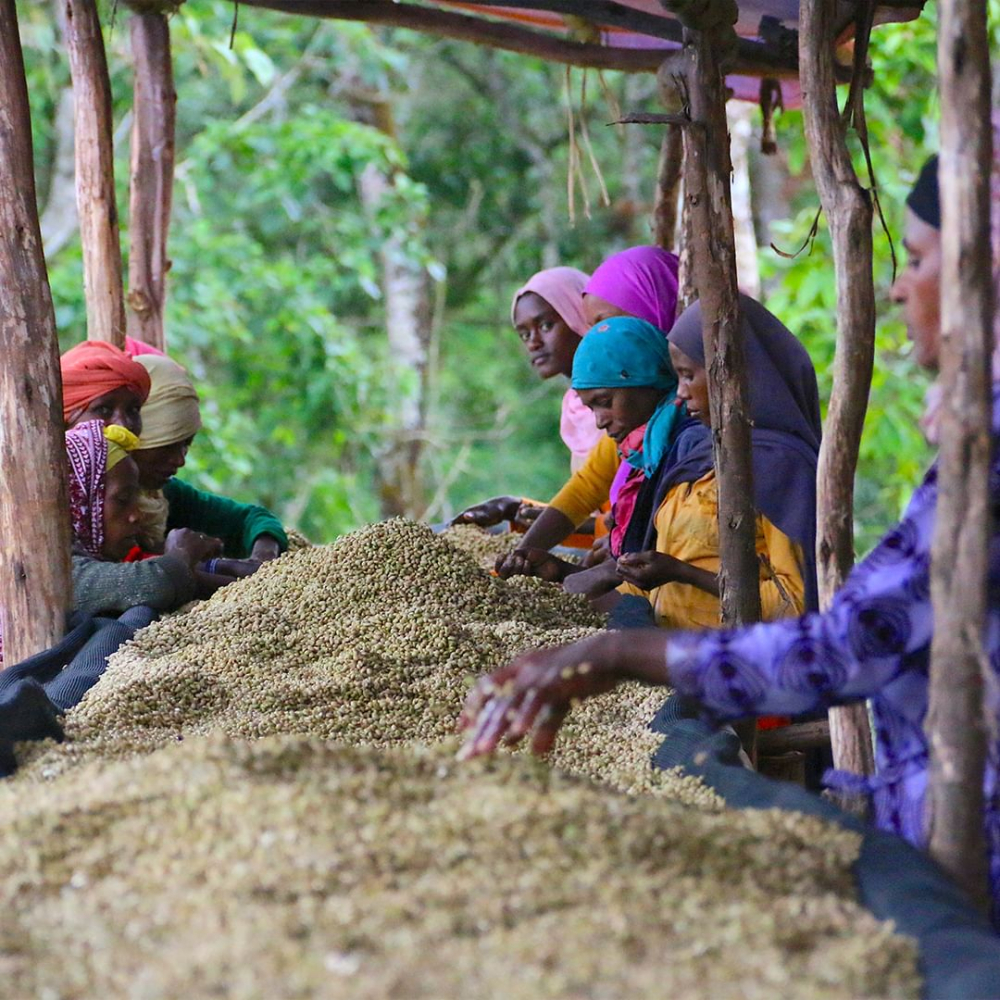
Project requirements: When harvesting coffee cherries, not only must fully red cherries be picked, but they must also be picked entirely by hand. However, this is only the most basic requirement — the project is far from this simple. The main purpose is to encourage coffee farmers. Trabocca, the largest coffee bean trader in the Netherlands, invites all Ethiopian farms before the harvest season to produce small batches of approximately 1,500-3,000 kg (25-50 bags) of beans for them. Women are only allowed to select 100% fully ripe red cherries. This makes a huge difference to the flavor of the brewed coffee, so meticulous, sharp-eyed, and diligent Ethiopian women are the important driving force behind Operation Cherry Red.
Operation Cherry Red is also a reinforcement approach, making farms put more thought into the process of screening and sorting beans. These coffees are also relatively higher priced. Operation Cherry Red includes washed, natural, semi-washed, semi-natural, and experimental coffees, with main production regions including Yirgacheffe, Sidamo, Bonga Forest, Lekempti, Kembata, Illubabor, Harar, Limu, and in 2011 the Golocha production area (near Harar) was added. These all have unique flavors that can fully showcase the flavor of Ethiopian coffee.
First, the cupping score requirements are high. In the cupping rooms in Addis Ababa, Ethiopia and Amsterdam, Netherlands, Trabocca receives coffee shipped from the production areas and then screens it again, judging whether the coffee beans meet the standard through two cuppings in Ethiopia and the Netherlands. Coffee beans that meet the standard are organized by Trabocca for auction to coffee bean buyers worldwide. Generally, the transaction price of coffee beans auctioned through this platform can reach more than 4 times the international general coffee spot price, and the highest can even reach 20 times.
Second, the production volume requirement is small, and the quality requirement is high. In order to have enough energy to take care of these top Ethiopian local beans, Trabocca requires that the beans participating in the project must all be small batches, with production volumes roughly between 1,500 kg and 3,000 kg.
Finally, Trabocca's investment and attention to this project are substantial, and it is highly valued. Trabocca donated new sun-drying racks, shade nets, generators, and so on locally. At the same time, it also provided financial loan support, new hardware equipment, and production processing knowledge and techniques to help farmers improve their production levels. Moreover, through real-time monitoring, safe transportation, and other methods, it ensures that the beans of "Operation Cherry Red" receive the best care at every stage.
Specifically, Operation Cherry Red encourages coffee farmers to more carefully complete every step of coffee bean harvesting, processing, and so on by raising the purchase price of high-quality green coffee beans. The coffee beans produced this way are better in quality and taste better, and can gain better recognition in the end market, thereby balancing the relatively higher coffee purchase price. Although Operation Cherry Red coffee beans don't seem to have a huge advantage today, the project also made a tremendous contribution to the refinement of specialty coffee.
How does Yirgacheffe Cherry Red coffee bean flavor perform?
Front Street Yirgacheffe Cherry Red coffee beans use fully red cherry natural processing from the Aricha Farm. At Aricha Farm, each small coffee farmer's average planting area is about 0.6 hectares. It is composed of hundreds of coffee farmers, with a cultivation altitude of nearly 2,000 meters, large temperature differences, and fertile soil, providing an excellent growing environment. Hand-picking fully red cherries maximizes the lower limit of coffee quality.
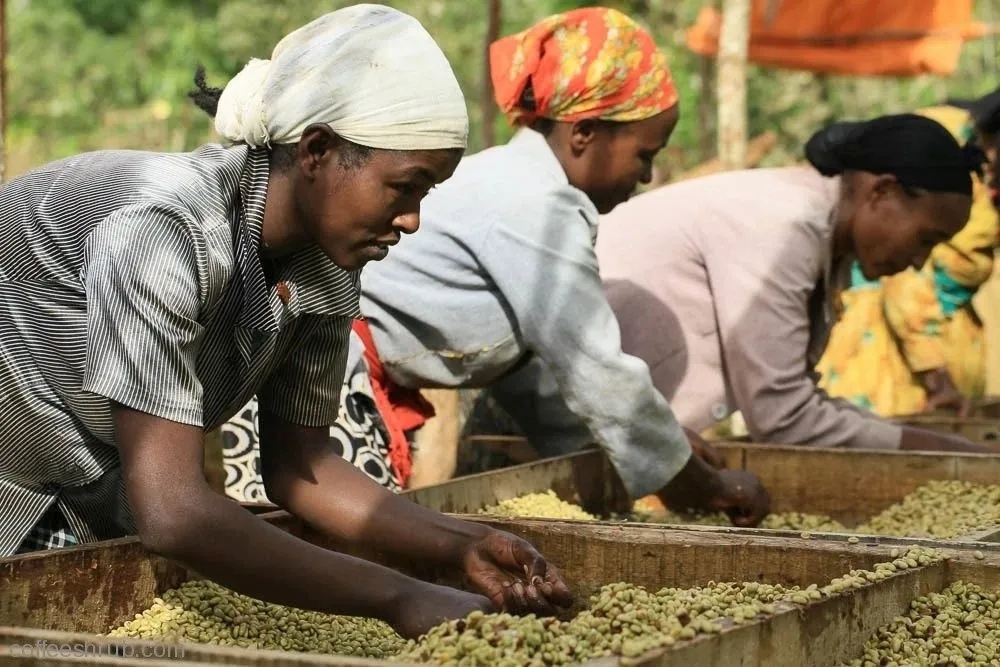
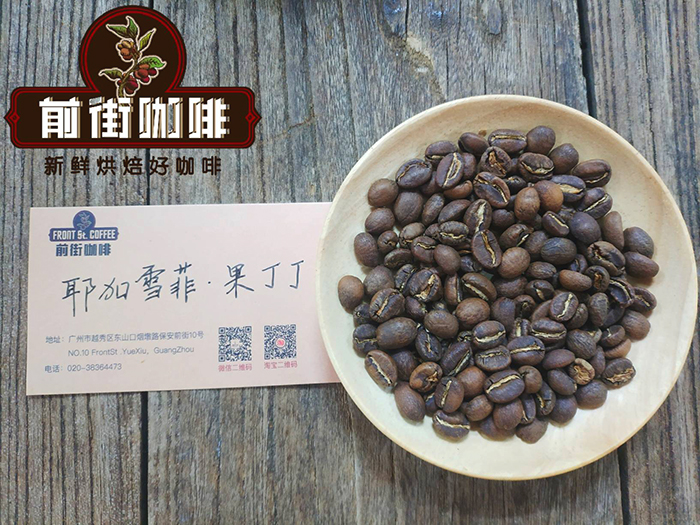
The green beans are pale yellow, plump, complete in appearance, and low in defect rate, belonging to the G1 grade. As a single-origin pour-over coffee, Front Street Coffee uses a medium-light roast for the Cherry Red coffee beans. After roasting, the Cherry Red coffee beans have a uniform color and an obvious berry aroma. Below, take the two beans on Front Street's bean list — Front Street Yirgacheffe Operation Cherry Red and Front Street Yirgacheffe Konga — as examples. Both of these Front Street Ethiopian coffee beans use the natural processing method, coming from the same Yirgacheffe region but different processing stations.
Front Street Yirgacheffe Cherry Red Coffee Beans and Front Street Yirgacheffe Konga Coffee Beans
Brewing Parameters
Dripper: V60#01 Water Temperature: 90-91℃ Dose: 15g Coffee-to-Water Ratio: 1:15 Grind Size: Medium-fine (80% passing through Chinese standard No. 20 sieve)
Front Street Ethiopia Yirgacheffe Cherry Red Coffee Beans Country: Ethiopia Region: Yirgacheffe Processing Station: Aricha Altitude: 2300m Variety: Local Heirloom Processing Method: Natural Grade: G1
Front Street Ethiopia Yirgacheffe Konga Coffee Beans
Region: Yirgacheffe
Washing Station: Worka Konga Processing Station
Altitude: 1850 to 2050 meters
Soil: Vertisol
Coffee Variety: Heirloom
Processing Method: Natural
Harvest Year: 2020
Grade: G1
Front Street Coffee Brewing Method Sharing
Three-stage extraction. Use 30 grams of water for a 30-second bloom. Pour in a slow circular motion to 125 grams for the first stage. When the water level is about to expose the coffee bed, continue pouring to 225 grams and stop. When the water level is about to expose the coffee bed again, remove the dripper. (Timing starts from the beginning of the bloom.) Total extraction time is 2'00".
Front Street Yirgacheffe Cherry Red Coffee Beans: Lemon, citrus, berries, sweet orange. Overall sweetness is relatively high, with a caramel and cream finish in the aftertaste, and a black tea aroma in the lingering finish.
Front Street Yirgacheffe Konga Coffee Beans: At high temperatures: berries, cream, honey, citrus, juicy mouthfeel, bright acidity. As the temperature drops slightly: berries, cream, smooth, citrus.
Front Street Yirgacheffe Cherry Red Coffee Beans Roasting Record
Front Street Yirgacheffe Cherry Red Coffee Beans Roasting Record
The above content is compiled by CoffeeHunters, a coffee news website.


