







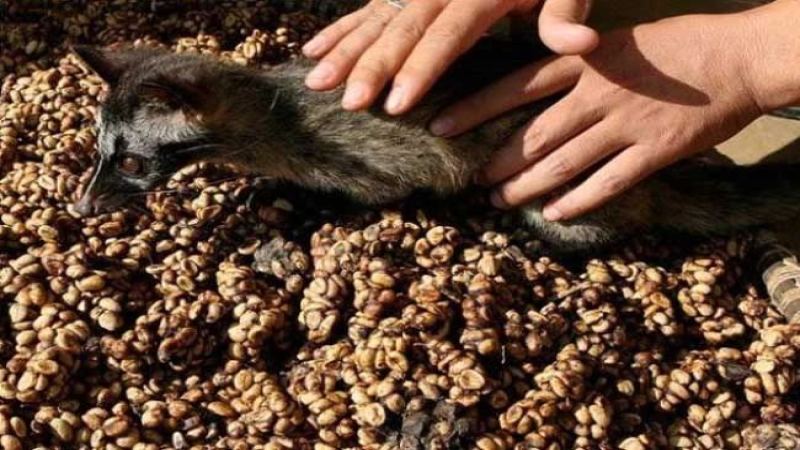
Musk cat coffee, commonly known as civet coffee, originated in Indonesia and is famous because the civet eats coffee cherries, which undergo natural fermentation in its body before being excreted. Its flavor is somewhat similar to Indonesian Mandheling coffee, yet it carries an extra layer of distinctive fermented character, with a smoother mouthfeel and less of Mandheling's earthy taste. Authentic civet coffee is extremely rare in production and expensive, hailed as the finest of specialty coffees. However, many products on the market labeled as civet coffee are not genuine, and some even involve cruel caged production behind the scenes. Front Street Coffee does not recommend blindly pursuing civet coffee, and recommends several high-quality alternative beans, such as Golden Mandheling, Geisha, Ethiopian coffee, etc., while also sharing Front Street's specific brewing parameters and flavor description for civet coffee.
For more specialty coffee knowledge, please follow the WeChat public account: Front Street Coffee (FrontStreet Coffee)
The original name of civet coffee is musk cat coffee, produced in Indonesia. Its flavor is somewhat similar to Indonesian Mandheling coffee, but with an extra layer of distinctive fermented character. Compared to Mandheling, it is smoother and lacks that earthy taste. Authentic civet coffee ranks among the most expensive coffees in the world, truly the finest of specialty coffees.
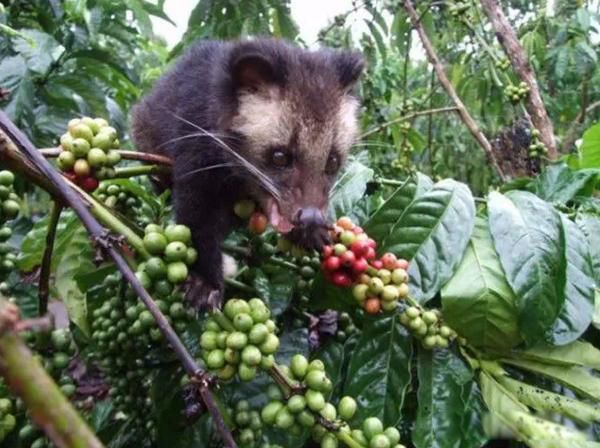
The name civet coffee is also heard of in other places from time to time, but those may not be genuine civet coffee—perhaps just coffee with a civet coffee flavor. Authentic civet coffee (Kopi Luwak) is one of the world's ten most expensive coffees, originating from the Indonesian island of Sumatra and closely tied to an animal called the civet. The civet is a wild omnivorous animal that locals habitually call Luwak. It has a pointed snout and dark gray fur, and is an omnivorous nocturnal animal. With its keen sense of smell, it can identify the sweetest and plumpest coffee cherries on the coffee trees. Occasionally it picks some coffee fruits as a snack, and it likes to climb the coffee trees to select ripe, sweet, fully red fruits to eat.
The civet eats the ripest coffee cherries, peels off the outer skin and swallows them, sucking on that layer of sweet but pitifully thin pulp. The pulp of the coffee fruit undergoes natural fermentation in the civet's digestive tract. Because coffee beans are exceptionally hard and difficult to digest, after intimate contact with the intestines, they are excreted along with the feces. The feces containing coffee beans pass through the nearby reproductive organs, and the beans thus pick up the musk oil secreted by the reproductive organs, adding a special layer of taste. Afterwards, experienced workers manually select and collect them from the forest for processing. It is said that nearly 1,300 beans must be collected to obtain 100 genuine civet coffee beans.
The above wonderful processing replaces traditional washing, sun-drying, and other coffee bean processing methods, reducing the acidity and bitterness of the raw coffee beans, giving the beans a unique flavor and an exceptionally mellow taste. Civet coffee's consistency is close to syrup, and after drinking, a faint minty coolness remains in the mouth—something ordinary coffee does not have. Its rich, rounded, sweet taste is also unmatched by other coffee beans.
The civet itself is a relatively rare animal with a small population, and it is nearly impossible to domesticate. The civet's food intake is also small, so its natural excrement is not plentiful. In addition, only about 30% of the coffee beans in civet excrement are usable, and factoring in losses from washing and grinding, the annual production of genuine "civet coffee" does not exceed 400 kilograms. So there is almost no way a significant amount of "civet coffee" could be circulating on the market. That makes it extremely precious. Some people exaggeratedly say that after drinking civet coffee, they can't bear to brush their teeth for days, hoping only to relive the unique taste of civet coffee again and again—showing just how captivating it is. These coffee beans are excreted from the civet's body intact along with the feces—this is the most primitive in-body "natural fermentation method," which creates the civet's unique flavor.
But some coffees on the market labeled as civet coffee are not necessarily genuine civet coffee, or are merely coffee with a civet coffee flavor. Some merchants saw the business opportunity in civet coffee, so caged farming to produce civet coffee emerged. Now the production process of "civet coffee" is also very cruel. Originally, "civet coffee" was discovered only after people偶然 picked up civet excrement, but now these animals are caged by humans, deprived of freedom, and begin a tragic life of being artificially fed coffee cherries to produce coffee beans.
In fact, this artificially farmed "civet coffee" is almost nothing but a gimmick, because those coffee beans are not selected by the civets themselves—humans force them to eat them. Moreover, these animals are naturally very shy, timid, and difficult to tame. After losing their freedom and living in cramped cages, forced to eat coffee cherries and excrete all day long, they become ill and begin to exhibit frenzied behavior such as biting their companions and biting themselves, and may ultimately die because of this cruel way of producing coffee.
What exactly is different about the taste of civet coffee?
Front Street believes that civet coffee is no different from ordinary coffee—both are coffee, and coffee's effects and functions are the same. Coffee can boost our metabolism, thereby improving our muscle strength performance during exercise. Secondly, the caffeine in coffee can make us more alert and improve endurance performance during exercise. Coffee also has a diuretic effect. If your face is puffy, you can drink Americano to reduce swelling. Many celebrities like to drink a cup of Americano to maintain their facial condition. However, drinking too much can easily cause palpitations, and the elderly and people with high blood pressure are not advised to drink too much coffee.
However, Front Street does not recommend everyone drink civet coffee. As Front Street just said, genuine civet coffee is fine, but there are many so-called civet coffees on the market. Coffee all has the same effects, and coffee from other producing regions and areas also tastes very good, such as: Panama's Geisha coffee with citrus notes, Ethiopian coffee with floral and fruity notes, Brazilian coffee with nutty and peanut notes, etc.—all are very delicious coffees. Front Street has more than fifty kinds of coffee beans from different producing regions, and everyone is welcome to try them. Civet coffee comes from Indonesia, and Indonesia's Mandheling coffee is also one of the most popular coffees at Front Street. Front Street has two Mandheling coffees: one is the everyday-bean Indonesian Lintong Mandheling coffee, and the other is the single-origin Golden Mandheling coffee. Both have excellent flavors, especially Golden Mandheling's clean, rich nutty-chocolate profile, which is deeply loved by coffee friends.
Front Street's brewing parameters for civet coffee:
In order to better express civet coffee's herbal flavor and rich mouthfeel, Front Street Coffee (FrontStreet Coffee) roasters use a medium-dark roast for civet coffee beans. Medium-dark roasted beans generally have a higher dehydration rate, so they are lighter in weight. During brewing, the grounds do not completely settle at the bottom. As soon as water is poured in, it is immediately absorbed. Because of vigorous degassing, bubbles surround the grounds, creating channels, and the fresher the beans, the longer these channels last, causing the water level to drop rapidly.
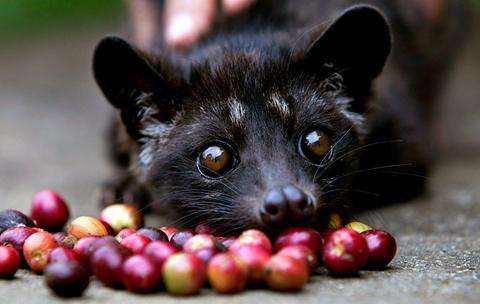
KONO dripper, 88°C water temperature, 1:15 coffee-to-water ratio, 15g coffee grounds, grind size (75% passing a No. 20 standard sieve), three-stage extraction.
Using staged extraction, bloom with 2 times the coffee grounds' weight in water, i.e., 30g of water for a 30-second bloom. The reason a blooming process is needed is to allow the coffee grounds to release internal carbon dioxide gas, thereby making the later stages of extraction more stable. Pour in a small stream in circles until 125g, then pause; continue pouring until 225g and stop. After the water in the dripper has finished dripping, remove the dripper. Start timing from the beginning of pouring; the extraction time is 2'00". Next, pick up the entire cup of coffee and swirl it to mix evenly, then pour it into a cup to taste.
Civet coffee flavor description : herbal, nutty, smooth mouthfeel, rich.
Front Street Coffee (FrontStreet Coffee) brewing suggestions:
To brew a delicious cup of coffee, Front Street believes that the freshness of the coffee beans is a very important part of brewing. The coffee beans shipped by Front Street Coffee (FrontStreet Coffee) are all within 5 days of the roast date. Front Street's roasting philosophy is "freshly roasted good coffee," so that every customer who places an order receives the freshest coffee when they get it. Coffee's resting period is about 4-7 days, so when customers receive it, it is exactly at its best flavor.
For friends who need ground coffee, Front Street kindly reminds you: once coffee beans are ground in advance, there is no need for further resting, because during transportation, the pressure from carbon dioxide inside the packaging can also make the coffee flavor rounder, so you can immediately brew a cup after receiving the ground coffee. However, ground coffee needs to be brewed promptly, because after ground coffee contacts air, it oxidizes relatively quickly—that is, the coffee's flavor dissipates relatively quickly, and the coffee will not taste as good. Therefore, Front Street recommends buying whole beans and grinding fresh before brewing, so you can better taste the coffee's flavor.
The above content is compiled by CoffeeHunters, a coffee news website.


