







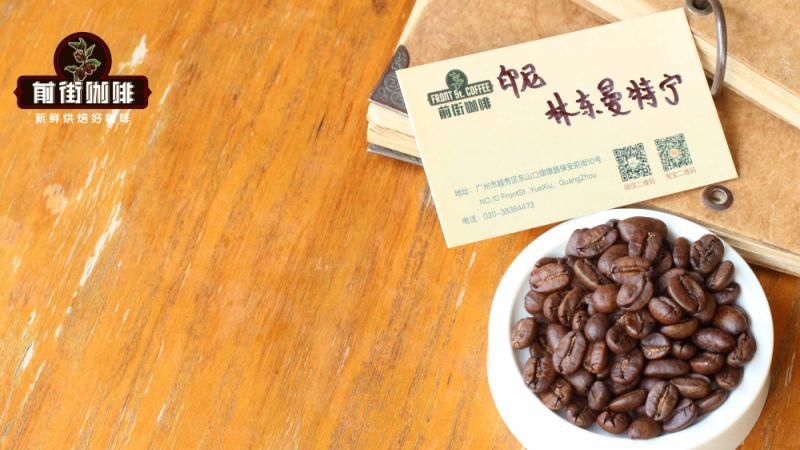
Sumatra Coffee: History, Flavor, and Brewing
Sumatra coffee is known for low acidity, richness, and herbal aroma. Mandheling stands out among specialty coffees. This article traces how coffee took root in Indonesia during the Dutch colonial period. It focuses on Aceh and Lintong, analyzing flavors and defects from the wet-hulling process. It also explains Indonesia's G1 green bean grading and PWN Golden Mandheling sorting. Finally, it provides pour-over parameters for medium-dark roasted Mandheling.
The Dutch East India Company twice transplanted coffee to Indonesia, but only the second attempt succeeded. Coffee trees thrived on Java, then spread to Sumatra and Sulawesi. In the early twentieth century, coffee leaf rust devastated Java's trees. Farmers switched to disease-resistant Robusta. Today, Indonesia is a major coffee producer, and its Arabica output ranks first in Asia. Sumatra remains the main producing region, known for unique flavors.
Sumatra coffee is known for its low acidity, richness, and herbal aroma, and Mandheling stands out as one of the most recognizable specialty coffees. This article begins with the history of the producing region, tracing how coffee took root in Indonesia during the Dutch colonial period, then focuses on the two core producing regions of Aceh and Lintong, analyzing the unique flavors and defect causes that the wet-hulling process gives Mandheling. It also explains in detail Indonesia's G1 green bean grading standard and PWN Golden Mandheling's sorting process. Finally, targeting the pour-over pain points of medium-dark roasted Mandheling, it provides complete parameters for grind size, water temperature, and three-stage pouring, helping coffee lovers brew a rich caramel sweetness rather than just burnt bitterness.
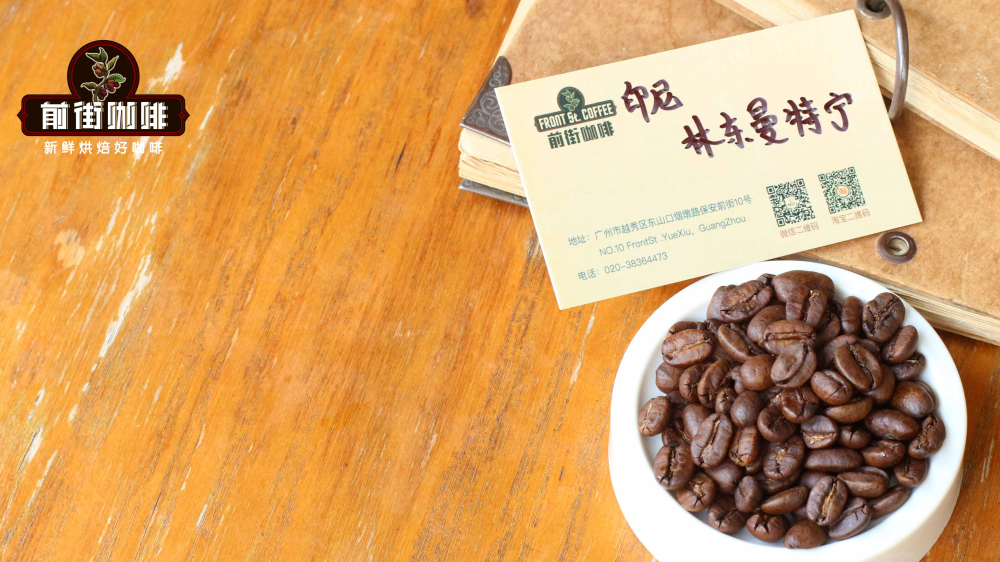
The medium-dark roasted Front Street Mandheling coffee exudes a rich "coffee flavor," resembling a complex aroma of nuts, dark chocolate, roasted chestnuts, cinnamon and other spices. It drinks with a caramel-like, creamy smoothness and richness, completely filling the mouth, with a solid body and a sweet finish. It is one of the top single-origin choices for friends who love strong, bitter black coffee.
History of Sumatra Coffee
Although Indonesian Mandheling coffee has been fragrant for more than half a century, Indonesia is not the birthplace of coffee. Like many coffee-producing countries, coffee cultivation is inseparable from European colonial activities. In the seventeenth century, coffee swept across Europe, and demand exceeded supply. In order to capture a larger consumer market, some European countries brought coffee seeds or saplings to their colonies for cultivation.
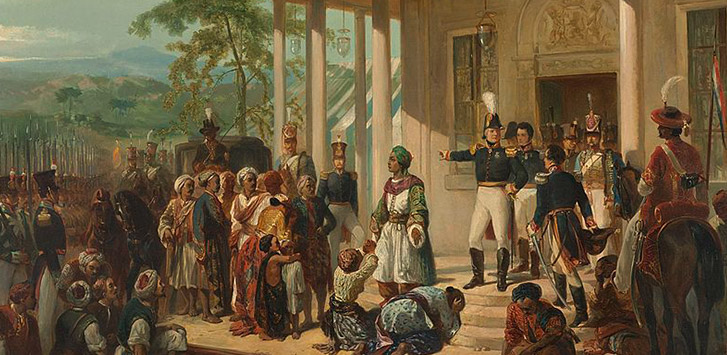
Among them, the Dutch East India Company twice transplanted coffee to Indonesia. Ultimately, on the second occasion, with favorable timing, harmony among people, and geographical advantage all aligned, coffee trees took root and thrived on the island of Java, and then spread to Sumatra and Sulawesi.
However, in the early twentieth century, coffee leaf rust swept through, and the coffee trees on Java were devastated. Later, they had to switch to planting Robusta coffee trees, which have stronger disease resistance. Today, Indonesia has become a major coffee-producing country, and its Arabica coffee bean output has long ranked first in Asia.
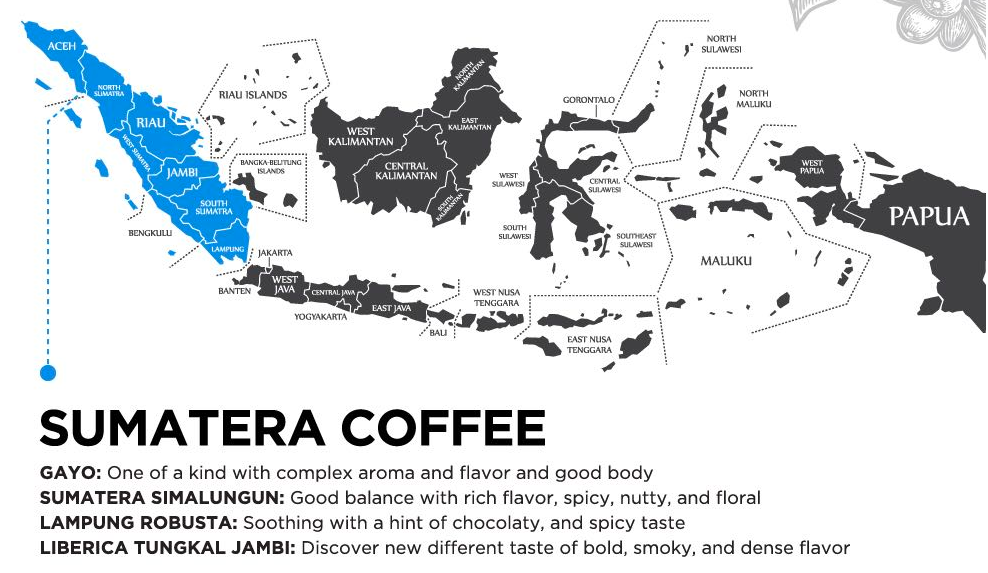
Indonesia's main coffee-producing region is located on the island of Sumatra, and the coffee produced in Sumatra is also one of the main coffee types in the specialty coffee industry. Sumatra coffee is renowned for its unique flavor characteristics, low acidity, richness, and distinctive aroma. Mandheling coffee beans are one of the most popular Sumatra coffee beans in the world.
The places where Arabica coffee beans are grown on the island of Sumatra are mainly concentrated in the northwest part of the island. According to different growing environments, they can be divided into the Aceh region of North Sumatra and the Lintong region around Lake Toba in North Sumatra Province.
Among them, the traditional producing region of Mandheling coffee beans is located in the Lintong region. Combined with the highly local wet-hulling process, this gives Lintong Mandheling coffee a heavy body, with a unique herbal aroma and obvious caramel sweetness.
The Aceh region, as a relatively emerging Mandheling coffee bean producing region, introduced a batch of Arabica coffee trees from North Sumatra Province in 1924. Subsequently, coffee production in the Aceh region increased year by year, even surpassing the traditional Lintong region. However, the global greenhouse effect is intensifying. As global warming progresses, scientific research shows that the area suitable for coffee cultivation in the traditional Lintong region will shrink dramatically over the next thirty years, or even disappear. The Aceh region, however, survives this global warming disaster and becomes the winner, replacing the status of the Lintong region.
Why is most Front Street Mandheling medium-dark roasted?
Front Street has noticed that in the past, Mandheling coffee on the market was uniformly medium-dark roasted, presenting a classic strong black coffee flavor profile. With the development of specialty coffee culture in recent years, people have begun to pursue more unique coffee tastes, and many merchants have launched medium-roasted, or even medium-light roasted Mandheling coffee. The lighter the roast, the more acidity the coffee beans retain, with flavors dominated by fruit, herbs, and tea-like notes, and lower body. We might think, since medium-light roasted Mandheling is so fresh, why not roast it lighter?
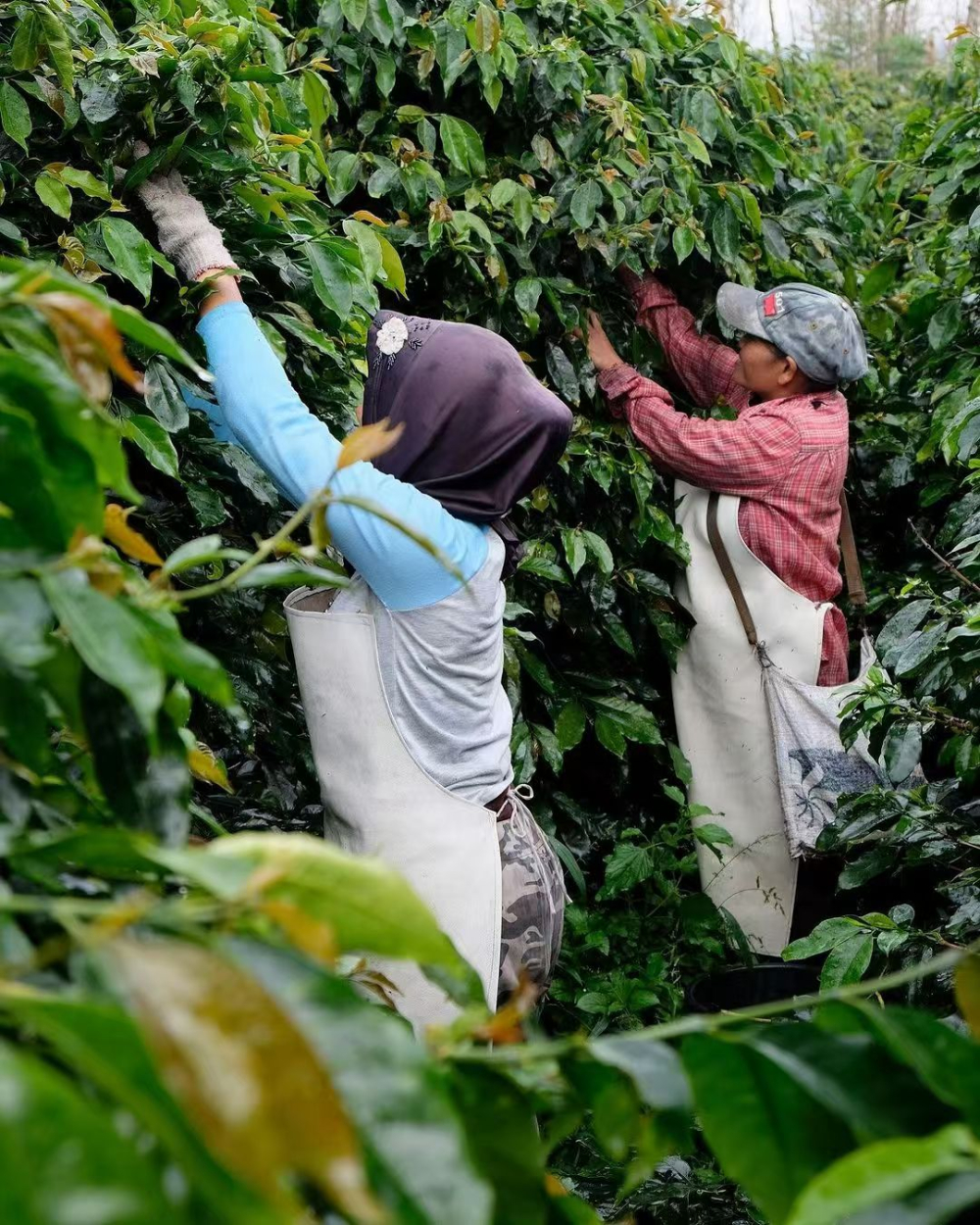
Friends who often drink Mandheling should know about Sumatra's wet-hulling process. Before the final drying stage, wet-hulled beans are poured into a huller, using greater friction to tear open the semi-dry parchment layer clinging tightly to the green beans. Through the friction and stirring, the green beans are easily crushed or damaged. The "naked beans" that have lost their parchment layer dry very quickly, while also being directly exposed to a humid environment, where various fungi breed.
Although wet hulling does give Mandheling its uniquely formed herbal and woody aromas, it also causes a higher defect rate in green beans, and dark roasting can perfectly conceal this flaw. Also, Mandheling's rise to fame originated from the Japanese discovering it early on. Given their taste preference, what they liked most was Japanese-style dark roasting, which is why most Mandheling is roasted so dark. Front Street hopes everyone can drink the classic Mandheling taste, so the two Front Street Mandheling coffees sold daily are both medium-dark roasted, including the Front Street Lintong Mandheling daily drinker beans from the Lintong region and the Front Street PWN Golden Mandheling coffee from the Aceh region.
What grade does Front Street Golden Mandheling belong to?
"Golden Mandheling" is the exclusive brand of Indonesia's Pwani Coffee Company (PWN). There are many different types of Mandheling products on the market. Because PWN registered the English name "Golden Mandheling" as its company trademark, only the Golden Mandheling coffee produced by PWN is truly Front Street Golden Mandheling in the strict sense. You can identify authentic Front Street PWN Golden Mandheling by the green bean burlap sack bearing the PWN mark and a certificate of origin signed by PWN. Front Street displays both of these identifiers in the Dongshankou store.
At the time, the Japanese took a liking to Sumatra coffee and purchased it over the long term, gradually discovering that the quality of local beans was often uneven. Therefore, they paid more attention to Mandheling production and began to establish strict standards and methods for screening defects, including starting from values such as bean density, specification, shape, and color. The Mandheling produced needed machine plus manual removal of defects to ensure that the output Mandheling was complete, uniform, large, and translucent, and also to reduce Mandheling's earthy and grassy fishy notes. It is said that it appeared golden and shining in the sun, which is how it got the name "Golden Mandheling."
Indonesian green coffee bean grading is based mainly on the number of defective beans, supplemented by size specifications. General quality requirements are no live insects, no moldy, rotten, or foul-smelling beans, a maximum moisture content of 12.5%, and an impurity rate of less than 0.5%. According to the defect rate, it is divided into six grades. Among them, the highest grade G1 requires that in a 300g sample, the total number of defective beans must be fewer than 11. The Front Street Lintong Mandheling coffee in Front Street's daily drinker series is G1, using the wet-hulling process, that is, the conventional version of Indonesian Mandheling flavor.
PWN, which pursues the utmost in sorting, purchases Mandheling green beans of 18 screen and above, G1 grade with fewer than 3 defective beans in a 300g sample, which is the highest grade of Indonesian green beans. Subsequently, it strictly follows standards with 1 mechanical sorting plus 3 manual selections to remove defective beans, ensuring the shape and size of the Mandheling coffee beans are uniform. In addition, before packaging, PWN also places the green beans in a machine for density and color sorting, making Golden Mandheling uniform and translucent in color.
Does pour-over Front Street Mandheling only taste burnt and bitter? Maybe you just brewed it wrong!
Front Street's coffee brewing parameters are all based on the characteristics of the coffee beans, the roast level, and the flavor profile. Mandheling is a bitter-toned coffee on the darker-roasted side. The baristas at Front Street Coffee (FrontStreet Coffee) choose the KONO dripper to brew this type of full-bodied bean. Compared with the V60, the KONO dripper has a smooth curved surface, weaker exhaust effect, and straight ribs that occupy only one quarter of the dripper, allowing the coffee bed and hot water to form an immersion extraction, making the coffee's taste rounder and fuller. The KONO dripper is also suitable for medium-dark roasted coffees such as Front Street Brazil Queen's Estate coffee and Front Street Jamaica Blue Mountain No. 1 coffee.
Dark roasting makes the internal structure of the coffee beans loose, so we can crush them with a gentle pinch of the hand, which indicates that after grinding into powder they have strong water absorption. To avoid the coffee grounds releasing too much bitter substance after absorbing water, Front Street will adjust the grind coarser and use lower-temperature water for pour-over brewing.
Grind size is one of the most critical factors affecting coffee taste. After coffee beans are ground into powder, they contact hot water and release a large amount of water-soluble flavor substances. Front Street uses a tool to adjust the grind size—the Chinese No. 20 0.85mm standard sieve. For medium-light roasted coffee beans, Front Street consistently uses a 75–80% passing rate, while for medium-dark roasted coffee beans, Front Street uses 70–75%. Compared with light-roasted coffee, the internal structure of medium-dark roasted Mandheling beans is looser, so the water absorption effect is better, and it easily releases large-molecule bitter substances. To avoid over-extraction, Front Street chooses a coarseness with a 70% passing rate on the No. 20 standard sieve.
Water temperature plays a role similar to grind size. The higher the water temperature, the higher the coffee extraction efficiency, the easier it is to release various substances and components, and the higher the concentration. If water close to boiling is used for brewing, it is easy to extract unpleasant bitter and astringent substances. Therefore, when brewing medium-dark roasted coffee beans, Front Street uses brewing parameters different from those for light-roasted coffee beans. The caramelization reaction is greater than in light-roasted coffee beans, so it is easier to release burnt-bitter large-molecule substances. To avoid extracting too many off-flavors, Front Street will lower the water temperature a bit. The brewing water temperature for light-roasted coffee is 91–93°C, while for medium-dark roasted coffee beans Front Street recommends 87–88°C.
Recommended brewing water temperature: 87–88°C
Coffee grounds: 15g
Coffee-to-water ratio 1:15
Grind size: medium-coarse grind (70% passing rate on Chinese standard No. 20 sieve)
The brewing method uses three-stage pouring. Dividing into three stages of pouring can better express the full-bodied mouthfeel and caramel sweetness of Front Street Golden Mandheling coffee.
For the first stage of blooming, pour 30ml. This pour completely wets the coffee grounds and allows degassing, for better extraction of the coffee's flavor substances afterward. For the second stage, pour 100ml. This stage mainly washes out all the golden foam of Front Street Golden Mandheling and raises the coffee bed.
For the final stage, gently pour 95ml in the center, which can enhance the coffee's sweetness. The brewed Front Street Golden Mandheling overall shows a substantial, full-bodied mouthfeel, with caramel sweetness and flavors of chocolate and nuts.
The above content is compiled by CoffeeHunters, a coffee news website.


