







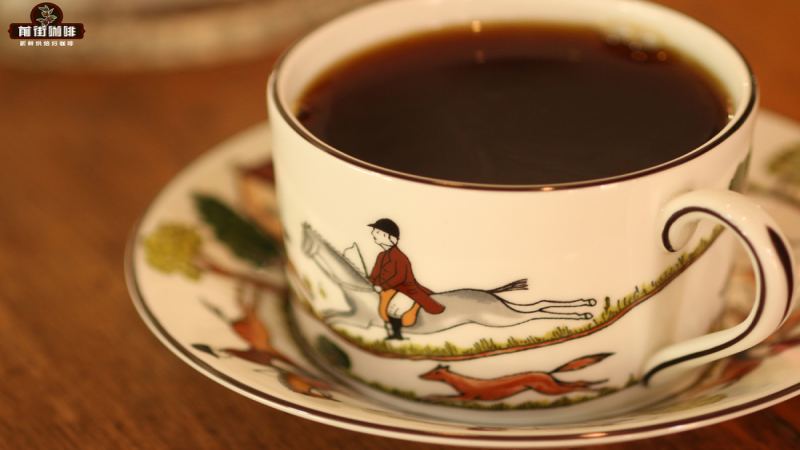
Mandheling is recognized as one of the fullest-bodied coffees in the world, with a unique earthy and herbal aroma. At Front Street Coffee shops, many veteran coffee drinkers order a cup of Yellow Mandheling as soon as they walk in—its nutty and chocolate notes are solid and full, with moderate acidity and rich sweetness. Why can Mandheling present such a full-bodied taste? This traces back to the history of variety evolution in its Indonesian origin. From the Dutch bringing Typica to Java in the 17th century, to the introduction of disease-resistant varieties such as Tim and Catimor after leaf rust, Indonesia has become a melting pot of coffee varieties. This article reviews the main varieties in Sumatra such as Sumatra Typica, Tim, Catimor, and Jember, explains the origin of the name Mandheling, and introduces Front Street Coffee's Golden Mandheling roasting and brewing insights.
Mandheling coffee is recognized as one of the fullest-bodied coffees in the world, with a unique earthy scent, and some describe it as having a fresh herbal aroma. At Front Street Coffee shops, many veteran coffee drinkers order a cup of Yellow Mandheling as soon as they walk in; the mouthfeel is full and solid, with pleasant nutty and chocolate notes. The aroma is pure, the acidity moderate, and the sweetness rich and thought-provoking. It is suitable for deep roasting and can give off a rich aroma.
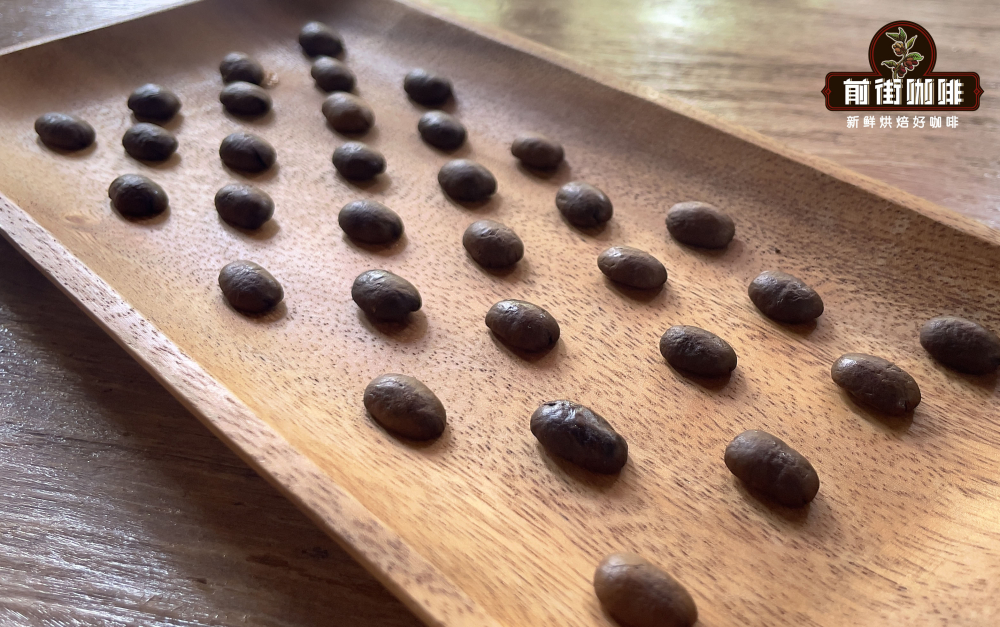
Mandheling coffee has a intense flavor, high body and a lively dynamic quality, neither astringent nor sour, with body and bitterness fully displayed. The appearance of Mandheling coffee beans can be called the ugliest, but coffee fans often say that the worse Sumatra coffee beans look, the better, fuller, and smoother they taste.
Why can Mandheling have such a rich and full-bodied taste? We need to return to the Indonesian origin and look for the answer from the source. In the 17th century, the Dutch brought coffee to Java for cultivation, and it then spread north to Sumatra. The variety planted at that time was Typica. In the 19th century, a wave of leaf rust struck, and Indonesia's native coffee trees were almost completely wiped out. The Dutch decided to introduce more varieties to increase genetic diversity and combat leaf rust. The varieties introduced at this time included Kent and the S series from India, Tim from Timor, and Robusta and Caturra from Brazil. Since then, Indonesia has become a melting pot of coffee varieties. Coupled with local farmers' traditional cultivation methods and language differences, it is still difficult for us to fully clarify Indonesian coffee varieties today.
Based on documentary materials, Front Street Coffee has compiled information on some Indonesian varieties to help everyone understand.
Sumatra Typica: The variety with the longest cultivation history in Indonesia. At the end of the 17th century, the Dutch introduced it from India to Java for cultivation. As Java cultivation succeeded and spread widely, it expanded northward to the larger island of Sumatra. The Typica planted in Indonesia at that time performed excellently in flavor. After a long period of integration with the local growing environment, it formed Indonesia's unique flavor profile of low acidity, high sweetness, and herbal aroma.
In 1877, leaf rust swept across Indonesia, and most Typica throughout the country became infected and withered. The Indonesian government could only introduce disease-resistant varieties as replacements. Today, Sumatra Typica is mainly distributed in the Lake Toba and Lintong areas. The Lintong Mandheling regional beans launched by Front Street Coffee contain this excellent variety, Typica.
The name Sumatra Typica is generally not heard locally in Indonesia; they use names such as Bergendal, Sidikalang, and Rambung to represent Sumatra Typica. It is also the finest coffee bean variety in Indonesian Mandheling.
Timor Hybrid : Originally a natural hybrid of Typica and Robusta on Timor Island, it inherited Robusta's high yield and disease resistance. After being introduced to Indonesia, coffee farmers called it Tim Tim. After being planted in Indonesia, it also gave rise to the direct line Bor Bor, meaning "abundant fruit," and its yield also improved compared with Tim Tim.
Catimor : In 1959, the Portuguese moved Caturra, a Bourbon mutation from Brazil, to East Timor and crossed it with Tim, which has Robusta ancestry. It has extremely high disease resistance, and its productivity is three times that of Typica. During the leaf rust crisis, the Indonesian government not only introduced Robusta (whose flavor is far from Arabica), but also introduced Tim to East Timor in an attempt to replace Typica. Later, expert investigations found that a batch of Tim seeds introduced by the Indonesian government in 1980 was mixed with some Catimor seeds. This batch of seeds was planted in Aceh in northern Sumatra, and the area where Catimor was first noticed in Indonesia was Central Aceh, so locals also call Catimor Ateng, taken from Aceh Tengah (Central Aceh).
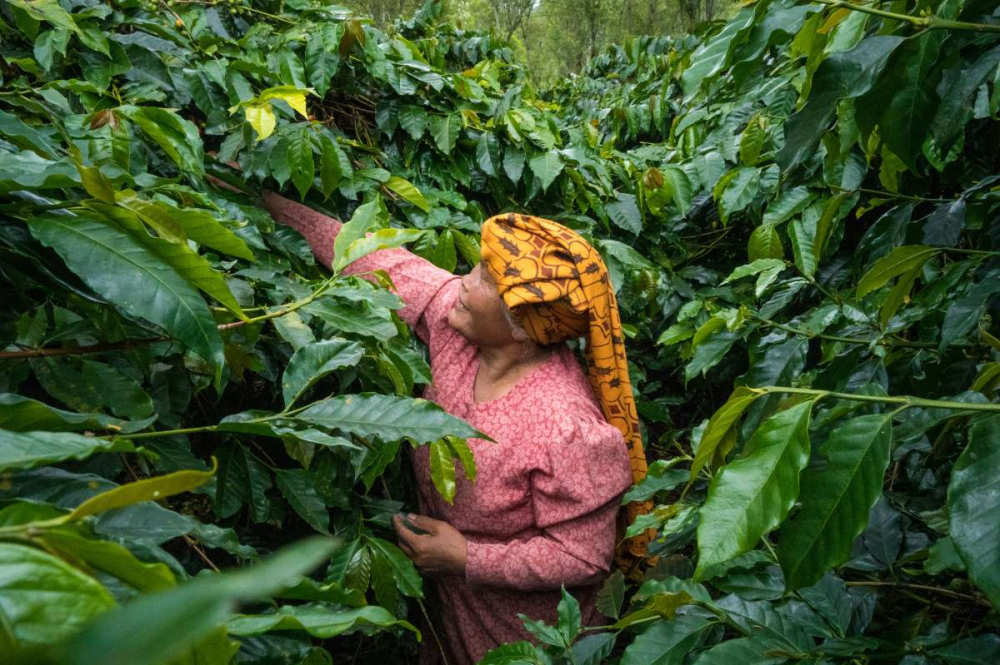
Because Ateng's disease resistance and productivity are both superior to Typica, and after years of local adaptation, the wild flavor of Catimor within Ateng has also been tamed. It is favored by coffee farmers and has spread from Aceh to Lake Toba. Aceh's Ateng also attracted the attention of Pawani, Indonesia's largest green bean merchant. At present, the coffee variety of the latest 2020 crop year Golden Mandheling launched by Front Street Coffee comes from Ateng in Mount Gayo, Aceh.
Jember : It is the localized Indonesian S795. It is currently mainly planted on Java Island. It was introduced from India by the Jember Coffee Research Center in East Java and then given to Javanese farmers to cultivate. Therefore, local Javanese farmers also directly call S795 Jember.
S795 beans have a blue-green color. Its natural variation comes from S288. S288 was originally an excellent hybrid cultivated in India in 1946. Its predecessor was lineage S288 (first generation) crossed with Typica and named S26. Because the first-generation beans of S288 were a cross between Arabica and Liberica, they always carried Liberica's earthy taste. Indian botanists therefore crossed the first-generation S288 with Typica to create the Kent variety, and then crossed it again with the second-generation S288, resulting in today's S795.
Many people know that Indonesian Mandheling coffee beans are very famous, but it is actually not the name of a variety, but the name of a local tribe. According to legend, during World War II when Japan occupied Indonesia, a Japanese soldier drank exceptionally rich and aromatic coffee in a café and asked the owner for the name of the coffee. The owner mistakenly thought he was asking "Where are you from?" and answered: Mandheling. After the war, the Japanese soldier recalled the "Mandheling" he had drunk in Indonesia and asked an Indonesian coffee trader to ship 15 tons to Japan, where it unexpectedly became very popular. The name Mandheling thus spread.
Today, as long as it is Arabica coffee beans produced in Sumatra, they can all be called "Mandheling." Among them, the most famous is "Golden Mandheling." Golden Mandheling is not a grade, but it surpasses a grade. It is the product of an Indonesian green bean company named "Pawani" and is also a trademark.
When producing Golden Mandheling coffee beans , PWN follows extremely strict standards. Under Indonesia's highest coffee grade, G1, it further applies three rounds of manual hand sorting, thereby ensuring appearance and greatly reducing the defect rate. The PWN Golden Mandheling selected in this way ultimately presents uniform color and uniform bean shape. It tastes not only free of the earthy miscellaneous flavors unique to ordinary Mandheling, but its mouthfeel is even cleaner and more transparent, and its sweetness is also stronger.
Therefore, PWN's Golden Mandheling is better in quality than G1-grade Mandheling, and its price is naturally somewhat higher than ordinary G1 Mandheling. FrontStreet Coffee's PWN Golden Mandheling coffee beans are priced at 89 yuan/227g (roasted beans).
The roasting stage is crucial to creating Mandheling coffee's incomparably full-bodied taste. Front Street Coffee's roasters conduct moisture content testing on every batch of Golden Mandheling green beans that enter the warehouse. Because it uses wet-hulling processing, Golden Mandheling's moisture content is higher than that of other producing countries, so the dehydration period during roasting is relatively important. Front Street Coffee uses deep roasting and adjusts it to bring out Golden Mandheling's sweetness.
The brewing stage is also very critical. Some friends always fail to brew out Mandheling's full-bodied taste and often consult Front Street Coffee, so Front Street Coffee is sharing its tips for brewing Mandheling with everyone.
The first point is to pay attention to the condition of the coffee beans. Front Street recommends using freshly roasted coffee beans for brewing, so you can experience the coffee's rich flavors to the greatest extent. The coffee beans shipped by FrontStreet Coffee are all within 5 days of roasting, because Front Street deeply understands that the freshness of coffee beans has a great impact on flavor. Front Street's roasting philosophy is "freshly roasted good coffee," so that every customer who places an order receives the freshest coffee when it arrives. Coffee's resting period is about 4-7 days, so when customers receive it, it is exactly at its best flavor.
Regarding the dripper, Front Street recommends using a Kono dripper, which can better brew out Mandheling coffee's full-bodied taste.
The brewing parameters are as follows:
Dose: 15g
Grind size: 70% passing through a No. 20 standard sieve
Ratio: 1:15
Water temperature: 87 degrees
Pouring method: three-stage
Slowly pour in the coffee grounds. During pouring, try to keep them as level as possible and avoid shaking the dripper (because shaking will reduce the spacing between coffee grounds, which is not conducive to blooming and degassing). In the first stage, pour 30g of water in a small circular motion in the center and bloom for 30 seconds. The coffee bed will slowly expand and puff up into a "hamburger."
In the second stage, pour 95g of water in a circular motion from the center outward, keeping the pouring height as close to the coffee bed as possible, moving slowly, and avoiding excessive agitation. In the final stage, pour 100g. Wait until all the coffee liquid in the dripper flows into the server to end extraction. Extraction time is 2 minutes.
For professional coffee knowledge exchange and more coffee bean information, please follow Coffee Workshop (WeChat public account: cafe_style) For more specialty coffee beans, please add the private WeChat of FrontStreet Coffee: qjcoffeex
The above content is compiled by CoffeeHunters, a coffee news website.


