







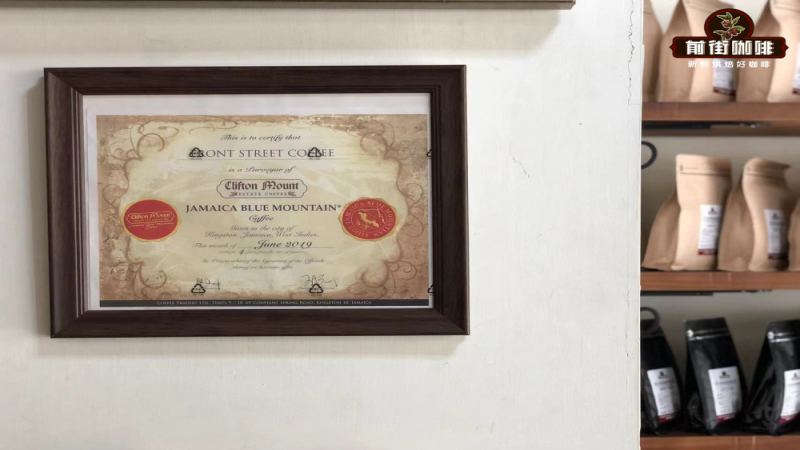
Blue Mountain coffee is renowned worldwide for its mellow, balanced taste, and Jamaica Blue Mountain No. 1 is the pinnacle among them. This article will walk you through the origin background, processing methods, and grading of Blue Mountain coffee, explain why black coffee best showcases its classic flavor, and share the brewing approach and parameters that Front Street Coffee's baristas have summarized in actual service. From the washed processing at Clifton Estate, to the three-pour technique with a KONO dripper, to the pairing of 88°C water temperature with a medium grind, this guide will help you master the key points of extracting Blue Mountain No. 1 and avoid ruining precious beans through improper brewing.
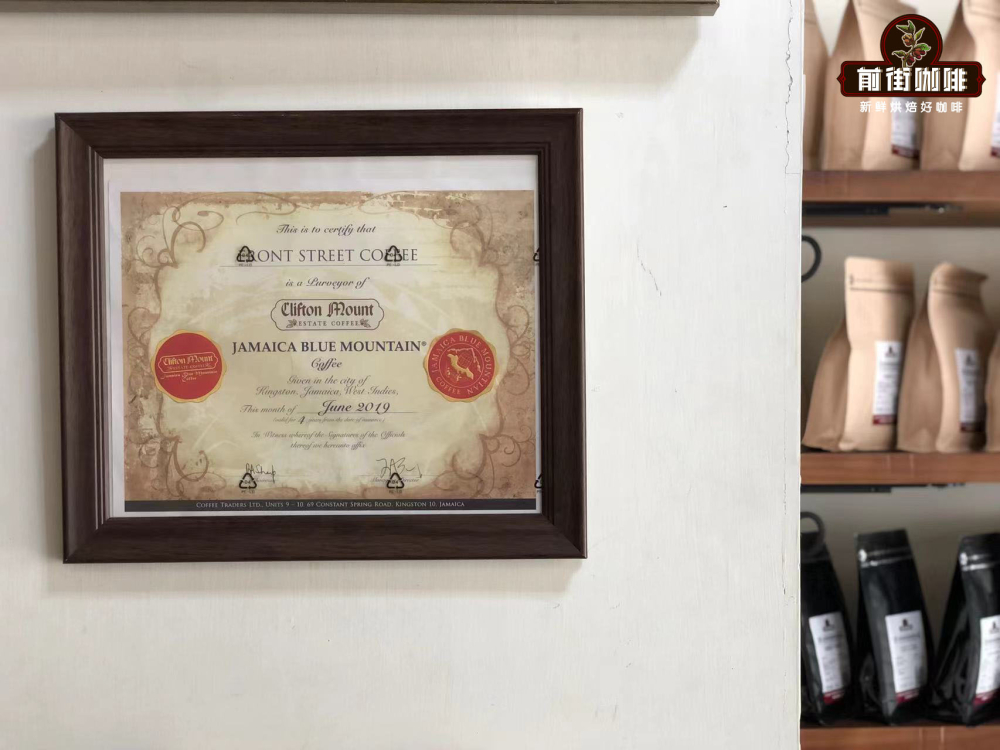
Blue Mountain coffee is mellow and full-bodied on the palate, with a delicate balance among acidity, sweetness, and bitterness. After drinking, a sweet aftertaste lingers in the mouth, making for a thoroughly pleasant experience overall. Precisely because it is so expensive, brewing it demands extra care so as not to waste such precious beans. Front Street recommends pour-over extraction, as this best showcases the classic flavor of Blue Mountain coffee.
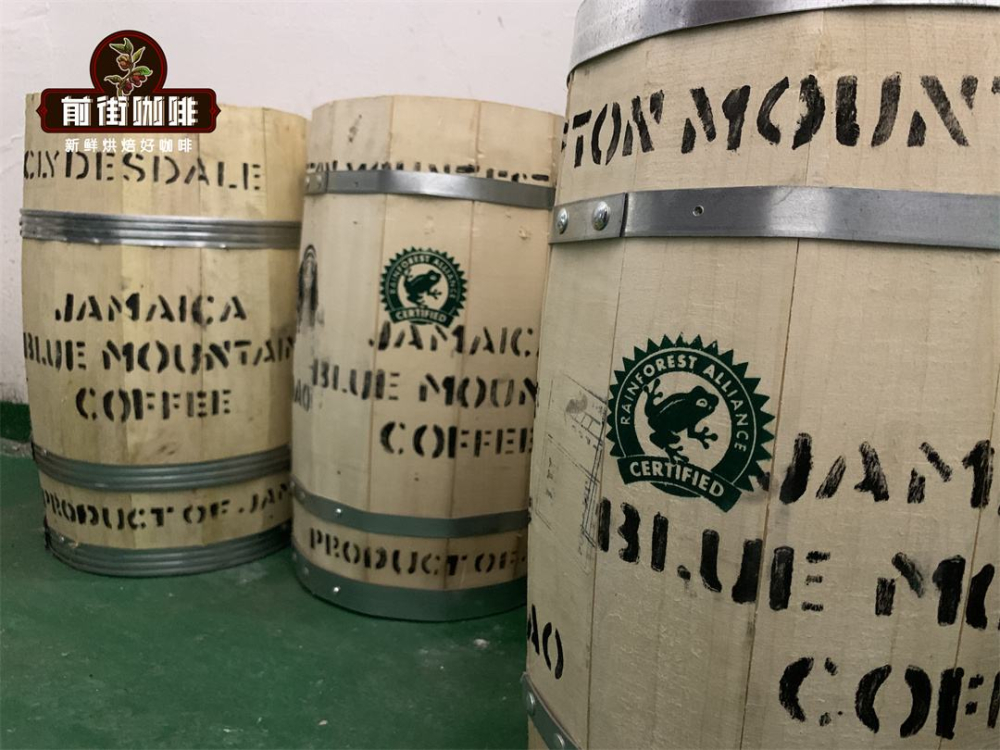
To brew a good cup of Blue Mountain, having a bag of freshly roasted Blue Mountain coffee beans on hand is a prerequisite. Freshness involves not only the harvesting and processing of green beans but also how many days have passed since roasting was completed. The Blue Mountain No. 1 coffee beans on Front Street's bean shelf come from Jamaica's oldest coffee estate — Clifton Estate. Located on Clifton Mount, this estate is the only coffee estate in the entire Blue Mountain region to have obtained Rainforest Alliance certification.
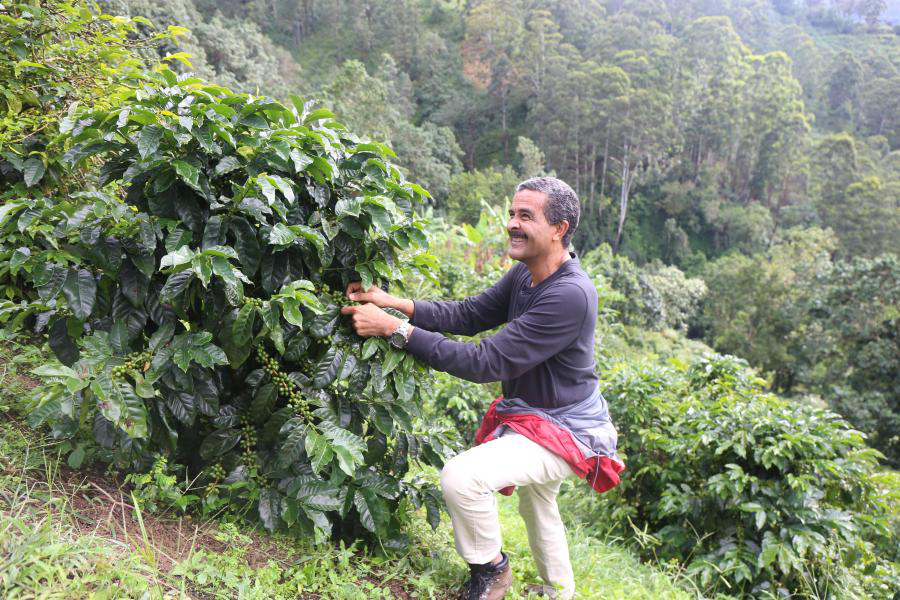
Of the planting areas in the Blue Mountains, only about one-third — roughly 6,000 hectares at elevations between 910 and 1,700 meters — can be classified as "Jamaica Blue Mountain Coffee." Coffee from the remaining areas is categorized as "Jamaica High Mountain Coffee" and "Jamaica Prime Coffee." Clifton Estate is currently the largest estate in this zone, with two centuries of production experience. Whenever the coffee cherries in the Blue Mountain region ripen, the estate sends workers to the steep highlands to hand-pick ripe, plump coffee cherries.
The harvested coffee cherries are sent to the processing plant immediately, where they are washed to remove the skin and pulp and then dried. First, underdeveloped cherries are removed through flotation; then the skin and pulp are stripped away, and the beans are left to rest in fermentation tanks for 12 to 18 hours. After fermentation, the beans remain in the tanks and are pushed back and forth, using the friction between the beans and the washing action of water to clean them until their surfaces are smooth and spotless. They are then spread out under sunlight to dehydrate and dry. Once the moisture content reaches the standard, they are bagged and stored to rest, and must still pass a quality inspection before export. All production processes at Clifton Estate follow environmentally friendly principles: water is recycled, and the separated pulp is converted into organic fertilizer.
After drying, Blue Mountain green beans are graded into four levels based on screen size, combined with color, moisture content, and flavor performance after roasting: Blue Mountain No. 1, Blue Mountain No. 2, Blue Mountain No. 3, and Blue Mountain Peaberry. Among these, the highest grade, Jamaica Blue Mountain No. 1 (NO.1), requires green beans of 17 to 18 screen size, a defect rate below 3%, uniform and neat beans, and a round, plump body, with a flavor profile that is balanced across mellowness, aroma, sweetness, and acidity. Front Street uses precisely this washed Jamaica national-treasure-grade Blue Mountain No. 1 coffee bean, roasted to a medium-dark level, presenting the classic mellow, sweet Blue Mountain flavor.
Front Street wants every customer who places an order to receive coffee beans bursting with aroma, so it strictly ships only beans within 5 days of roasting, meaning that by the time you receive them, they are roughly at their peak flavor window. If you don't have a grinder at home, Front Street also offers a grinding service. Still, one reminder: once coffee is ground, both aroma loss and oxidation speed up considerably compared with whole beans, so it's best to drink it as soon as possible after receiving it — don't let high-quality Blue Mountain coffee beans go to waste. To fully appreciate the rich flavor of Blue Mountain coffee, Front Street recommends buying whole beans and grinding fresh for each brew.
Why should Blue Mountain be enjoyed as black coffee?
For high-quality coffee like Blue Mountain — richly aromatic and well balanced in flavor and mouthfeel — Front Street believes that only black coffee can present it at its best. Black coffee is coffee with no milk or sugar added; common pour-over coffee and Americano both fall into this category. In moderation, black coffee not only helps you stay alert but can also promote metabolism and effectively break down body fat; a cup after a meal aids digestion. Here Front Street also reminds you that coffee should not be consumed in excess — try to keep it to 2 to 3 cups a day. Drinking too much can easily cause gastrointestinal discomfort or palpitations.
Brewing suggestions for Blue Mountain No. 1 coffee
Below, taking the pour-over that Front Street stores typically serve as an example, let's go through the approach and steps for brewing Blue Mountain No. 1 coffee beans.
When brewing coffee beans with a predominantly bitter profile, Front Street prioritizes the KONO dripper, aiming to highlight the coffee's mellow body (bitter-profile coffees usually present flavors such as chocolate, nuts, caramel, and hazelnut). The upper part of the KONO dripper has a smooth curved surface that fits the paper filter better. Compared with the V60 dripper, its extraction method is mainly immersion-based, which can increase the coffee's overall concentration and thereby enhance body. Likewise, the KONO dripper is also suitable for brewing Brazil Queen's Estate coffee beans and Golden Mandheling coffee beans.
For a single cup, Front Street uses 15 grams of coffee powder with a coffee-to-water ratio of 1:15. Front Street suggests that, provided extraction remains balanced, the strength can be adjusted to personal preference. Those who like a rich taste can use a 1:13 or 1:14 ratio; those who prefer a lighter, clearer taste can use 1:16 or 1:17.
After medium-dark roasting, Blue Mountain No. 1 coffee beans have a looser texture than medium-light roasted beans and absorb water more readily, so bitter large molecules are released more easily. Therefore, Front Street recommends brewing with a slightly lower water temperature. By the same logic, to avoid over-extraction, the grind should also be adjusted coarser accordingly. Front Street Coffee (FrontStreet Coffee) baristas use a water temperature of 88°C and a medium grind (75% passing rate on the Chinese No. 20 standard sieve) when serving.
For the pouring technique, Front Street uses a three-stage method. First, wet the coffee bed with twice the coffee powder's weight in water to form a dome, and let it bloom for 30 seconds; then pour in a thin stream in circles from the inside out, pausing the pour at 125 grams; when the coffee bed has dropped to half the height of the dripper, continue pouring the third stage with the same thin stream up to 225 grams. Once all the coffee liquid has drained through, remove the dripper; total time is about 2 minutes.
Pour-over flavor of Blue Mountain No. 1 coffee: on entry, aromas of dark chocolate, roasted nuts, and toffee, with caramel sweetness, soft and delicate acidity, all flavors in balanced harmony, and a smooth, rich, mellow mouthfeel. As the temperature drops, the aroma becomes clearer and the layers richer.
For professional coffee knowledge exchange and more coffee bean information, please follow Coffee Studio (WeChat official account: cafe_style)
For more specialty coffee beans, please add the private WeChat of Front Street Coffee (FrontStreet Coffee), WeChat ID: qjcoffeex
The above content is compiled by CoffeeHunters, a coffee news website.


