







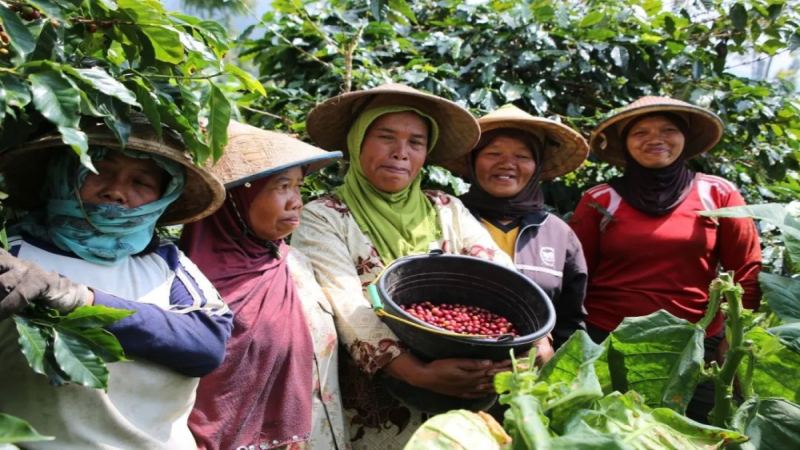
Coffee-growing regions in Indonesia have climate conditions completely different from those in Africa and Central and South America: humidity stays at 70–90% year-round, annual rainfall often exceeds 2,000 mm, and typhoons are frequent. In such a humid environment, long-cycle natural processing or high-water-consumption washed processing is difficult to carry out. Indonesian coffee farmers therefore developed the distinctive wet-hulled method, which uses early hulling and accelerated drying to create Mandheling’s signature full body and herbal, earthy, dark chocolate flavors. This article breaks down each step of the wet-hulled method in detail and includes Front Street Coffee’s complete pour-over recipe for medium-dark roasted Mandheling, including dripper choice, grind size, water temperature, and three-pour technique, helping enthusiasts brew a round, concentrated Southeast Asian flavor at home.
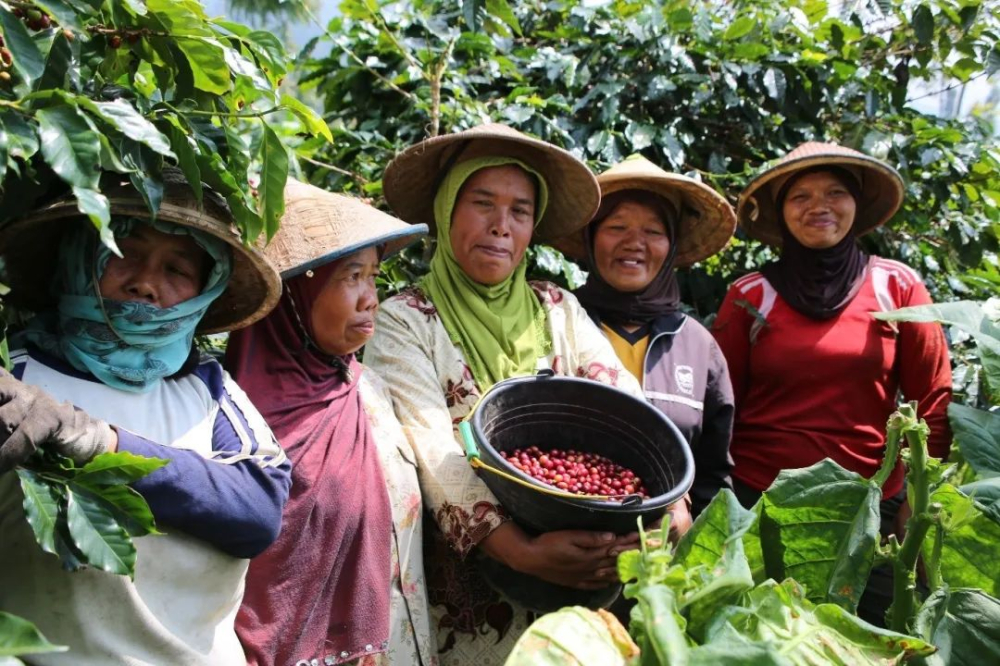
The climate conditions in Indonesia’s coffee-growing regions are completely different from those in most origins—humidity is the norm here. Air humidity remains between 70 and 90% year-round, typhoons can strike at any time, and annual rainfall often exceeds 2,000 millimeters. In this environment, trying to replicate Africa’s two-to-three-week natural drying is nearly impossible; washed processing also has the problems of being time-consuming and costly in labor and water, making it hard to sustain for Indonesia’s coffee industry, which aims for volume production. For this reason, locals developed a compromise semi-washed solution—the wet-hulled method.
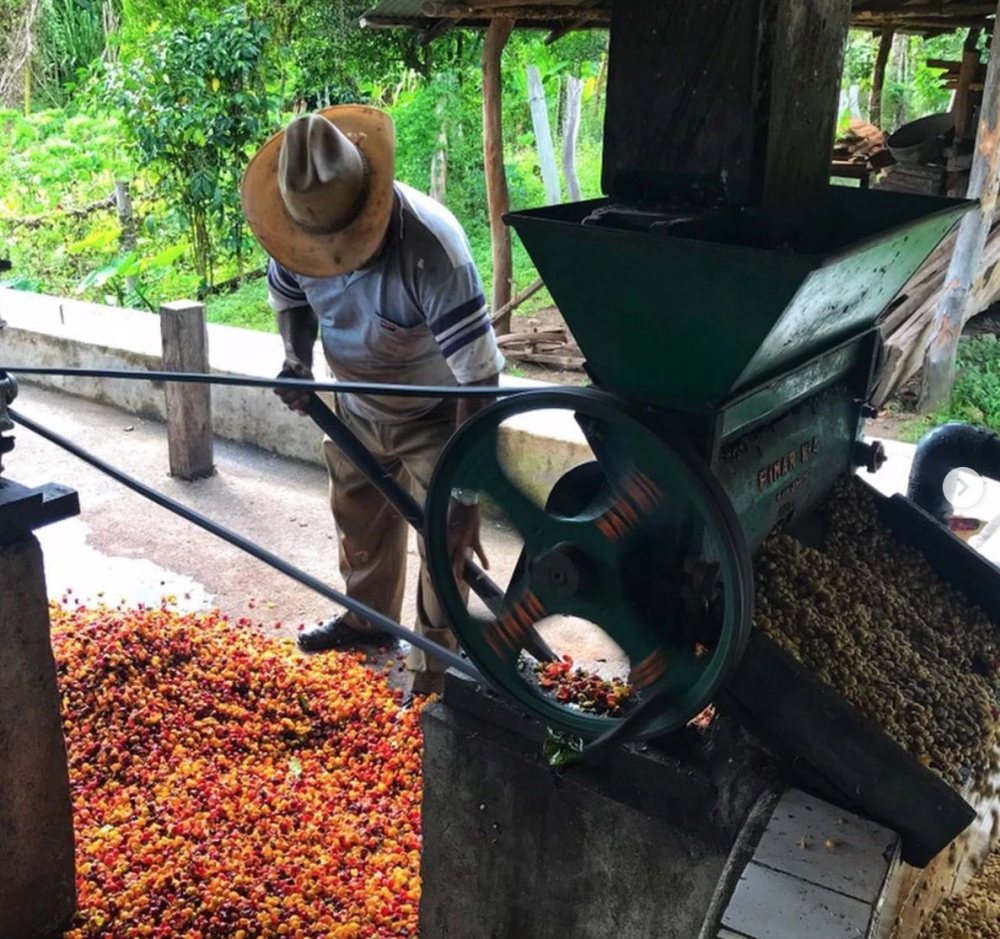
The wet-hulled process is different from both natural and washed processing. The first step is to remove the outer skin of the coffee fruit with a pulper, then put the beans directly into a water tank for a short fermentation lasting several hours. At this point, a small amount of mucilage still clings to the surface of the parchment, which needs to be removed by scrubbing. Next, the coffee beans with parchment enter the drying stage. When the moisture content of the green beans first drops to 30–40%, the farmers sell the beans to a collector. After receiving these semi-dry parchment beans, the buyer immediately hulls them to speed up drying while also removing residual mucilage and parchment, finally obtaining green beans.
The huller works through relatively high friction, tearing open the parchment layer clinging tightly to the green beans. During this process, white or green viscous liquid often flows out. After prolonged soaking in mucilage and in a humid environment, the green beans eventually become softer in texture, pale in color, swollen, and grayish-green in tone. During the friction and agitation process, the green beans are easily cracked or crushed, especially with small chips appearing at both ends, forming so-called goat-foot beans. The “naked beans” that have lost the protection of the parchment layer dry extremely quickly, but at the same time are directly exposed to humid air and susceptible to infection by various microbes.
The wet-hulled method significantly shortens fermentation time, so the coffee’s acidity is lower, body is markedly enhanced, and grassy and herbal notes become more prominent. The “naked beans” still absorb moisture in the hot, humid air, thus developing the earthy, herbal, and cedar-like “muted aroma” unique to Sumatra. After roasting, they present even richer dark chocolate, caramel, and nutty roasted aromas, which are especially favored by Japanese consumers who prefer dark roasts. The two Mandheling coffees on Front Street’s bean list are precisely wet-hulled; if you are interested in this kind of Southeast Asian flavor, you might try the wet-hulled Indonesian Mandheling daily-drinker beans offered by Front Street.
For full-bodied coffees such as Indonesian Mandheling, Brazil Queen’s Estate, and Jamaican Blue Mountain, Front Street Coffee’s baristas usually prioritize the KONO dripper for brewing. Compared with the V60, the KONO dripper’s curved surface is smoother, a design intended to let the filter paper cling to the wall of the dripper after wetting. At the same time, its guiding ribs are only one quarter of the dripper’s height, restricting upward airflow so water can only flow from the bottom into the server. As a result, the water absorption time of the coffee grounds is extended, and the coffee bed and hot water form immersion-style extraction, resulting in a rounder, fuller, and more concentrated final flavor.
Medium-dark roasting greatly changes the internal structure of coffee beans, making them porous and, after grinding, more absorbent. If brewing parameters are not adjusted accordingly, it is easy to produce bitterness from over-extraction. To give the coffee enough aroma without over-extracting, the key is to lower the extraction rate. Front Street’s approach is to use a lower water temperature and control the grind to a coarse-sugar-like degree, thereby reducing the release of bitter large molecules.
Dark roasting makes the internal structure of coffee beans loose; they can be crushed with a gentle pinch of the fingers, indicating strong water absorption after grinding. To avoid the coffee grounds releasing too many bitter substances after absorbing water, Front Street adjusts the grind coarser and uses lower-temperature water for pour-over. Grind size is one of the key variables determining coffee flavor—after coffee beans are ground and come into contact with hot water, a large number of soluble flavor substances are released. Front Street uses a tool when adjusting grind size: the Chinese No. 20 0.85 mm standard sieve. Medium-light roasted beans are usually controlled at a 75–80% passing rate, while medium-dark roasted beans use 70–75%. Compared with light roast, medium-dark roasted Mandheling beans have a looser internal structure and better water absorption, making it easy to release large-molecule bitter substances. To avoid over-extraction, Front Street chooses a coarseness with a 70% passing rate on the No. 20 standard sieve.
Water temperature works similarly to grind size: the higher the water temperature, the higher the extraction efficiency, the easier various components are released, and the higher the concentration becomes. If brewed with water close to boiling, it is easy to bring out unpleasant bitter substances. Therefore, when brewing medium-dark roasted coffee beans, Front Street uses different parameters from those for light roasted beans. Medium-dark roasted beans undergo more caramelization reactions than light roasted beans and more easily release bitter large-molecule substances. To avoid excessive off-flavors, Front Street appropriately lowers the water temperature—the brewing water temperature for light roasted coffee is 91–93°C, while medium-dark roasted coffee beans are recommended to use 87–88°C.
Recommended brewing water temperature: 87–88°C
Coffee grounds: 15 g
Coffee-to-water ratio 1:15
Grind size: medium-coarse grind (70% passing rate on Chinese standard No. 20 sieve)
The brewing method uses three-stage pouring, which can better showcase Golden Mandheling’s full body and caramel sweetness.
For the first stage, pour 30 ml for blooming, with the purpose of completely wetting the coffee grounds, allowing the beans to degas, and laying a foundation for subsequent extraction of flavor substances. For the second stage, pour 100 ml; this stage mainly washes out Mandheling’s golden foam while raising the coffee bed. For the final stage, gently pour 95 ml in the center, which can enhance the coffee’s sweetness, presenting an overall thick, full body along with caramel sweetness and chocolate, nutty flavors.
The above content is compiled by CoffeeHunters, a coffee news website.


