







Mandheling is synonymous with Indonesian coffee and is the starting point for many coffee lovers to get to know Indonesian coffee. Starting from Sumatra's planting history and geographical environment, this article sorts out the characteristics of core producing regions such as Lintong and GAYO, analyzes the varietal origins of Mandheling and its unique wet-pulping process, and introduces in detail the brewing parameters and flavor performance of Front Street Coffee's PWN Golden Mandheling. Whether you are a beginner just encountering Indonesian coffee or a seasoned player pursuing specialty quality, you can find practical references here.
Mandheling is an important representative of Indonesian specialty coffee, and in the minds of many coffee lovers it is almost the calling card of Indonesian coffee. Front Street Coffee includes Mandheling on its daily-drink bean list as an entry-level choice for understanding Indonesian coffee; at the same time, Front Street Coffee also offers Indonesian specialty-grade Golden Mandheling coffee.
Indonesian coffee beans are usually larger in size and dense in texture, with a relatively high mouthfeel of body. In fact, Mandheling is neither a place name, a producing region name, nor a coffee variety name, but a misreading of the pronunciation of the Mandailing people who originally lived in Sumatra. The birth of this name was also accompanied by a rather legendary misunderstanding. During World War II, when the Japanese army occupied Indonesia, a Japanese soldier drank a cup of extremely aromatic coffee in a cafe and asked the owner what coffee it was. Because of the language barrier, the owner thought the other party was asking where he was from, so he answered "Mandailing." After the war, this soldier recalled the "Mandheling" he had drunk in Indonesia and commissioned an Indonesian coffee merchant to ship 15 tons to Japan, where it became hugely popular, and the name Mandheling spread from there.
The History of Sumatra Mandheling Coffee Cultivation
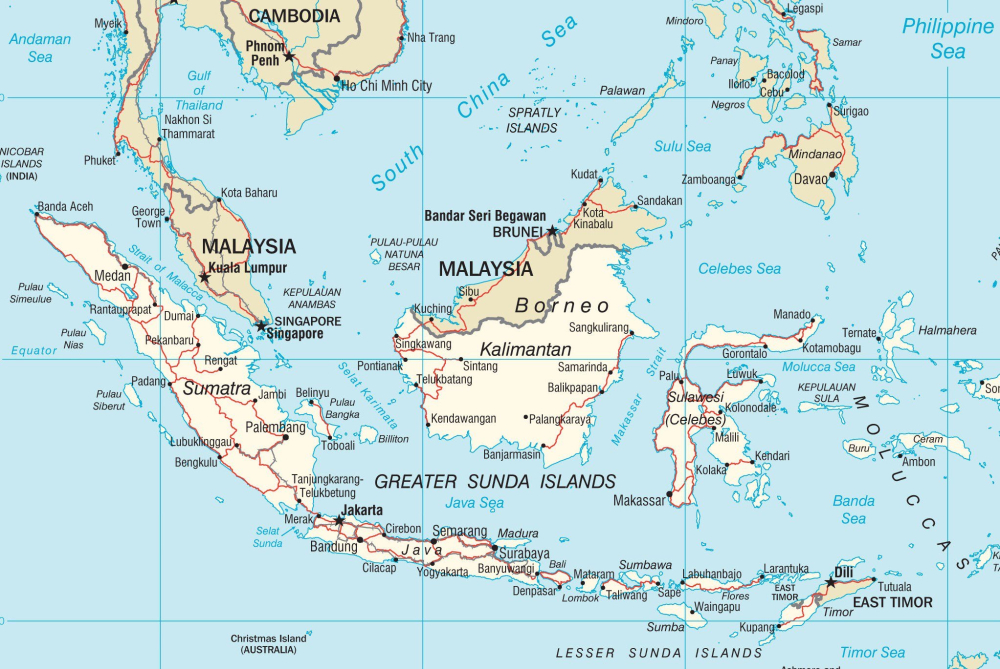
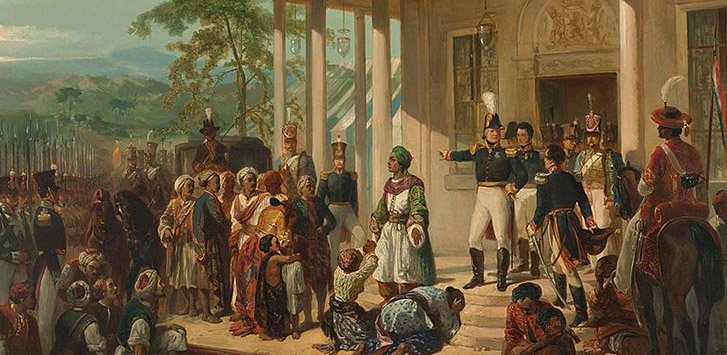
Sumatra is the second-largest island in Indonesia, with a resident population of about 55 million, and it is also one of Indonesia's largest coffee-producing regions. The island's coffee output accounts for about 74.2% of Indonesia's total production, while Indonesia's second-largest producing region accounts for only 12% of the national total. However, coffee is not a native crop of Indonesia; it was introduced to the island by the Dutch government after the Dutch defeated the Portuguese in the early colonial period. Two centuries later, during World War II, a large number of coffee trees were replaced by crops such as rice, corn, and cassava in order to solve the local people's food and clothing problems. In 1950, local coffee production was only one-eighth of the pre-war level. But since then, coffee has gradually become a pillar of the local economy.
Coffee-Producing Regions of Sumatra, Indonesia
Sumatra is not only the largest island in Indonesia but also the sixth-largest island in the world. It is located in northwestern Indonesia, extending from northwest to southeast, with the equator passing through its center. The terrain is high in the northwest, with the Barisan Mountains running through it, mainly growing Arabica and serving as the main producing area of Mandheling; the southeast is low, mostly flat land or swamps, mainly growing Robusta. The entire island has more than 90 volcanoes and numerous volcanic lakes, providing fertile soil for coffee growth. Affected by its geographical location, Sumatra has the country's earliest harvest season—from November to March of the following year.
Mandheling coffee comes from Sumatra, Indonesia, in Asia, and is also known as "Sumatra coffee." The main producing areas include Java, Sulawesi, and Sumatra, of which 90% is Robusta. The "Mandheling" produced on Sumatra is the most famous. Among the refined traditional Arabica coffees produced in northern Sumatra, the best quality ones are sold under the names Lintong and Mandheling. To be precise, Lintong refers to coffee grown in a small area of the Lintong administrative region southwest of Lake Toba. The small coffee-growing areas are scattered across high, undulating, fern-covered clay plateaus. Lintong coffee is not shade-grown, does not use chemicals, and is almost entirely owned by smallholders. Mandheling is a broader term that includes Lintong coffee as well as coffee from Diari (capital Sidikalang) and the northern Lake Toba growing areas, which have similar conditions.
Lintong Mandheling is produced in the Lintong mountainous area in north-central Sumatra, near Lake Toba, and is the regular version of Sumatra Mandheling. Front Street Coffee's daily-drink Mandheling coffee is exactly Lintong Mandheling.
Lake Toba is located in the central part of North Sumatra Province. In 1888, Dutch colonists moved "Java Mandheling" north to the Lake Toba area, creating the legend of modern Mandheling.
Lake Tawar is located in the central part of the Aceh Special Region, at the northern tip of Sumatra, with an area less than one-tenth that of Lake Toba.
At present, the highest-quality beans in the Sumatra region come from the GAYO mountains, mostly grown from old tree varieties. The Gayo Mountains are located in the Aceh producing region of North Sumatra Province, at an altitude of 1,500–2,500 meters, and most coffee farmers are local Gayo people. This region has ideal growing conditions for coffee—high altitude, fertile soil, abundant rainfall, with Lake Tawar providing a rich water source, and organic methods are widely used in cultivation without chemical fertilizers, so it is regarded as a green coffee-producing region in the world. Therefore, Gayo coffee is also often called green coffee or Gayo organic coffee.
Golden Mandheling Coffee
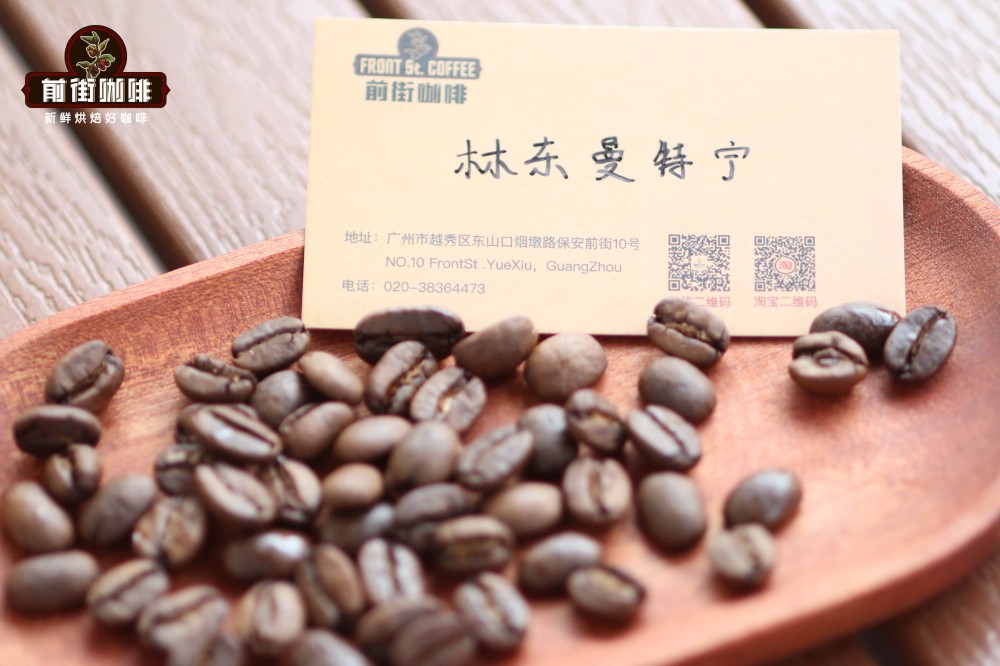
FrontStreet Coffee's Golden Mandheling of the new season is produced in the Gayo Mountains of Aceh, North Sumatra, and comes from PWN Company's Golden Mandheling coffee beans. Golden Mandheling has stricter quality requirements: first, the coffee beans must reach screen size 19, and the beans must be plump and uniform, belonging to the highest grade G1. PWN's beans are darker green in color and have a neat flat-bean shape. In addition, they must undergo one mechanical sorting and three manual hand-sortings to ensure that there are fewer than 3 defective beans in the green beans (in a 300g green bean sample).
What Variety Is Mandheling Coffee?
Mandheling variety—Typica. In 1658, the Dutch transplanted descendants of the "European Typica mother plant" to Sri Lanka, but the cultivation failed. In 1699, the Dutch transplanted coffee trees from Malabar in eastern India to Java, and the trial planting succeeded, allowing Typica to grow steadily in Java. In 1718, the Dutch transplanted the successfully trial-grown Typica from Java to Sumatra and Sulawesi. After more than a century of propagation, just as Indonesian Typica was at its peak, a leaf rust disease swept through most of Indonesia's Typica at the end of the 19th century, after which the more disease-resistant Robusta variety had to be introduced.
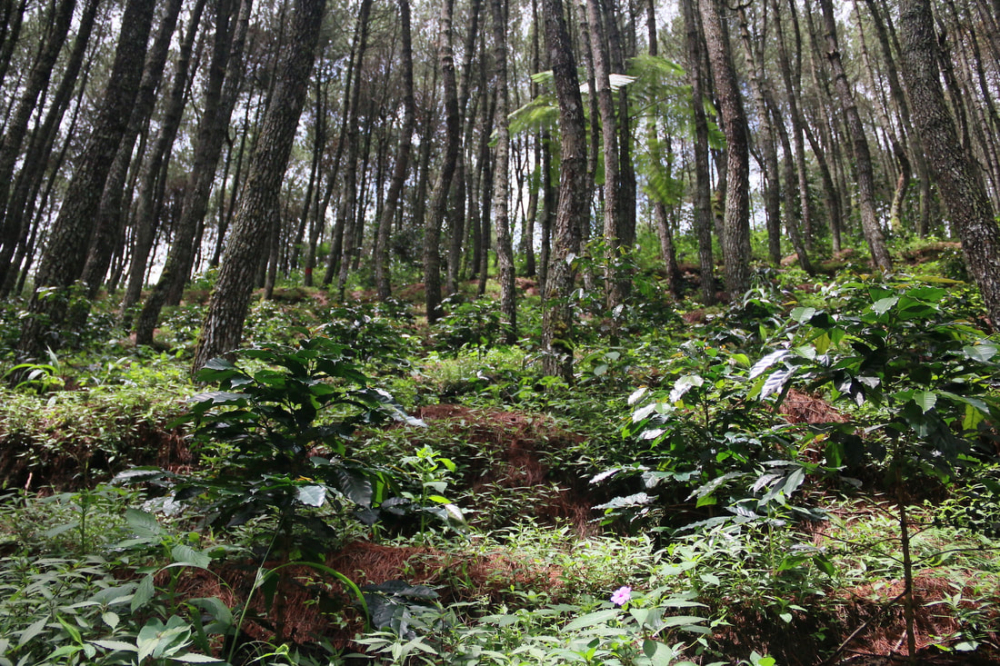
Front Street Coffee's Lintong Mandheling coffee variety is labeled Tim Tim Ateng, and the Golden Mandheling coffee variety is labeled Ateng. What variety is this? Ateng is a hybrid between Arabica and Robusta, widely planted in Sumatra and other small Indonesian islands. It is actually a branch of Catimor, and Ateng is the local name. What Indonesia calls Tim Tim is what we call Timor. Ateng is very suitable for planting and flavor development in the Aceh region. Due to local Indonesian naming conventions, Mandheling's coffee varieties often seem unfamiliar, but in fact they are simply different names.
The Processing Method of Mandheling Coffee Beans
Mandheling's unique flavor is not only related to the local climate and environment but is also inseparable from its processing method. Indonesia has a typical tropical rainforest climate, with frequent rainfall and short sunshine duration, making it unsuitable for natural sun-drying processing; combined with the local economic conditions, which generally lack sufficient funds to invest in washed processing, coffee farmers developed a semi-washed processing method, namely the wet-pulping method. This is a rare processing method in the world, and by accident it created Mandheling's special flavor profile of low acidity, thick body, and muted aroma.
So how should Mandheling coffee be brewed?
Front Street Coffee has previously shared the relationship between coffee bean roast level and pour-over brewing. Light-roasted and dark-roasted coffee beans differ in the choice of water temperature and dripper. Golden Mandheling is a dark-roasted bean, so the water temperature should not be too high, and a Kono dripper is preferable. The lower water temperature is to avoid extracting too many off-flavors; when FrontStreet Coffee chooses dark roasting, more aromatic substances have already been released, and if brewing continues at the water temperature used for light roasting, over-extraction is likely. FrontStreet Coffee chooses the Kono dripper because the V60 flows too quickly and is prone to under-extraction at low water temperatures; the Kono dripper has few ribs and they are located at the lower end, so the filter paper fits closely against the dripper, which can restrict airflow, prolong the contact time between water and coffee grounds, allow the coffee grounds to be fully extracted, and enhance the thick mouthfeel.
Front Street Coffee's Brewing Parameters for Golden Mandheling Coffee:
Water temperature: 88°C, coffee dose: 15 grams, coffee-to-water ratio: 1:15, grind size: medium-fine grind (75% passing through a No. 20 sieve).
Use staged extraction, blooming with twice the amount of water as the coffee grounds, that is, 30 grams of water for a 30-second bloom. The purpose of the bloom is to let the coffee grounds release internal carbon dioxide, making the later extraction more stable. Pour in a small stream in a circular motion until it reaches 125 grams, then pause; continue pouring until 225 grams and stop. After the water in the dripper has dripped through, remove the dripper. Time from the start of pouring, with an extraction time of 2'00". Then swirl the entire cup of coffee to mix it evenly and pour it into a cup to taste.
[Front Street PWN Golden Mandheling Coffee Flavor]: The overall layering is varied, thick and clean, with rich nutty and caramel aromas, a chocolate note, a long finish, and high balance.
[Lintong Mandheling Coffee Flavor]: On the palate there is a rich herbal aroma, dark chocolate, caramel, and a sweet aftertaste.
FrontStreet Coffee Brewing Suggestions
For coffee brewing, Front Street recommends using freshly roasted coffee beans to experience the rich flavors to the greatest extent. The coffee beans shipped by FrontStreet Coffee are all within 5 days of the roast date, because Front Street deeply understands that freshness has a great impact on flavor. Front Street's roasting philosophy is "freshly roasted good coffee," so that every customer receives the freshest coffee when placing an order. The coffee resting period is about 4–7 days, so by the time customers receive it, it is exactly at its best flavor.
Of course, some customers need Front Street to help grind the coffee, and that is fine too, but Front Street reminds you: once coffee beans are ground in advance, they no longer need to rest, because during transportation the pressure generated by carbon dioxide inside the package can also make the coffee flavor rounder, and you can brew a cup immediately upon receiving the ground coffee. However, ground coffee needs to be brewed promptly, because after contact with air it oxidizes quickly and the flavor dissipates faster, so the coffee flavor will not be as good. Therefore, Front Street recommends buying whole beans and grinding fresh before brewing to better taste the coffee's flavor.
Front Street already has two Indonesian coffees: one is the daily-drink bean series Indonesian Mandheling coffee, and the other is the single-origin specialty coffee Golden Mandheling coffee. Either way, the flavor is very good. Daily-drink Mandheling can serve as an entry-level bean for beginners to understand Indonesian coffee; Golden Mandheling is the higher specialty coffee pursued by friends who understand coffee.
For professional coffee knowledge exchange and more coffee bean information, please follow Coffee Workshop (WeChat public account cafe_style)
For more specialty coffee beans, please add the private WeChat of FrontStreet Coffee, WeChat ID: qjcoffeex
The above content is compiled by CoffeeHunters, a coffee news website.


