







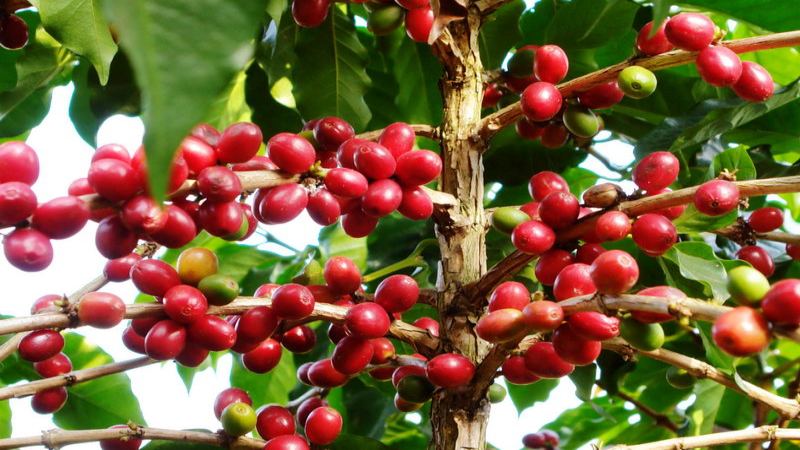
In the Galapagos Islands of the eastern Pacific, San Cristobal Island, with its abundant freshwater resources and unique microclimate, nurtures a highly prized coffee treasure. This island is not only the only landmass in the archipelago with ample freshwater, but also, thanks to the Ecuadorian government's strict ecological protection policies, has become a representative production area for naturally organic coffee. This article will take you deep into the geography, coffee-growing history, and flavor characteristics of San Cristobal, as well as the role of the Andes in Ecuador's coffee landscape. At the same time, we will also share Front Street Coffee's practical suggestions on fresh roasting and brewing to help you better savor this unique coffee from an equatorial island.
Introduction to the San Cristobal Production Area
Among the Galapagos Islands, San Cristobal ranks among the largest in area, and it is also the only island in the entire archipelago with abundant freshwater resources. At an elevation of about 410 meters on the island lies a small lake called El Junco. The lake water spreads outward, turning into several streams that flow slowly down the southern slope of the island over rock and volcanic layers. This mineral-rich freshwater continuously nourishes the soil of San Cristobal, keeping it moist and fertile year-round. In addition, the Humboldt Current brings a local microclimate to the region, which, combined with intense equatorial sunlight and significant temperature variation—reaching 43 degrees at sea level while dropping to 10 to 16 degrees at an elevation of 275 meters—together creates extremely rare conditions for coffee cultivation.
Characteristics of Galapagos Islands coffee:
Coffee beans produced in the Galapagos Islands can be called treasures among specialty coffees, with excellent quality performance. Given the special status of the archipelago in history, the Ecuadorian government has designated it as a national park, prohibiting the clearing of forest land for new agricultural use, and also strictly forbidding the introduction and use of chemical fertilizers, pesticides, herbicides, and other chemical agents. For this reason, coffee from the Galapagos Islands is widely recognized as a purely natural product.
Flavor: full-bodied layers, with sweetness amid acidity
Recommended roasting method: medium roast
★★★: Excellent
The market for Galapagos Islands coffee:
Because the Galapagos Islands played a unique role in history, the Ecuadorian government has established the archipelago as a national park, no longer approving the clearing of land for new agricultural use, and fully prohibiting the introduction and use of chemical fertilizers, pesticides, herbicides, and other chemical agents. Therefore, coffee produced in the Galapagos Islands is widely recognized as a natural product. In 1875, a local Ecuadorian named Manuel J. Cobos planted Arabica Bourbon coffee trees at Hacienda El Cafetal on San Cristobal.
Coffee-producing areas of the Galapagos Islands:
Coffee cultivation areas are concentrated on San Cristobal (Saint Cristobal). At Hacienda El Cafetal on San Cristobal, Arabica Bourbon coffee trees are planted. The plantations are distributed between 140 and 275 meters above sea level, and the local climatic conditions are equivalent to those of inland areas at 915 to 1,830 meters. Such an elevation gradient is very suitable for the growth of high-acidity Strictly Hard Bean (SHB) coffee, and is also a core factor in achieving superior coffee quality.
Three hundred and forty years after Fray Tomas de Berlanga discovered the island, that is, in 1875, an indigenous resident named Cobos came to San Cristobal Island. He established Hacienda El Cafetal here and planted about 100 hectares of Arabica Bourbon coffee trees. Because the plantation is located between 140 and 275 meters above sea level, its climatic conditions are equivalent to those of inland zones at 915 to 1,830 meters. This uniquely advantageous geographical environment is very suitable for the growth of high-acidity Strictly Hard Bean (SHB) coffee, so high-quality coffee took root here. A well-known South American brand, Ecuadorian Grade A coffee, with large state-owned plantations; 100% from natural vegetation zones at 1,300 to 2,000 meters above sea level, selling well in European and American markets, allowing you to taste refined world-class Arabica flavor at supermarket prices.
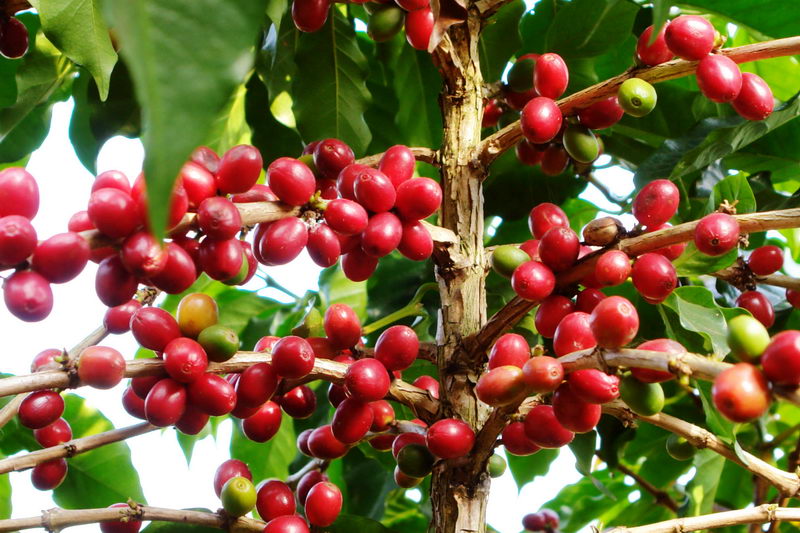
ES coffee is grown on the slopes of the Andes in Latin America and is a clean organic coffee. It is one hundred percent pure coffee. By continuously improving the economic and working conditions of the plantations while maintaining small-scale operation of the coffee plantations and biodiversity within them, our coffee quality is safeguarded and enhanced. In addition, it is also one of the important economic sources of the coffee place of origin, because all coffee is dried and packaged locally, which ensures its unique position in global coffee and also preserves its distinctive flavor expression.
In 1875, Ecuadorian indigenous resident Manuel J. Cobos began planting Arabica Bourbon coffee trees at Hacienda El Cafetal on San Cristobal.
Characteristics of Galapagos Islands coffee:
Coffee produced in the Galapagos Islands is a treasure among coffees, of excellent quality, and no chemical agents are used during cultivation.
The Andes Mountains
Central highlands: After the Andes Mountains enter Ecuadorian territory from Colombia, they divide into the Cordillera Oriental and the Cordillera Occidental. Between the two ranges is a plateau higher in the north and lower in the south, with an average elevation of 2,500 to 3,000 meters. The Andes run through the center of the country. Interlocking ridges divide the plateau into more than a dozen intermontane basins. The most important among them are the Quito Basin and the Cuenca Basin in the south. There are many volcanoes in the country, and seismic activity is frequent. The famous Cotopaxi Volcano, at 5,897 meters above sea level, is one of the highest active volcanoes in the world. Chimborazo, located in central Ecuador at 6,262 meters above sea level, is the country's highest peak. The distance from the center of the Earth to the summit of Chimborazo in Ecuador is 6,384.1 kilometers. Chimborazo Peak is located in the Cordillera Occidental of the Andes and was long mistaken for the highest peak of the Andes. It is a dormant volcano with many craters, its summit covered by large glaciers, and areas above about 4,694 meters are covered with snow year-round. The port of Guayaquil is Ecuador's largest seaport, facing the Pacific Ocean and backed by the Santa Ana hill. Nearby, Puna Island serves as a natural barrier, making the port less exposed to storms. To the south are docks more than 900 meters long. In the harbor lie ships from different parts of the world flying flags of various colors. The port railway leads to the capital, Quito, and highways connect Quito with other cities in the country. Products such as bananas, cacao, coffee, and cotton from all over the country are gathered and distributed here. In the history of friendly exchanges between the peoples of China and Ecuador, Guayaquil also played an important role. As early as the 18th century, Chinese clothing, textiles, and other goods were transported via Guayaquil to cities throughout Ecuador. In August 1978, the Chinese freighter "Jialingjiang" arrived here for the first time.
After Thomas and the crew landed on this island, they searched frantically for water, and when they were so thirsty they could hardly bear it, they squeezed juice from the thick pads of the cacti to drink. Eventually, they found water in a crevice of a rock. Thomas attributed this to God's grace, because that day was Good Friday, and before setting out to look for water they had devoutly attended Mass. However, Thomas would never know that the island they had landed on was precisely the only island in the Galapagos archipelago with abundant freshwater—the present-day San Cristobal (Saint Cristobal).
Arabica coffee trees were first introduced to Ecuador in 1952, and their coffee quality is very good, especially coffee harvested in early June. Ecuadorian coffee beans can be divided into two varieties, Galapagos and Gigante, both characterized by large beans and heavy weight. Ecuadorian coffee can be divided by quality into No.1 and Extra Superior. They are mainly exported to the Nordic countries of Scandinavia. San Cristobal is one of the larger islands in the Galapagos archipelago. At an elevation of 410 meters on the island there is a small lake called El Junco. The lake water forms several streams that flow along the rock and volcanic rock on the southern slope of the island. The mineral-rich freshwater moistens the land of San Cristobal, keeping the soil there moist and fertile and providing the rarest conditions for coffee cultivation here.
Front Street brewing suggestions:
Regarding coffee brewing, Front Street has always believed that the freshness of coffee beans has a great relationship with coffee flavor, so the coffee beans shipped by Front Street Coffee (FrontStreet Coffee) are all within 5 days of roasting. Front Street's roasting principle is "freshly roasted good coffee," so that every customer who places an order receives the freshest coffee when it arrives. The resting period for coffee is about 4-7 days, so when customers receive it, it is exactly at its best flavor.
For friends who need ground coffee, Front Street warmly reminds you: once coffee beans have been ground in advance, they no longer need resting, because during transportation the pressure generated by carbon dioxide inside the package can also make the coffee flavor rounder, so once you receive the ground coffee you can immediately brew a cup and drink it. However, ground coffee needs to be brewed promptly, because after ground coffee contacts air it oxidizes relatively quickly; in other words, the coffee flavor dissipates relatively quickly, and the coffee flavor will not be as good. Therefore, Front Street recommends buying whole beans and grinding fresh before brewing, so that you can better taste the coffee's flavor.
For professional coffee knowledge exchange and more coffee bean information, please follow Coffee Workshop (WeChat public account cafe_style)
For more specialty coffee beans, please add the private WeChat of Front Street Coffee (FrontStreet Coffee), WeChat ID: qjcoffeex
The above content is compiled by CoffeeHunters, a coffee news website.


