







Ethiopia is the birthplace of coffee and a core producing country that cannot be overlooked in the global specialty coffee landscape. From the bright floral and fruity notes of washed Yirgacheffe, to the rich fermented sweetness of natural Sidamo, and to the Huakui series produced in Guji Hambela, each region has its own unique terroir expression. This article systematically reviews the cultivation models, processing methods, and flavor characteristics of regions such as Sidamo, Yirgacheffe, Guji, and Arsi, and combines Front Street Coffee's cupping and brewing experience to help coffee lovers more comprehensively understand the diversity of Ethiopian coffee.

When people mention Ethiopian specialty coffee, many first think of washed Yirgacheffe. Its clear, bright fruit notes and floral aroma linger long after you drink it, often making people wonder: is this really a cup of coffee, and not some kind of floral or fruit tea? So how does Sidamo, another equally famous specialty region in Ethiopia, perform?
Sidamo and Yirgacheffe are both important origins of Ethiopian specialty coffee. Yirgacheffe is dominated by washed processing, while Sidamo has both washed and natural processing, but natural lots account for a higher proportion and are the more representative processing method locally. Both Sidamo coffee beans on Front Street's bean list use natural processing. Front Street believes that natural processing often gives coffee fuller flavor layers, more prominent sweetness, a certain fermented quality, and a texture close to fruit juice. Overall, whether washed or natural, each has its own strengths and both are choices coffee lovers are happy to pursue.
Aroma and Taste Characteristics of Sidamo
Sidamo green beans are grayish in color, with uneven particle size, some coarse and some fine. Its acidity can be soft or intense, its body can be heavy or light, and it combines sweetness with spice, belonging to the typical garden coffee type of Ethiopia's southern highlands. Compared with most African coffees, Sidamo's fruit acidity is clearer, its mouthfeel is smooth, and it is accompanied by delicate floral and herbal notes.
Natural Sidamo leans toward floral notes, but may carry a slight earthy taste; the washed version presents nut-like fruit aromas and a mild cocoa note. What they share is a round, smooth mouthfeel, moderate viscosity, comfortable and pleasant acidity, and delightful aroma. Light or medium roast is suitable for single origin, while medium or dark roast is suitable for blends and as the base for premium Espresso.
After washing, Sidamo is light green, with small beans, an elongated oval shape, plump fruit, overall uniform quality, and a fragrant, mellow aroma. One sip is memorable for a long time, with a kind of wild beauty. It is elegant yet playful; it is gentle and pleasant at first sip, then bright lemon acidity brings a strong taste collision, with a unique and mellow mouthfeel, a distinctive and pleasing sweetness, and a slowly rising finish that hides a unique sweetness.
Overview of Ethiopian Coffee
In Ethiopia, coffee cultivation is both the main livelihood of most people and an important source of national income, and coffee has long been woven into the country's culture and economy. Ethiopia is the world's sixth-largest coffee producer. According to reports, in 2018 about 100 million people worldwide were directly or indirectly engaged in the coffee industry, and Ethiopia's coffee workers accounted for 20% of them. In 2017, the country produced about 470,000 tons of green coffee beans, of which about 160,000 tons were exported, meaning that less than half of Ethiopia's coffee was exported, with the rest consumed domestically.
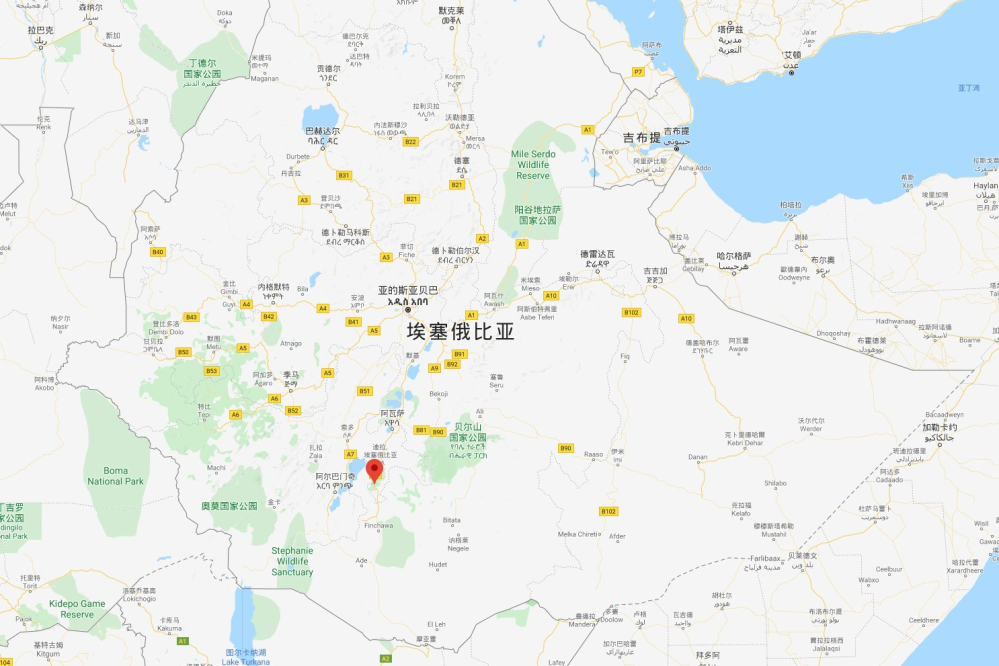
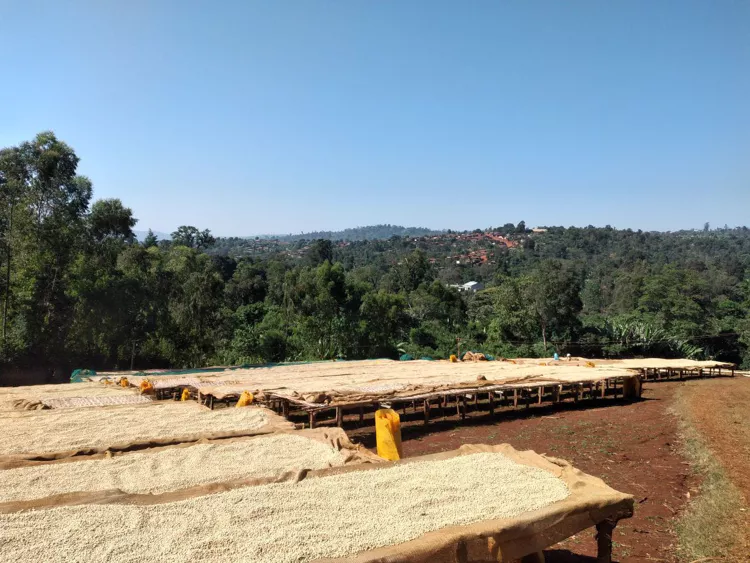
Ethiopia's coffee cultivation is mainly concentrated in the western and southern regions, and more than half uses the smallholder model, also called garden coffee, which is Ethiopia's most important production method. It is understood that nearly 1.2 million local households make a living by growing coffee, with each household cultivating no less than 4 hectares. The so-called garden coffee refers to farmers managing coffee trees together with other cash crops in their own backyards, usually planted alongside banana trees, so that a unique green landscape forms around every household's front and back yards.
Because smallholder coffee production is limited, farmer cooperatives or processing plants of different scales are established locally to handle green bean processing in the area. Every harvest season, farmers pack their own coffee cherries and send them to nearby processing plants or cooperatives close to water sources for unified processing, then sell them under the name of the processing plant. For example, the Gedeb cooperative coffee beans on Front Street's bean list are made from coffee cherries grown in Yirgacheffe town, sent by farmers to the town for unified washing, and finally produced under the cooperative's name and sold around the world.
Sidamo
Sidamo is one of Ethiopia's highest-yielding coffee-growing regions, producing large quantities of high-quality green beans every year. The region took shape in 1942 after Ethiopia broke free from Italian rule, and its name comes from the local indigenous Sidamo people. Through cupping, Front Street found that Sidamo coffee is known for its rich, full-bodied taste, complex sweetness and aroma, clear and soft acidity, and long sweet finish. For example, both Santa Vini and Huakui on Front Street's bean list come from the famous Sidamo region.
Sidamo's coffee flavors are extremely diverse. Different soil types, microclimates, and countless native coffee varieties create rich flavor expressions. The region contains towering mountains, highlands, plateaus, valleys, and plains, with diverse terrain. Its geology consists of fertile, well-drained volcanic soil, with a soil layer nearly two meters deep, and the topsoil is dark brown or brown.
Therefore, in order to let enthusiasts taste the flavors of different Ethiopian regions in coffee's birthplace, Front Street acquired more than a dozen Ethiopian coffee beans from different regions, covering both natural and washed processing, which can satisfy everyone's diverse preferences for coffee.
Sidamo's greatest advantage is that soil fertility is maintained through the cycling of organic matter, relying on fallen leaves from surrounding trees or residual plant roots as fertilizer. This also creates obvious differences and characteristics among coffees produced in different towns. In the 2010 to 2012 period, Sidamo continuously received high scores of 92 to 94 from the authoritative American coffee evaluation website CR, which shows the extraordinary quality of green beans from this region.
Guji Region
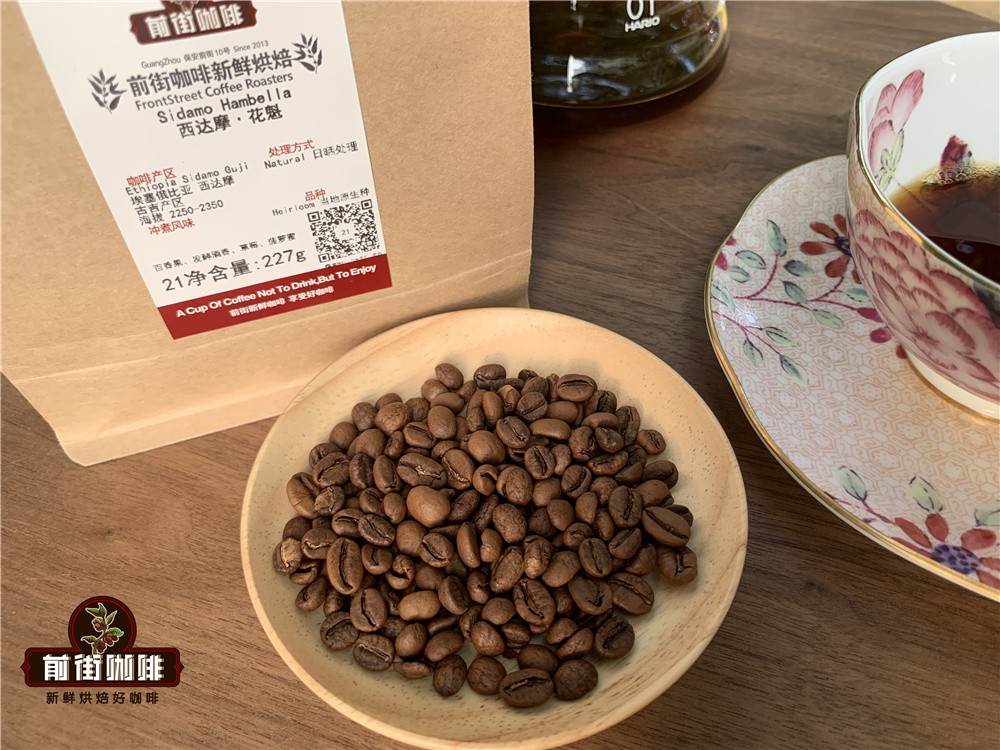
In Front Street's view, the most famous coffee in the Sidamo region is Huakui. This bean comes from Hambela, located in Guji, Ethiopia's largest coffee-producing region. Administratively it belongs to Oromia State and was once part of the Sidamo region, but in 2010 it was made an independent new region by the Ethiopia Commodity Exchange (ECX). Western Hambela faces Yirgacheffe's Kochere across the mountains, with a highland about 30 kilometers wide and 3,200 meters above sea level separating the two regions. The geographical characteristics create significant day-night temperature differences, giving the area superior terroir conditions for producing high-quality specialty coffee. Hambela borders the Guji subregions of Shakiso, Uraga, and Kercha to the southeast, south, and north respectively, and is Ethiopia's highest-altitude coffee subregion.
At present, the Hambela region has nearly 20 processing plants of various scales. In 2017, Ethiopian green bean company DW sent their coffee beans to the TOH (the Taste Of Harvest) green bean competition hosted by the African Coffee Association. A natural lot from the "Buku Abel" processing plant won the TOH Ethiopia championship with rich strawberry and creamy aromas. That lot of green beans was introduced into China that year by Beijing green bean trader Hongshun, and in the same year Li Jianfei used this bean to win second place in the 2017 World Brewers Cup China region. This Ethiopian bean stood out among many Geisha competition beans, so it was given the name "Huakui." (Geisha in Japanese means geisha, while Huakui means the leading geisha, used here to show how outstanding this bean is.)
Later, DW set up processing plants in Dimtu, the core production area of Hambela, namely "Buku Abel," "Buku Saysay," "Haro Soresa," and "Tirtiro Goye," with an annual coffee output of about 1,100 tons. From the perspective of growing regions and processing plants, among all these estates and processing sites, only coffee from the processing area of the "Buku Abel" plant covers the small production area that originally produced natural Huakui. In other words, only natural coffee beans produced and processed by Buku Abel can be called "Huakui." Coffee is an agricultural product, and the climate and environment differ each year, so coffee bean flavors also vary slightly. In order to distinguish each year's Huakui coffee beans, DW named them Huakui 2.0, Huakui 3.0, Huakui 3.1, Huakui 4.0, Huakui 5.0, and Huakui 6.0, and this year's 2024 Huakui 8.0 has also been listed and met everyone.
Arsi Region
Arsi is also a subregion within the Sidamo coffee-producing region. West Arsi is located between the famous Yirgacheffe coffee-growing area and Hararge, in the western part of the Sidamo region. The name of this area comes from a branch of the Oromo people who have long lived there. West Arsi consists of three woredas (Ethiopia's third-level administrative divisions): Arsi, Bale, and East Shewa. About 88.52% of West Arsi's population is Oromo, which is very important in coffee history because they were the first tribe in human history to drink coffee, and half of the coffee produced in Ethiopia comes from this region.
Coffee cultivation in the West Arsi region uses the smallholder model. The average farm of each smallholder is not large, about 2 to 3 hectares, but even so, the area is often slightly larger than the usual 1.5 to 2 hectares in most parts of Ethiopia. Although current coffee cultivation technology is still in a stage of development, compared with other producing regions, cultivation technology in West Arsi has developed very rapidly. Coffee farmers do not need to hire temporary or full-time workers, but instead select coffee with the help of family members, which allows them to better control coffee quality. Processing stations usually also pay extra for fully ripe red cherries, greatly increasing farmers' motivation.
Bean Variety of Huakui Coffee
Huakui's variety, like most Ethiopian coffee beans, belongs to Ethiopia's local native species, namely Heirloom native species. In Ethiopia, the garden planting system is the cultivation model on which the vast majority of small coffee farmers depend, and Heirloom native species come from the "unnamed varieties" in their backyards. The coffee trees may have been left by a previous owner of the land, or obtained through sharing among neighbors, and may also have been grown from seeds from another origin. Various coffee plants are mixed with other cash crops on the land and are picked and sold only when ripe.
Therefore, Heirloom does not refer to a specific coffee variety. It represents a green bean blend from the origin. The coffee gathers the same-period harvests of many smallholders and is combined together. A single lot may contain dozens or even hundreds of varieties that have not been finely separated. Precisely because there are differences among varieties, and each blending method is different, these coffees differ in bean size, dimensions, and shape, some large and some small, some long and some round. They can be understood as "blended-type lots."
Coffee Bean Processing Methods
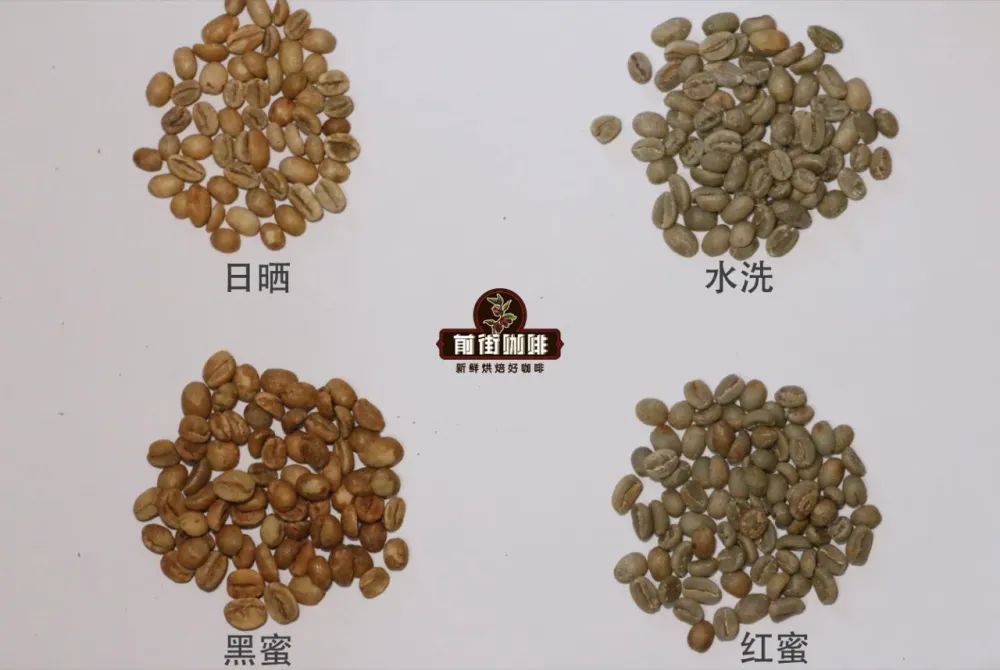
Sidamo coffee beans have two processing methods: washed and natural. The washed method first screens high-quality fruit, removes the skin and pulp, then soaks and ferments it in a tank, after which it is dried to a moisture content of about 12%. The natural method is relatively simple: it uses direct sunlight to dry the fruit to a moisture content of about 12%, then removes the skin and pulp.
Different processing methods also produce different flavors in coffee beans. Washed processing better reflects Sidamo coffee beans' most original citrus acidity and floral herbal aroma, while natural processing adds aroma on top of the original flavor.
Front Street's Brewing Parameters for Sidamo Coffee:
For coffee brewing, Front Street has always believed that the freshness of coffee beans has a great impact on flavor. Therefore, the coffee beans shipped by Front Street Coffee (FrontStreet Coffee) are all within 5 days of the roast date. Front Street's roasting purpose is "freshly roasted good coffee," so that every customer who places an order receives coffee in the freshest state. Coffee's resting period is about 4 to 7 days, so when customers receive it, it is at its best flavor.
As a light-roast Sidamo coffee, Front Street chose: V60 dripper, water temperature 90°C, water-to-coffee ratio 1:15, coffee dose 15g, grind size (80% passing rate on China's No. 20 standard sieve).
Use staged extraction. First bloom with 2 times the coffee powder weight in water, that is, 30 grams of water for 30 seconds. The purpose of blooming is to let the coffee powder release internal carbon dioxide, thereby making the later extraction more stable. Pour in a small stream in circles until 125 grams, then pause; continue pouring until 225 grams and stop. After the water in the dripper has dripped through, remove the dripper. Start timing from the beginning of pouring; the extraction time is 2'00". Next, swirl the entire cup of coffee to mix it evenly, then pour it into a cup and taste.
[Natural Arsi Coffee Flavor]: It smells of berries and honey; on the palate, jam-like sweetness spreads throughout the mouth, very sweet, with nectarine notes in the finish and a juice-like mouthfeel. When cooled, it is more like a cup of plum and nectarine juice.
[Natural Huakui 5.0 Coffee Flavor]: Floral and fruity aromas are very obvious: citrus, passion fruit, strawberry, oolong tea, with very high sweetness.
In the flavor comparison of these two beans, Arsi's fruity sweetness and juiciness are slightly better, especially when hot; the jam and honey flavors are irresistible, and the juice-like quality becomes even more obvious as the temperature drops, very comfortable.
Huakui 8.0 leans toward tropical fruit flavors, and the alternating contrast between sweetness and acidity is very surprising. Compared with the two, Huakui's fermented quality is a bit stronger.
The above content is compiled by CoffeeHunters, a coffee news website.


