







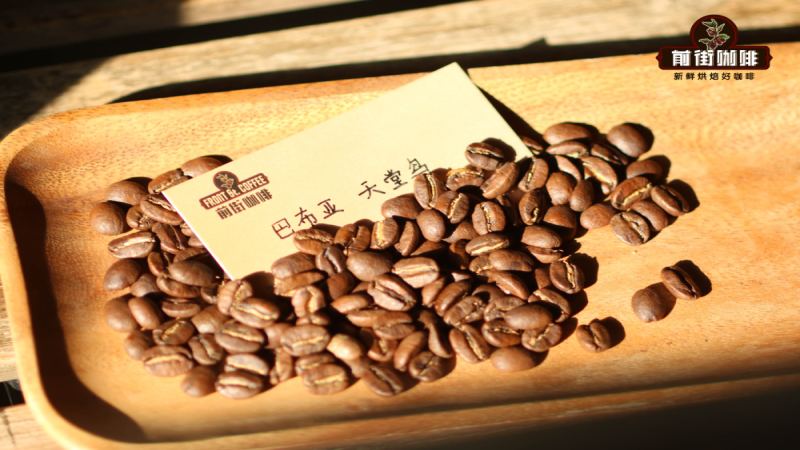
Papua New Guinea coffee has long been hailed as "Little Blue Mountain." Its Typica variety was introduced from Jamaica Blue Mountain, and its growing environment is similar to that of Blue Mountain. Front Street Coffee once conducted in-depth roasting, cupping, and brewing of this bean and found that its flavor carries a sweet-and-sour note of dark fruits, slightly different from Blue Mountain. Papua coffee circulating in China mainly comes from Sigri Estate and Prosa Estate, and the burlap sacks are printed with the image of the national bird, the bird of paradise. This year, Front Street Coffee selected the Bird of Paradise coffee from Sigri Estate; the green beans are plump and emerald green. This article will comprehensively introduce the flavor types and variety information of Papua New Guinea coffee from aspects such as origin, cultivation model, processing method, and brewing plan.
For more specialty coffee knowledge, please follow: Front Street Coffee (Frontsteet Coffee)
Papua New Guinea coffee beans are dubbed "Little Blue Mountain," thus often attracting the attention of coffee lovers. Front Street initially purchased a Papua New Guinea bean out of curiosity, and then systematically explored this coffee through roasting, cupping, and brewing.
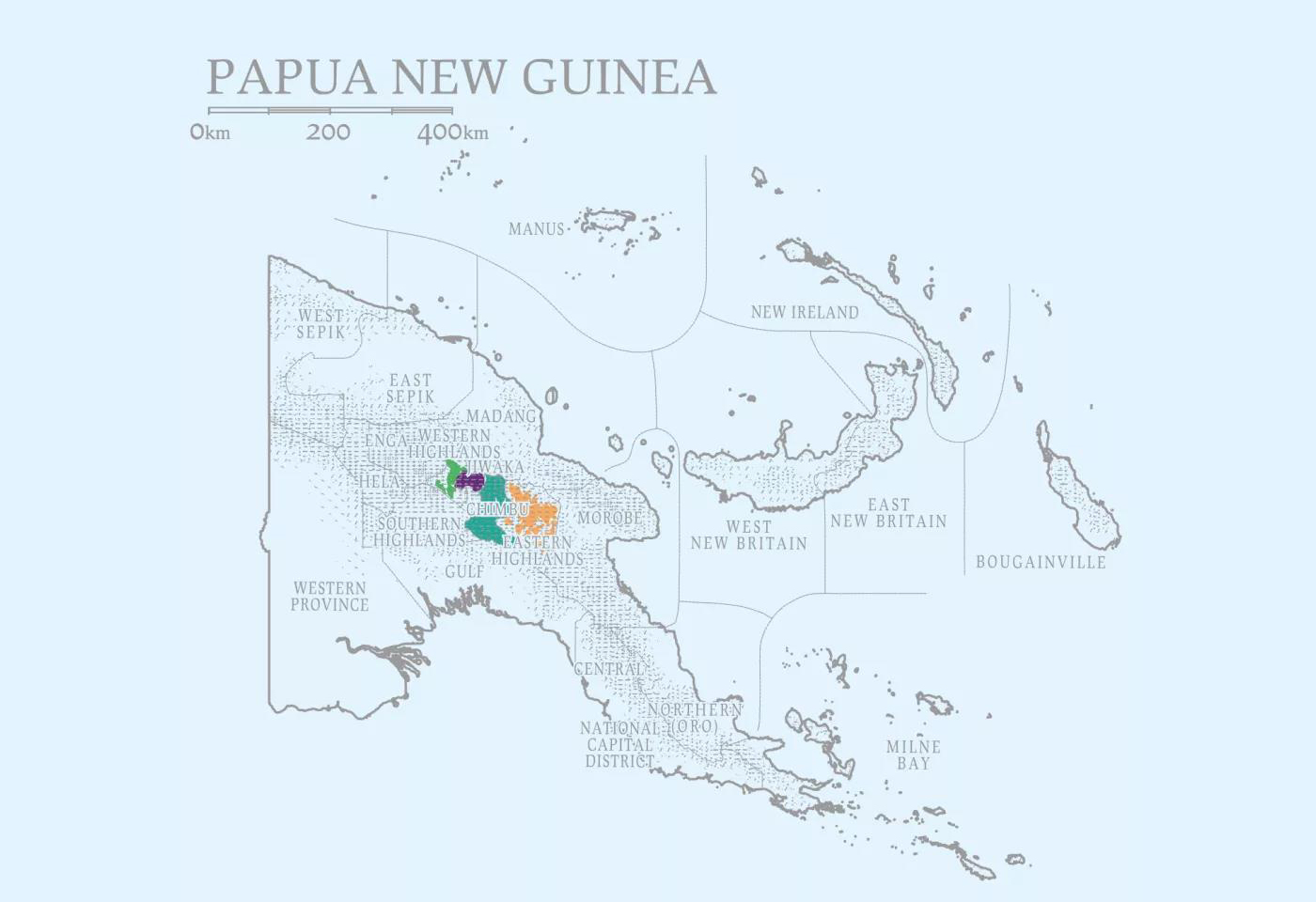
The vast majority of Papua New Guinea's territory is located on the island of New Guinea. A straight dividing line splits the island into east and west parts. The western half belongs to Indonesia, while the eastern half is Papua New Guinea. Because the full name is long, it is usually abbreviated as "Papua" or referred to by the English abbreviation "PNG."
The reason Papua coffee is often called Little Blue Mountain is that its variety is Typica introduced from Jamaica Blue Mountain, and its growing environment, altitude, and rainfall are very similar to those of Blue Mountain. After introduction, Typica quickly adapted to the natural conditions of the island of New Guinea. Whether viewed from the variety or the island-type environment, it truly deserves the name Little Blue Mountain. Papua's coffee-producing region is located at 6 degrees south latitude, closer to the equator than Blue Mountain (about 18 degrees north latitude). On closer tasting, its flavor still differs from Blue Mountain: Papua coffee has an extra layer of sweet-and-sour dark fruit notes.
Coffee Cultivation Model In Papua New Guinea, about 75% of coffee comes from small local farms. Many farms clear land in forest areas, and some farms are hidden deep in the woods, almost isolated from the outside world. The country's coffee is all grown in highlands at 1,300 to 1,800 meters above sea level, so the quality is very high. Although coffee is also grown in the lowlands, the output is very small. Local coffee mostly relies on natural conditions to grow, because transporting chemical fertilizers and pesticides to the farms poses transportation difficulties and high costs.
Coffee-Growing Regions Papua New Guinea's specialty coffee beans are mainly distributed in the Waghi Valley and Sigri Estate in the Western Highlands, as well as Arona Estate, Kimel Estate, and Arokara Estate in the Eastern Highlands, among which Kigabah Estate is the most well-known. Because the variety differs from Indonesia's, and the altitude is also higher than Sumatra's, and because the country's coffee beans use the washed processing method, Front Street believes that the terroir flavor of Papua New Guinea coffee is completely different from the spice, herbal, and deep notes of Indonesian coffee. Instead, it presents brightness, sweet-and-sour notes, and floral and fruity aromas, closer to the flavors of South America.
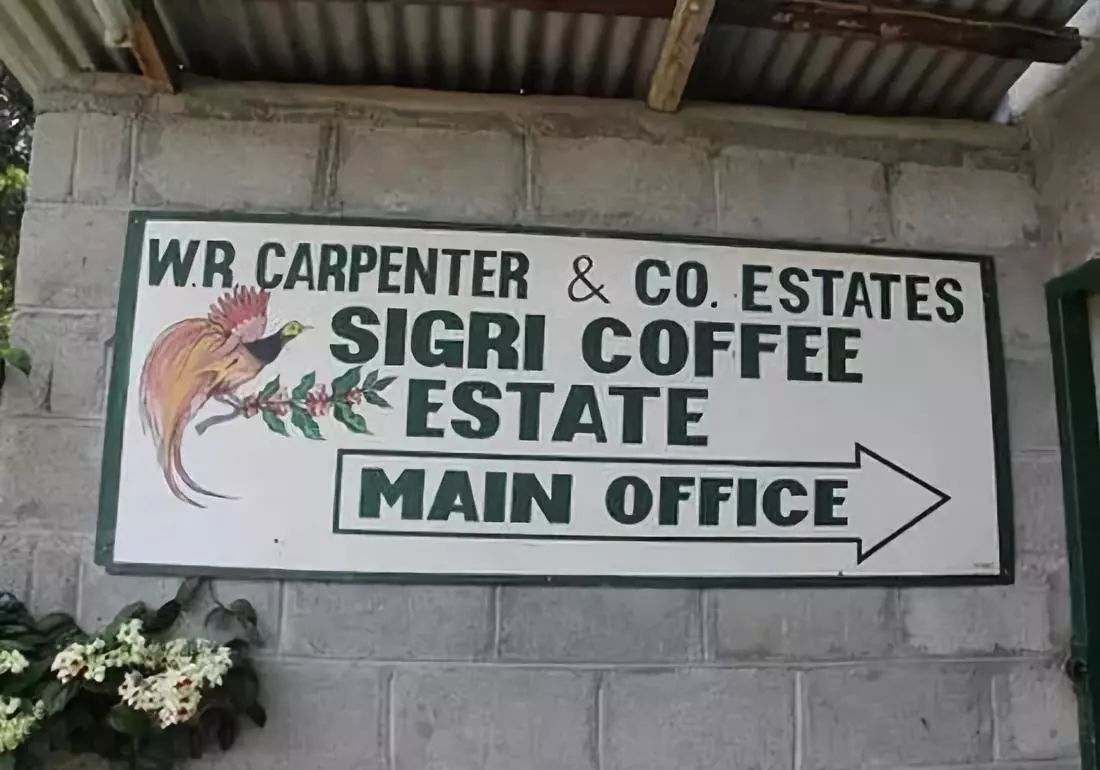
Bird of Paradise Coffee Front Street Coffee (FrontStreet Coffee) chose the Bird of Paradise coffee from Sigri Estate this year. Here, a brief explanation of the origin of Bird of Paradise coffee is needed. Much of the Papua coffee circulating in China comes from Sigri Estate and Prosa Estate, and the coffee burlap sacks they export are printed with the image of the bird of paradise, which is Papua's national bird.
The earliest Papua coffee beans introduced came precisely from Sigri Estate, and at that time the bean was given the name "Bird of Paradise" in China. The coffee sacks from Prosa Estate introduced later also bore the bird of paradise图案, but in order to distinguish the two, the later-introduced one could only be called by the estate name. Although this is slightly unfair to the newcomer, after years of subtle influence, Sigri has in the subconscious become tightly bound with Bird of Paradise.
However, Sigri Estate is also absolutely worthy of the name Bird of Paradise. This year's green coffee beans are plump and emerald green, with an excellent bean appearance.
Sigri Estate was established in 1950 and has now been around for more than 60 years, making it a pioneer of the local coffee industry. Bird of Paradise Estate is located in the Waghi Valley in Western Highlands Province, in a high-altitude mountainous area of about 1,500 meters, with mineral-rich volcanic soil, a cool climate, fertile soil, and abundant rainfall. Bird of Paradise Estate also places great emphasis on ecological protection. In order to protect the soil and water sources, it refuses to use chemical fertilizers and pesticides, and cares for the ecology and nearby birds.
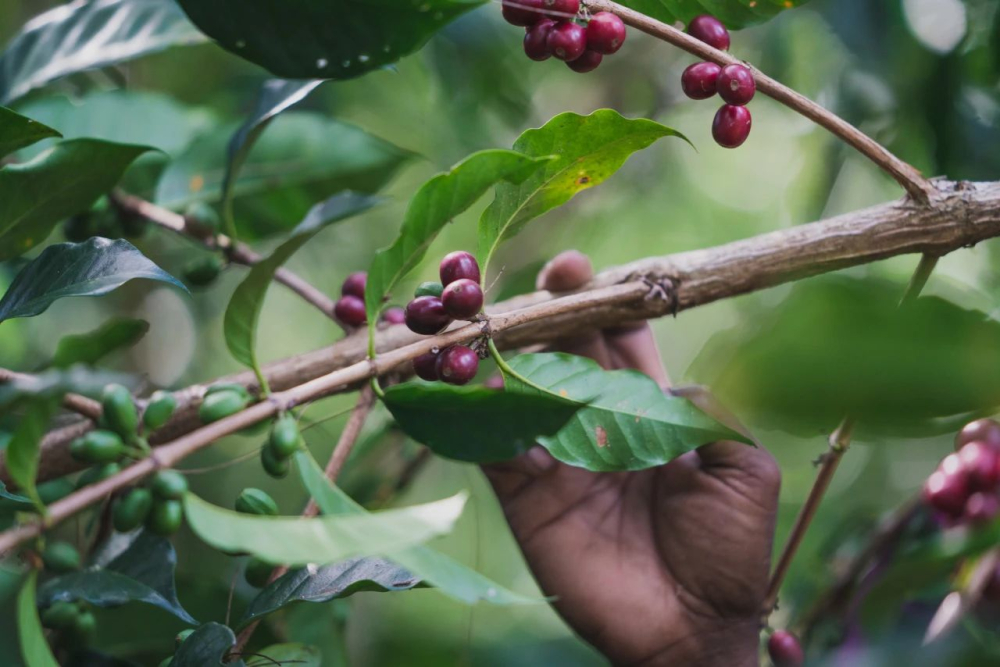
For many years, Bird of Paradise Estate has consistently adhered to high-standard cultivation and processing systems. During the harvest season from April to September each year, only fully ripe red coffee cherries are hand-picked, bringing the acidity and sweetness in the coffee berries into perfect balance. At Bird of Paradise Estate, cupping is conducted every day to ensure that the plantation provides customers with consistently top-quality coffee. As a result, Bird of Paradise Estate has become a classic among the world's specialty coffees.
Coffee Bean Processing Method Papua New Guinea coffee is mainly washed, with a brighter flavor profile and more fruit acidity, similar to the flavor of Central American coffee. Large estates and farms usually have their own wet processing plants, while smaller individual coffee farmers are better able to control the quality and flavor expression of their output.
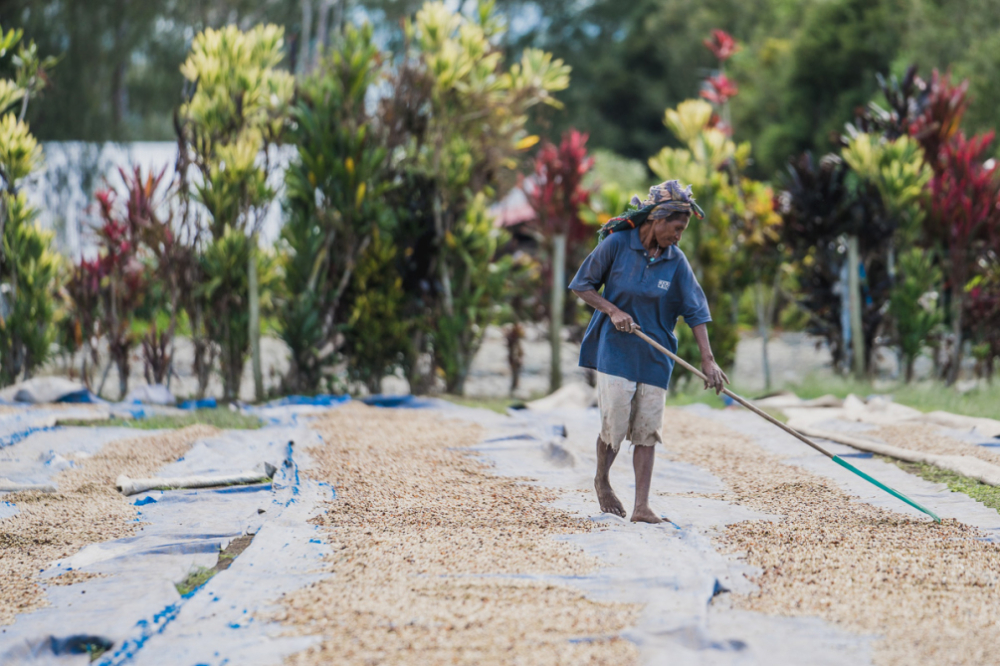
After harvesting ripe, fully red coffee cherries, they are sent to the estate's own wet processing plant for processing. Papua New Guinea's local washed processing differs from the washed processing methods of Central and South America. It uses three rounds of washing and fermentation, each soaking for about 24 hours, and replaces the water with clean water to control the coffee flavor. After washing is completed, the green beans are hulled and then graded in various ways, such as AA, AB, PB peaberry, and so on. This carefully crafted post-processing method brings the coffee itself a bright and delicate fruity acidity, along with a clean and long-lasting sweet mouthfeel.
Front Street Coffee (FrontStreet Coffee) Roasting Analysis When I first received this bean, compared with Blue Mountain, which is also washed, it was really hard to tell which was better.
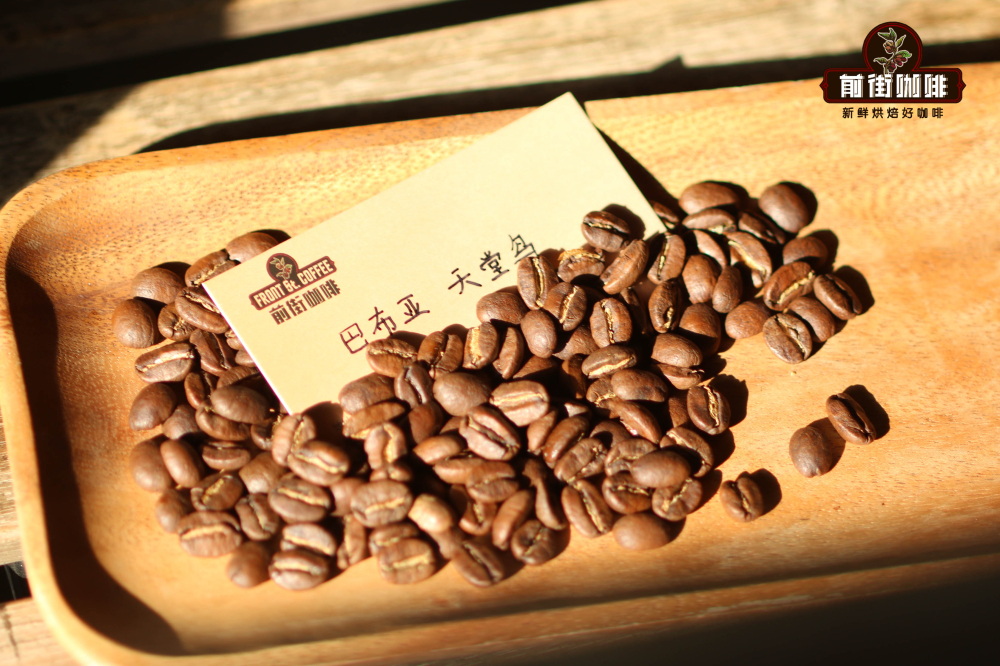
Guess which of the following images is Bird of Paradise and which is Blue Mountain.
Answer Revealed (Top) Bird of Paradise (Bottom) Washed Blue Mountain
Front Street Coffee (FrontStreet Coffee) uses a medium roast for this bean, because Typica is a low-density green bean. In order to highlight its inherent refreshing acidity and fruity aroma, the focus is placed on adjusting the heat after first crack. The beans are charged when the drum temperature reaches 170°C, the damper is set to 3, the heat is set to 140°C, and the turning point is at 1'36"; when the temperature reaches 140°C, the damper is opened to 4; roast until 6'25'', at 151°C, when the bean surface turns yellow, the grassy smell completely disappears, dehydration is complete, and at 176°C the heat is lowered to 110; the damper is changed to 4;
At 180°C, lower the heat to 90. The bean surface shows ugly wrinkles and dark streaks, and the toast aroma clearly turns into coffee aroma, which can be defined as the prelude to first crack. At this point, raise the heat to 183.5°C and at 10'08'' first crack begins, open the damper fully, at 188°C reduce the heat to 60°C, and open the damper fully (adjusting the heat must be done very carefully, not so low that there is no cracking sound, and control the rate of temperature rise after first crack within 6°C). First crack development time is 3'00", and the beans are dropped at 198.5°C.
Front Street Coffee (FrontStreet Coffee) Brewing Plan Taking 15 grams of coffee grounds as an example, use a 1:15 coffee-to-water ratio, a medium-coarse grind (65% passing rate on a No. 20 standard sieve), and a water temperature of 88°C. Use a KONO MEIMON dripper.
This time, a staged pouring method is used. Slowly add the coffee grounds. For the first stage, pour 30g of water in a small circular motion in the center and let it bloom for 30 seconds. During the first pour, the dry coffee bed will slowly absorb water and expand into a "hamburger."
For the second stage, pour 120g in a circular motion from the center outward, keeping the pouring height as close to the coffee bed as possible, moving slowly to avoid excessive agitation. For the final stage, pour 75g, bringing the total poured water to 225g. Wait until all the coffee liquid in the dripper flows into the server to end the extraction. Extraction time is 2 minutes.
Flavor: Mainly the rich aroma of nuts and cocoa, with a slight sweet berry note. It tastes rich and balanced, with sweetness and soft acidity.
The above content is compiled by CoffeeHunters, a coffee news website.


