







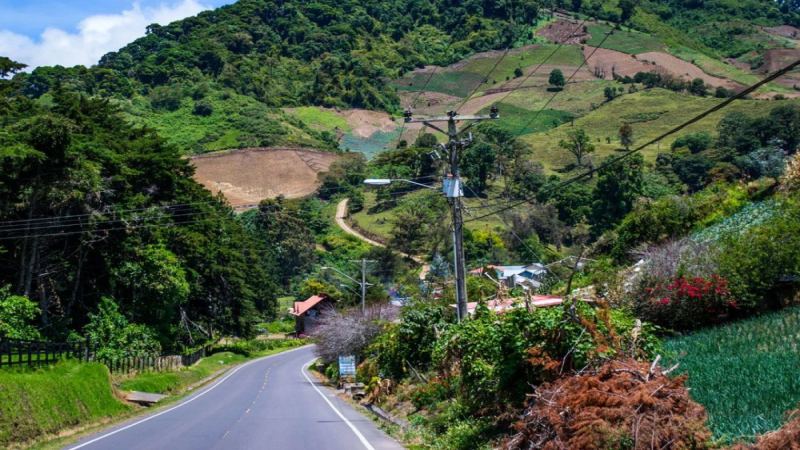
Central American coffee beans mostly grow between 1,600 and 1,700 meters above sea level. The temperature difference between day and night at high altitudes extends the development cycle of the coffee fruit, which increases bean density and makes the texture harder. Through cupping, Front Street Coffee has found that Central American coffee generally shows soft acidity, good cleanliness, and medium body. However, the flavor differences among producing countries are quite obvious. This article focuses on five well-known producing countries in Central and South America—Panama, Colombia, Costa Rica, Brazil, and Honduras—and reviews the terroir characteristics of each region and the flavor performance of representative coffee beans, while also introducing information on Front Street’s products currently on sale, such as Geisha, Sidra, the Musician series, Red Bourbon, and Yellow Bourbon.
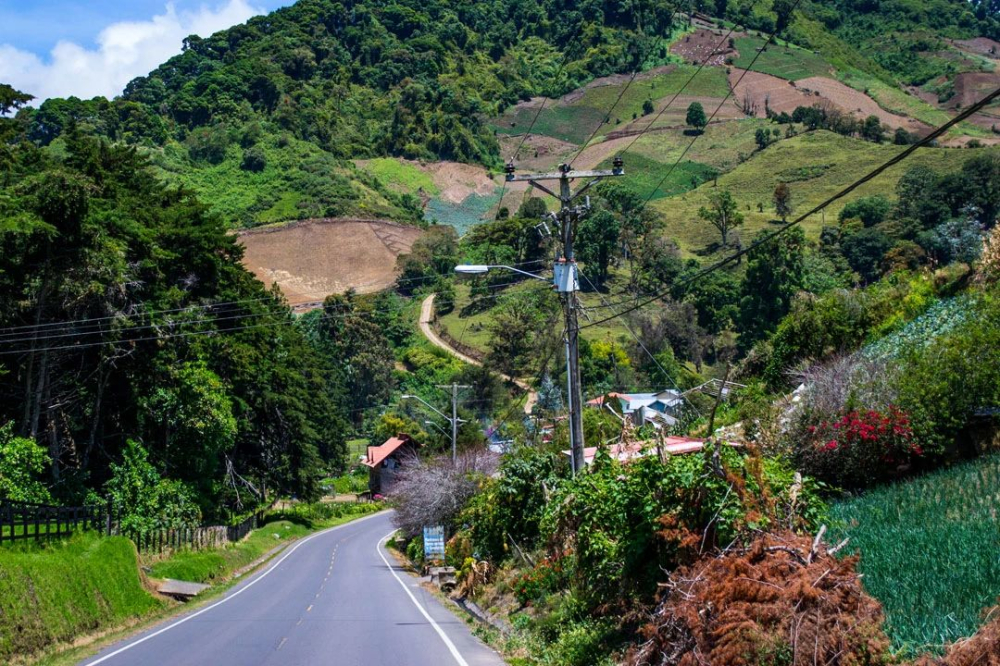
Central American coffee beans are usually grown at elevations of 1,600 to 1,700 meters. The higher altitude creates a marked temperature difference between day and night, which lengthens the ripening cycle of the coffee fruit and increases bean density—in other words, the beans are harder. When Front Street Coffee cupped Central American coffees, it found that these beans have mild acidity, excellent cleanliness, and a medium level of body. However, even within Central America, the coffees produced by different countries each have their own distinctive flavors. Next, Front Street will introduce one by one the flavor characteristics of coffee beans from several well-known Central American producing countries: Panama, Colombia, Costa Rica, Brazil, and Honduras.
|Panama Coffee Introduction
Panama is located at the southernmost tip of Central America, with the Caribbean Sea to the east and the Pacific Ocean to the west, bordered by Costa Rica to the north and Colombia to the south. It is a key isthmus connecting North and South America. Influenced by these geographical conditions, Panama has a complex and varied microclimate, which gives rise to Panama coffees with distinctive flavors. When Front Street cupped Panama coffee beans, it sensed full beans but relatively light weight, soft acidity, and an overall balanced flavor. Panama can be roughly divided into four producing regions: Boquete, Volcan, Santa Clara, and Piedra de Candela.
Boquete: at about 1,450 meters above sea level, it is Panama’s highest-yielding and highest-quality coffee-producing region. Hacienda La Esmeralda, Kotowa Estate, Elida Estate, and others are all located here.
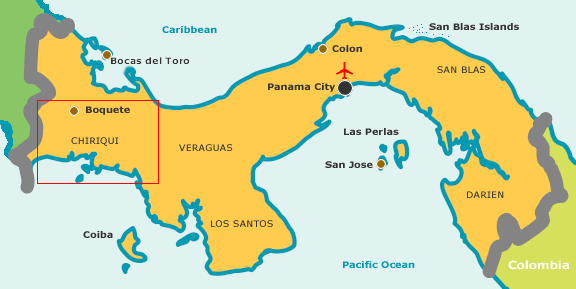
Volcan: at 2,000 to 3,000 meters above sea level, the coffee from this region is known for its mild and balanced flavor, and in recent years it has gradually attracted the attention of international experts and coffee lovers. The well-known Volcan Baru coffee comes from here.
Santa Clara: at about 1,500 meters above sea level, this region benefits from irrigation by the Chorerra Falls, and because it is close to the Panama Canal, coffee from all over Panama can be conveniently shipped around the world.
Piedra de Candela: at about 1,200 meters above sea level, it is a micro-region under the Volcan producing area, named after Volcan Baru and the city of Piedra Candela. This region is considered to have the greatest potential for developing high-quality specialty coffee. Panama’s most famous coffees are the Geisha coffee beans from Hacienda La Esmeralda in the Boquete region, and the wine-process coffee beans from Hartmann Estate in the Volcan region.
Front Street Hacienda La Esmeralda Natural Green Label Geisha Coffee Beans
Region: Panama Boquete
Estate: La Esmeralda Estate
Altitude: 1600-1800m
Variety: Geisha
Processing Method: Natural Brewing Flavor: On entry, bright citric acidity and jasmine aroma; after gradually cooling, passion fruit aroma and a strawberry juice-like sensation; finally, a honey-sweet finish. The coffee is full and smooth overall.
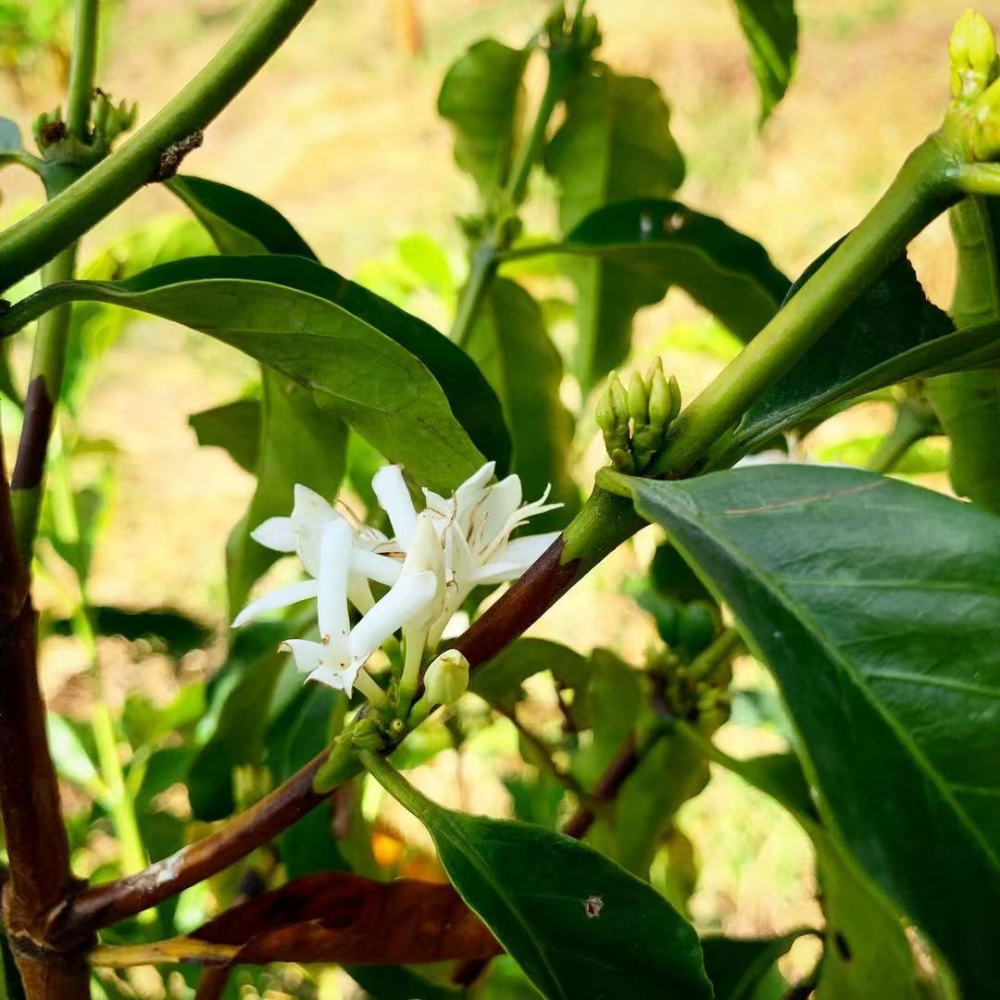
Why are Hacienda La Esmeralda Geisha coffee beans so famous?
Geisha coffee beans are slender and elongated, with a fresh and pleasant flavor. From these two points, Geisha indeed does not seem like a coffee variety from Central or South America, but rather more like an Ethiopian coffee variety. So when was Geisha introduced to Panama? It was discovered in 1931 in the Geisha forest of Ethiopia. It was later sent to the Coffee Research Institute in Kenya, introduced to Uganda and Tanzania in 1936, to Costa Rica in 1953, and to Panama around 1960.
Although Geisha has strong disease resistance, its yield is low, so after people at the time used it as a plant for variety improvement, it faded into obscurity—until estate owners rediscovered them in a windbreak forest. Although the Petersons were not the ones who introduced the variety, they were indeed the ones who recognized Geisha coffee’s value. In 2004, the father and son separated the Geisha from that area and entered it in the 2004 BOP cupping competition. Its aroma and taste captivated a group of judges, making it famous overnight and setting a then-record high price of 21 pounds per kilogram. In other words, without Hacienda La Esmeralda, Geisha coffee beans might still not have attracted everyone’s attention today.
|Colombia Coffee Introduction
Colombia’s coffee-growing regions are divided into two parts. One part is located in central Colombia and mainly produces commercial coffee beans, with low altitude at about 1,000m. This region is called MAM: M refers to Medellin, the capital of Antioquia Department; A refers to Armenia, the capital of Quindio; and the other M refers to Manizales, the capital of Caldas Department. Coffee beans produced in the central part of this region have low acidity, full body, and good sweetness, somewhat close to the flavor of Indonesian Mandheling. The other part is located in south-central Colombia, where past SCAA Coffee of the Year winners have come from. With many volcanoes, it is a specialty coffee-producing region full of hidden talents. This region includes Tolima, Cauca, Huila, and Narino.
Huila is located in the southern part of Colombia’s Central Cordillera and is the country’s most famous specialty coffee-producing region. This area consists of mountain hills surrounded by mountains, with cultivation at elevations above 1,500 meters. Colombia’s most important rivers converge here, bringing abundant water resources and moisture. Through cupping, Front Street Coffee found that coffees from the Huila region have strong nutty, chocolate, and caramel flavors.
Tolima: farms in Tolima are generally slightly larger than those in other southern Colombian producing regions, at about 10-15 hectares. Cooperatives are also common here, with farmers sending their small lots of coffee cherries to the cooperative’s processing plant. Some farmers also choose to process their own coffee using small-scale processing facilities capable of handling the day’s harvest. Through cupping, Front Street Coffee found that coffee beans from the Tolima region have soft berry acidity and nutty cocoa flavors.
Cauca is a region certified as a Colombian coffee place of origin, with an average altitude of 1,758m and a maximum altitude of up to 2,100m. The region’s terrain, rainfall, temperature, and volcanic soil provide suitable conditions for coffee growth. Eighty percent is mountainous, with parallel mountain ranges in the east and center that are part of the Andes. Front Street believes that it is precisely this high-altitude growing environment that gives Cauca coffee better acidity and its much-praised distinctive sweetness.
Narino is located in southwestern Colombia, bordered by the Pacific Ocean to the west and Ecuador to the south, with the Andes running through the entire department. Coffee is grown at high-altitude cloud forest elevations of 1,600 to 300, with fertile volcanic soil. The beans are smaller but full, and emerald green in color. The coffee from this region has a mellow, delicate flavor, slight sweetness and cocoa notes, and a rich aroma with walnut aromas. Among them, the most famous Colombian coffee is none other than the Sidra coffee beans from Colombia’s Huila region.
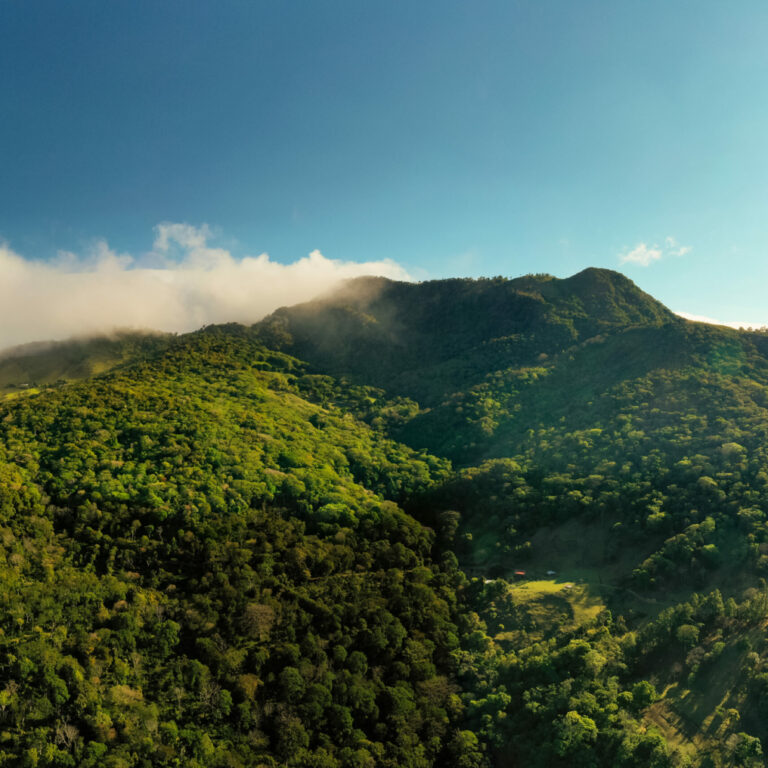
Front Street Colombia Sidra Coffee Beans Region: Colombia Huila Altitude: 1900m Variety: Sidra Processing Method: Anaerobic Natural Brewing Flavor: In the wet aroma, you can smell the sweet-tart notes of passion fruit and grapes, as well as aromas of apricot and dried fruit. On entry, tropical fruit flavors and fermented notes, with an almond-like finish.
|Costa Rica Coffee Introduction
Costa Rica mainly has eight major coffee-producing regions: West Valley, Central Valley, Tarrazu, Tres Rios, Orosi, Brunca, Turrialba, and Guanacaste. Among them, Central Valley and Tarrazu are the most famous.
Tarrazu is located south of the capital, San Jose. This land can produce more than 450 tons of coffee each year. However, the cultivation of Tarrazu La Meta coffee does not use artificial fertilizers or pesticides, and its harvesting and sorting are done entirely by hand. The reason for this is to avoid the damage to coffee beans caused to some extent by air-jet sorting. Front Street observed that Tarrazu coffee beans are full, and through cupping found the overall body to be rich, the mouthfeel smooth, with intense chocolate and nut aromas, moderate acidity, and an inviting fragrance.
Front Street Costa Rica Musician Series Beethoven Coffee Beans
Region: Costa Rica Tarrazu
Estate: Canet Estate
Processing Method: Washed
Variety: Yellow Catuai
Altitude: 1900m Brewing Flavor: The overall taste is clean and the aroma is rich. On entry, the sweet-tart strawberry juice and lively citrus-like acidity are like one brisk, lively note after another dancing in the mouth. The floral aroma and almond-like finish bring a perfect embellishment to this chapter of the music.
Central Valley: Central Valley is a plateau in central Costa Rica, at 1,200-1,600m above sea level. The producing region has three high-altitude volcanoes: Irazu, Barva, and Poas, which provide abundant nutrients to the surrounding coffee-producing areas. Rainfall is moderate, with annual rainfall of 118 inches, and the average annual temperature is only 19°C. The high altitude, rich microclimates, mild temperatures, and three volcanoes provide extremely rich volcanic soil. Through cupping different coffee beans from this region, Front Street Coffee found that the coffee beans have high density, aromas of chocolate and nuts, soft berry acidity, and rich sweetness.
Front Street Costa Rica Blackberry Coffee Beans
Region: Costa Rica Tarrazu
Variety: Caturra
Processing Method: Black Honey
Altitude: 1700m
Grade: SHB Brewing Flavor: On entry, berries, tropical fruit, fermented wine aroma; in the finish, honey, cocoa. The overall mouthfeel is smooth, the flavor layers are distinct, and the sweet aftertaste is obvious.
|Brazil Coffee Introduction The higher the altitude at which coffee beans grow, the lower the density of the coffee beans and the higher the hardness. At the same time, the temperature difference between day and night in high-altitude areas contributes to the formation of more flavors in the coffee beans. Brazil’s altitude is relatively low, its terrain is flat and monotonous, it lacks microclimates, and it habitually uses sun-drying methods to grow coffee trees, thus producing Brazil’s unique soft-bean flavor. Through cupping Brazilian coffee beans from different producing regions, Front Street believes that Brazilian coffee beans have low acidity, moderate nuttiness, chocolatey sweetness, and a full body.
Brazil’s main coffee-producing regions include Minas Gerais, Sao Paulo, Bahia, and Espirito Santo; these four places account for 90% of the country’s exports. The Mogiana we commonly see comes from Sao Paulo. Cerrado and Sul de Minas in Minas Gerais, because these three producing regions in Minas are at higher altitudes, produce more specialty Brazilian coffee beans.
Sul de Minas: with altitudes above 1,100m, rolling foothills, rich terrain, distinct dry and wet seasons, a relatively large day-night temperature difference, and abundant microclimates, it is suitable for cultivating Bourbon and Yellow Bourbon with flavor. It has naturally become a main producing region for specialty coffee.
Cerrado: only areas at 1,100-1,300m altitude can be called Cerrado coffee. This area has the essence of the Cerrado grasslands. With high altitude and fertile soil, Front Street believes that the coffee beans produced in this region are clean and sweet, with high body and no earthy or musty taste.
Mogiana: this area is very close to southern Minas. Coffee is grown among shrubs, grasses, and other vegetation. There are many farming families in this region; some use traditional large-farm operating methods, while others adopt small-scale modern operations. Modern technology combined with mountain coffee-growing culture has created the highest-quality green coffee beans. Through cupping, Front Street found that coffee beans produced in this region have a clean sweetness like sucrose. The two Brazilian coffee beans Front Street has put on the shelves are one Yellow Bourbon from Queen Estate in Mogiana and one Red Bourbon from the Cerrado producing region.
Front Street Brazil Red Bourbon Coffee Beans Country: Brazil Region: Cerrado Altitude: 1,000 meters Variety: Red Bourbon Processing Method: Semi-washed Brewing Flavor: On entry, there is obvious sweetness, accompanied by a light lemon aroma, with a rich nutty flavor. The finish shows obvious dark chocolate notes. The overall impression is relatively round.
Red Bourbon is what we generally call Bourbon. After the coffee fruit ripens, it appears wine-red, and the coffee bean itself is relatively round. Bourbon grown at high altitude usually has better aroma and bright acidity, and tastes somewhat like red wine.
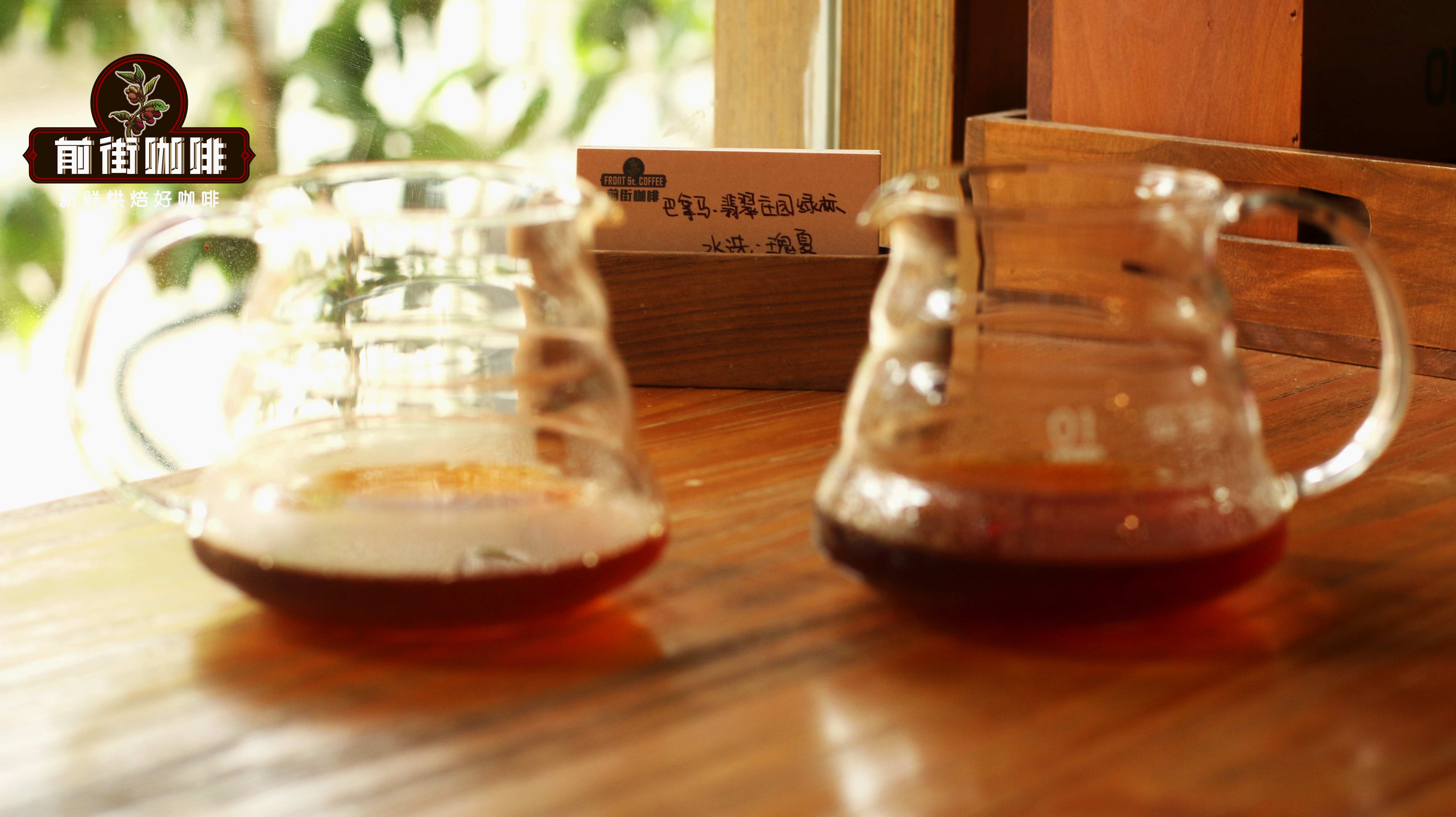
Front Street Brazil Queen Estate Yellow Bourbon Region: Sao Paulo State (Queen Estate) Altitude: 1400-1950m Variety: Yellow Bourbon Processing Method: Semi-washed / Natural Brewing Flavor: The taste has an obvious clean sweetness like sucrose, with a rich nutty flavor. The finish shows obvious dark chocolate notes. The overall impression is relatively round.
Semi-washed processing removes the skin and pulp of the coffee cherry and can control the fermentation degree of the parchment coffee beans after depulping. Traditional natural processing is sun-drying with the skin and pulp still on, so the fermentation degree of the mucilage cannot be seen. The semi-washed processing method lies between natural and washed methods, but it omits the washed process of “tank fermentation and rinsing with clean water,” instead taking the beans directly to dry in the sun. Although the method seems similar, without the fermentation step, the flavor of the coffee beans is completely different. In the semi-washed process, during the removal of the coffee skin and pulp, ripe pulp is easily removed, while the skin of immature green cherries is not easy to remove, so a second sorting can be carried out to filter out immature fruit and standardize the ripeness of the coffee fruit. Compared with the natural method, Front Street believes that coffee beans selected and processed this way will have improved cleanliness and ripeness, bringing a more uniform-tasting coffee.
|Honduras Coffee Introduction Honduras is a mountainous country located in northern Central America. It borders the Caribbean Sea to the north, the Gulf of Fonseca of the Pacific Ocean to the south, Nicaragua and El Salvador to the southeast, and Guatemala to the west. More than three-quarters of the country is mountains and plateaus, with mountain ranges extending from west to east, lava plateaus inland, many intermontane valleys, and plains along the coast. It has a tropical climate, and the coastal plains have a tropical rainforest climate. Honduras has a growing environment suitable for good coffee: microclimates, altitude, soil, and abundant rainfall. Honduran coffee can be divided into six major producing regions, mainly in the west and south: Copan, Opalaca, Montecillos, Comayagua, Agalta Tropical, and El Paraiso. The average cultivation altitude in the specialty-producing areas is above 1,100 meters. Of the coffee grown in these areas, 69% is HG grade, 12% is SHG, and 19% is CS. Among them, the most famous are the Copan producing region and the Masaguara producing region, known for the wine-barrel fermented coffee beans from Inmoca Estate.
Front Street Honduras Washed Caturra Coffee Beans
Region: Copan
Altitude: 1250m
Variety: Caturra
Processing Method: Washed Brewing Flavor: Nuts, cream, chocolate, walnut
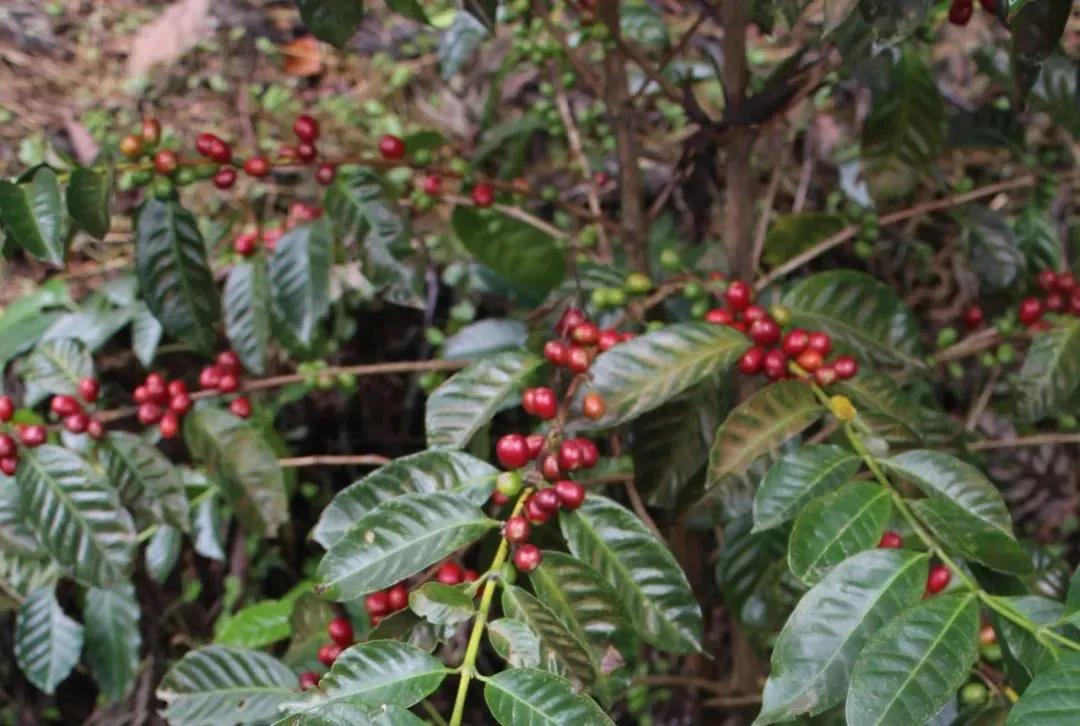
Red Caturra is a natural mutation of the Arabica variety Bourbon. It was discovered in Brazil in 1937. Compared with other coffees, Red Caturra fruit grows more firmly and is not easy to pick. It has high disease resistance, is suitable for growing at high altitude, and has delicate, clean acidity. Through cupping, Front Street found that Red Caturra has medium acidity, a smooth mouthfeel, is mild and easy to drink, and has both good body and sweetness. Its softness allows it to blend with most coffee beans without changing the flavor too much.
The above content is compiled by CoffeeHunters, a coffee news website.


