







Among African coffee-producing countries, Kenya is famous for its intense fruit acidity, while Rwanda displays another style—a more balanced mouthfeel, accompanied by fruity sweetness, floral notes, and a black tea finish. Front Street Coffee recently acquired several Rwandan beans for roasting and cupping and found that their flavor sits between Kenya and Central America, clean and solid. This article will comprehensively review the coffee industry landscape of this "Land of a Thousand Hills," from Rwanda's growing environment, main producing regions, variety composition, washed processing techniques, to its grading system, and analyze the specific classification standards for AA, SC, TT, and other grades.
For more specialty coffee knowledge, please follow: Front Street Coffee (Frontsteet Coffee)
Among the coffee-producing countries on the African continent, Kenya has conquered countless palates with its full-bodied fruit acidity, an acidity as thick as tomato juice or berry juice. However, Africa is not only Kenya; Rwanda is also a producing origin worth noting, and its coffee flavor takes a different route from Kenya's. Front Street Coffee previously purchased several Rwandan beans for roasting and cupping, and concluded that Rwanda's overall profile is more balanced than Kenya's, typically presenting fruity sweetness, floral fragrance, and a long finish similar to black tea.
Front Street Coffee: Rwanda · Washed Red Bourbon
Country: Rwanda Region: Nyamasheke Altitude: 1,500–1,700 meters Variety: Red Bourbon Processing Method: Washed
Flavor: Berry, apple, green tea, apricot
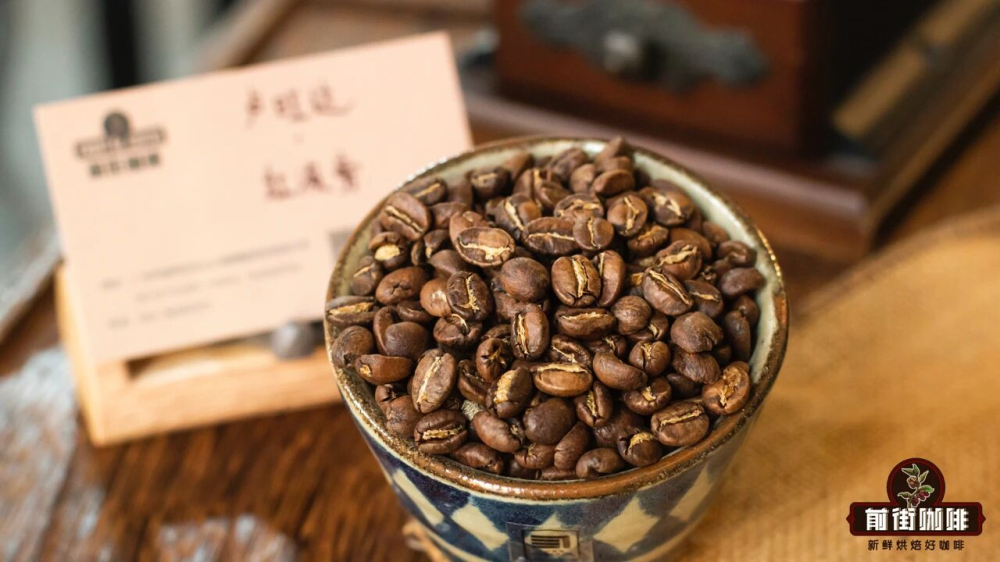
During the cupping session, the dry aroma of Front Street's Rwandan Red Bourbon presented fresh notes of apple and green tea, mixed with a hint of elegant floral fragrance. After hot water was poured in, the aromas of berries and green tea were released. The first impression on the palate was the sweet-and-sour sensation of berries, and the acidity faded quickly, followed immediately by clean sweetness like apple and apricot. After swallowing, the finish clearly captured the fresh fragrance of green tea and apple. Overall, this bean's balance is quite outstanding, with a clean and solid mouthfeel, making for a very pleasant drinking experience.
Rwanda's Growing Environment
Rwanda enjoys exceptional coffee-growing conditions: high altitude, volcanic soil, and abundant sunshine. A large number of coffee trees are distributed across mountainous areas at altitudes of 1,700 to 2,000 meters, which is why Rwanda is also called the "Land of a Thousand Hills." Rwandan coffee can be considered world-class, with better balance than Kenya and clarity comparable to Central American coffee. Generally speaking, Rwandan coffee carries the fresh sweetness of fruit, the delicate fragrance of flowers, and a black tea-like finish. The operating model of the coffee industry chain varies from country to country. Rwanda is entirely dominated by smallholder production rather than large corporate operations, which is also a common feature of coffee cultivation in Africa. Compared with small farms in Brazil that can easily be twenty hectares, each household in Rwanda has only 0.1 to 0.2 hectares, a stark gap in scale.
Rwandan Coffee Producing Regions
Rwanda's specialty coffee-producing regions are concentrated in the south and west. The southern Huye mountain area and Nyamagabe region are at higher altitudes, and the coffee beans produced there carry floral and citrus notes; the Nyamasheke region by Lake Kivu in the west is rich in high-quality coffee with a full body, rich aroma, and juicy mouthfeel. Although flavor differences between producing regions are not particularly pronounced, careful tasting can still distinguish them. Guests often ask Front Street Coffee (FrontStreet Coffee) how to tell them apart. Flavor may seem mysterious, but in fact Front Street Coffee (FrontStreet Coffee) also had to undergo extensive flavor recognition training before gaining the ability to distinguish coffee flavors from different producing regions. This requires time, energy, and sustained investment.
Changes in Rwanda's Coffee Industry
Rwanda is located in central Africa and is a standard landlocked country, with neighboring countries that are almost all major coffee producers. In the early 20th century, Rwanda was colonized successively by Germany and Belgium, and coffee was first introduced by German missionaries. During the colonial period, coffee production rose sharply, but labor was exploited, coffee purchase prices were suppressed, and export taxes were high, resulting in less-than-ideal coffee bean quality. This was also the general situation of commercial coffee at the time. Front Street Coffee (FrontStreet Coffee) notes that Brazil, which also experienced colonial rule, likewise long suffered a reputation for poor coffee quality because it valued quantity over quality.
After Rwanda gained independence, it established its first official coffee organization, OCIR, and only then did coffee bean production gradually receive attention. From the 1960s to the 1980s, Rwanda's coffee production continued to grow, reaching a historic peak in 1986, until domestic political turmoil in the early 1990s (the Rwandan genocide) caused the coffee industry to stagnate. After 1995, with the Rwandan government's vigorous development and the support of international non-governmental organizations and private groups, the country gradually restored stability, and the coffee industry slowly regained vitality. However, due to the impact of the COVID-19 pandemic this year, Rwandan coffee sales have undoubtedly suffered a considerable blow, and all parties are also working to help Rwandan coffee farmers get through these difficult times.
Coffee Varieties Grown in Rwanda
Among Rwandan coffee varieties, more than 90% are the early-introduced Bourbon variety and mixed varieties of the Bourbon family, which have a certain ability to resist natural disasters. Bourbon coffee was first planted on Réunion Island, introduced to Brazil in 1860, and then quickly spread northward throughout Latin America. Several Latin American Bourbon coffee beans currently introduced by Front Street Coffee (FrontStreet Coffee) include Brazil Red Bourbon, Brazil Yellow Bourbon, and Colombia Pink Bourbon.
However, the dominance of Bourbon in Latin America is no longer what it once was, because of its poor disease resistance. By contrast, Rwanda's Bourbon still retains its advantages, which is one of the reasons Front Street Coffee (FrontStreetCoffee) chose to introduce Rwandan coffee beans. After the Red Bourbon coffee tree flowers and bears fruit, the color of the fruit undergoes a series of changes: green > slightly yellow > slightly orange > mature red > darker deep red, hence the name [Red Bourbon], though Red Bourbon is in fact what is commonly called Bourbon. Bourbon grown at high altitudes often has a more outstanding aroma and brighter acidity, and can even taste somewhat like red wine.
In the past, poorly managed post-harvest processing in Rwanda became a stumbling block to specialty coffee
After coffee cherries are picked, they need to be sent to a processing plant as quickly as possible, but Rwanda lacks infrastructure and cannot process the fruit immediately. The picked fruit is piled together, and the lack of ventilation accelerates mold and rot. Spoiled fruit drags down coffee quality and produces defective flavors. In addition, Rwandan coffee can be traced to the washing station, and washing stations are supplied by cooperatives or smallholder farmers, with each household averaging 183 coffee trees, so it is very difficult to trace coffee back to an individual farmer, making consistency of quality hard to guarantee.
The Washed Processing Used for Rwandan Coffee
In 2000, Rwanda, having just experienced internal turmoil, began its path of reconstruction with the support of two major coffee development programs, PEARL and SPREAD, funded by the United States Agency for International Development (USAID). After the implementation of the programs, Rwanda successively built 46 coffee washing stations, and the strong export of coffee beans brought significant growth to the country's economy.
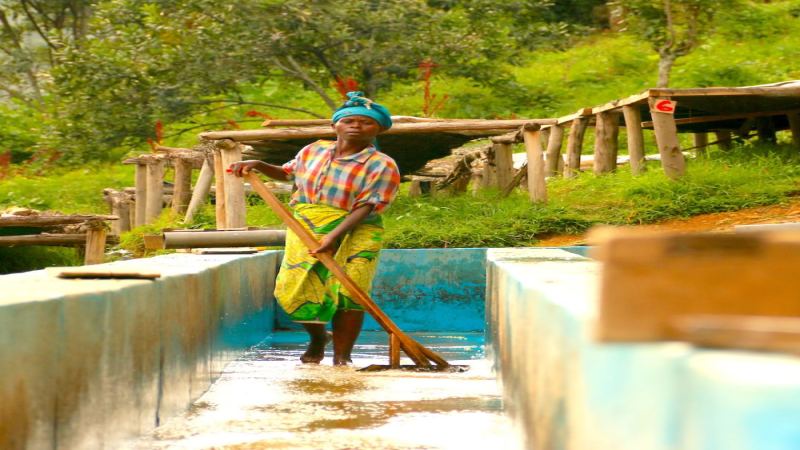
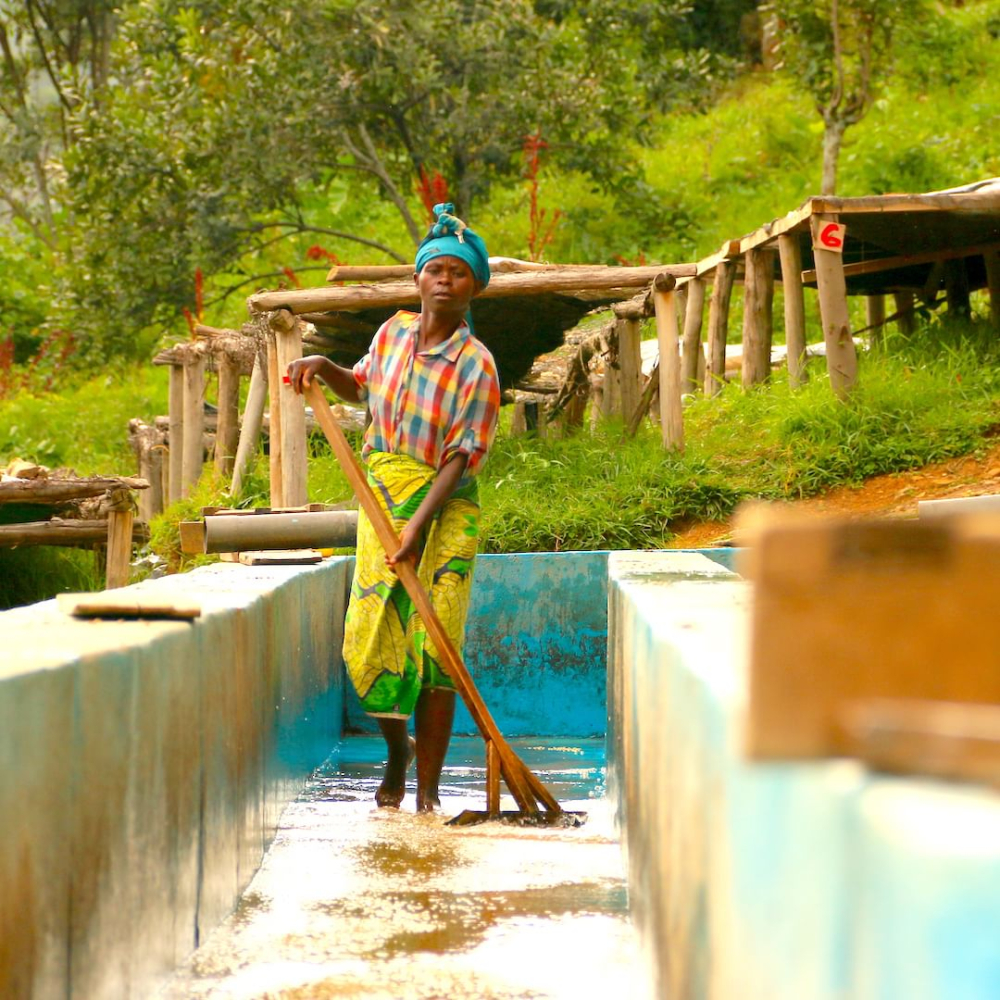
Rwandan coffee beans mainly use the washed processing method. Ripe fruit is hand-selected, the skin and pulp are removed, washing fermentation is carried out for 12 to 18 hours, the mucilage is cleaned off, and finally the beans are dried until the moisture content is below 14%. Front Street Coffee (FrontStreetCoffee) believes that Rwanda's establishment of washed processing as the main method in the early stages of development was a choice that clearly highlights coffee flavor. This is because washing best reflects the essential flavor of coffee, and when recommending a coffee-producing region, Front Street Coffee (FrontStreetCoffee) also prioritizes recommending washed beans to guests, so that the flavor characteristics of that region can be understood more clearly.
Rwanda's Coffee Grading System
Rwanda's grading system is based on bean size, divided into AA grade at screen sizes 12 to 18 and grades above 18.
· AA grade: above 18 screen size, the largest in size and the highest in price.
· SC grade: screen size 15+ and defect rate ≤5%. Under this grading rule, manual hand sorting is used to reduce the defect rate below 5%.
· TT grade: screen size between 13 and 14. Some beans with screen size >14 but a defect rate higher than 5% are also assigned to this grade.
· T grade: refers to beans with screen size <12.
· STL grade: (stock lot) broken rice-like beans. This grade usually comes from parchment beans classified as A3 and A4.
Among these, honey processing and natural processing are used only when making specialty coffee.
Using SC (above 15 screen size) coffee beans for natural and honey processing is considered high-spec production, while TT (below 15 screen size) belongs to G2 grade. However, whether it can become specialty coffee still needs to go through cupping; only beans scoring 85 or above on the SCAA cupping form can be called specialty coffee. Under such a grading system, SC (above 15 screen size) coffee beans need to achieve a milling yield of more than 70% for the processing station to be profitable.
The above content is compiled by CoffeeHunters, a coffee news website.


