







How do you brew juicy Kenya coffee at home?
Juicy Kenya coffee depends on the bean's roast level and the extraction method working together. Kenyan beans from the growing region carry bright, complex berry notes. Brewed well, they give dense acidity, rounded fruit sweetness, and a smooth, syrupy body. The flavor comes from fruity aromatics in the bean plus a roast light enough to preserve acidity and amplify sweetness.
For a light-roasted Kenyan lot, use a coffee-to-water ratio around 1:15, water near 90-92C, and a medium-fine grind, then pour in stages to keep the bed even. Iced pour-over needs a slightly tighter ratio and more ice. Citrus, apple, berries, and stone fruit are common descriptors, so a coffee enthusiast can adjust grind and rhythm to match the intended cup.
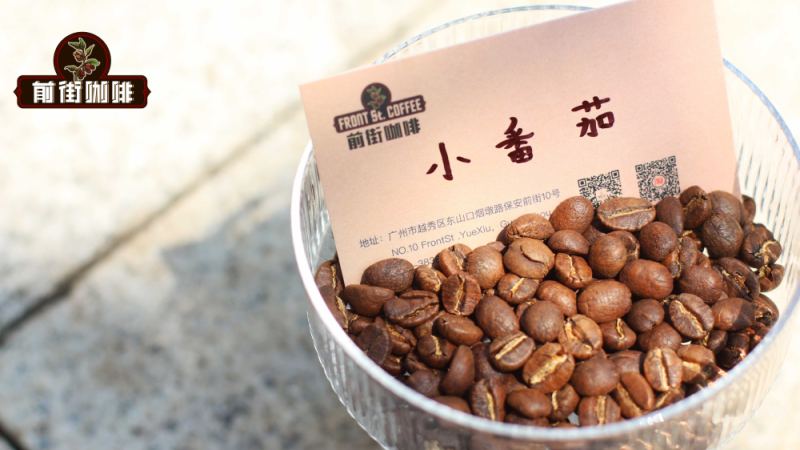
To brew a full-bodied, juicy Kenyan coffee, the key lies in the interplay between the bean's roast level and the extraction method. This article uses the Kenyan Cherry Tomato coffee beans selected by Front Street Coffee as an example to break down in detail the hot water pour-over recipe for light-roasted Kenyan beans, including coffee-to-water ratio, water temperature, grind size, staged pouring rhythm, and adjustments for iced pour-over. The article focuses on how to bring out a lively yet dense berry acidity, rounded fruit sweetness, and smooth mouthfeel, making it a useful reference for coffee enthusiasts looking to improve their pour-over consistency.
For more specialty coffee knowledge, please follow our WeChat official account: Front Street Coffee
A while back, a friend complained to Front Street: the coffee beans they bought had flavor notes full of fruity descriptors, yet their brew turned out either bitter and over-extracted, or thin and insipidly sour. So they asked Front Street: how exactly can coffee be brewed to achieve a juice-like mouthfeel?
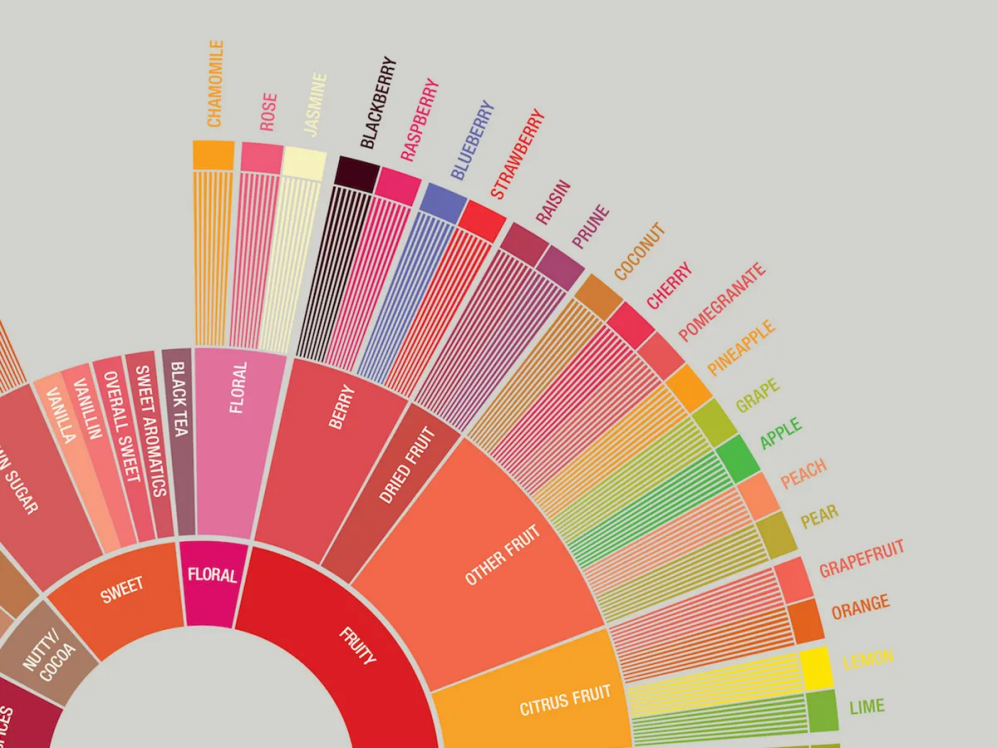
When drinking coffee, everyone forms different associations and interpretations of flavor based on their own taste preferences and memories. The so-called juice-like quality of coffee generally comes from the fruity aromas captured by orthonasal olfaction, combined with the acidity and sweetness perceived by retronasal olfaction after swallowing—the overall experience evokes the sensation of eating a certain type of fruit.
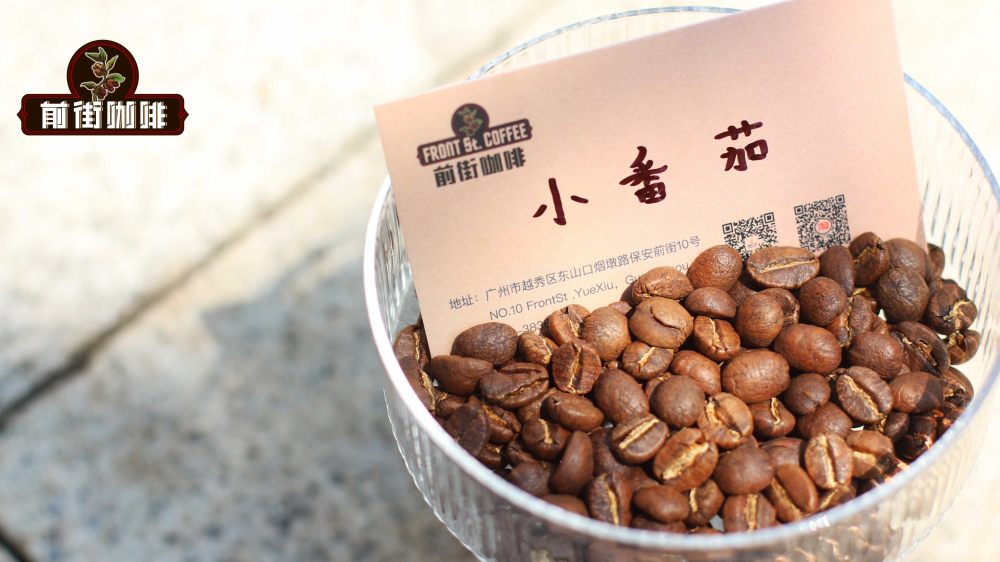
As the saying goes, one can't make bricks without straw. For coffee to brew with a juice-like texture, the beans themselves must first contain floral and fruity aromatic compounds, and the roast level must be just right to preserve acidity and amplify sweetness. Juice-type flavors cover a wide range—citric acid, malic acid, tartaric acid, lactic acid, and so on. Common fruity flavor descriptors include citrus, lemon, passion fruit, apple, honey pomelo, berries, grape, apricot, peach, plum, etc. Here, Front Street has selected a quintessential representative of juicy coffee—Kenyan Cherry Tomato coffee beans—for demonstration.
Coffee beans from the Kenyan growing region are known for their bright and complex berry notes. Under ideal extraction conditions, they offer both dense acidity and rounded fruit sweetness, with a smooth, syrupy coffee liquid that feels like biting into a tomato and having the juices burst forth. Considering this bean's exceptionally rich acidic fruit flavors, Front Street wanted the fruity aromas to come through more clearly, so the coffee-to-water ratio was widened to 1:16. Based on Front Street's standard single-cup dose of 15 grams, that means pouring 240 grams of hot water. Paired with a V60 01 dripper, 91°C water temperature, and a grind size like fine granulated sugar (EK43s setting 10, with 82% passing through a No. 20 standard sieve).
During staged extraction, different compounds in the coffee grounds dissolve at different rates, with flavors releasing in the order of acidity, sweetness, then bitterness. To increase the proportion of acidity and sweetness in the cup, the second pour after blooming needs to use the maximum water volume to extract a large amount of the acidic compounds from the early stage. At the same time, reducing the water volume in the final pour serves as a balance, mainly to supplement sweetness and components that enhance mouthfeel. This way, the coffee more easily showcases a lively yet dense fruit acidity without lacking body. According to Front Street's brewing experience, a high-flow pour makes the coffee's layers more complex and the acidity more pronounced, while a low-flow pour emphasizes a softer, more rounded sweetness. So to highlight the coffee's fruity acidity and rich layers without making the finish too short or the body too thin, Front Street uses a high-flow-then-low-flow approach for extraction. Coffee grounds: 15g Total water: 240g Water distribution: first pour 30g, second pour 130g, third pour 80g
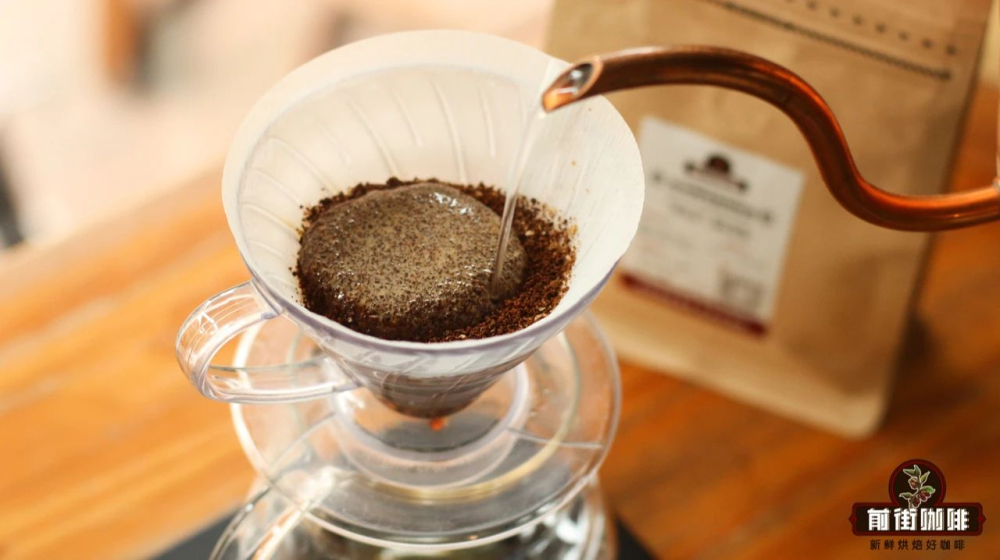
First, pour 30 grams of water and start the timer, blooming for 30 seconds. For the second pour after blooming, Front Street uses a medium-high flow rate (greater than 7g/s), quickly pouring 130 grams of water in large outward circles. Once the coffee liquid has fully drained into the server, switch to a low flow rate (less than 4g/s) and slowly pour the remaining 80 grams of hot water in small circles. Extraction ends when all the coffee liquid has dripped into the sharing pitcher, at 2 minutes (with a 10-second tolerance). It's worth noting that with the larger water volume in the second pour, pouring too aggressively can easily build the coffee bed too high, and after the water level drops, the grounds at the edge of the dripper become difficult to rinse with the final pour, leading to under-extraction. Therefore, the final water level of each successive pour should be controlled properly and not pushed too high. After completing the second pour, Front Street tries to keep the water level at about 3/5 the height of the dripper.
If using the iced pour-over method, to compensate for the shorter extraction time caused by reduced water volume and to help coffee compounds release faster, the grind should be set finer—Front Street uses 9.5 here. Judged by a No. 20 sieve, the grind size for iced pour-over has a passing rate of 82–83%. Also based on 15 grams of coffee grounds, the coffee-to-water ratio is 1:11, corresponding to a total water volume of 165 grams, with 75 grams of ice added. Water distribution is 30g, 90g, 45g.
With this brewing method, the hot pour-over highlights the dense berry acidity of Kenyan coffee, with a juicy quality reminiscent of cherry tomatoes, while the iced pour-over is more like a glass of chilled smoked plum juice, with a finish carrying the crisp sweetness of ripe blueberries—perfect for summer.
The above content is compiled by CoffeeHunters, a coffee news website.


