







Jamaican Blue Mountain coffee has long been regarded as a legend in the coffee world, and the foundation of this legend originates from that island in the Caribbean blessed by mist and volcanic soil. The unique geographical and climatic conditions of the Blue Mountain range have created the serene and alluring flavor of Blue Mountain coffee, but the producing areas that truly qualify to bear the name "Blue Mountain Coffee" are actually quite limited. This article will guide you through the origin range, certification system, and historical background of Blue Mountain coffee, and focus on the Clifton Estate Blue Mountain No. 1 commonly seen in China, analyzing its variety, processing method, grade specifications, and price characteristics. Front Street Coffee will also share practical brewing parameters and flavor performance to help you gain a more comprehensive understanding of this composed and elegant classic coffee.
Professional coffee knowledge exchange. For more coffee bean information, please follow the Coffee Workshop (WeChat public account cafe_style)
For more specialty coffee beans, please add the private WeChat of Front Street Coffee (FrontStreet Coffee), WeChat ID: qjcoffeex
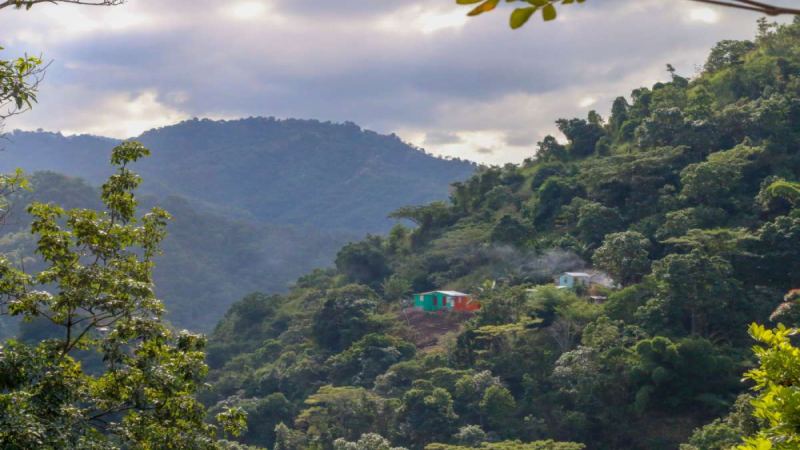
Jamaica sits within the embrace of the blue Caribbean Sea. This pearl of the sea, with its superior geographical location and climatic conditions, has become an ideal place for coffee cultivation and growth. To the northeast of Jamaica's capital, the Blue Mountain range is the core region producing the world-renowned Blue Mountain coffee.
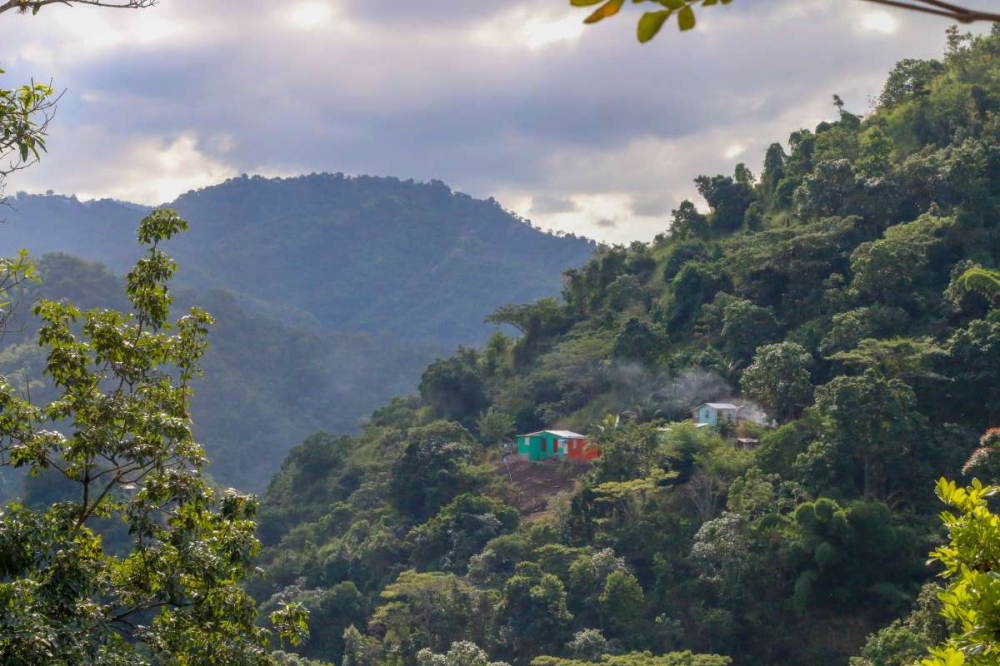
The reason Blue Mountain coffee is so famous is partly because the Blue Mountain range happens to lie within the coffee belt between 25 degrees north latitude and 25 degrees south latitude, possessing fertile new volcanic soil, fresh air, a pollution-free environment, abundant rainfall year-round, and significant temperature differences between day and night. More importantly, every afternoon the mountain top is shrouded in mist, which not only provides natural shade for the coffee trees but also brings sufficient moisture, allowing the coffee trees to absorb nutrients in an almost "carefree" state, ultimately forming a serene and alluring coffee flavor.
On the other hand, although the Blue Mountain range is the highest mountain in the Caribbean region, with the highest peak reaching 2,256 meters above sea level, areas above 1,700 meters are part of a natural ecological reserve where commercial crops are not allowed to be planted. Meanwhile, coffee grown in areas below 900 meters in this range does not match the flavor performance of high-altitude areas.
Therefore, only coffee grown in the 910 to 1,700 meter range is eligible to be called "Blue Mountain Coffee." Coffee below 900 meters is sold under the names "Jamaica High Mountain Coffee" or "Jamaica Prime Coffee." The area that can truly grow authentic Blue Mountain coffee is not large, with a total planted area of only 6,100 hectares.
According to the regulations of the Jamaica Industry Board, only coffee grown in the four producing regions of St. Andrew, St. Mary, St. Thomas, and Portland can be called Jamaican Blue Mountain coffee.
In addition, in 1952 the Jamaica Coffee Industry Management Office was upgraded to the Jamaica Coffee Industry Board (CIB), playing a pivotal role in both tourism and export trade. As the tourism market continued to develop, the reputation of Blue Mountain coffee gradually became world-renowned.
However, in 1969 Jamaica suffered severe damage from a hurricane. At that time, Japan's UCC Ueshima Coffee introduced ecological technology into coffee cultivation, helping the Jamaican coffee industry recover. To express gratitude, the Jamaican government signed a contract with Japan in 1971, agreeing to ship 90% of its annual production to Japan.
Therefore, before 2012, Japan held the priority right to purchase Blue Mountain coffee, making it very difficult for many countries and regions to buy Blue Mountain coffee, which also cast a veil of mystery over Blue Mountain coffee.
Famous yet hard to obtain, counterfeit Blue Mountain coffee began to appear in markets across various regions. To address this, the CIB designed and registered the "Blue Mountain Coffee" trademark and also established strict export and certification standards, which not only gave consumers a basis for identifying authenticity but also established the market prestige of Blue Mountain coffee.
Blue Mountain coffee green beans are all exported in wooden barrels as whole barrels. Buyers purchasing Blue Mountain coffee beans (first-hand green bean buyers) can apply to the Jamaican CIB or the estate for a Blue Mountain coffee bean certification certificate, which is also an important proof of whether Blue Mountain coffee beans are authentic.
Currently, Blue Mountain coffee imported into China comes from the Clifton Estate and the Clydesdale Estate under the Sharp family, both at the Blue Mountain No. 1 grade. Coffee beans of this grade have a screen size between 17-18 mesh, with a defect rate not exceeding 2%. The beans are uniform and plump overall, with a semi-oval bean shape.
So when purchasing Blue Mountain No. 1 coffee beans, you can look for products from these two estates, and when uncertain, ask the merchant to provide a Blue Mountain coffee bean certification certificate. At Front Street Coffee's offline stores, you can see Blue Mountain certification certificates from the Clifton Estate's place of origin as well as the wooden barrels containing Blue Mountain coffee green beans.
Introduction to Clifton Estate
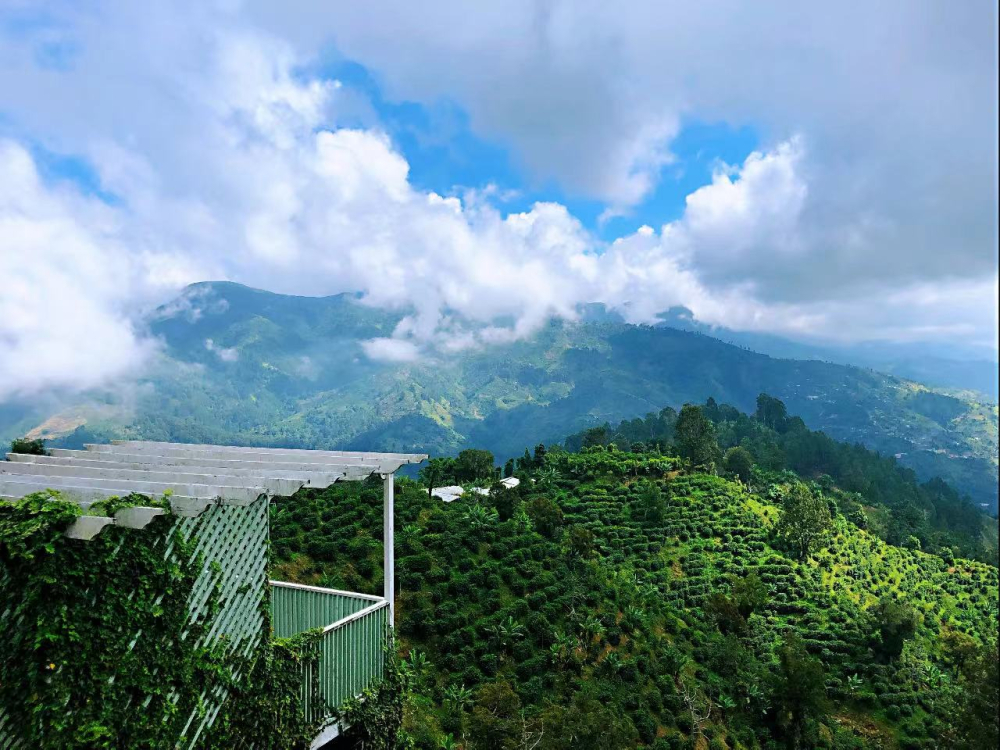
Clifton Estate is the oldest coffee plantation in the Blue Mountain range, with over 200 years of coffee growing history. It is located on the open top of a mountain peak, with coffee grown at an altitude of 1,310m. Front Street Coffee was drawn to Clifton Estate's Blue Mountain coffee because it possesses a very full-bodied coffee flavor with balanced acidity, sweetness, and bitterness.
One reason is that the variety of Blue Mountain coffee is Typica, the oldest variety in the Arabica coffee lineage. This variety was introduced to the Blue Mountains in the eighteenth century and began to be cultivated there. After two hundred years of "adaptation," Blue Mountain Typica has developed into an Arabica variety with better disease resistance, is very well suited to the local growing environment, and has formed a refined flavor that cannot easily be replicated elsewhere.
Blue Mountain Coffee Processing Method
Another reason is its refined washed processing method, which has been used for centuries. Clifton Estate first manually removes defective beans from the harvested coffee cherries, uses a machine to remove the outer skin of the coffee, and then pours them into a water tank to ferment for 12-18 hours, with the aim of removing the mucilage layer from the coffee beans.
Next, they are moved to a clean water tank for multiple scrubbings and a second screening to remove defective beans. The clean parchment green beans are drained of moisture, spread flat on mesh beds to dry in the sun until the bean moisture content is 10-12%, and finally packed into wooden barrels and stored in a warehouse with constant temperature and humidity. Hulling and quality inspection are carried out before shipment once orders are received.
The estate's strict procedures give each year's Blue Mountain coffee beans a more stable quality. To let everyone also experience Blue Mountain coffee's "composed character," Front Street Coffee uses a medium-dark roast to enhance the body of Blue Mountain coffee while retaining soft acidity, resulting in an overall balance of acidity, sweetness, and bitterness.
Blue Mountain Coffee Brewing Recommendations
Front Street recommends using freshly roasted coffee beans for brewing, as this allows you to experience the coffee's rich flavors to the greatest extent. The coffee beans shipped by Front Street Coffee are all within 5 days of the roast date, because Front Street deeply understands the great impact of coffee bean freshness on flavor.
When brewing Blue Mountain coffee, Front Street Coffee uses: water temperature: 88°C, coffee dose: 15 grams, coffee-to-water ratio: 1:15, grind size: medium-coarse grind (70% passing through a No. 20 sieve).
This is paired with staged extraction. Use twice the amount of water relative to the coffee grounds for blooming, that is, 30 grams of water for a 30-second bloom. The reason the blooming process is needed is to allow the coffee grounds to release internal carbon dioxide gas, thereby making the later stages of extraction more stable. Pour in a small stream in circles until 125 grams, then pause; continue pouring until 225 grams and stop. After the water in the dripper has finished dripping, remove the dripper. Timing starts from the beginning of pouring, and the extraction time is 2'10". Next, pick up the entire cup of coffee and swirl it to mix evenly, then pour it into a cup for tasting.
Jamaican Blue Mountain No. 1 coffee bean pour-over flavor: rich dark chocolate and nutty flavors, creamy smooth mouthfeel, balanced acidity, sweetness, and bitterness.
The above content is compiled by CoffeeHunters, a coffee news website.


