







Blue Mountain coffee occupies an irreplaceable position in the global coffee landscape thanks to its exquisite balance of sweet, acidic, and bitter notes. It is produced in the Blue Mountains of eastern Jamaica, where volcanic soil, a year-round misty and rainy climate, and just the right elevation combine to create its unique flavor—rich and mellow with no trace of bitterness. From the introduction of Arabica seeds in the 18th century, to the strict oversight of the Jamaica Coffee Industry Board, to the grading from No.1 down to PB, every step of Blue Mountain coffee is steeped in meticulous care. This article systematically sorts through the cultural origins, cultivation history, producing regions, and grade standards of Blue Mountain coffee, while also sharing Front Street Coffee's practical advice on buying and brewing, to help coffee lovers truly understand this legendary cup.
Blue Mountain coffee refers to coffee brewed from beans grown in the Blue Mountains of Jamaica. By quality tier, it can further be divided into two categories: Jamaican Blue Mountain coffee and Jamaican High Mountain coffee.
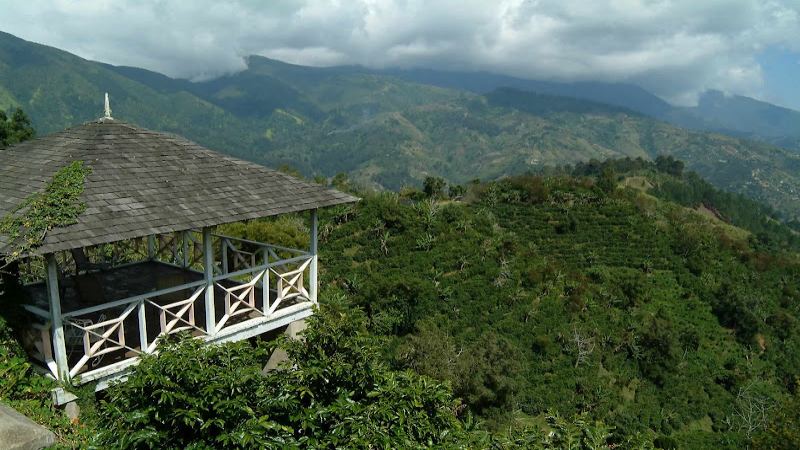
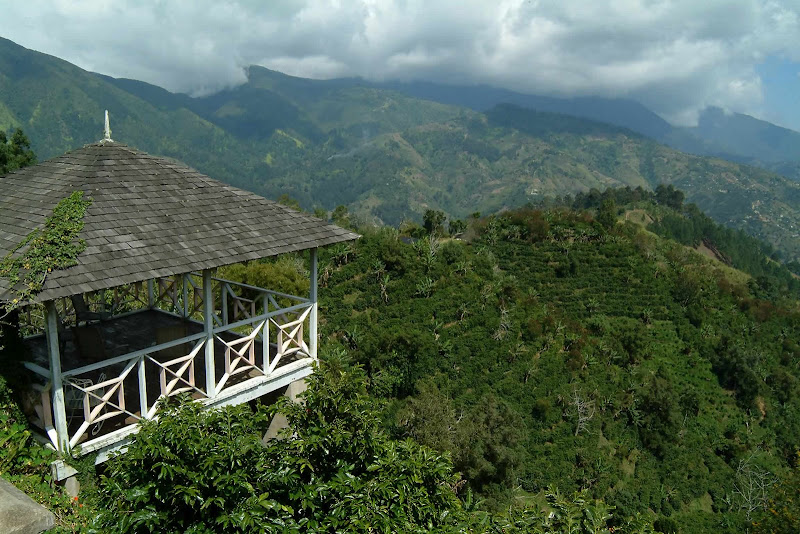
The Blue Mountains lie in the eastern part of the island of Jamaica. The range got its name because it is embraced by the Caribbean Sea; on clear, bright days, sunlight strikes the azure sea, and the peaks reflect the shimmering blue radiance of the water—hence the name. The main peak of the Blue Mountains rises 2,256 meters, making it not only the highest point in the Caribbean region but also a well-known tourist destination. This area lies within the coffee-growing belt, with fertile volcanic soil, clean and pollution-free air, and a humid climate that is misty and rainy year-round, with average annual rainfall of about 1,980 millimeters and temperatures holding around 27 degrees Celsius. It is precisely these natural conditions that have given rise to the world-famous Jamaican Blue Mountain coffee, and have also made it the second most expensive coffee on the planet. This coffee brings together all the qualities a fine coffee should have: not only is its body rich and mellow, but because sweet, acidic, and bitter notes are blended in just the right proportion, the bitterness is almost imperceptible, leaving only a moderate and perfectly balanced acidity.
In the mid-18th century, Jamaica's governor Sir Nicholas Lawes introduced Arabica coffee seeds from Martinique and began promoting cultivation in the St. Andrew area. To this day, St. Andrew remains one of the three major producing regions of Jamaican Blue Mountain coffee, alongside the Portland and St. Thomas regions. Within the following eight years, Jamaica's exports of genuine coffee reached more than 375 tons. In 1932, coffee production entered its heyday, with the harvest exceeding 15,000 tons.
In 1950, the Jamaican government established the Jamaica Coffee Industry Board, tasked with setting coffee quality standards and overseeing their enforcement, thereby safeguarding the quality level of Jamaican coffee. The Board issues a special official seal for exported green beans and roasted beans, making it arguably the highest-level national coffee authority in the world. There are six marks that can represent the Blue Mountain coffee place of origin: Mavis Bank Coffee Factory, Blue Mountain Coffee Cooperative, Portland Blue Mountain Coffee Cooperative, Coffee Industry Association (Wallenford), Coffee Industry Association (St. John's Peak), and Blue Mountain Valley.
By 1969, the situation improved as production quality was enhanced with the help of Japanese loans, and the market was thus secured. To this day, this coffee has reached a level of fervent acclaim.
In 1981, Jamaica cleared about 1,500 hectares of land for coffee cultivation, and subsequently opened up another 6,000 hectares of coffee plantations. In fact, today the Blue Mountain region's planted area is only 6,000 hectares—a very small scale—so it is impossible for all coffee labeled "Blue Mountain" to actually come from there. Another 12,000 hectares of land is used to grow two other types of coffee: High Mountain Supreme and Jamaican Prime Washed coffee.
The "secret" behind Blue Mountain coffee's pure taste lies in this: the coffee trees all grow on steep slopes, making harvesting extremely difficult—only the locally experienced women workers can manage it. During picking, only coffee cherries at just the right ripeness may be selected; underripe or overripe ones will drag down the coffee's quality. The picked beans must be hulled the same day, then fermented for 12 to 18 hours. After that, the beans are washed and sorted. The next step is drying, which must be done on concrete floors or thick blankets until the beans' moisture content drops to 12% to 14%. They are then stored in dedicated silos. When needed, they are taken out for roasting and then ground into powder. These steps must all be strictly controlled, or the coffee's quality will suffer.
Beans typically grown at low elevations or in other regions can only be called "Jamaican High Mountain beans" or "Jamaican washed beans," and their flavor falls far short of Jamaican Blue Mountain. Yet these producing areas are twice the size of the true Blue Mountain region and account for 75% of the country's output, so when you buy Jamaican coffee, don't assume you've bought Blue Mountain coffee.
Among Blue Mountain coffees, Blue Mountain and High Mountain are each further divided into four grades. From highest to lowest quality, they are: NO.1, NO.2, NO.3, and PB, with PB meaning peaberry. According to CIB standards, only coffee grown above 666 meters can be called Jamaican Blue Mountain coffee;
High Mountain coffee: coffee produced below 666 meters in Jamaica's Blue Mountain region is called High Mountain coffee, second only to Blue Mountain coffee in quality and known in the industry as Blue Mountain coffee's sibling variety. Since Jamaican Blue Mountain coffee is produced in extremely small quantities, if you want to taste Jamaican flavor, High Mountain coffee is the best alternative.
Jamaican coffee: coffee grown outside the Blue Mountains is called Jamaican coffee. In the past, Chinese coffee professionals widely held a misconception that only coffee produced in the Blue Mountain region above 1,800 meters could be called Blue Mountain coffee. In reality, in the mountain-crown zone above 1,800 meters in the Blue Mountains there is only one estate, named Amber, whose owner is of Chinese descent with the surname Lyn (Lin) and ancestral roots in Guangdong, China. This estate has only 30 hectares of land, so its output is very limited. Blue Mountain coffee is mainly distributed across five mountain areas of the Blue Mountains: John Crow, St. John's Peak, Mossman's Peak, High Peak, and Blue Mountain Peak.
Because Jamaican Blue Mountain's reputation was so great and its output so scarce, supply once fell short of demand, to the point that many people had only heard the name Blue Mountain but never tasted its flavor. So between the 1990s and 2000, counterfeit "Blue Mountain style" coffees appeared on the market; products with packaging reading "Blue Mountain flavor coffee beans" or "Blue Mountain blend coffee beans" were basically custom blends made by vendors themselves, possibly without even a single genuine Jamaican Blue Mountain bean in them.
Therefore Front Street recommends that when buying Blue Mountain coffee beans, you must carefully check the information on the packaging to avoid falling into word traps. As long as you don't chase bargains, you basically won't buy counterfeit Blue Mountain coffee beans. Reference roasted bean price: 158 yuan per 100 grams.
How do you brew Blue Mountain coffee beans?
Front Street recommends pour-over brewing. In the past, Blue Mountain coffee did not export green beans, only roasted beans. But as people came to recognize that fresh coffee beans taste better, green beans are now exported as well. Therefore, Front Street recommends brewing with freshly roasted coffee beans to experience the coffee's rich flavor to the fullest. The coffee beans shipped by Front Street Coffee are all within 5 days of roasting, because Front Street knows well that freshness greatly affects flavor. Front Street's roasting philosophy is "freshly roasted good coffee," so that every customer who places an order receives their coffee in the freshest condition. Coffee's resting period is about 4 to 7 days, so by the time the customer receives it, it is at its peak flavor.
For professional coffee knowledge exchange and more coffee bean information, please follow Coffee Workshop (WeChat public account: cafe_style) For more specialty coffee beans, please add the private WeChat of Front Street Coffee (FrontStreet Coffee), WeChat ID: qjcoffeex
The above content is compiled by CoffeeHunters, a coffee news website.


