








Although Colombia is a small country in terms of land area in South America, it firmly holds the position of the world's second-largest producer of Arabica coffee beans. From the early 18th century when Spanish missionaries brought coffee seeds to this land, to the reshaping of the industry landscape after the Thousand Days' War, and then to the formal establishment of FNC in 1927, Colombian coffee has traveled a path full of ups and downs. Today, Colombian coffee, with its classic dark chocolate flavor and soft fruit acidity, remains an irreplaceable presence in the hearts of many coffee lovers. In Front Street Coffee's daily bean series, the washed beans from Colombia's Huila region are a representative work showcasing the terroir of that region. This article will take you back through the origins of coffee cultivation in Colombia and the story of its industry development.

For more specialty coffee knowledge, please follow our WeChat official account: Front Street Coffee (FrontStreet Coffee)
Once coffee becomes part of daily life, when people pick up that cup every morning—a beverage that combines acidity, sweetness, bitterness, and astringency—more and more coffee lovers begin to notice that coffees from different origins have their own distinctive flavors. Brazilian coffee is known for being smooth and mild, Ethiopian coffee has bright acidity, and Indonesian coffee is low in acidity yet full-bodied. Front Street Coffee (FrontStreet Coffee) has encountered quite a few older coffee enthusiasts who, compared with today's popular fruit-bomb flavors, prefer classic Colombian coffee beans with dark chocolate notes.
History of Colombian Coffee
Although Colombia's land area is not large, it is truly a major coffee-producing country, with its output of Arabica coffee beans second only to neighboring Brazil worldwide. However, as is the case with many coffee-producing countries in the Americas, before Europeans came to this continent, this cash crop native to Ethiopia had no foothold in Colombia.
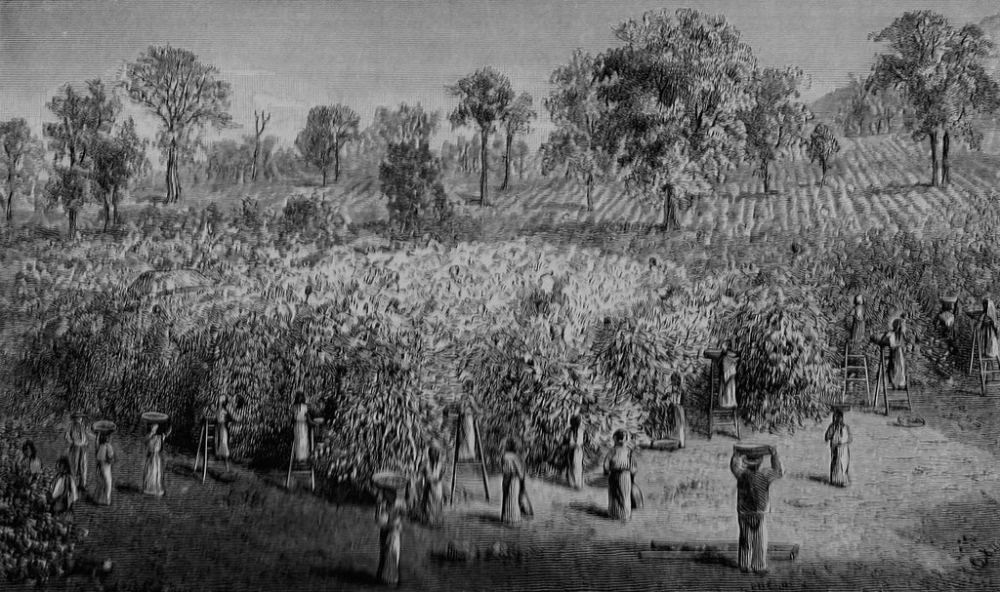
According to popular accounts, coffee was first planted in Colombia as early as the early 18th century, when coffee seeds or seedlings were brought to Colombia aboard the ships of Spanish Jesuit missionaries. A Spanish missionary named José Gumilla once recorded in a book the Orinoco River, which flows through Venezuela and Colombia. He explicitly wrote that in 1730 he witnessed the existence of coffee plantations along both banks of the river.
This indirectly shows that as early as before 1730, some people in Colombia had already begun cultivating coffee.
With the widespread promotion of coffee in Colombia, by the end of the 19th century coffee had become the country's main export commodity for foreign exchange. However, the four-year "Thousand Days' War" that broke out at the end of the 19th century dealt Colombia a heavy blow: the population dropped sharply, land was severely abandoned, and economic development nearly came to a standstill.
Many large coffee plantations could no longer continue operating, and some even became unmanaged wasteland. In order to save the coffee industry, the Colombian government gathered these abandoned lands, redivided them into smaller planting units, and sold them to landless farmers at very low prices. Farmers could plant coffee and other crops on these lands at the same time.
Colombian National Coffee Growers Association
Colombia's industrial structure, dominated by small coffee farms, was regarded as a new and flexible industrial model. Against the backdrop of international coffee prices at the time, Colombian coffee showed considerable growth potential. However, at that time Colombian coffee did not occupy an important position in the global market.
In order to reverse this situation, Colombian coffee growers formed an organization called the "Coffee Producers Institution" in 1904 to manage the domestic market. By 1920, a coffee grower took the lead in promoting the establishment of the Colombian Coffee Federation to protect the rights and interests of numerous small coffee farms. This organization subsequently continued to grow and in 1927 formally established a more authoritative and larger-scale organization—FNC.
The purpose of founding FNC was to safeguard the interests of coffee growers. In the years that followed, with FNC's support, Colombia, as a coffee-producing country, rose to become the world's third-largest coffee exporter.
As one of the classic coffee-producing countries, Colombia occupies a unique place on Front Street Coffee's (FrontStreet Coffee) bean list of nearly fifty coffee beans, and has also successfully been selected for Front Street Coffee's (FrontStreet Coffee) daily bean series.
Front Street Coffee's (FrontStreet Coffee) daily bean series includes seven classic coffee-producing regions. Although these beans do not come from famously prestigious coffee estates, they allow beginner coffee lovers to experience the representative flavors of major producing regions at an affordable price, and thereby find the region direction they prefer.
After repeated cupping comparisons of many coffee beans of different varieties, processing methods, and producing regions, Front Street found that washed coffee beans can more clearly present the core flavor of a producing region, while naturally processed coffee beans show stronger aroma and sweetness on the basis of washed beans.
For this reason, Front Street Coffee's (FrontStreet Coffee) daily bean series basically all use the washed processing method in order to highlight the most fundamental flavor characteristics of the producing region. One of Front Street Coffee's (FrontStreet Coffee) Colombian daily beans comes from the well-known Huila region. The washed process fully releases its original terroir characteristics, presenting a rich dark chocolate flavor with soft fruit acidity.
In addition to the more traditional chocolate-flavored Colombian coffee, Front Street Coffee (FrontStreet Coffee) maintains keen attention to the currently popular fourth wave of specialty coffee. More and more coffee lovers are not only interested in coffee beans with fruit-bomb flavors, but have also begun to gain a deeper understanding of coffee bean varieties and the post-processing methods of green coffee beans.
For example, Finca El Diviso, which rose to fame at the World Barista Championship. Here we recommend Front Street Sidra Coffee and Front Street Maragogype Coffee. Both beans are medium-roasted, with alluring floral aromas and juicy character, suitable for a variety of brewing methods, including moka pot, coffee machine, cold brew pitcher, pour-over, clever dripper, and so on, and have therefore become the first choice of many coffee lovers. You can place orders on Front Street's Tmall flagship store.
The above content is compiled by CoffeeHunters, a coffee news website.


