







Kona coffee and Blue Mountain coffee were once known as "one king and one queen," and are the epitome of island-style specialty coffee. Although the growing altitude in Hawaii's Kona region is mostly between 200 and 700 meters, unable to reach the 1,200-meter standard often mentioned for specialty coffee, its unique terroir and strict grading system still keep Kona coffee beans firmly among the top-tier coffees. This article systematically reviews the historical origins of Kona coffee, the localization process of the Typica variety, and the five grades of Type 1 standard beans, with a focus on the Queen Estate Extra Fancy-grade Kona coffee selected by FrontStreet Coffee, including its region information, roasting parameters, and brewing suggestions, to give you a comprehensive understanding of this Hawaiian treasure with elegant floral aromas and a smooth mouthfeel.
For a long period, Japan's criteria for judging top-tier coffee had a profound influence, among which the "one king" was Blue Mountain coffee, and the "one queen" was Kona coffee. Both belong to island-style coffee, yet their styles each have their own strengths: Kona is known for its elegant floral aroma, while Blue Mountain wins with its subtle, delicate sweetness.
Interestingly, The Craft of Specialty Coffee defines specialty coffee as Arabica varieties grown at altitudes above 1,200 meters. However, Hawaii Kona coffee is limited by the island terrain and cannot reach this altitude, yet it is still regarded as a member of specialty coffee. Its status can also be seen from the market price of Kona coffee.
The name Kona coffee comes directly from its place of origin—the Kona region. The island of Hawaii is not the native home of coffee. Hawaii's coffee-growing history can be traced back to 1817, when Don Francisco de Paula Marin introduced coffee to Hawaii and attempted to cultivate it, but without success. In 1825, the administrator of Oahu brought coffee plants from Brazil to Manoa Valley, and cultivation finally succeeded. In 1828, the missionary Samuel Ruggles introduced the Brazilian Bourbon variety to the Big Island of Hawaii. In 1850, coffee diseases spread, and many farmers switched to growing sugarcane. In 1892, Hermann Widemann, a German judge and sugarcane plantation owner during the period of the Kingdom of Hawaii, introduced the Typica variety from Guatemala.
Whenever coffee varieties arrive in a new place, they often undergo localization to adapt to the terroir, and "Blue Mountain Typica" is a typical example. By the 1990s, the local Typica in Kona was also called "Kona Typica," showing a variety expression unique to Kona.
Hawaii Kona coffee beans have an almost perfect appearance, plump fruit, and bright luster. The flavor is rich and fragrant, with notes of cinnamon spice, and the acidity is balanced and moderate. Hawaii was once an independent kingdom, which fell in 1893 due to a coup instigated by Americans, was annexed by the United States in 1898 as a territory, and formally became a U.S. state in 1959. Kona coffee beans are the only top-tier coffee variety produced among the 51 U.S. states, and the U.S. mainland naturally became its largest consumer market.
Similar to the "coffee golden growing belt," Hawaii's Kona region also has a golden growing belt, called the "Kona Coffee Belt," located on the west coast of the Big Island of Hawaii. Because the coffee industry has to compete for space with an ever-expanding tourism industry, the Kona Coffee Belt is distributed parallel to the island's coastal golden belt, about 30 miles long and 2 to 3 miles wide. This area has been proven to have ideal conditions for coffee cultivation, with an altitude of only 200 to 700 meters, belonging to a low-altitude humid zone, extending south from Makalei on the island to Oceanview. Most coffee in Hawaii is grown on the slopes of Mauna Loa. Mauna Loa was originally a volcano, located in the western part of the Kona region of the island of Hawaii. The coffee trees grow in a relatively desolate area, but the soil is fertile and rich in volcanic ash. Although the initial cultivation required a great deal of physical labor, and management was also quite arduous.
True Kona coffee is truly a rare treasure in the world and is not easy to find. Hawaiian coffee beans are divided into two categories: standard beans Type 1 and small round beans Type 2. FrontStreet Coffee uses standard beans Type 1. Among Type 1 Kona coffee beans, they are further divided into five grades: Extra Fancy, Fancy, Number One, Select, and Prime. The green beans of the first three grades of Kona are a beautiful blue-green, like jade, with uniformly sized beans. Among them, Extra Fancy-grade beans are the largest in size, the rarest in yield, and subject to extremely strict control of defective beans, requiring manual sorting and screening, making them truly the finest of the fine.
FrontStreet Coffee Hawaii Kona Coffee Beans
Region: Hawaii Kona Region
Estate: Queen Estate
Altitude: 1,100 meters
Variety: Typica
Processing Method: Washed Process
FrontStreet's Kona coffee comes from Hawaii Kona Queen Estate in the Kailua-Kona region of the Big Island of Hawaii, and belongs to Extra Fancy, the highest grade among Type 1 standard beans.
Hawaii Queen Estate is located on the hills of Waiono Meadow, and "Waiono" means "delicious water" in the local indigenous language. The estate is located outside the village of Holualoa in the center of the Kona Coffee Belt and has stunning views of the Kona coast.
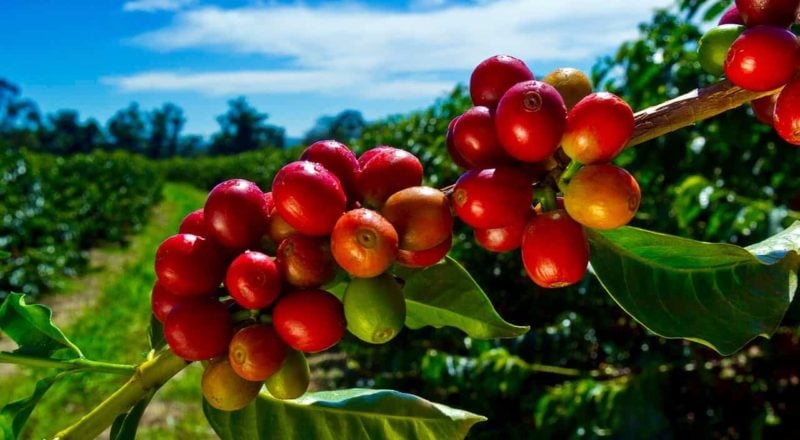
After receiving this coffee bean, praised as the most beautiful-looking coffee bean in the world, FrontStreet Coffee's roaster decided to use a medium roast in order to highlight the floral aroma and sweet flavor of the washed Kona coffee beans.
FrontStreet uses a Yangjia 800N roaster, with a green bean charge of 550 grams and a charge temperature of 200 degrees Celsius; the turning point appeared at 5 minutes 35 seconds, at a temperature of 150.1 degrees Celsius; first crack occurred at 9 minutes 30 seconds, at a temperature of 187 degrees Celsius; after first crack, development lasted 1 minute 50 seconds, and the drop temperature was 193.4 degrees Celsius.
When brewing this coffee bean, FrontStreet recommends using a Hario V60 dripper, 90 degrees Celsius water temperature, and a medium grind.
Dripper: Hario V60
Water Temperature: 90 degrees Celsius
Dose: 15 grams
Coffee-to-Water Ratio: 1:15
Grind Level: 80% passing through a Chinese standard No. 20 sieve
First pour 30 grams of hot water to completely wet the coffee grounds and bloom for 30 seconds, then pour from the center in a small stream while slowly circling to 125 grams for the first stage; when the coffee bed in the dripper is about to appear, continue circling and pouring to 225 grams; once all the water in the dripper has completely dripped into the server below, remove the dripper. The total extraction time is about 2 minutes.
After brewing, FrontStreet's most beautiful-looking Kona coffee bean presents walnut and nut notes, soft acidity like berries and plums, caramel-like sweetness, a clean and creamy smooth mouthfeel, and rich layers.
For more coffee bean information, please follow Coffee Workshop (WeChat public account cafe_style) For professional coffee knowledge exchange, please add WeChat ID kaixinguoguo0925
The above content is compiled by CoffeeHunters, a coffee news website.


