







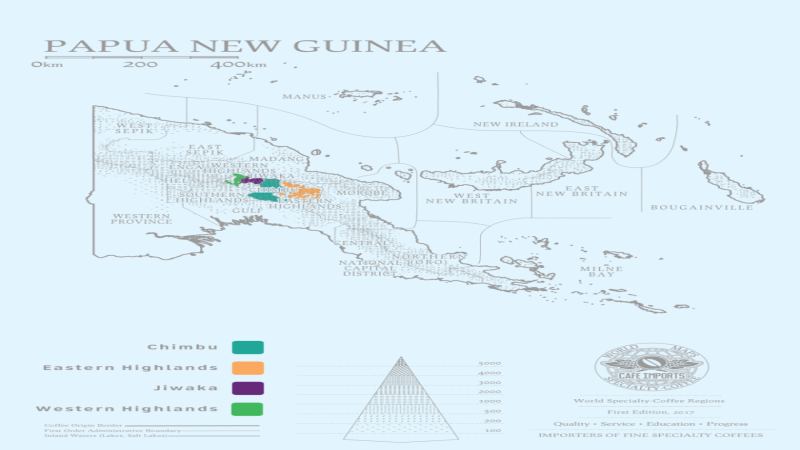
Located in the South Pacific, Papua New Guinea, with its high altitude, volcanic soil, and tropical rainforest climate, has become a potential production area for high-quality Arabica coffee. This article starts from the country's coffee cultivation history, sorts out the botanical characteristics and flavor advantages of the Typica variety, and focuses on the Bird of Paradise coffee beans in Front Street Coffee's bean list—produced by the Sigri Bird of Paradise Estate, using washed processing, with a soft and balanced taste, and long known as the "Little Blue Mountain." The article also presents Front Street Coffee's brewing parameters and extraction methods, and describes the complete flavor performance of this coffee from dry aroma to aftertaste, providing coffee lovers with production area knowledge and brewing reference.
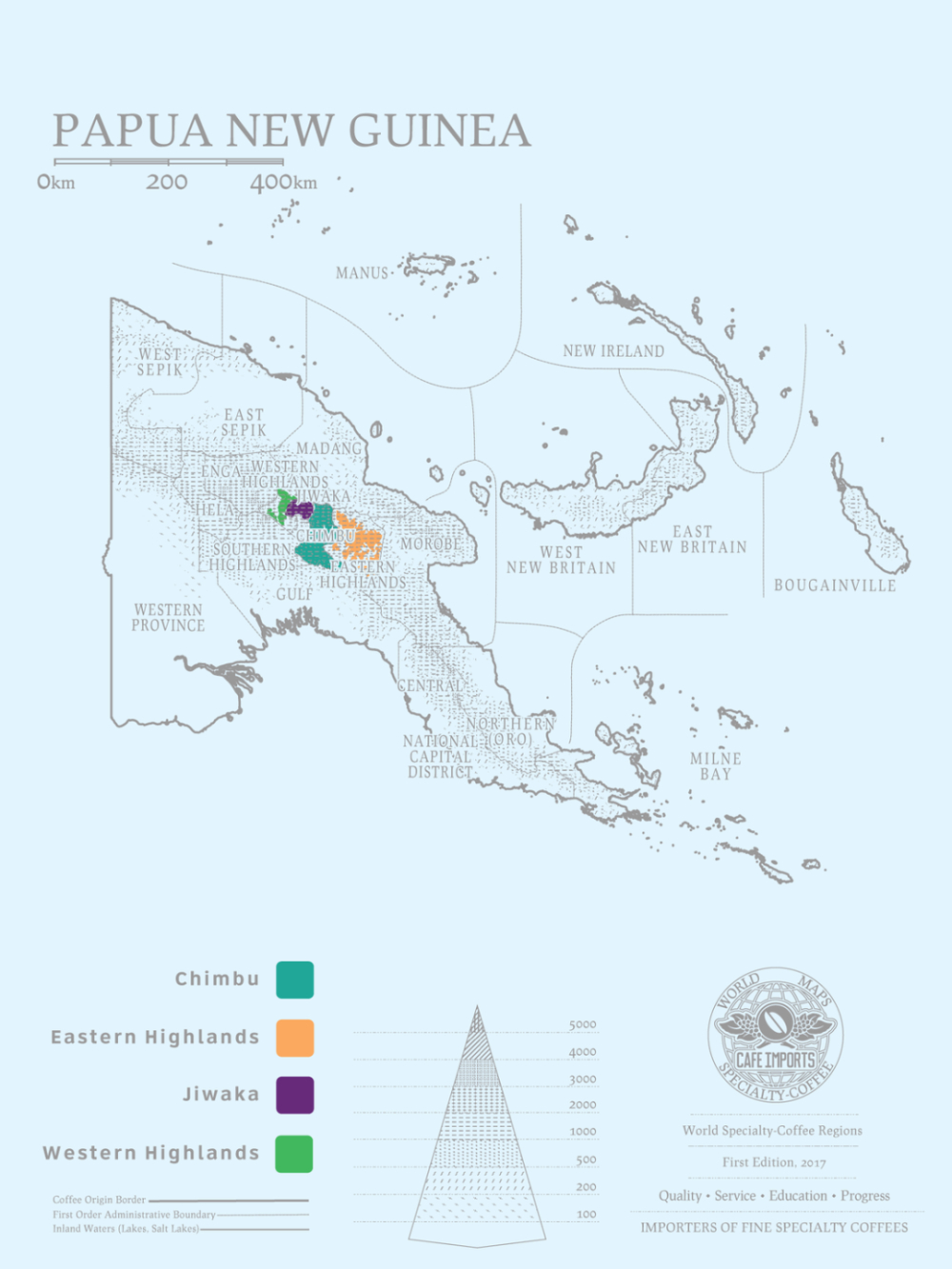
Papua New Guinea is an island country near Indonesia, covered with tropical rainforests and extremely rich in forest resources. In the highland areas at an altitude of 1,300 to 1,800 meters, the climate and soil conditions are very suitable for coffee tree growth. Because it was once ruled by Britain for a long time, it was not until 1931 that someone introduced Typica seeds from Jamaica for planting, and only after that did the commercialization of coffee gradually accelerate. The Papua coffee long kept on Front Street Coffee's bean list uses the time-honored Typica variety, and after washed processing and medium-dark roasting, it shows aromas of hazelnut, toast, and sugarcane, with a clean entry and transparent sweetness.
As a high-quality coffee variety, Typica is still widely planted around the world today, and the most famous among them is undoubtedly Jamaica Blue Mountain. Growing Typica with elegant and pure flavor is not easy: innate terroir, plant management, fruit picking, and post-processing—every step must be fully guaranteed before the coffee beans can develop positive flavors and mouthfeel. This also means that stably producing high-quality Typica requires higher labor input and deeper technical accumulation, which is exactly why Blue Mountain coffee and Kona coffee are expensive.
The most distinctive feature of Typica is that the terminal bud is reddish bronze, so it is also called "red-top coffee." The tree shape is conical, with branches slightly slanting outward, and the angle between the lateral branches and the vertical main stem is 50 to 70 degrees. The trunk is relatively slender, the branches are thin, and because the tree is tall and the branches are long, sufficient spacing must be left when planting. Typica coffee beans are relatively large and long, with pointed and upturned ends, somewhat egg-shaped. After roasting, they usually have a citrus-like acidity, with bitterness not prominent, a sweet aftertaste, and high overall cleanliness. Many people describe its flavor as elegant and clear.
On Front Street Coffee's daily bean list, there are several Typica varieties alone, such as Jamaica Blue Mountain No. 1 coffee beans, Front Street Coffee 2013 sun-dried Typica coffee beans, and Papua New Guinea Bird of Paradise coffee beans, among others. Grown under different terroir conditions and using different processing methods, Typica also presents different flavors and mouthfeels. Below, Front Street Coffee introduces this washed Typica from Papua New Guinea—Bird of Paradise coffee beans.
This Bird of Paradise coffee from Front Street Coffee comes from the SIGRI Bird of Paradise Estate, uses washed processing, and is named after Papua's national bird. The Bird of Paradise Estate is located in the Waghi Valley of the Western Highlands. The local volcanic soil is rich in minerals, the climate is cool, the soil is fertile, and rainfall is abundant. All coffee in the estate is cultivated with organic fertilization. High-standard planting and production management give the Typica coffee here a cleaner profile; with its soft low-acid taste and balanced flavor, Bird of Paradise has earned the title of "Little Blue Mountain."
Papua New Guinea is the largest island country in the South Pacific, located in the eastern half of the island of New Guinea, adjacent to Indonesia to the west and close to the Solomon Islands to the east. The country has a typical island climate, hot and humid all year round, and its special geographical location forms a unique microclimate in the highland regions. The country lies between the equator and 10 degrees south latitude, with dense tropical rainforests, volcanic rock landforms in the north, coastal swamps in the south, and highland terrain in the center, at an altitude of 1,200 to 2,500 meters, making it an ideal place to grow coffee. Although Papua New Guinea's coffee industry started relatively late, its quality potential is quite outstanding, and almost all the coffee it produces is Arabica beans. In recent years, the high-quality coffee grown in the highland regions has gradually attracted the attention of specialty coffee professionals, and its prospects are worth anticipating.
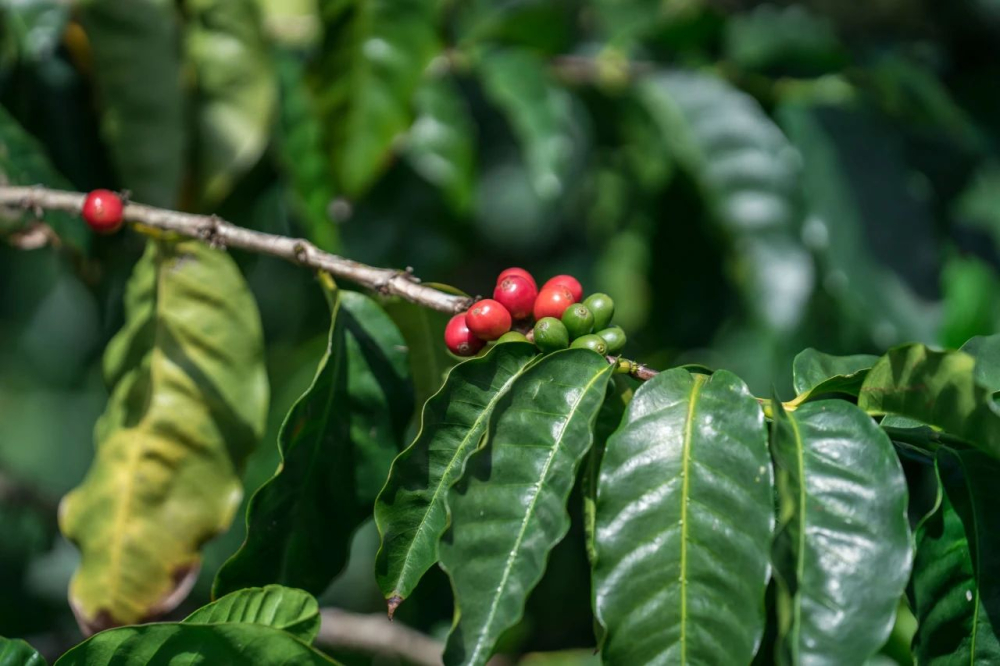
This Bird of Paradise coffee produced by Sigri undergoes strict wet-mill processing. Quality control begins on site at the coffee garden: coffee cherries are hand-picked and checked one by one for uniformity, and only fully ripe red fruits can be selected, because only such cherries can bring a balance of sugar and acidity. These selected cherries are then pulped on the same day they are picked and enter fermentation. The entire fermentation process lasts three days, interrupted only once every 24 hours during washing. Unlike the practices of other washed processing plants, the coffee beans are completely soaked in water for one day, thereby forming unique flavor characteristics. After that, all coffee beans are dried to further strengthen the flavor, and then carefully conditioned, hulled, graded, and hand-sorted.
Front Street Coffee brewing suggestion
Dripper: Kono dripper
Dose: 15g
Coffee-to-water ratio: 1:15
Grind size: 75% passing through a No. 20 sieve
Water temperature: 89°C
Front Street Coffee found that brewing with a Kono dripper gives this coffee a better body, and the aromas of nuts and cocoa can also be extracted more fully. For this brewing, Front Street Coffee uses staged extraction: first bloom with 30 grams of water for 30 seconds, then pour in a small stream in circles until 125 grams for the stage break, and when the water level drops and is about to expose the coffee bed, continue pouring until 225 grams and stop. When the water level drops again and is about to expose the coffee bed, remove the dripper. Timing from the start of blooming, the total extraction time is 2 minutes 00 seconds.
Flavor description: Compared with Jamaica Blue Mountain, the dry aroma of Bird of Paradise Little Blue Mountain has an extra faint spicy note. On entry, there is the sweet aroma of nuts and toast, mixed with a little fruity sweetness and acidity, making the flavor layers richer. The aftertaste has a spice-like sweetness, and the overall mouthfeel is rich and balanced.
For professional coffee knowledge exchange and more coffee bean information, please follow Coffee Workshop (WeChat public account: cafe_style)
For more specialty coffee beans, please add the private WeChat of Front Street Coffee (FrontStreet Coffee), WeChat ID: qjcoffeex
The above content is compiled by CoffeeHunters, a coffee news website.


