







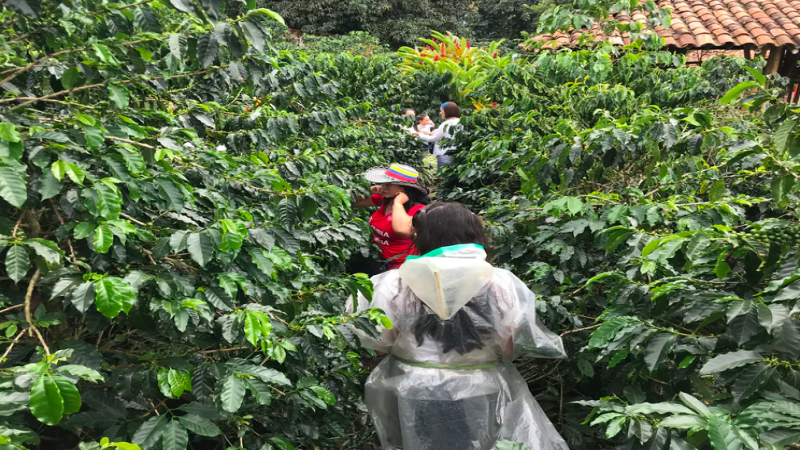
As the world's second-largest coffee producer, Colombia may not match Brazil in volume, but it is renowned worldwide for the excellent quality of its washed Arabica. Its coffee is mild and sweet, with cocoa notes when processed well. This article will systematically review Colombia's six major specialty regions—Medellin, Huila, Cauca, Narino, Tolima, and Santander—offering an in-depth analysis of each region's altitude, climate, soil characteristics, and flavor expression, while also introducing major varieties such as Caturra, Bourbon, and Castillo, as well as processing methods including washed, natural, and honey. The article will also mention representative coffees under the Front Street brand, such as Colombia Huila, Flower Moon Night, and Rose Valley, along with brewing parameters and suggestions, providing coffee lovers with a complete guide to Colombia's coffee terroir.
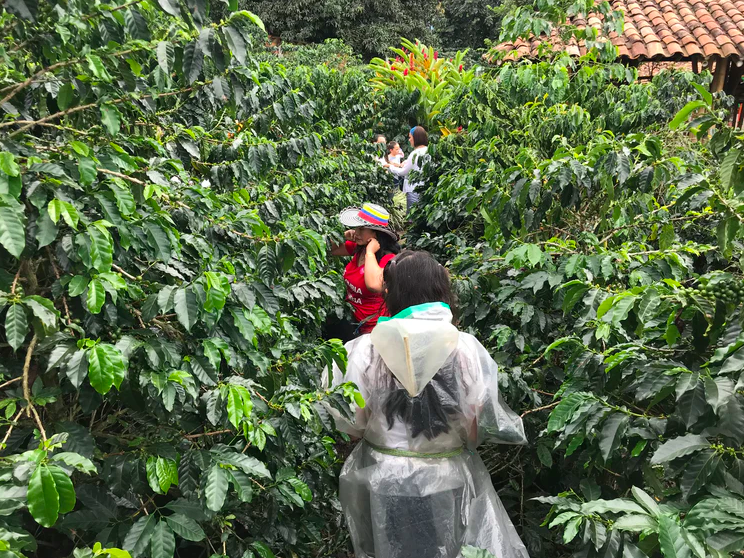
For more specialty coffee knowledge, please follow the WeChat public account: Front Street Coffee (FrontStreet Coffee)
Colombia's total coffee production ranks second in the world. Although it cannot match Brazil at the top in quantity, it surpasses it in quality. This country is the world's largest producer of washed Arabica coffee. Its coffee has a gentle mouthfeel and a clear sweet aftertaste, and with proper processing it also reveals a faint cocoa aroma.
Colombian coffee beans are usually larger than ordinary beans, uniform in size, and very attractive in appearance. Because they grow in low-latitude, high-altitude volcanic soil environments, Colombian coffee presents a balanced profile, with abundant acidity, high recognizability, and relatively solid body, occasionally revealing a red-wine-like nuance and pleasant fruity aromas. For this reason, Colombian coffee beans are also often used as a component in blends. For example, Front Street's specialty blend coffee (Brazilian coffee beans + Colombian coffee beans) is rich on the palate, with outstanding sweetness of nuts, cream, dark chocolate, and caramel.
Colombia is located in northwestern South America, adjacent to Panama in Central America, roughly between 3 and 8 degrees north latitude. It has a tropical climate, but the weather varies with terrain. The country is rich in volcanic soil resources, with annual rainfall between 2,000 and 3,000 millimeters, a mild climate, and humid air. These diverse climatic conditions allow Colombia to harvest coffee throughout the year. The southern part of the eastern plains and the Pacific coast have a tropical rainforest climate, the mountains at 1,000 to 2,000 meters above sea level have a subtropical climate, and the northwest has a tropical savanna climate. The average annual temperature ranges from 15.8 to 20.5 degrees Celsius, while the average temperature in coffee-growing areas fluctuates between 18 and 22.5 degrees Celsius.
Colombian coffee is highly regional, and its grading can be subdivided into more than 200 levels. Better-known regions include Medellin, Armenia, and Manizales, which the industry customarily calls "MAM." The country's specialty bean regions are mainly concentrated in the south, mostly above 1,500 meters above sea level, covering San Augustin in Huila, Popayan in Cauca, Narino, and Tolima. Coffee produced in these places has refined acidity and berry aromas, accompanied by caramel-like sweetness, with a very prominent sweet note.
Among them, the most famous specialty coffee region is Huila, located in the southern part of the Central Cordillera in southern Colombia.
Huila is located in the southern part of the Central Cordillera in southern Colombia, in the mountainous zone of the country's southwest, and is Colombia's most famous specialty coffee region. This area features hilly terrain surrounded by mountains, and within the region lies an active volcano that in 2008 erupted a large amount of mineral-rich volcanic ash, covering soils throughout Colombia. The planting altitude is above 1,500 meters, and Colombia's most important rivers converge here, bringing abundant water resources and moisture. Contrary to the common impression of Colombian coffee as balanced and smooth, many smallholder micro-lot Colombian specialty coffees actually have distinct regional flavors. In recent years, as the international market has raised its demands for coffee quality and specialty coffee, the former system of grading by bean size has gradually been abandoned in favor of micro-regional selections organized by smallholder coffee producers, in which dozens of smallholders combine their individual harvests into a single micro-lot for sale. This also creates more opportunities to directly select many excellent coffees from specific smallholders through lot-by-lot cupping.

Huila is also the region richest in volcanic ash. Whether coffee can present more refined flavors depends not only on variety and altitude, but also on nutrients in the soil. Therefore, coffee beans produced in Huila have refined fruit acidity, nutty flavors, and a caramel-like finish, which is also the signature flavor label of coffee from southern Colombia.
Front Street's daily-drinker Colombia Huila coffee comes precisely from the Huila region.
Front Street Colombia Flower Moon Night coffee comes from Finca Acevedo Cajetin in the city of Acevedo, Huila. According to Front Street's understanding, the estate owner Ramirez came from a coffee-growing family and has been involved in coffee production since the age of 18. He worked in professional coffee roles in the city of Acevedo, and later bought this estate named Finca Acevedo Cajetin, planting Caturra.
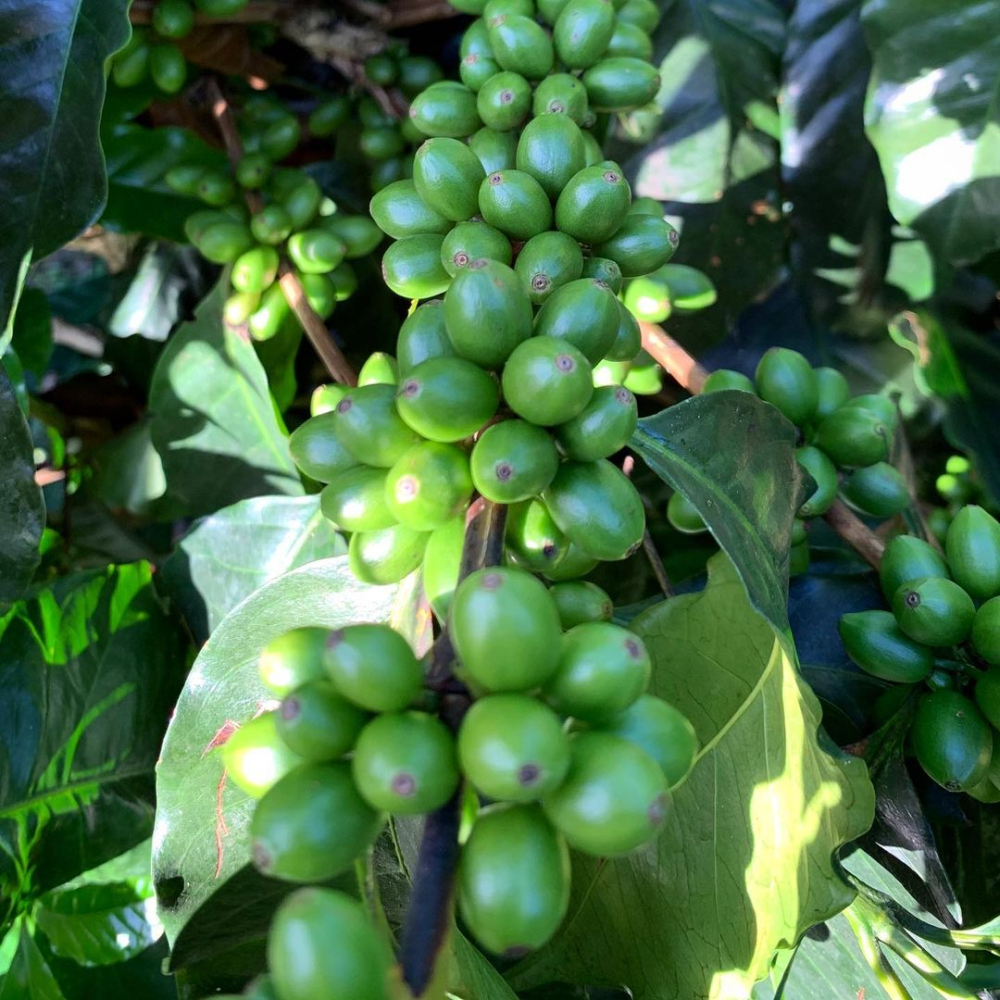
Cauca is a region certified as a Colombian coffee place of origin, with an average altitude of 1,758 meters and a maximum of up to 2,100 meters. The region's terrain, rainfall, temperature, and volcanic soil provide suitable conditions for coffee growth. Eighty percent of its territory is mountainous, with parallel mountain ranges in the east and center that are part of the Andes. The central range contains two major volcanoes, Sotara and Petacas. Along its border, Cauca is similar to other southwestern production regions in that rainfall shows a clear monomodal distribution. The dry season mainly occurs from August to September each year, followed by a rainy season that brings a concentrated coffee flowering period, and then the concentrated coffee harvest the following year.
The biggest climatic difference from other regions is probably the relatively large temperature variation: the average daily temperature is 11 degrees Celsius, and the average daytime temperature is 18 degrees Celsius. The day-night temperature difference is an important factor in producing high-quality coffee. Low nighttime temperatures and relatively higher altitude slow the pace of coffee growth, allowing the coffee seeds and beans to more fully absorb nutrients from the coffee fruit, which also creates Cauca coffee's better acidity and widely praised distinctive sweetness.
Narino is located in the southwest of the country, bordering the Pacific Ocean to the west and Ecuador to the south. The Andes run across the entire province, and coffee is grown in the high-altitude cloud belt at 1,600 to 2,300 meters. The soil is fertile volcanic geology, and the beans are small but plump with an emerald-green color. The vast majority of Narino's annual output is purchased by large American bean dealers. Narino is located in southwestern Colombia, bordering the Pacific Ocean to the west and Ecuador to the south, with the Andes running through the province. It has both majestic mountains and beautiful scenery, as well as many rivers passing through and flowing southward. It belongs to Colombia's high-mountain coffee-growing zone and has nurtured many smallholder specialty coffee producers. Narino's total annual output is about 150,000 bags, of which only about 6,000 bags are hand-selected beans.
Tolima is adjacent to Huila and Cauca. Here the north-south trending Andes (M. Andes) and Cordillera (M. Cordillera) run through, and between these two famous mountain systems flows the Magdalena River (R. Magdalena) from south to north. The name Tolima comes from the Pijao people who first lived here. In the language of this ancient people (Pijao word), tolima means "snowed." Tolima's farms are generally slightly larger than those in other southern Colombian regions, at about 10 to 15 hectares. Cooperatives are also common here, with farmers sending their own small lots of coffee cherries to the cooperative's processing plant. Some farmers also choose to process their own coffee using small-scale facilities capable of handling the amount picked that day.
Medellin is located in northern Colombia. It has a rich mouthfeel, moderate acidity, and a high sweetness that is very intriguing. Medellin exported by the FNC association has higher uniformity and cleanliness than ordinary Medellin.
Santander is located in northern Colombia, bordered by the Magdalena River to the west, with a planting altitude of about 1,400 to 1,600 meters and an area of 30,537 square kilometers. Through cupping, Front Street Coffee (FrontStreet Coffee) found that coffee beans from this region are known for their strong taste, long finish, and unique fresh grassy flavor.
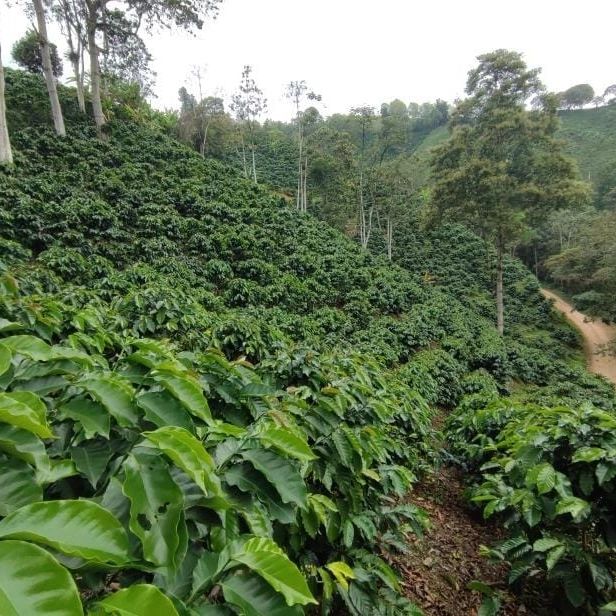
Rose Valley coffee beans
Front Street Colombia Rose Valley coffee comes from Finca El Roble in Colombia's Santander region. Santander is located in northern Colombia, bordered by the Magdalena River to the west, with a planting altitude of about 1,400 to 1,600 meters and an area of 30,537 square kilometers. Santander is a very important but rarely mentioned province. It is actually the province where coffee was first planted in Colombia and currently accounts for about 5% of Colombia's total coffee production. Through cupping, Front Street Coffee (FrontStreet Coffee) found that coffee beans from this region are known for their strong taste, long finish, and unique fresh grassy flavor.
Colombian coffee varieties
At present, Colombia is the world's largest producer of washed Arabica, the second-largest producer of Arabica, and the world's third-largest coffee producer. Its annual output is about one-third of Brazil's, accounting for 12% of world production. This places it behind only Brazil and Vietnam, but compared with those two, Colombia grows almost exclusively high-end Arabica coffee beans.
Caturra is a natural mutation of the Arabica variety Bourbon, discovered in Brazil in 1937. Its tree is not as tall as Bourbon, but shorter. Because it inherits Bourbon's lineage, its disease resistance is relatively weak, but its yield is higher than Bourbon's. Although it was discovered in Brazil, Caturra is not suitable for growing in Brazil, so it was not planted on a large scale there. Instead, it became widespread in Central and South America. For example, Colombia, Costa Rica, and Nicaragua all plant Caturra on a large scale.
In addition to the Caturra, Bourbon, Typica, and Pacamara commonly found in American production regions, Colombia also has three disease-resistant varieties of its own: Castillo, Tabi, and Cenicafe, as well as the Colombia variety sharing the country's name. Of course, there are also some rare and precious varieties, such as Geisha, small-bean Mocca, Rume Sudan, Eugenioides, Laurina, and Maraguesa—a natural hybrid of Maragogipe and Geisha.

Colombian coffee bean processing methods
Colombia's production regions are rich in water resources and very suitable for washed processing. Therefore, the vast majority of Colombian coffee is washed. Unlike other South American and Central American countries, most coffee growers process coffee at their own washing stations. Each smallholder family has a small specially designed processing machine (Ecomill or Eco-Pulper). Harvested coffee cherries are poured in, which not only removes the skin and pulp but also removes most of the mucilage, using only a very small amount of water. Next, the parchment beans with a small amount of remaining mucilage go into a small tank or container, possibly a cement tank (some tiled), or a stainless steel barrel, and are left overnight to ferment and loosen the remaining mucilage. The next day they are rinsed with clean water, completing the washed process. Doing all processing at home allows growers to fully control coffee quality.
With the development of specialty coffee, many farms release small lots of refined natural and honey processing, as well as special processing methods. For example, Front Street's very popular Flower Moon Night coffee has an intense berry-jam fermentation character, and Rose Valley coffee has a charming rose aroma and the sweetness of peach. Although the aromas of these novel-processing Colombian coffees are truly special, they mask the original flavors of Colombia's coffee regions. Front Street believes it is best to choose the natural washed method to highlight the clean mouthfeel of high-altitude coffee. Therefore, Front Street chose washed Colombia Huila coffee as the representative of Colombian coffee.
Front Street brewing parameters for Colombia Flower Moon Night and Rose Valley coffee:
V60 dripper, 1:15 coffee-to-water ratio, medium grind (about the size of coarse granulated sugar / 80% passing through a Chinese No. 20 standard sieve), 91 degrees Celsius water temperature.
Use staged extraction, blooming with 2 times the coffee dose in water, that is, 30 grams of water for a 30-second bloom. The reason blooming is needed is to allow the coffee grounds to release internal carbon dioxide, thereby making the later extraction more stable. Pour in a small stream in circles until 125 grams, then pause, continue pouring until 225 grams and stop. After the water in the dripper has fully drained, remove the dripper. Start timing from the beginning of pouring, with an extraction time of 2'00". Next, pick up the entire cup of coffee and swirl it to mix evenly, then pour it into a cup and taste.
Front Street Colombia Rose Valley coffee flavor characteristics: Winey chocolate, rose, cranberry, peach, cream.
Front Street Colombia Flower Moon Night coffee flavor characteristics: Intense strawberry jam and sweet rose aroma, with rich strawberry, jam, and liqueur chocolate flavors on the palate.
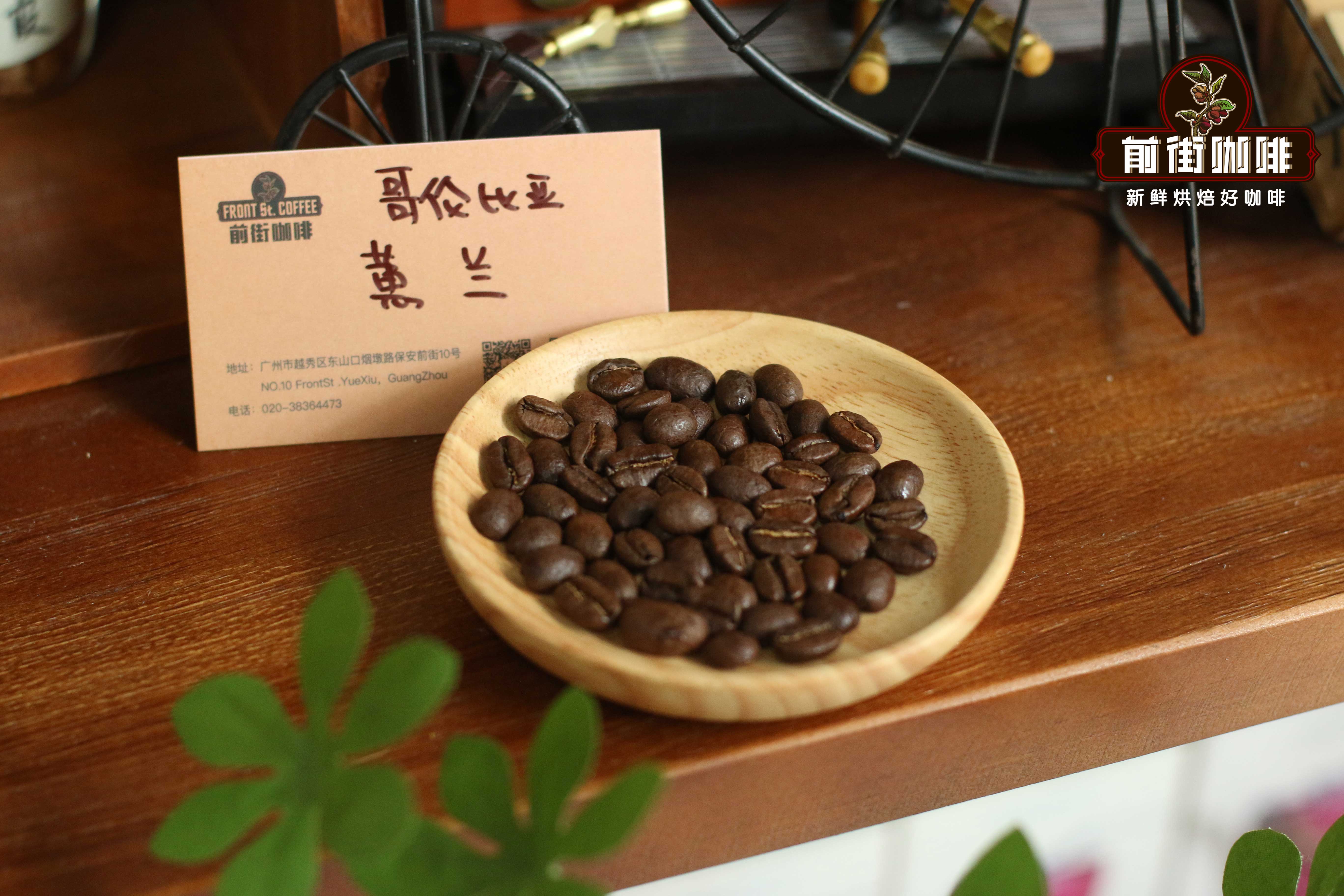
As a daily-drinker bean and also one of the coffee beans in Front Street's specialty blend, Colombia Huila coffee may taste relatively strong if brewed on its own, with more obvious notes of nuts, dark chocolate, and fruit acidity; but if used as a blend component, the mouthfeel is absolutely delicious and certainly very smooth. Of course, everyone's taste is different, and as for how to brew it, Front Street believes it depends entirely on personal preference. Front Street has over 100 single-origin coffee beans from different regions, fully able to satisfy everyone's choices and preferences for coffee.
Front Street coffee brewing suggestions:
Regarding coffee brewing, Front Street has always believed that the freshness of coffee beans has a great relationship with coffee flavor. Therefore, the coffee beans shipped by Front Street Coffee (FrontStreet Coffee) are all within 5 days of the roast date. Front Street's roasting philosophy is "freshly roasted good coffee," so that every customer who places an order receives the freshest coffee. The resting period for coffee is about 4 to 7 days, so when customers receive it, it is exactly at its best flavor.
For friends who need ground coffee, Front Street warmly reminds you: once coffee beans are ground in advance, they no longer need to be rested, because during transportation the pressure from carbon dioxide inside the package can also make the coffee flavor rounder, so you can immediately brew a cup after receiving the ground coffee. However, ground coffee needs to be brewed promptly, because ground coffee oxidizes relatively quickly after contact with air. In other words, the coffee flavor will dissipate faster and the coffee will not taste as good. Therefore, Front Street recommends buying whole beans and grinding fresh for each brew, so that you can better taste the flavor of the coffee.
The above content is compiled by CoffeeHunters, a coffee news website.


