







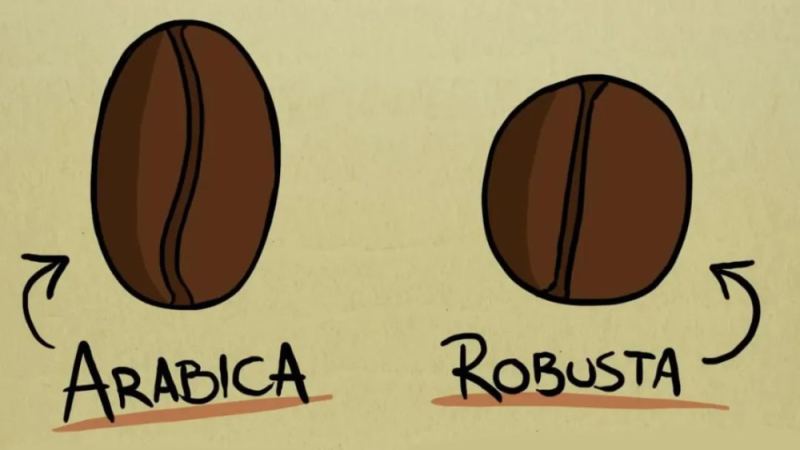
In the world of coffee, Arabica and Robusta are the two major varieties, with the former accounting for over 70% of global production and the latter about 20%. The two differ significantly in caffeine, fat, and sugar content, which directly creates their distinctly different flavor profiles. Arabica is known for its soft sweetness and bright fruity acidity, while Robusta stands out for its rich intensity and nutty, grainy notes. Understanding their characteristics not only helps us better choose our daily drinks, but also explains why Robusta is often added to espresso blends to boost crema and body. This article will comprehensively analyze the differences between these two major varieties from the perspectives of flavor, composition, and practical application, and present Front Street Coffee's classic blend and commercial blend recommendations.
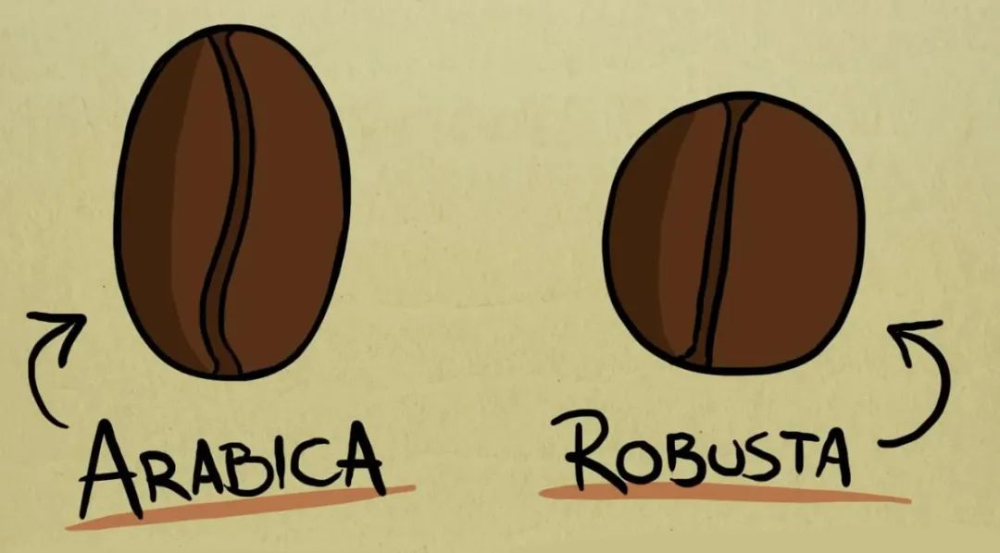
Arabica: About 70% of global coffee production belongs to this variety, and nearly all the specialty single-origin coffees you drink in cafes every day are Arabica.
Robusta: Its flavor is heavier and its mouthfeel is punchy, and it is usually used in instant coffee or espresso blend beans.
The three major native species of coffee are Arabica, Robusta, and Liberica (also known as Liberica). Arabica has the highest production, accounting for about 70% to 75% of the world total, and includes branches such as Bourbon and Typica. Robusta accounts for about 20% to 25%. Liberica accounts for only about 3%, and is mainly grown in the Asia-Pacific region.
In terms of composition, Arabica has a lower caffeine content, roughly between 0.9% and 1.2%; its fat content is 60% higher than that of Robusta; and its sugar content is twice that of the latter. These factors make Arabica taste sweeter and smoother on the palate, often with a fruit-like acidity. The bitterness we perceive when drinking coffee mainly comes from chlorogenic acid, and Robusta has higher levels of caffeine, amino acids, and chlorogenic acid than Arabica. Therefore, Robusta naturally lacks the elegant, ethereal aroma of Arabica, replaced instead by a heavier, deeper taste experience, with flavors such as walnut, peanut, hazelnut, wheat, and grain, as well as abundant crema.
In addition, Robusta has relatively few derived varieties, while Arabica has numerous variants that display different characteristics depending on the producing region, climate, and processing method, and each variety has a pleasant acidity, bitterness, and aroma. If you want to experience Arabica with iconic flavors, you can choose Front Street Jamaica Blue Mountain No. 1 Typica (nut, cream, chocolate, with balanced acidity, sweetness, and bitterness), Front Street Panama Geisha (jasmine, citrus, oolong tea, melon), and Front Street Sun-Dried Huakui (creamy strawberry, floral, berry, guava, mango).
Since Robusta has a strong taste and high caffeine content, it is naturally not suitable for brewing and drinking directly, otherwise it will show obvious barley tea, peanut, and brown rice tea characteristics, with prominent bitterness and a lack of acidity. Combined with Robusta's advantages and value, we can incorporate it into espresso recipes to increase body on the one hand and enrich the coffee's crema on the other.
Front Street Classic Blend is a medium-dark roasted espresso bean combining Brazil Red Bourbon, Indonesia Mandheling, and a small amount of Vietnam Robusta, specially designed for coffee and moka pots. When extracted as espresso, it gives off rich butter, roasted hazelnut, caramel, and dark chocolate flavors, with a solid mouthfeel; as black coffee it is sweet, fragrant, and refreshing, and when milk is added to make a latte it becomes smooth and delicate.
Front Street Commercial Blend is a product launched for friends opening coffee shops. It uses a combination of two major producing countries, Brazil and Colombia, and is rich in nutty aromas such as almond, peanut, apricot kernel, and walnut, with ample chocolate sweetness in the finish. Finally, a small amount of Robusta is added to make the crema fuller, so that both beginners and professional baristas can easily make a rich espresso with abundant crema.
The above content is compiled by CoffeeHunters, a coffee news website.


