







Yirgacheffe is Ethiopia's most iconic specialty coffee region, renowned worldwide for its white floral notes and lemon-citrus acidity. This article will systematically examine what makes Yirgacheffe coffee unique, from the definition of the region, variety origins, and processing method evolution to brewing parameters. It will also introduce representative products from Front Street Coffee, including Gutingding, Red Cherry, and the washed Yirgacheffe everyday drinking beans, helping coffee enthusiasts gain a deeper understanding of this region's diverse character. Whether you are a beginner just getting into specialty coffee or a seasoned drinker looking for daily beans, you will find practical reference information here.
To learn more about specialty coffee, welcome to follow: Front Street Coffee (Frontsteet Coffee)
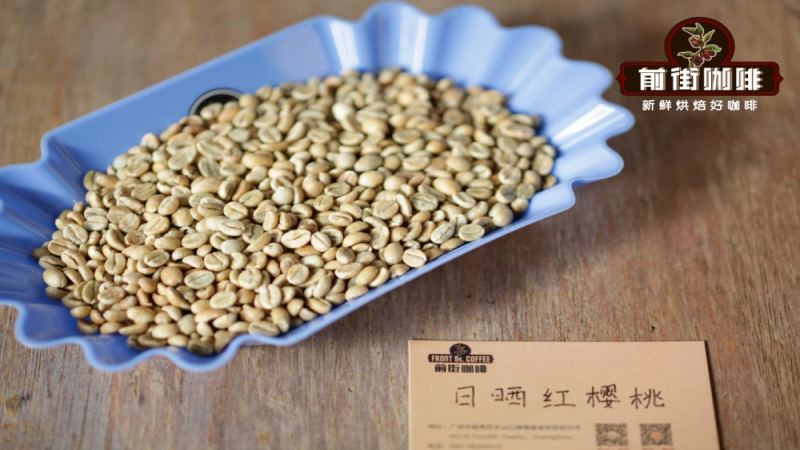
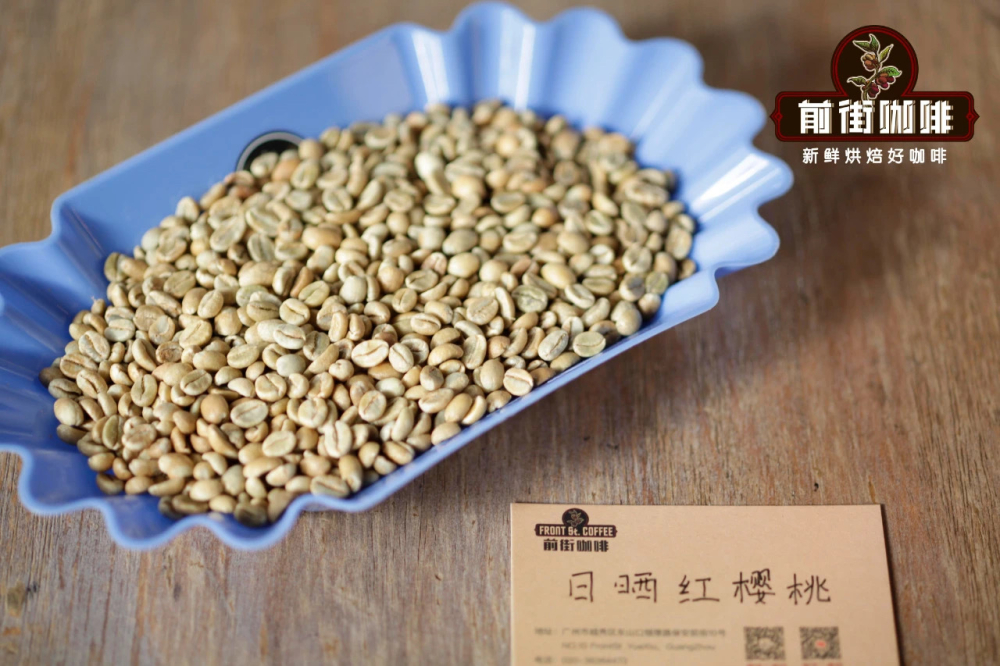
Although Yirgacheffe coffee beans are rather small, they exude a gentle, sweet character.
Front Street's representative Yirgacheffe products include Front Street Gutingding, Front Street Red Cherry, and Front Street Washed Yirgacheffe everyday drinking beans. After light roasting, Front Street Yirgacheffe presents lemon, floral, and honey-like sweet aromas, with soft fruit acidity carrying citrus tones, fresh and bright overall, and a green tea-like sensation in the finish. Brewed as black coffee, no milk or sugar is needed—the rounded texture and soft floral notes gently caress the palate, leaving a long-lasting aftertaste……
What does the name Yirgacheffe mean?
Yirgacheffe is both a specialty coffee region in Ethiopia and the flagship representative of the country's coffee. Front Street Coffee (FrontStreet Coffee)'s everyday drinking bean, the washed Yirgacheffe, is a typical example. Coffee produced in different regions, micro-regions, and even single farms across Ethiopia often shows significantly different cup profiles. For this reason, Front Street has introduced over a dozen Ethiopian single-origin coffees alone, of which five or six are from the Yirgacheffe region, demonstrating just how popular this region is. Regardless of which region they come from, though, any Ethiopian Arabica coffee bean is enough to captivate.
Yirga cheffe is a small town in the Sidamo Province of southern Ethiopia, at an altitude of approximately 1,700 to 2,100 meters, with coffee trees typically planted above 1,800 meters, making it one of the highest coffee-growing regions in the world. Yirgacheffe has become synonymous with Ethiopian specialty coffee because it displays highly distinctive white floral notes and lemon-citrus acidity. This area was originally a wetland; in the ancient language, "Yirga" means "to settle down" and "Cheffe" means "wetland." In 2010, the Ethiopia Commodity Exchange separated the Yirgacheffe region from the Sidamo region, which is how the now widely known Yirgacheffe region came to be.
The local coffee production methods and flavor expression are so outstanding that Ethiopian coffee farmers take pride in their coffee having Yirgacheffe-like flavors, and Yirgacheffe has thus become Africa's most famous coffee region.
Why are Yirgacheffe coffee beans so small?
Observant friends may have noticed that Ethiopian coffee beans vary in size and shape, and the variety field is often listed as local heirloom. What exactly does that mean?
In response to these questions, Front Street answers one by one:
Ethiopia is widely recognized as the birthplace of coffee, with an extremely rich coffee gene pool. It is estimated that the country has over ten thousand local heirloom varieties, most of which have not undergone formal genetic identification. With such a vast number of varieties, identification is naturally no easy task. On the other hand, the Ethiopian government, out of consideration for keeping species genetic information confidential, uniformly refers to them as local heirloom varieties.
The original term for local heirloom is HEIRLOOM, which in English means "a precious item passed down from generation to generation." In the coffee field, this term is used to refer to ancient varieties of the Arabica coffee plant, translated into Chinese as "local heirloom," and now broadly refers to Ethiopian coffee varieties. Therefore, many Ethiopian coffee beans are labeled as local heirloom.
Where does Yirgacheffe's floral aroma come from?
Have you ever been misled by washed Yirgacheffe coffee into thinking that all coffee from the Yirgacheffe region is washed? In fact, Yirgacheffe originally used the oldest natural (dry) processing method. In 1972, Ethiopia introduced washed processing technology from Central and South America to improve quality, making Yirgacheffe's jasmine and citrus aromas clearer and more refined, propelling it to become a world-class specialty bean. This superb washing technology played an indispensable role. After the 1970s, washed processing was basically dominant, such as washed Yirgacheffe coffee. However, in the past two years, Yirgacheffe has broken with convention and frequently released stunning natural-process beans!

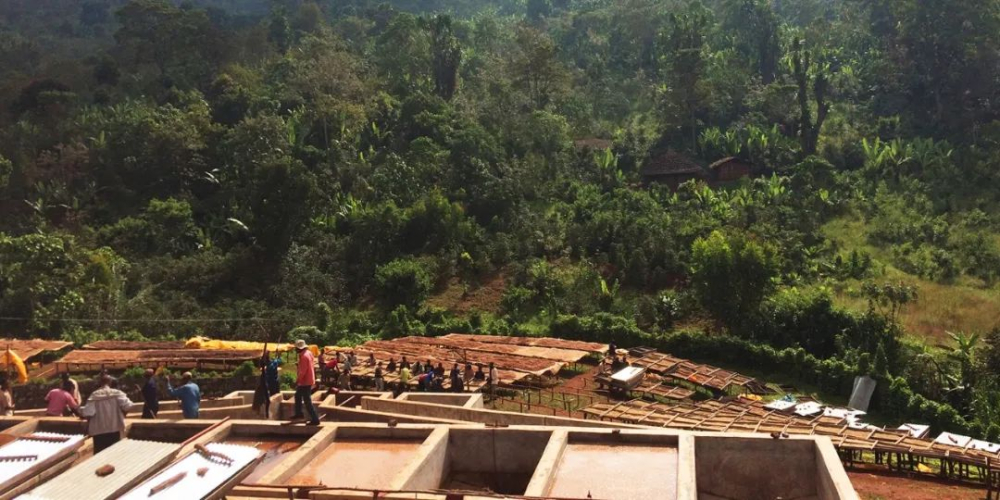
Natural-process Yirgacheffe has strict standards for selecting red cherries (the fruit borne by coffee trees). Before sun-drying the coffee cherries, unripe green cherries or defective fruits are removed by hand; during the drying process, damaged or moldy fruits are removed again. After two weeks, the sugar and essence of the fruit pulp have fully permeated the coffee beans, and the moisture content has dropped to 12%. The hardened pulp, pectin layer, and pod are then scraped clean together by a hulling machine. After the beans are extracted, they still need to undergo density and bean color testing. After eliminating defective beans, workers finally remove any remaining defective beans by visual inspection. This multi-layered quality control creates the clean and refined character of Yirgacheffe natural-process beans. For example: Yirgacheffe Red Cherry coffee.
According to information reviewed by Front Street, the Yirgacheffe Coffee Farmers Cooperative Union (YCFCU) was established in June 2002 and currently has 28 primary member cooperatives, 44 coffee processing sites, and a total farmer membership of 45,094. Front Street's research found that in the Yirgacheffe area, coffee is the main source of income and also a way of life. But many farmers lack the tools, training, and bargaining power needed to build profitable businesses. As prices decline, making a living from coffee becomes increasingly difficult, and entering the international market is even more of a challenge for smallholders. The birth of YCFCU was intended to enable farmers to continue operating and gain economic autonomy through better organization and establishing new market connections in the specialty coffee sector.
As a traditional coffee region, Yirgacheffe's local coffee farmers deliver their harvested coffee beans to the nearest coffee cooperative for unified processing, which is then traded under the processing station's name. Therefore, most Yirgacheffe coffee beans we drink are labeled as Ethiopia Yirgacheffe, a certain cooperative, a certain processing station coffee beans. Currently, well-known Yirgacheffe cooperatives include Gutingding Cooperative, Aricha Cooperative, Worka Cooperative, Kochere Cooperative, and others. Among them, a washed Yirgacheffe coffee bean sold by Front Street Coffee (FrontStreet Coffee) comes from Gutingding Cooperative, and a natural-process Yirgacheffe coffee bean comes from Aletaland Cooperative.
The biggest difference between washed processing and natural processing is: washed processing first removes the coffee cherry skin and pulp, then places the beans in a clean water tank to ferment and remove residual mucilage, followed by sun-drying. Therefore, washed coffee beans have a shorter drying time, a cleaner overall flavor, and more pronounced acidity.
Natural-process coffee beans, on the other hand, retain the skin and pulp and are dried whole in the sun. Under high temperatures, the sugars in the pulp ferment, and the coffee beans absorb the fermented flavors; at the same time, some of the sugars in the pulp are transferred into the beans. This is why natural-process coffee beans carry a subtle fermented aroma and a more pronounced sweetness.
Front Street's brewing parameters for Yirgacheffe coffee:
V60 dripper, water temperature 90°C, water-to-coffee ratio 1:15, coffee dose 15g, grind size (80% passing through a Chinese No. 20 standard sieve)
Use staged extraction: first bloom with 2 times the coffee dose in water, i.e., 30 grams of water for 30 seconds. The purpose of blooming is to let the coffee grounds release internal carbon dioxide, making the subsequent extraction more stable. Pour in a slow circular stream until reaching 125 grams, then pause; continue pouring until 225 grams, then stop. Once the water in the dripper has dripped through, remove the dripper. Timing starts from the beginning of pouring; extraction time is 2 minutes 00 seconds. Next, swirl the entire cup of coffee to mix, then pour into a cup and taste.
[Washed Yirgacheffe Coffee Flavor] Brighter and livelier acidity, citric acid, citrus aroma, fresh and fragrant mouthfeel, with a black tea-like finish in the later stages.
[Natural Red Cherry Coffee Flavor] Berry, lemon, strawberry, fermented wine aroma.
Ethiopia is like a treasure waiting to be discovered and explored, with coffee beans from each region having distinct flavors. Front Street has introduced over a dozen single-origin Ethiopian coffees alone. Welcome to Front Street Coffee (FrontStreet Coffee) to experience them!
The above content is compiled by CoffeeHunters, a coffee news website.


